
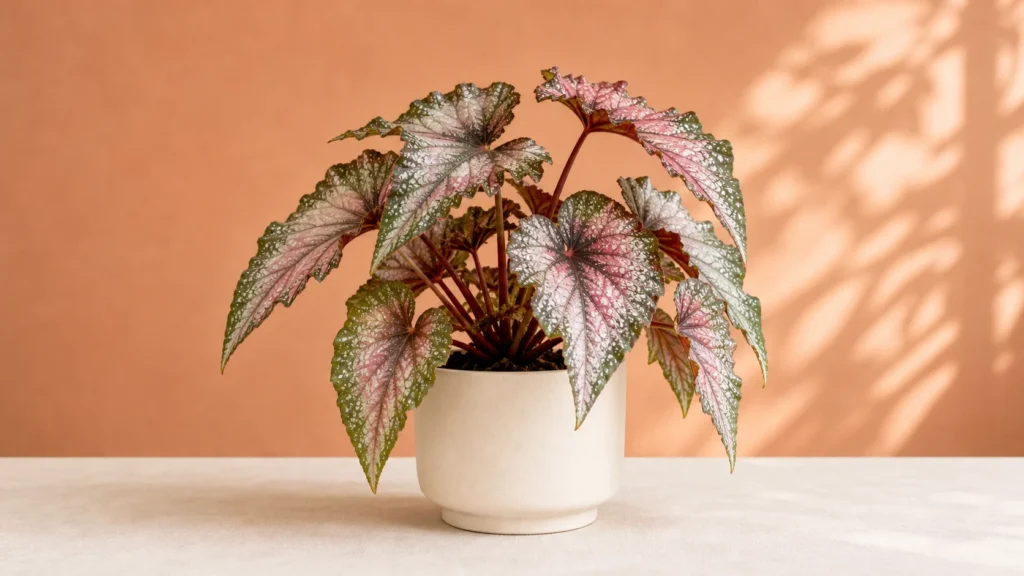
Begonia ‘Garden Angel Blush’
Begonia 'Garden Angel Blush'
A vigorous hardy hybrid begonia with silver maple-like leaves, plum-red blush and veins, and pink flowers for shaded gardens or containers.
Watering frequency
Every 5-7 days
Ideal temperature
55-75°F / 13-24°C in active growth
Humidity
40-60%
Care difficulty
Medium
Air purifying
No/Not Known
Growth rate
Fast
Plant size
1-2 ft / 0.3-0.6 m
Soil type
Humus-rich, moist, well-drained soil
Fertilizer need
Lightly while growing; stop in fall.
Care summary
- Light: Outdoor shade or filtered indoor light.
- Water: Keep evenly moist but never waterlogged.
- Soil: Use fertile, humus-rich soil with reliable drainage.
- Winter: Expect dormancy outdoors; protect the crown in colder areas.
- Safety: Keep away from pets that may chew the plant or roots.
Common problems
- Wilting: dry soil, heat, or transplant stress.
- Crown rot: poor drainage or persistent saturation.
- Leaf spots: wet foliage and limited airflow.
- Scorch: excessive direct sun.
- Slugs and snails: damage tender outdoor growth.
Plant care guide
About Begonia ‘Garden Angel Blush’
Begonia ‘Garden Angel Blush’ is a vigorous rhizomatous hybrid bred for dramatic foliage and garden performance. Its palmately lobed leaves resemble stylized maple leaves, with silvering between dark veins, a plum-red blush, and red-purple undersides. Pink flowers appear above the foliage around late summer or, under protected conditions, later in the year.
The verified cultivar name is Garden Angel Blush. The official U.S. plant patent and the RHS cultivar record use this name; no authoritative source supports the older “Gordon Angle Blush” spelling. The patent records the cross as Begonia ‘Benitochiba’ × Begonia grandis subsp. evansiana and describes a hardy, bushy plant rather than a tender 6–12 inch low-light houseplant.
The stable Slug and existing image filenames remain unchanged so this corrected record updates the same established WordPress Plant rather than creating a second database identity.
Why You’ll Like It
Garden Angel Blush brings houseplant-level foliage drama into a shaded outdoor planting. Its silver and purple coloring remains useful before and after the pink flowers, making it more than a short seasonal bloom display. It can form a broad mound and works as a shade-border accent or a substantial container plant.
It is also more cold-tolerant than a typical rex begonia. The patent reports hardiness to USDA Zone 7 under the breeder’s trial conditions, although local winter drainage, snow cover, exposure, and establishment still determine survival. Treat that rating as a starting point, not a guarantee for every garden.
Indoor culture is possible, especially while overwintering a container, but this cultivar was selected for vigor and landscape use. It should not be promised to remain a tiny shelf plant. Give it room, bright filtered light, and a seasonal rhythm rather than forcing constant growth in a warm dark corner.
What Kind of Plant Is It?
This is an herbaceous rhizomatous perennial. A rhizome is a modified stem that grows at or near the soil and stores energy while producing shoots and roots. The patented cultivar is caulescent and shrubby, with upright growth above the rhizome rather than a flat rex-style rosette.
The patent describes plants around 35 cm tall and 60 cm wide in trial containers, while landscape listings may report somewhat larger sizes. Actual dimensions depend on climate, soil, age, and season. Leaves are broadly ovate with four to six main lobes, serrated edges, and a softly hairy surface.
Like other begonias, it produces separate male and female flowers on the same plant. The pink flower clusters add seasonal interest, but the silver-plum foliage remains the primary reason to grow it.
Garden Angel Series and Related Begonias
These are related commercial selections or useful comparisons, not interchangeable names.
- ‘Garden Angel Blush’: Silver leaves with plum-red blush, dark venation, and pink flowers; the focus of this guide.
- ‘Garden Angel Plum’: A sibling selection with stronger plum coloring and silver patterning.
- ‘Garden Angel Silver’: A sibling emphasizing silver foliage rather than the warm blush.
- Begonia ‘Benitochiba’: The seed parent named in the patent, valued for highly divided colorful foliage but not identical in hardiness or appearance.
- Hardy Begonia: Begonia grandis and its forms contributed cold tolerance to this hybrid and typically die back before returning from underground structures.
- Rex Cultorum begonias: Tender foliage begonias commonly grown indoors; they may share silver or purple coloring but belong to a different horticultural use pattern.
The Terra Nova introduction record dates the Garden Angel selections to 2013. Keep full cultivar names in internal links so readers do not confuse the three sibling selections.
Where It Works Best
Outdoors, choose partial shade or bright open shade. Morning sun may be acceptable in cooler climates, but hot afternoon sun can scorch or bleach the patterned leaves. A woodland edge, shaded courtyard, north or east side of a building, or container beneath a covered patio can work.
Indoors, place it near a bright window with filtered light. A dark room labeled “low light” will not support dense colorful growth. Rotate containers for balanced development and keep them away from heating vents. Indoor humidity need not be extreme if watering is steady and the air is not desiccating.
Allow enough width. Patent measurements indicate a plant can spread to roughly 2 feet, so it may crowd narrow shelves. Outdoors in Zone 7 or warmer, consult local experience about winter protection and avoid a site that remains waterlogged while dormant.
How to Water Garden Angel Blush
Keep the root zone evenly moist during active growth but never saturated. Water when the surface starts to dry, applying enough to moisten the full root area. A container may need checking every five to seven days in mild weather and much more often during summer heat; garden plants depend on rain, soil, mulch, and root establishment.
Wilt is not a sufficient diagnosis by itself. Dry soil suggests thirst, while limp growth in wet soil can signal crown or root damage. Check before watering. Morning irrigation gives wet leaves time to dry and reduces the risk associated with cool, damp nights.
As outdoor foliage dies back, reduce water. Dormant rhizomes use far less moisture, and winter saturation can be more dangerous than temporary surface dryness. An overwintered container should be kept cool and only lightly moist unless it continues active growth under strong light.
Soil, Containers, and Planting
Use fertile, humus-rich soil that drains reliably. Compost can improve organic matter, but it should not turn heavy clay into a permanently wet basin. In containers, use quality peat-free potting mix with added drainage material if necessary and a pot with open holes.
Plant at the same depth as the nursery pot, keeping the crown from being buried. Mulch outdoor plants lightly to moderate temperature and moisture, but do not pack wet mulch against the stems. In colder parts of its range, a protective winter mulch can help after the ground cools; local extension guidance should determine timing and depth.
Repot container plants when roots fill the pot or the mix loses structure. Increase only one pot size. A large volume of unused wet compost encourages rot and makes watering harder to judge.
Temperature, Feeding, and Seasonal Care
Active growth is comfortable around 55–75°F (13–24°C), though established outdoor plants experience a wider range. Heat raises water demand and makes shade more important. A potted plant is less insulated than one in the ground, so its roots may need protection even where the cultivar is nominally hardy.
Feed container plants lightly during active growth with a balanced fertilizer according to the label. In fertile garden soil, annual compost or modest spring feeding may be enough. Excess nitrogen can produce soft growth, and late heavy feeding may delay seasonal hardening.
In frost-prone climates, foliage dies back. Remove collapsed growth after frost or when it no longer contributes to the display, taking care not to damage the crown. Mark the planting location because new shoots may emerge late in spring.
Growing It Indoors Versus Outdoors
Garden Angel Blush can be displayed indoors, but its care should reflect its outdoor-bred nature. Indoors, use a bright filtered window, rotate the container, and watch for mites or mildew in still air. Growth may remain softer and less dense than it would in outdoor shade. If it drops foliage during a cool, dark winter, reduce watering and wait for renewed growth rather than forcing it with fertilizer.
Outdoors, roots have more room and air but face slugs, heavy rain, heat, and winter cold. Plant after severe frost risk has passed so new growth is not cut down immediately. During the first season, water often enough to establish roots beyond the original nursery ball. Established plants can still wilt in heat because the broad leaves lose water quickly.
A container offers control and easy relocation, but its root zone heats, freezes, and dries faster than garden soil. In a climate colder than the reliable hardiness range, move the pot to a cool protected place before deep freezes or take a labeled division as insurance. Do not carry an outdoor plant directly into the collection without checking both leaf surfaces and the crown for pests.
Landscape Use and Responsible Siting
Use the plant as a foliage mound in a shade border, woodland edge, or large mixed container. Give neighboring plants enough distance that air can move around wet leaves. Silver foliage combines well with green ferns and dark-leaved shade plants, while the pink flowers suit quieter planting schemes.
Before planting permanently, confirm that the chosen site is not a winter drainage basin. A location can seem dry in summer yet collect cold rain around dormant crowns. Where hardy begonias spread comfortably, monitor the clump and divide deliberately rather than moving unlabeled pieces that lose the cultivar identity.
Propagation
The patent states that ‘Garden Angel Blush’ was reproduced asexually by cuttings and tissue culture so its traits remained consistent. Home growers may be able to divide a mature rhizome or root suitable stem or rhizome cuttings, but propagation rights should be checked while any plant patent remains enforceable in the relevant jurisdiction.
Seed will not reproduce the cultivar true to name. A seedling inherits a reshuffled combination of traits and should not be sold or shared as ‘Garden Angel Blush’. Preserve labels on divisions and verify legal restrictions before commercial propagation.
Pet and Human Safety
Garden Angel Blush is not pet-safe. The ASPCA’s Begonia guidance identifies soluble calcium oxalates, with underground portions considered especially toxic, and lists vomiting or salivation in cats and dogs. Outdoor pets that dig may reach the rhizome even when they ignore leaves.
If ingestion occurs, remove access and contact a veterinarian or animal poison-control service. Do not induce vomiting unless instructed. Wear gloves if sap irritates your skin and keep cut rhizomes away from children.
Common Problems
- Leaves scorch or bleach: Increase shade, especially during hot afternoon sun.
- Plant wilts in dry soil: Water deeply and review mulch or container volume. Repeated severe wilting damages foliage.
- Crown becomes soft: Improve drainage, reduce irrigation, and remove decayed tissue with clean tools.
- Spots spread after wet weather: Remove affected debris, water the soil rather than foliage, and improve spacing. The American Begonia Society problem guide describes bacterial spot, Botrytis, mildew, and root or crown rots affecting begonias.
- Slugs or snails chew new shoots: Inspect after dark and use locally appropriate controls that are safe around pets and wildlife.
- Plant fails to return: Winter saturation, temperatures beyond local tolerance, crown damage, or delayed emergence are possibilities. Wait for genuinely warm soil before declaring the rhizome dead.
Frequently Asked Questions
Is ‘Gordon Angle Blush’ the correct name? No authoritative source supports that spelling. The verified cultivar is Begonia ‘Garden Angel Blush’; the established Slug is retained so existing links continue to resolve.
Is it an indoor rex begonia? No. It is a patented hardy rhizomatous hybrid bred from ‘Benitochiba’ and B. grandis subsp. evansiana. It can grow in a container or bright indoor setting, but it was selected for landscape vigor.
Will it survive Zone 7 winter? The patent reports Zone 7 hardiness, but drainage, exposure, establishment, and local winter conditions matter. Use regional guidance and protect container roots more carefully.
Can it grow in full sun? Filtered light or partial shade is safer. Strong hot sun can scorch and mute the patterned foliage.
Final Thought
Garden Angel Blush is a documented, vigorous hardy hybrid rather than a generic pink houseplant. Its real strengths are silver-plum foliage, shade performance, and a seasonal garden presence. Give it space, reliable drainage, and a seasonal care rhythm, and it can become a lasting feature of a sheltered shade planting or container.