
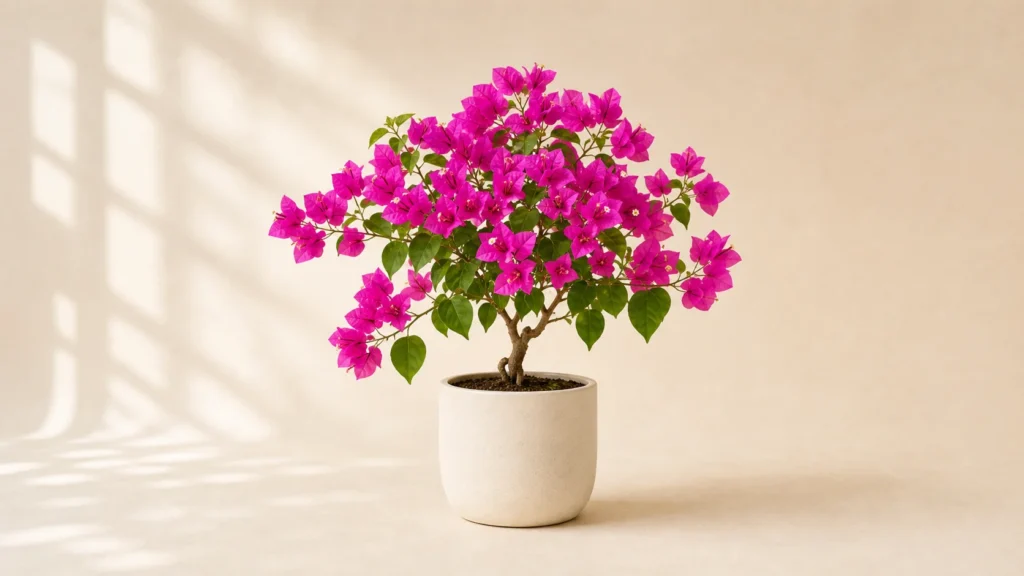
Bougainvillea
Bougainvillea spp.
A sun-hungry woody vine with vivid papery bracts, best grown as a patio container plant that overwinters at the brightest window available.
Watering frequency
Every 7-14 days
Ideal temperature
60-90°F / 16-32°C
Humidity
30-60%
Care difficulty
Medium
Air purifying
No/Not Known
Growth rate
Fast
Plant size
2-6 ft / 0.6-1.8 m in containers
Soil type
Fast-draining container mix
Fertilizer need
Lightly while growing.
Care summary
- Light: At least six hours of direct sun is the practical flowering target.
- Water: Water deeply after the upper mix dries; never leave the pot standing in water.
- Soil: Use a fast-draining mix and a container with drainage holes.
- Training: Tie stems to support; bougainvillea scrambles rather than clinging by itself.
- Pruning: Shape after a flowering flush and handle thorny stems with gloves.
Common problems
- No colorful bracts: Usually too little direct sun, excessive nitrogen, or repeated pruning of new growth.
- Sudden leaf drop: A major change in light, cold exposure, drought, or persistently wet roots.
- Yellow leaves and soft growth: Check for overwatering and poor drainage.
- Sparse, stretched stems: Indoor light is too weak.
- Aphids, scale, or spider mites: Inspect tender shoots and leaf undersides.
- Scratches: Long axillary thorns make placement and pruning important.
Plant care guide
About Bougainvillea
Bougainvillea is the familiar consumer and trade name for a group of thorny South American vines and scrambling shrubs in the four-o'clock family, Nyctaginaceae. A plant sold simply as “Bougainvillea” may be a species, a hybrid, or a named cultivar, so this page intentionally covers the container-grown group rather than pretending every retail plant has the same species identity. Kew's accepted genus record lists 17 accepted species and a native range across South America.
The spectacular pink, purple, red, orange, yellow, or white display is not made of petals. The true flowers are small and usually pale; the papery color comes from modified leaves called bracts that surround them. NC State Extension's Bougainvillea profile also describes the woody scrambling habit, bright bracts, full-sun requirement, and thorns carried near the leaf axils.
That identity explains both the appeal and the main limitation indoors. Bougainvillea is not a shade-tolerant flowering houseplant. It is a sun plant that can be kept in a container and brought inside when temperatures fall. In a warm climate it may stay outdoors year-round; elsewhere, the best routine is usually an outdoor growing season followed by a bright, cooler overwintering period.
Why You'll Like It
Few container plants produce such concentrated color for so long when conditions are right. A flowering bougainvillea can turn a sunny balcony, terrace, or doorway into a focal point without needing a large flower bed. It also responds well to training and pruning: you can guide it up a trellis, maintain it as a compact shrub, or develop a small standard or bonsai-like specimen over time.
It suits a grower who enjoys reading a plant's seasonal rhythm. New shoots, flowering flushes, brief pauses, and occasional leaf drop are visible responses to light, temperature, and water. Once you stop treating every dropped leaf as a crisis, the plant becomes easier to understand.
Choose it only if you can supply strong direct sun and manage thorny stems. If your room offers bright filtered light but little direct sun, a foliage plant such as Croton or colorful Caladium will generally provide color more reliably. If you want a flowering climber without the same thorn problem, compare Star Jasmine, while remembering that it also needs abundant light.
What Kind of Plant Is It?
Bougainvillea is a woody scrambler rather than a self-attaching vine. It leans, arches, and hooks its thorny stems through neighboring growth. A container plant therefore needs ties, a trellis, or regular pruning; it will not neatly attach itself to a wall like ivy.
Three traits govern indoor and container care:
- Color develops around new growth. Flowering follows active growth, so repeated hard pruning can remove the shoots that would carry the next display. Shape strategically rather than clipping every extension immediately.
- Established plants tolerate dry periods better than wet roots. Thick, woody growth survives a short dry spell, but a saturated container limits oxygen around fine roots and can trigger yellowing or collapse.
- Light controls the whole plant. Weak light produces long green stems and few bracts. Fertilizer cannot compensate for a dim room, and a “bloom booster” cannot create flowers without enough sun.
Common Bougainvillea Types
Retail labels are often incomplete, and modern plants may have hybrid ancestry. These species names are useful reference points rather than a visual identification key for an unlabeled pot:
- Bougainvillea glabra is a widely cultivated climbing species from eastern and southern Brazil. It is often associated with smoother leaves and comparatively manageable growth.
- Bougainvillea spectabilis is another widely grown Brazilian species, typically vigorous and strongly thorned. NC State describes it as a tropical perennial shrubby vine suited to containers and hot, dry conditions.
- Bougainvillea peruviana contributes to cultivated hybrids and comes from western South America.
- Named compact cultivars are the most practical choices for containers. Buy by a reliable nursery label when mature size or bract color matters; color alone cannot confirm the cultivar.
Keep the trade label with the plant. If House Plant Finder later adds cultivar pages, this section can link to them without turning a general Bougainvillea guide into a false species identification.
Where It Works Best
Outdoors, use the sunniest protected patio or balcony available. Full sun means roughly six or more hours of direct light, not simply a bright-looking outdoor corner. Heat reflected from a wall is usually easier for an established bougainvillea than prolonged wet soil, but a newly purchased plant still needs gradual acclimation before it sits in intense afternoon sun all day.
Indoors, place it directly at a large unobstructed south- or west-facing window in the Northern Hemisphere. Even there, winter light may be insufficient for flowering. A strong grow light can support active growth, but the fixture must be powerful and positioned appropriately; an ordinary room lamp will not help.
Keep thorny stems away from narrow walkways, children's play areas, and places where pets brush past. A stable trellis inside the pot is safer than letting long shoots snag curtains or furniture. Rotate the container only when necessary because sudden orientation and location changes can contribute to leaf drop.
How to Care for Bougainvillea
Light: Give at least six hours of direct sun when flowering is the goal. An indoor plant that makes leaves but no bracts is usually light-limited. Move outdoor plants into stronger sun gradually over one to two weeks so leaves formed indoors do not scorch.
Watering: Check the mix rather than following a fixed weekday. When the upper portion has dried and the pot feels lighter, water thoroughly until excess drains. Empty the saucer. Do not keep a newly rooted cutting as dry as an established woody plant, and do not let a small summer container desiccate repeatedly in extreme heat. During cool, slow winter growth, the same pot may take much longer to dry.
Soil and container: Use an airy, fast-draining container mix and unobstructed drainage holes. A modest amount of bark, pumice, or perlite can improve structure. Do not jump from a small pot to a huge one: the large volume stays wet longer and makes moisture harder to judge. Slight root restriction may simplify watering, but deliberate severe root binding is not required for flowering.
Humidity: Average household humidity is adequate. Bougainvillea does not need tropical-house humidity, and misting the foliage will not solve low light or dry potting mix. Good air movement matters more when the plant is crowded indoors for winter.
Temperature: Warm growing conditions support active growth, but protect the plant from frost. When bringing it inside, move before cold nights damage tender shoots. Keep it away from freezing glass and blasts from exterior doors. A cooler bright winter position may slow growth and reduce water demand.
Fertilizer: Feed lightly during active growth with a balanced or modestly lower-nitrogen fertilizer, following the product label. Excess nitrogen produces vigorous green stems at the expense of the display. Do not feed a cold, leafless, or root-stressed plant, and periodically water deeply enough to reduce fertilizer-salt buildup.
Pruning and training: Wear gloves and use clean pruners. Remove dead, crossing, or dangerously placed stems first. Shorten shoots after a flowering flush to encourage branching, but leave some active new growth for the next display. Use soft plant ties that do not cut into expanding woody stems.
A Practical Seasonal Rhythm
In spring, increase water only after stronger light and new growth make the pot dry faster. Resume light feeding and inspect ties before shoots lengthen. Move the plant outdoors after cold-night risk has passed, acclimating it first to wind and then to direct sun.
Summer is the main growth and flowering period in cool climates. Check small containers frequently during heat, but keep the wet-dry cycle intact. After a display fades, remove dead bracts and selectively shorten overlong shoots rather than shearing the whole plant every week.
In fall, inspect carefully for pests before moving indoors. A sudden reduction in light may cause leaf drop even when roots are healthy. During winter, match water to the much slower drying rate and do not keep feeding a plant that is barely growing. The objective is safe survival in strong light, not forcing a summer performance in December.
How to Propagate Bougainvillea
Stem cuttings are the practical home method. In warm active growth, take a healthy section that is firm but not heavily woody, remove leaves from the lower nodes, and place it in a clean, airy propagation mix. High humidity around the cutting can slow moisture loss, but the medium must not stay waterlogged. Bright filtered light is safer than harsh direct sun before roots form.
Rooting can be slow and inconsistent among cultivars. Judge progress by resistance to a gentle tug and the appearance of sustained new growth rather than promising a fixed number of days. Seed is not a dependable way to copy a named hybrid or cultivar.
When to Repot
Repot when water runs straight around a congested root mass, the mix has collapsed and no longer drains predictably, or the plant becomes unstable. Move up only one practical container size. Spring or early active growth gives damaged roots the best opportunity to recover.
Handle the root ball gently. Bougainvillea can respond to root disturbance by dropping leaves, so prepare the new pot first, keep the plant at its previous depth, and avoid combining major root work with a dramatic change in light.
Safety Around Pets and People
This page classifies Bougainvillea as not pet-safe because thorny stems create a clear physical injury risk and retail plants may not have precise species or treatment histories. Long thorns can scratch skin, eyes, paws, and mouths. Wear gloves, secure the plant, and keep pruned pieces off the floor.
Do not use the absence of a dedicated ASPCA species result as proof that chewing is safe. If a pet eats plant material or has mouth, eye, or gastrointestinal symptoms, remove access and contact a veterinarian or animal poison-control service with the plant label available. For homes with persistent plant-chewers, choose from the pet-safe houseplants guide instead of relying on placement alone.
Common Problems and Practical Fixes
- Green growth but no colored bracts: First measure direct sun. If light is adequate, review high-nitrogen feeding and whether frequent pruning is removing new flowering growth.
- Sudden leaf drop after moving indoors: A sharp reduction in light, cooler temperatures, and a changed drying rate often occur together. Stabilize the location, reduce watering to match slower use, and wait for new growth.
- Yellow leaves with wet mix: Improve drainage and allow more drying. Check the roots if stems soften or the soil smells sour.
- Crisp leaves and very dry mix: Rehydrate thoroughly, then monitor more often during heat. Do not compensate by leaving the pot permanently wet.
- Long, sparse shoots: The plant needs more direct sun. Pruning alone creates shorter sparse growth if the light problem remains.
- Aphids, scale, or spider mites: Inspect new shoots, stem joints, and leaf undersides. Isolate the plant, rinse manageable pests away, and use a labeled horticultural treatment if needed.
Frequently Asked Questions
Can Bougainvillea really live indoors?
It can overwinter or grow in an exceptionally sunny indoor position, but reliable flowering is much easier outdoors in full sun. Treat it as a patio plant with indoor winter protection rather than an ordinary low-light houseplant.
Why did it drop leaves as soon as I brought it home?
Transport and a sudden change in sun, temperature, and watering can trigger leaf drop. Check that roots are neither saturated nor bone-dry, then keep conditions stable. Healthy woody stems can produce new leaves after adjustment.
Does keeping it root-bound make it bloom?
A sensibly sized pot dries predictably and avoids excess wet mix, but extreme root binding is not a substitute for sun. Repot when the root system or degraded mix interferes with watering.
Should I prune before bringing it indoors?
Remove hazardous or unmanageable stems, but avoid unnecessary hard pruning if the plant has room. It may already face light and temperature stress during the move.
Is the colorful part a flower?
The paper-like color comes from bracts. The true flowers are the small tubular structures inside them.
Final Thought
Bougainvillea succeeds in a container when you treat it as the sun-loving woody vine it is. Give it direct sun, a pot that drains promptly, deliberate rather than constant pruning, and less water during cool slow periods. If those conditions are available, the brilliant bracts are a realistic reward; if the room is dim, choose a plant designed for filtered indoor light instead.