
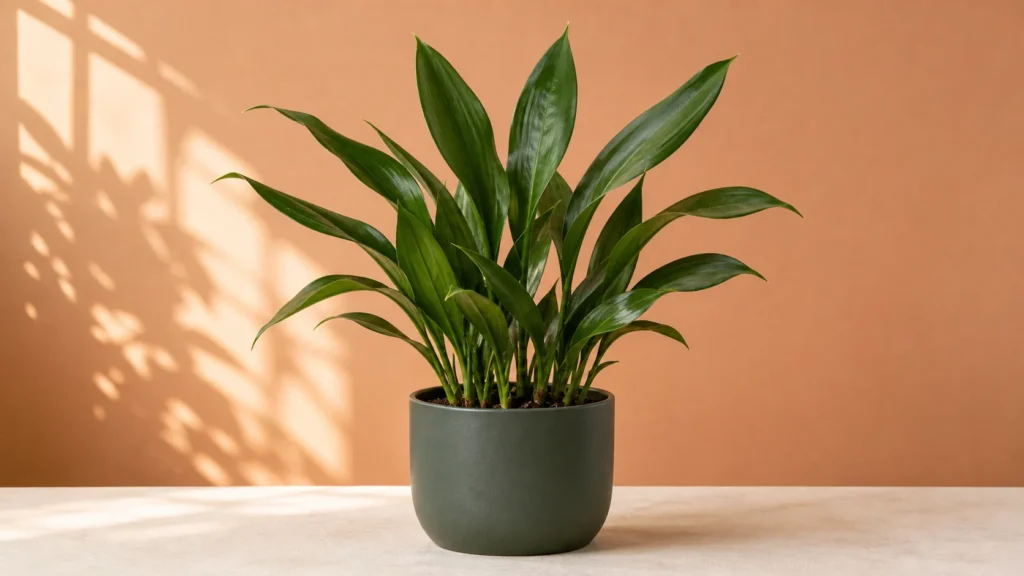
Cast Iron Plant
Aspidistra elatior
A slow-growing, shade-tolerant plant with upright leathery leaves, valued for handling ordinary rooms without demanding constant attention.
Watering frequency
Every 2-3 weeks
Ideal temperature
60-80°F / 16-27°C
Humidity
30-60%
Care difficulty
Easy
Air purifying
Yes
Growth rate
Slow
Plant size
1-3 ft / 0.3-0.9 m
Soil type
Well-draining potting mix
Fertilizer need
Two or three times, spring-summer.
Care summary
- Light: Low to bright indirect light; keep out of harsh direct sun.
- Water: Let a substantial portion of the mix dry, then soak and drain.
- Soil: Use an airy mix and a pot with unobstructed drainage.
- Growth: Slow growth is normal, especially in dimmer rooms.
- Safety: ASPCA lists Cast Iron Plant as non-toxic to cats and dogs.
Common problems
- Yellow leaves: Check wet soil, blocked drainage, cold stress, and natural aging.
- Brown tips or margins: Irregular watering, salt buildup, sun scorch, or root damage.
- Bleached patches: Too much direct sun.
- No visible growth: Often normal in low light or winter; inspect roots before changing pots.
- Split or bent leaves: Physical damage will not repair.
- Scale or spider mites: Inspect both leaf surfaces and the base of each petiole.
Plant care guide
About Cast Iron Plant
Cast Iron Plant is the established common name for Aspidistra elatior, a slow-growing evergreen perennial with broad, leathery leaves that rise individually from underground rhizomes. The name is not a promise that the plant survives every mistake; it describes an unusual ability to tolerate shade, dry household air, modest feeding, and occasional missed watering once established.
Kew Plants of the World Online accepts Aspidistra elatior and records it as native to southern Japan. NC State Extension's Cast Iron Plant profile describes the rhizomatous habit, upright clumps, deep-shade tolerance, slow growth, and preference for well-drained soil.
What looks like a stem is a long petiole supporting one leaf. New leaves emerge as tight spears from the soil, then unfurl and harden. Flowers, when they appear, sit close to the ground and are easy to miss. Indoors, the foliage is the entire point.
Why You'll Like It
Cast Iron Plant is useful where many popular houseplants gradually thin out: several feet from a window, in an entryway with indirect daylight, or in an office where direct sun never reaches the leaves. It maintains a clean upright silhouette without vining, climbing, or quickly outgrowing its corner.
Its slow pace reduces maintenance. There are no weekly runners to prune and no support pole to extend. A healthy plant may produce only a limited number of new leaves in a season, but each leaf can remain attractive for years if it avoids scorch and mechanical damage.
This is also a reassuring choice for pet-owning homes because ASPCA has a direct non-toxic listing for the species. If you want a similarly tolerant but more sculptural plant, compare ZZ Plant or Snake Plant; both are toxic if chewed. Spider Plant 'Bonnie' offers a pet-safe arching alternative but usually wants more light and more frequent watering.
What Kind of Plant Is It?
Cast Iron Plant is a rhizomatous perennial. A rhizome is an underground stem that stores energy and sends up leaves at spaced growing points. Over time, the plant expands into a wider clump rather than developing a trunk.
Four traits matter indoors:
- Shade tolerance reduces demand, not the need for light. In low light the plant uses water slowly and adds leaves infrequently. It still needs ambient daylight or a suitable grow light.
- Thick leaves resist moisture loss. Average household humidity is usually adequate, and regular misting is unnecessary.
- Rhizomes resent stagnant wet soil. Overwatering can damage the whole growing point below the surface before the foliage makes the problem obvious.
- Leaves do not repair. A crease, split, bleached patch, or brown margin remains until the leaf is removed. Prevention matters more than cosmetic treatments.
Popular Cast Iron Plant Cultivars
The plain dark-green species is the most tolerant choice for a dim room. Named cultivars add stripes, speckles, or pale tips and generally benefit from somewhat brighter indirect light. NC State records a broad cultivar range, including:
- 'Asahi' develops pale or frosted-looking tips as the leaf matures.
- 'Milky Way' is known for light speckling scattered across dark foliage.
- 'Variegata' carries longitudinal cream striping; this is a verified cultivar epithet, not a generic “variegated plant” database name.
- 'Hoshi-zora' and other spotted selections create a starry pattern.
- 'Lennon's Song' develops a distinctive lighter central stripe.
Buy patterned plants with a reliable label. Speckling can also come from pests, residue, or physical damage, so pattern alone is not a sound cultivar identification method.
Choosing a Plant and Reading Its Shape
Select a clump with firm upright leaves and at least one healthy growing point. A few old scars are less important than the condition of the rhizome and roots. Avoid a plant that rocks loosely in saturated mix, smells sour, or has several soft yellow leaves emerging from the same area.
Natural leaf posture varies. Some selections are nearly vertical; others arch as they lengthen. A broad mature leaf leaning outward is not necessarily “drooping.” A genuine problem usually includes loss of firmness, discoloration, a damaged petiole, or unhealthy roots.
Quarantine a new plant and inspect for scale, which can resemble a small brown bump attached to a leaf or petiole. Clean dust before deciding that pale speckles are pests. If buying a named cultivar, keep the label with the pot so its stable pattern is not confused later with nutrient damage or disease.
Where It Works Best
Use Cast Iron Plant in a low-to-medium indirect-light room where some daylight remains available for much of the day. A north-facing exposure, an interior position in a room with large windows, or a shaded east window can work. Brighter indirect light supports faster growth, but direct midday or afternoon sun can bleach the leaves.
It handles average household humidity and cooler rooms better than many tropical foliage plants, but avoid freezing glass and winter drafts. Outdoors in suitable climates, it is a shade plant, not a sun plant. Indoors, keep it clear of narrow traffic lanes because once a broad leaf is bent, it stays bent.
The plant is well suited to bedrooms and offices because it grows quietly and needs infrequent attention. It is not a plant for a truly windowless room unless a grow light supplies the missing energy. The low-light houseplants guide explains the difference between a low-light position and complete darkness.
How to Care for Cast Iron Plant
Light: Low to bright indirect light is acceptable. In a dimmer position, expect slower growth and longer drying times. Variegated cultivars need more light to maintain their pattern. Avoid abrupt exposure to direct sun, which can leave pale tan or brown patches.
Watering: Let a substantial portion of the mix dry before watering again, then soak the root ball and allow it to drain completely. Test below the surface with a finger, wooden skewer, or the weight of the pot. A calendar estimate of every two to three weeks may be a starting point, but season, pot size, soil, and light can shift the interval considerably.
Do not interpret resilience as a preference for chronic drought. Repeated severe drying can brown tips and stall new spears. The goal is a clear wet-to-partly-dry cycle, not permanent wetness or months of neglect.
Soil and container: Use a well-draining houseplant mix with added bark, perlite, or pumice if the base mix compacts easily. Drainage holes are essential. A wide, stable pot suits the spreading rhizome better than an excessively deep oversized container.
Humidity: Normal room humidity is usually sufficient. Very dry heated air can contribute to edge damage, but misting is not necessary. A humidifier can help a whole dry room; it should not be used to justify keeping roots wet.
Temperature: Aim for ordinary indoor temperatures around 60-80°F / 16-27°C. The plant tolerates cool conditions better than many aroids, but protect container roots from freezing and reduce watering when cool temperatures slow use.
Fertilizer: Feed lightly two or three times during active spring and summer growth with a diluted balanced fertilizer. Skip feeding in very low light, during winter slowdown, or when roots are unhealthy. Excess salts can burn margins on a plant that grows too slowly to use heavy feeding.
Cleaning and pruning: Wipe each leaf with a damp cloth and support it from below. Avoid leaf-shine products that leave residue. Remove a fully yellow or badly damaged leaf at soil level with clean pruners, taking care not to cut a nearby emerging spear.
University of Wisconsin Extension's houseplant guidance includes Cast Iron Plant among durable lower-light choices and explains how seasonal light and temperature changes affect indoor plants. That context supports the useful distinction between what the plant tolerates and the conditions that keep it looking its best.
Seasonal Adjustments
In spring and summer, brighter days may produce new spears and moderately faster drying. Resume light feeding only after growth begins. If moving the plant outdoors, start in deep shade; leaves made indoors can scorch even though the species is used as a shade-landscape plant.
In fall and winter, lower light and cooler temperatures slow water use. Check the pot less by habit and more by actual moisture. Keep the plant away from freezing drafts, pause fertilizer, and accept a quiet season. A stable leaf canopy with no new spear is a successful winter, not a failure that needs extra water.
How to Propagate Cast Iron Plant
Division is the reliable method. Leaf cuttings cannot reproduce the plant because a detached leaf lacks the rhizome growth point.
When an established clump has several healthy growth points, slide it from the pot and locate natural divisions in the rhizome. Separate with your hands or a clean knife so each section retains roots and multiple leaves when possible. Pot each division into a container only slightly larger than its root mass.
Keep divisions in stable indirect light and water carefully while damaged roots recover. A divided plant may pause before producing a new spear; do not respond to that normal delay with constant water or strong fertilizer.
When to Repot
Repot when rhizomes press firmly against the pot, roots disrupt drainage, water no longer penetrates evenly, or the mix has broken down. A crowded but healthy plant does not need annual repotting. Slow growth is normal and should not be the only reason for a larger pot.
Spring is a practical time because the plant can recover during active growth. Move up one size, preserve the original planting depth, and leave a little horizontal room for expansion. If the plant has become too large, division may be more useful than transferring the entire clump to a heavy oversized container.
Pet Safety
ASPCA lists Cast Iron Plant as non-toxic to dogs, cats, and horses. That direct species-level listing makes it one of the more confidently documented foliage choices for pet homes.
Even a non-toxic plant should not become a salad bar. Fibrous leaf material can cause stomach upset, and fertilizer or pesticide residue creates separate exposure. Confirm that the plant is genuinely Aspidistra elatior, discourage chewing, and contact a veterinarian if symptoms occur.
Common Problems and Practical Fixes
- Several yellow leaves with wet soil: Pause watering, verify drainage, and inspect roots and rhizomes if the decline continues.
- One old outer leaf yellows: This may be normal aging, especially if the rest of the plant is firm and new growth is healthy.
- Brown tips: Review severe dry-down, fertilizer salts, hard water residue, hot air, and root condition. The next leaf shows whether the correction worked.
- Bleached tan areas: Move away from direct sun. Damaged patches will remain.
- No new growth: Check season, light, and roots. If the plant is stable, patience is usually safer than repotting or feeding heavily.
- New spear stops or browns: Check for damaged roots, a dry root ball, cold, or water trapped in dense mix.
- Scale or mites: Inspect the leaf undersides and petiole bases. Isolate the plant, wipe or rinse manageable pests away, and follow a labeled indoor-plant treatment if necessary.
Frequently Asked Questions
Can Cast Iron Plant live in a room with no window?
Not without suitable artificial plant lighting. Low-light tolerance means it can use weak indirect daylight efficiently; it does not mean photosynthesis continues in darkness.
Why does it grow so slowly?
Slow growth is characteristic, especially in low light or winter. Confirm that roots are healthy and light is adequate before trying to force growth with fertilizer.
Should I mist the leaves?
No routine misting is needed. Wipe dust away and address whole-room humidity only if the air is consistently very dry.
Can I propagate it from one leaf?
No. A division needs part of the rhizome, roots, and a viable growth point.
Is it safer for pets than Snake Plant?
ASPCA lists Cast Iron Plant as non-toxic, while Snake Plant is listed as toxic. Any plant material can still upset the stomach when eaten.
Final Thought
Cast Iron Plant is dependable because it asks for less, not because it needs nothing. Give it indirect daylight, an airy pot that dries substantially between waterings, light seasonal feeding, and protection from direct sun. Accept its slow pace and it can hold a difficult corner for years with very little drama.