
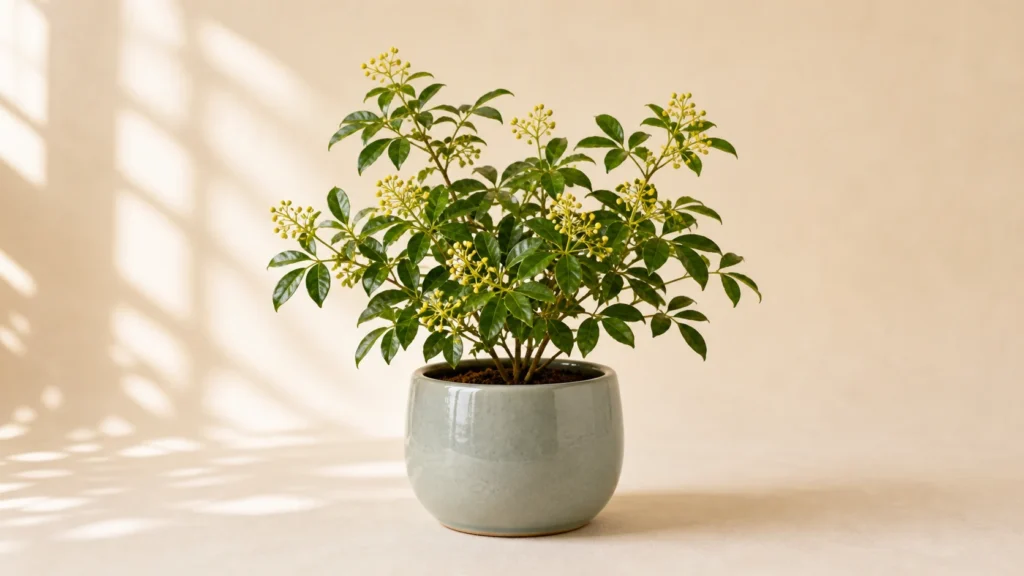
Chinese Perfume Plant
Aglaia odorata
A fragrant subtropical shrub with glossy leaves and tiny yellow flowers that needs bright light, warmth, and careful watering indoors.
Watering frequency
Every 7-10 days
Ideal temperature
65-85°F / 18-29°C
Humidity
50-70%
Care difficulty
Medium
Air purifying
No/Not Known
Growth rate
Moderate
Plant size
2-6 ft / 0.6-1.8 m
Soil type
Rich, well-draining mix
Fertilizer need
Every 4 weeks, spring-summer.
Care summary
- Light: Give very bright light with gentle direct sun where possible.
- Water: Water after the surface begins to dry, then drain completely.
- Soil: Use an airy, fertile mix in a pot with drainage holes.
- Shape: Prune after a growth or flowering flush to encourage branching.
- Safety: Pet-specific toxicity evidence is limited; keep it out of reach.
Common problems
- Yellow leaves: Check for wet soil, poor drainage, or abrupt watering changes.
- Leaf drop: Review cold drafts, relocation stress, light, and root moisture.
- Few flowers: Increase usable light and avoid heavy nitrogen feeding.
- Brown edges: Check prolonged dryness, heat, and salt buildup.
- Pests: Inspect stems and leaf undersides for scale, mites, or mealybugs.
Plant care guide
About Chinese Perfume Plant
Chinese Perfume Plant (Aglaia odorata) is a woody evergreen shrub grown for glossy compound leaves and clusters of tiny yellow flowers with a surprisingly noticeable fragrance. It is also sold as Chinese perfume tree, Chinese rice flower, or mock lemon. The flowers are not large or colorful in the way a hibiscus bloom is; their appeal is scent. This makes the plant a good fit for someone who enjoys fragrant plants but has enough light and space for a branching shrub rather than a compact tabletop plant.
Kew's accepted botanical record for Aglaia odorata places it in the mahogany family, Meliaceae, and records a native range from southern China through parts of tropical Southeast Asia. That background explains its preference for warmth and a long growing season. Indoors, it does not behave like a shade-tolerant forest-floor foliage plant. It needs strong usable light to grow densely and has the best chance of flowering near a bright window or in a sunroom.
The common name can create unrealistic expectations. A young plant may not bloom immediately, and fragrance intensity varies with plant maturity, light, temperature, and the number of flowers open at once. Buy it because you like the small-leaved, shrubby form as well as the possibility of fragrance. That way, the plant remains worthwhile even between flowering periods.
Why You'll Like It
Chinese Perfume Plant offers a combination that is unusual among houseplants: fine-textured foliage, a trainable woody framework, and scented flowers. Regular pruning can keep it as a compact bush, while a larger container and more time can produce a small indoor tree. Its small leaflets make the canopy look detailed rather than heavy, so a mature specimen can fill a bright corner without visually overwhelming it.
It also responds visibly to good care. Strong light encourages shorter spaces between leaves, pruning creates more branch tips, and stable moisture reduces stress-related leaf loss. For a grower who likes shaping plants and watching a shrub develop over several years, it can be more engaging than a plant that simply produces one new leaf at a time.
This is not the easiest choice for a dim apartment. A Star Jasmine may offer a different fragrant-plant experience, while a Croton provides colorful shrub-like foliage without being purchased primarily for flowers. Chinese Perfume Plant is best chosen when fragrance, bright light, and hands-on shaping are all part of the appeal.
What Kind of Plant Is It?
This species is a tropical to subtropical broadleaf evergreen. Its leaves are pinnately compound: what looks like a row of small leaves is one leaf made of several leaflets. New stems gradually become woody, and flowers form in small branching clusters from the leaf axils. Singapore's NParks profile describes the small yellow flowers, compound foliage, and the value of occasional pruning to encourage branching.
The woody habit changes how it should be managed indoors. One-sided window light can pull the whole canopy in one direction, so rotation matters. Bare old wood may not refill as quickly as a soft vine, so it is better to pinch and lightly prune while the plant is actively growing than to wait until it becomes extremely leggy. It can be moved outdoors for a warm season, but every transition in light must be gradual.
Flowers may be male or female on separate plants, and seed is therefore not a dependable home propagation route. Cuttings or air layering are more practical. A plant can still flower and provide fragrance without setting fruit.
Where It Works Best
Place Chinese Perfume Plant close to the brightest window available. An east-facing window with morning sun can work well. A south- or west-facing window may provide stronger light, but use a sheer curtain or increase exposure gradually if the plant came from a shaded nursery. The goal is abundant light without suddenly scorching leaves that are not acclimated to direct sun.
A bright sunroom, enclosed balcony, or warm patio can be excellent during the growing season. Bring the plant indoors before nights become cool. Avoid locating it next to an exterior door, an air-conditioning vent, or a heater that creates sharp temperature and moisture swings. The Missouri Botanical Garden's cultivation guidance recommends bright indoor placement, well-drained soil, moderate but consistent watering, and protection from cold.
Give the canopy room for air movement. Pressing a dense shrub tightly against glass can expose one side to heat while keeping the interior stagnant. Leave enough room to inspect stems and leaf undersides, because scale insects are much easier to control when found early.
How to Care for Chinese Perfume Plant
Light
Very bright indirect light is the most dependable indoor target, with some gentle direct sun where the plant is acclimated. Light is measured by what reaches the leaves, not by how bright a room looks to human eyes. A position several feet from a window may be too dim even in a pleasant room.
Signs of insufficient light include stretched new growth, large gaps between leaves, a thinning lower canopy, and little or no flowering. Pruning cannot permanently correct legginess if the plant returns to the same dim location. Move it closer to a window or use a suitable grow light before reshaping it.
Pale or scorched patches that appear soon after a move may indicate too much direct sun too quickly. Increase sun exposure over a week or two, starting with morning light. Established outdoor plants can accept more sun than leaves produced indoors behind glass.
Watering
Water when the surface layer has begun to dry but before the entire root ball becomes bone dry. Insert a finger or wooden skewer into the mix, and check the pot's weight. Then water thoroughly until excess drains from the holes. Empty the saucer or decorative cachepot so the roots are not left standing in water.
The frontmatter interval of seven to ten days is only a starting point. A small terracotta pot in strong summer light may dry faster; a large glazed pot in winter may take much longer. Temperature, root density, potting mix, airflow, and plant size all change the interval. The useful routine is check, water deeply when needed, and drain—not a fixed weekday splash.
Both prolonged saturation and severe repeated drought can cause yellowing or leaf drop. If symptoms appear, inspect the soil before adding more water. Wet soil plus yellowing suggests a drainage or root problem. Dry soil pulling away from the pot, crisp leaves, and a very light container point toward underwatering.
Soil and Container
Use a fertile but open mix. A quality indoor potting mix amended with coarse perlite, fine bark, or another structural material is more reliable than dense garden soil. The mix should hold some moisture but allow water and air to move through it. A drainage hole is essential.
Choose a pot only slightly wider than the root ball. A very oversized container surrounds the roots with soil that may stay wet for too long. Terracotta can help a chronic over-waterer, but it also dries quickly in heat. Plastic or glazed ceramic retains moisture longer. Match the container to the room and to how often you can check the plant.
Humidity and Temperature
Normal household humidity can be adequate, but 50–70 percent relative humidity supports cleaner foliage when light and airflow are also good. Humidity does not compensate for dim conditions or wet roots. A humidifier is more effective than occasional misting, which changes humidity only briefly and may leave foliage wet.
Aim for 65–85°F (18–29°C), with protection from cold nights. Growth slows as temperatures fall. If the plant is cool and receiving weak winter light, reduce watering and pause fertilizer because it will use resources more slowly.
Fertilizer
During active spring and summer growth, apply a balanced houseplant fertilizer at a diluted label rate about every four weeks. If the mix already contains slow-release fertilizer, wait before adding more. Excess fertilizer does not force flowers and can damage roots or leave salts in the soil.
If a plant is not growing, first check light, temperature, moisture, pests, and root condition. Fertilizer is not a substitute for sufficient light. Flush the pot occasionally with plain water if mineral crust accumulates, provided drainage is good.
Pruning and Shaping
Pinch soft growing tips to encourage branching. For larger corrections, prune just above a healthy leaf or outward-facing branch during active growth. Removing a modest amount after a growth or flowering flush is less stressful than stripping a weak plant all at once.
Rotate the pot a quarter turn every week or two so the canopy develops evenly. Remove dead twigs, crossing branches, and dense interior growth that prevents inspection. Clean cutting tools before and after use.
How to Propagate Chinese Perfume Plant
Stem cuttings are the most accessible method, although rooting can be slower and less predictable than with pothos. Take a healthy non-flowering tip cutting with several nodes. Remove foliage from the lowest part, place the cut end in a clean, airy propagation medium, and keep it warm with bright filtered light. The medium should stay lightly moist, never waterlogged.
High humidity around the cutting can reduce moisture loss, but open a cover regularly for airflow and remove any decaying material. Resistance to a gentle tug and visible new growth are better signs of rooting than a promised number of days. Do not pot the cutting into a large container before it has developed a working root system.
Air layering is useful for a mature woody stem. Wound or expose a small section according to a standard air-layering method, wrap it with moist sphagnum, and enclose it while roots form. Once a visible root mass develops, cut below the layer and pot it separately. This method allows the stem to remain attached to the parent while producing roots.
When to Repot
Repot when roots densely circle the container, water runs through without wetting the root ball, the mix has collapsed and drains poorly, or the plant becomes unstable. Do not repot simply because flowering pauses. A small increase in pot diameter is enough.
Spring or early summer is usually easiest because warmth and light support recovery. Keep the plant at the same planting depth, remove only clearly dead or rotten roots, and avoid combining severe root work with heavy canopy pruning unless necessary. After repotting, return it to stable bright light and wait for renewed growth before fertilizing heavily.
Toxicity and Pet Safety
Reliable pet-specific toxicity guidance for Aglaia odorata is limited compared with common plants listed by major veterinary poison-control databases. That absence should not be interpreted as proof that the plant is safe. House Plant Finder therefore keeps the conservative Not pet safe classification until stronger species-specific evidence is available.
Keep leaves, flowers, prunings, and potting material away from pets and young children. If chewing or ingestion occurs, contact a veterinarian or the appropriate poison-control service and provide the botanical name Aglaia odorata. Do not induce vomiting or rely on a home remedy unless a professional instructs you to do so. Breathing or swallowing difficulty requires urgent help.
Common Problems and Practical Fixes
Yellow leaves
Check the soil first. If it is wet deep in the pot, stop watering, empty the cachepot, and improve warmth, light, and drainage. If it is extremely dry, rehydrate thoroughly rather than giving a small sip. A few older yellow leaves can be normal; widespread yellowing calls for a root and environment check.
Sudden leaf drop
Recent relocation, cold air, a sharp light change, drought, or saturated roots can all cause leaf loss. Review what changed during the previous one or two weeks. Stabilize the plant rather than changing several variables every day.
Leggy growth or few flowers
The most likely limitation indoors is usable light. Move the plant closer to a bright window, acclimate it to some sun, or add a grow light. Once new growth is stronger, prune stretched tips to create a fuller framework. Avoid feeding heavily in low light.
Brown edges
Check whether the root ball is drying completely, the plant is receiving hot glass-amplified sun, or fertilizer salts have accumulated. Humidity may contribute, but it is not the only cause. Correct moisture and root conditions before purchasing a humidifier.
Scale, mites, or mealybugs
Inspect leaf undersides, branch junctions, and stems. Isolate an affected plant. Remove accessible insects, wash foliage when practical, and use a treatment labeled for the pest and indoor plants. Repeat inspection because eggs or hidden insects may remain.
Frequently Asked Questions
Why is my Chinese Perfume Plant not flowering?
Insufficient light, immaturity, recent pruning, cool conditions, or general stress may be involved. Prioritize strong light and stable growth. Do not try to force flowers with excessive fertilizer.
Can it live in low light?
It may persist for a time, but low light usually produces sparse growth and reduces flowering. This is a bright-window plant, not a dependable low-light shrub.
Can I grow it outdoors in summer?
Yes, when nights remain warm. Acclimate it gradually to stronger sun, keep checking moisture, and inspect for pests before bringing it back indoors.
Should I mist it every day?
No. Misting is not a substitute for stable room humidity, correct watering, or airflow. Use a humidifier if the room is persistently dry and the plant shows a genuine need.
How large will it become indoors?
Container size, pruning, light, and time determine the result. Regular pruning can keep it around 2–6 feet, while an unpruned plant in a bright conservatory can become larger.
Final Thought
Chinese Perfume Plant rewards a bright, warm position and an observant grower. Let the surface begin to dry, drain the pot thoroughly, prune for branching, and treat flowers as a bonus produced by a healthy shrub. If your home cannot offer strong light, choose a more shade-tolerant foliage plant; if it can, this understated species can provide both a refined canopy and memorable fragrance.