
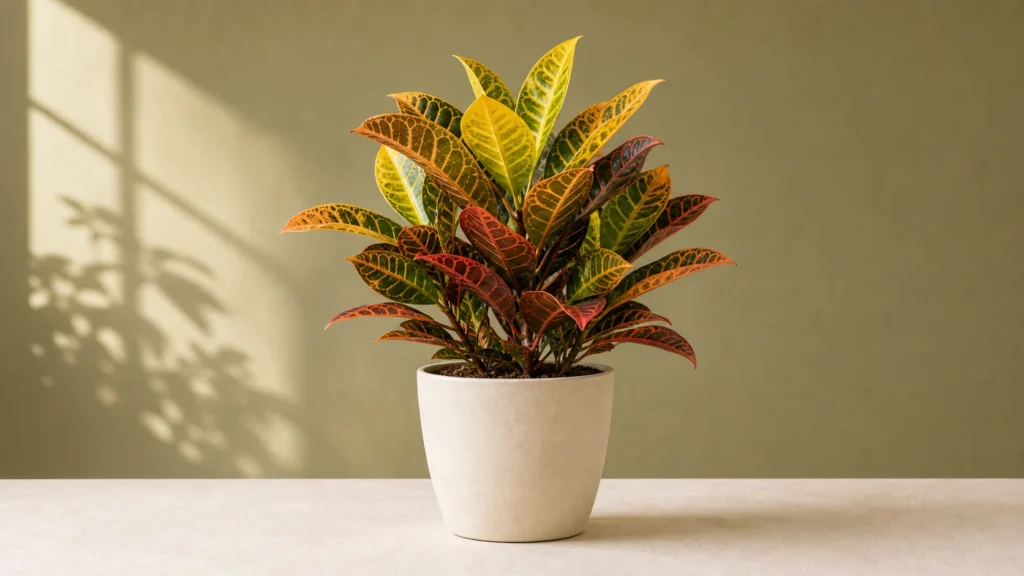
Croton
Codiaeum variegatum
A colorful tropical shrub whose thick patterned leaves stay brightest with strong light, steady warmth, and consistent care.
Watering frequency
Every 5-10 days
Ideal temperature
65-85°F / 18-29°C
Humidity
40-70%
Care difficulty
Medium
Air purifying
No/Not Known
Growth rate
Moderate
Plant size
2-6 ft / 0.6-1.8 m
Soil type
Rich, well-draining mix
Fertilizer need
Monthly, spring-summer.
Care summary
- Light: Provide very bright indirect light and acclimated gentle sun.
- Water: Water when the surface dries, then drain thoroughly.
- Stability: Avoid cold drafts and repeated location changes.
- Humidity: Moderate humidity supports foliage but cannot correct wet roots.
- Safety: Sap and plant material can irritate; keep away from pets and children.
Common problems
- Leaf drop: Check relocation stress, cold, low light, pests, and soil moisture.
- Faded color: Increase usable light gradually.
- Yellow leaves: Inspect for saturated soil and root damage.
- Brown edges: Review drought, salt buildup, heat, and dry air.
- Pests: Inspect for mites, scale, mealybugs, and thrips.
Plant care guide
About Croton
Croton (Codiaeum variegatum) is a tropical evergreen shrub grown for thick, leathery leaves patterned in green, yellow, orange, pink, and red. Some cultivars have broad oak-like leaves; others are narrow, twisted, curled, or interrupted along the blade. That variety explains why two plants sold simply as “Croton” may look dramatically different.
The name Croton is also a botanical genus containing other species, but the familiar houseplant belongs to Codiaeum. NC State Extension's Codiaeum variegatum profile gives the accepted houseplant identity and describes its colorful cultivars and irritating milky sap. Keep Croton as the consumer-facing title while storing the botanical name separately.
Croton's reputation for sudden leaf drop is not entirely undeserved. It reacts to cold, relocation, low light, watering extremes, and pests. That does not make it impossible to grow; it means stability matters. A healthy plant in a genuinely bright position is much easier than one moved repeatedly around a dim room.
Why You'll Like It
Few foliage plants produce such warm, multicolored leaves. One established Croton can supply the visual role normally filled by several flowering plants, yet the leaves remain decorative for months. Its upright woody form also suits a bright floor position where a trailing plant would not.
Croton is a useful choice for someone willing to reserve prime window space. If that light is unavailable, Coleus can provide fast seasonal color, while Chinese Evergreen tolerates lower indoor light with a quieter palette. Caladium offers spectacular thin leaves but has a tuberous, often dormant life cycle. These are alternatives, not identical-care substitutes.
What Kind of Plant Is It?
Croton is a branching shrub in the Euphorbiaceae family. Leaves emerge greener and often gain stronger yellow, orange, or red pigments as they mature in sufficient light. Exact color is genetic as well as environmental: light can help a cultivar express its pattern, but cannot turn one cultivar into another.
Stems produce white latex when cut. Wear gloves, keep sap away from eyes and mouth, and clean tools after pruning. The plant can become a large landscape shrub in tropical climates; a container restricts its size, and pruning can maintain a manageable indoor framework.
Popular Croton Varieties
- 'Petra' usually has broad oval leaves with colorful veins and margins. It is one of the most widely sold forms.
- 'Mammy' has narrow, curled leaves and a compact, dense appearance.
- 'Gold Dust' carries small yellow spots over green foliage, creating a lighter effect than red-dominant cultivars.
- 'Zanzibar' produces long, very narrow leaves in mixed colors and reads almost grass-like from a distance.
- 'Oakleaf' is named for lobed foliage resembling an oak leaf.
Use the verified cultivar name when the nursery supplies one. “Red Croton” or “variegated Croton” is a description, not necessarily a cultivar identity. Different cultivars vary in mature dimensions and how much sun they accept, but all need substantially more indoor light than a low-light foliage plant.
Where It Works Best
Place Croton immediately beside a bright east, south, or west window. Gentle direct sun often improves color, but acclimate the plant gradually. Leaves produced under greenhouse shade can burn if suddenly pressed against hot afternoon glass.
A warm sunroom or protected summer patio can work well. Move outdoors only after nights are warm, introduce sun in stages, and check moisture frequently. Before returning indoors, inspect for pests. Croton dislikes cold drafts, air-conditioning blasts, and repeated moves, so choose one stable winter position.
How to Care for Croton
Light
Very bright indirect light with some acclimated sun is the practical goal. Fading color, widely spaced leaves, and weak new growth often indicate insufficient light. Move closer to a window or add a suitable grow light. Do not compensate with fertilizer.
Bleached tan patches on the window-facing side after relocation suggest sun scorch. Increase exposure gradually. Older damaged tissue will not recover; judge the correction by healthy new leaves.
Watering
Water when the surface layer begins to dry, then soak the mix evenly and allow excess to escape. Do not leave the pot in a water-filled cachepot. Croton prefers consistent moisture but not constant saturation.
Five to ten days is only a starting estimate. Pot size, roots, light, temperature, season, and mix determine the real interval. A winter plant may need much longer; a root-filled summer pot may dry faster. Use soil depth and pot weight rather than a calendar.
Repeated severe drought can cause leaf drop, but watering wet soil again can damage roots and produce the same symptom. Always check before acting.
Soil and Container
Use a fertile, airy potting mix that drains while retaining modest moisture. Indoor potting mix amended with perlite and fine bark is suitable. The container must have drainage holes and should be only slightly larger than the root ball.
Dense, decomposed mix can remain wet even when the surface appears dry. If drainage slows, the soil smells sour, or roots are dark and soft, repot into fresh mix after removing clearly dead tissue.
Humidity and Temperature
Croton prefers warm, moderately humid conditions. Aim for 65–85°F (18–29°C) and avoid temperatures below the comfortable household range. Humidity of 40–70 percent can support cleaner leaf edges, but wet roots, salts, or drought must also be checked when browning appears.
A humidifier provides steadier humidity than misting. Maintain airflow and keep foliage from touching cold glass.
Fertilizer
Feed monthly at a diluted label rate during active spring and summer growth. Reduce or pause during slow winter growth. Fresh commercial mix may already contain fertilizer. Excess feeding can burn roots and will not restore color lost to insufficient light.
Cleaning, Pruning, and Shaping
Wipe broad leaves with a damp cloth so dust does not block light or hide pests. Avoid oily leaf-shine products. Rotate the plant to balance growth.
Prune in active growth just above a node to encourage branching. Wear gloves because cut stems release latex. Do not remove most of the canopy from a stressed plant. Healthy tip cuttings can be used for propagation.
How to Propagate Croton
Stem cuttings are the practical home method. Take a healthy tip with several leaves and nodes, protect yourself from sap, and let excess latex stop flowing. Insert the lower node into a clean, lightly moist, airy propagation mix. Provide warmth, bright filtered light, and higher humidity with regular ventilation.
Large leaves can be reduced modestly to limit moisture loss, but retain enough foliage for photosynthesis. Rooting is slower and less dependable than Coleus or pothos, so make more than one cutting without stripping the parent plant. New growth and gentle resistance are better evidence of roots than a rigid timeline.
A detached leaf may remain attractive or form roots, but it cannot reliably make a complete new Croton without stem tissue containing a viable node.
When to Repot
Repot when roots tightly circle the pot, emerge from drainage holes, the mix breaks down, or watering becomes unmanageable. Move up one modest pot size in spring or early summer when possible. Keep the original planting depth and avoid heavy fertilizer until growth resumes.
Do not repot solely because the plant drops leaves after purchase. First stabilize light, warmth, and moisture; unnecessary root disturbance can add another stress.
Seasonal Care and Bringing Croton Home
A newly purchased Croton has often traveled from a warm, humid greenhouse through a store and then into a home. Some leaf loss during that transition is possible. Before buying, inspect the leaf undersides, stems, and growing tips for webbing, scale bumps, sticky residue, or distorted new leaves. Choose a plant with firm stems and a root ball that is moist but not sour or waterlogged.
At home, quarantine it from other plants for a few weeks and place it directly in the bright location you intend to use. Do not immediately repot, fertilize, prune heavily, and move it outdoors at the same time. One controlled change is easier for both plant and grower to evaluate.
In spring and summer, stronger light and warmth increase water use and support pruning or propagation. Check more often without automatically watering more often. In fall, inspect outdoor plants carefully before they return inside. Shorter winter days slow growth, so extend dry-down and reduce fertilizer while keeping the plant warm. A grow light can prevent a dramatic seasonal loss of usable light.
If a stressed plant has dropped many leaves but retains firm green stems, keep care steady. Scratch a tiny inconspicuous area of bark only if necessary to confirm living green tissue. New buds may emerge when roots recover and light improves. Avoid cutting the entire plant back until you know which stems remain alive.
Toxicity and Pet Safety
Croton is not pet-safe. Its sap and plant material can irritate the mouth, digestive tract, eyes, and skin. NC State Extension identifies low-severity poison characteristics and contact-dermatitis potential. Keep the plant, fallen leaves, and pruning debris away from pets and children.
If a pet chews it, contact a veterinarian or animal poison-control service and provide Codiaeum variegatum. For human exposure, rinse sap from skin or eyes as directed by an appropriate poison-control or medical professional. Breathing or swallowing difficulty requires urgent help. Do not use home remedies that could delay care.
Common Problems and Practical Fixes
Sudden leaf drop
Check recent changes: a trip home from the store, colder nights, a new room, drought, saturated soil, or pest treatment. Inspect soil and leaf undersides. Stabilize conditions and avoid moving the plant again. A sound stem may produce new growth once the cause is corrected.
Leaves are turning green
Move the plant toward stronger light gradually. Confirm that new green leaves are not simply the normal color of the cultivar. Color recovery appears in new growth; old leaves may not change dramatically.
Yellow leaves and wet soil
Stop watering, empty standing water, and check drainage. If symptoms continue, inspect roots. Remove only rotten tissue and repot into fresh airy mix. Improve light and warmth without placing a weak plant in sudden harsh sun.
Brown tips or margins
Possible causes include prolonged dryness, hot sun, low humidity, cold damage, or fertilizer and water salts. Review the whole environment instead of assuming humidity alone. Flush salts when drainage and roots are healthy.
Spider mites, scale, mealybugs, or thrips
Isolate the plant. Identify the pest, clean accessible foliage, remove heavily affected material, and use a product labeled for indoor plants and that pest. Repeat inspection because dense leaves and veins provide hiding places.
Frequently Asked Questions
Can Croton grow in low light?
It may survive temporarily, but growth and color usually decline. Croton should be treated as a high-light houseplant.
Why did it drop leaves after I bought it?
Transport and a sudden change in light, temperature, and humidity can trigger stress. Check moisture, give it a warm bright position, and allow it to settle.
Can I put it in direct sun?
Acclimated plants can accept some sun, but a greenhouse-grown or indoor plant can burn after a sudden change. Increase exposure gradually.
Will bare stems grow leaves again?
Healthy nodes can produce shoots, especially in warmth and strong light. Scratch only a tiny area if necessary to check for green living tissue and avoid repeated cutting.
Should I shower the leaves?
An occasional lukewarm rinse can remove dust and some pests, provided the pot drains freely and foliage dries with good airflow. It does not replace pest treatment or correct root problems.
Is Croton easy to care for?
It is manageable when bright light and stable warmth are available. In a cold or dim home, it is more demanding than genuinely shade-tolerant plants.
Final Thought
Croton's color comes with a clear bargain: give it prime light, warm stable conditions, careful watering, and regular pest checks. Resist reacting to every fallen leaf with more water or another move. Once the environment is steady, this tropical shrub can hold a bold canopy that few other houseplants match.