
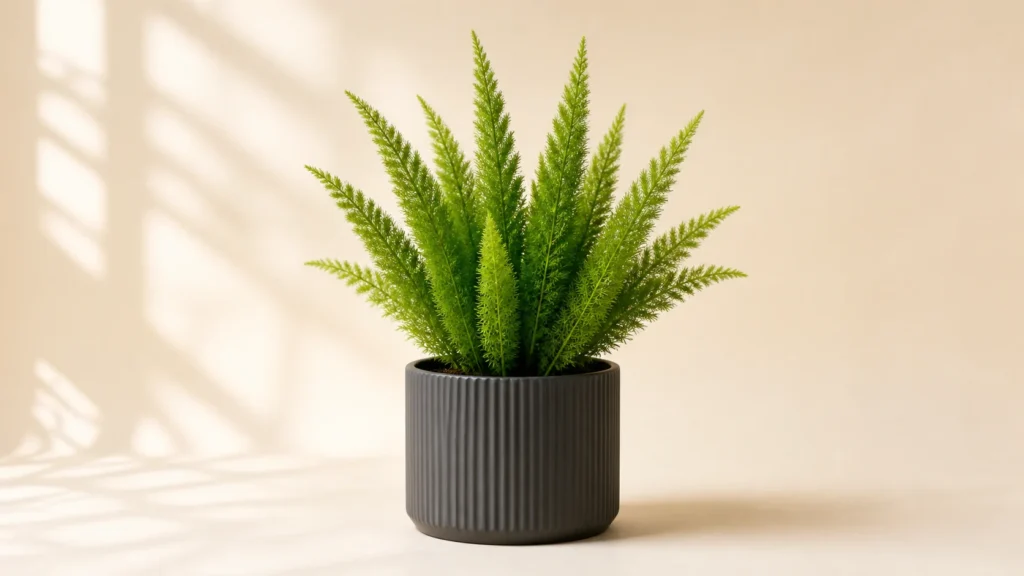
Foxtail Fern
Asparagus densiflorus 'Myersii'
A sculptural asparagus relative with dense bottlebrush plumes that prefers bright filtered light and moist but well-drained soil.
Watering frequency
Every 5-10 days
Ideal temperature
60-80°F / 16-27°C
Humidity
40-70%
Care difficulty
Easy
Air purifying
No/Not Known
Growth rate
Moderate
Plant size
1-3 ft / 0.3-0.9 m
Soil type
Moist, well-draining mix
Fertilizer need
Every 6-8 weeks, spring-summer.
Care summary
- Light: Give bright indirect light or gentle acclimated sun.
- Water: Water as the surface dries; never leave roots standing in water.
- Roots: Expect fleshy storage roots and repot only when genuinely crowded.
- Grooming: Remove entire brown plumes at the base rather than trimming every tip.
- Safety: Sap and berries can cause problems; keep away from pets and children.
Common problems
- Yellow plumes: Check saturated soil, poor drainage, and insufficient light.
- Brown tips: Review drought, salts, heat, and very dry air.
- Sparse growth: Increase usable light and assess crowded or damaged roots.
- Root rot: Remove soft tissue and replace waterlogged mix.
- Pests: Inspect fine foliage for spider mites and scale.
Plant care guide
About Foxtail Fern
Foxtail Fern is the established common name for Asparagus densiflorus 'Myersii', a compact plant with upright to arching, densely covered stems resembling green bottlebrushes or animal tails. Despite the name, it is not a true fern. It belongs to the asparagus family and grows from a crown with fleshy storage roots.
The Royal Horticultural Society's accepted cultivar profile identifies 'Myersii' as a compact tuberous evergreen perennial and lists foxtail fern as a common name. The named cultivar matters: other asparagus ferns have flatter, trailing, or more open growth and should not automatically be labeled Foxtail Fern.
Its soft appearance is deceptive. The fine green structures are cladodes—modified stem tissue that performs photosynthesis—while the true leaves are reduced scales. Mature stems can be stiff, and hidden small spines may scratch. Wear gloves during division and major grooming.
Why You'll Like It
Foxtail Fern provides texture that broad-leaved houseplants cannot. Each plume has a clean tapered outline, and a mature clump sends up new spears from the center, gradually filling a container. It works as a bright indoor accent, a seasonal patio plant, or an outdoor perennial in frost-free climates.
It also tolerates an occasional short dry period better than many true ferns because its fleshy roots store water. That does not mean it wants cactus treatment. The best growth comes from a regular wet-to-partly-dry rhythm in a draining mix.
For a true fern with nest-shaped fronds, compare Bird's-nest Fern. Boston Fern creates a softer arching basket but generally demands more consistent atmospheric moisture. Foxtail Fern is the more sculptural asparagus relative.
What Kind of Plant Is It?
The plant grows as a clump. New shoots emerge from the crown and expand into individual plumes; an old brown plume cannot turn green again. The underground system includes many pale, swollen storage roots. These are normal and should not be mistaken for disease or cut away merely because they look like small tubers.
Small white flowers may appear on mature plants, followed by red berries. Flowering is less common indoors. Berries increase the safety concern and should be kept away from pets and children.
University of Florida IFAS guidance describes the 'Myersii' cultivar, partial-shade performance, moderate drought tolerance, need for well-drained soil, and low-level toxicity and dermatitis concerns.
Foxtail Fern and Similar Asparagus Plants
- Foxtail Fern, A. densiflorus 'Myersii', has distinct upright, tapered plumes.
- Sprengeri Asparagus Fern has longer, loose, arching stems and is commonly used in baskets.
- Plumosa or Lace Fern usually refers to Asparagus setaceus, with very fine, flat, triangular sprays.
- Ming Asparagus Fern has woody zigzagging stems and tufted clusters.
These relatives share a misleading “fern” label but are not the same cultivar. Their mature shape and placement differ, and pet-safety claims should be matched to the correct plant rather than generalized from a true fern.
Where It Works Best
Indoors, place Foxtail Fern immediately near a bright east, south, or west window with filtered light. Gentle morning sun can keep plumes dense. Acclimate gradually because a plant grown under shade cloth can scorch in sudden hot sun.
A bright sunroom, enclosed balcony, or protected patio is suitable during warm weather. Outdoor pots dry faster due to wind, so check them more often. Bring the plant inside before frost and quarantine it while inspecting fine foliage for mites.
Give the clump horizontal space. New spears rise from the crown and can bend against walls or furniture. Avoid high-traffic spots where plumes brush skin or are repeatedly crushed.
How to Care for Foxtail Fern
Light
Bright indirect light or filtered partial sun supports full green plumes. Deep shade produces thinner, more open growth. Harsh midday sun can yellow or bleach the most exposed side, especially after an abrupt move.
Rotate indoor pots so shoots develop evenly. If new plumes lean, first improve the position rather than staking every stem. A grow light can supplement weak winter daylight.
Watering
Water when the surface layer starts to dry, then thoroughly wet the root ball and let excess drain. Its storage roots provide resilience, but repeated complete drought leads to yellowing, needle-like shedding, and brown tips.
Five to ten days is only a warm-season estimate. A root-filled terracotta pot outdoors may need water sooner; a cool winter plant may take much longer. Check the mix and pot weight.
Do not keep it constantly soggy. Storage roots and crown tissue can rot in oxygen-poor mix. Wilting or yellowing in wet soil is not a request for more water.
Soil and Container
Use a moisture-retentive but airy indoor mix amended with perlite, pumice, or fine bark. Drainage holes are essential. A slightly deeper pot can accommodate the root system, but avoid a large jump in volume.
The fleshy roots can distort a thin nursery pot when crowded. Repot before the container cracks, but do not remove healthy storage roots just to make the plant fit. Choose a modestly larger pot or divide the clump.
Humidity and Temperature
Average room humidity can work, while 40–70 percent may reduce crisping in heated spaces. Brown tips also come from drought, mineral salts, root stress, or excessive sun. Humidity does not correct wet soil.
Keep indoor temperatures around 60–80°F (16–27°C). Avoid frost and cold drafts. Cooler winter conditions slow growth and water use, requiring less frequent watering and little fertilizer.
Fertilizer
Feed lightly every six to eight weeks from spring through early fall, while new fronds are forming, following label directions; reduce or pause in winter when growth slows. Fresh potting mix may already contain nutrients. Excess fertilizer can leave salts and brown tips, so do not feed a dry or root-damaged plant.
Grooming and Pruning
When a plume is mostly yellow or brown, cut the entire stem near the base with clean pruners. Trimming hundreds of individual tips creates a clipped appearance and cannot restore damaged tissue. Remove debris from the crown so pests and rot are easier to see.
Do not cut emerging pale-green spears; they deepen in color as they expand. Wear gloves because mature stems and crown material may scratch or irritate.
How to Propagate Foxtail Fern
Division is the most reliable home method. Water the plant the previous day, remove it from the pot, and identify natural crown sections with both shoots and healthy roots. Use a clean sturdy knife or saw if the root mass is dense. Each division needs viable crown tissue; detached storage roots alone will not create a plant.
Pot divisions into correctly sized containers at the original depth. Keep the mix lightly moist while roots reestablish and protect from harsh sun. Temporary slowing or the loss of an older plume is possible after major division.
Seed propagation is possible from ripe berries, but it is slower and introduces handling and safety concerns. Wear gloves, keep fruit away from children and pets, and do not assume seedlings will preserve every cultivar characteristic.
When to Repot
Repot when roots deform the container, water runs through a compacted mass without wetting it evenly, the crown has filled the surface, or the mix no longer drains. Spring is convenient because new growth can support recovery.
Move up one size for a larger plant or divide for multiple smaller plants. Preserve the fleshy roots, keep the crown level, and wait for resumed growth before fertilizing heavily.
Seasonal Care
In spring and summer, new plumes emerge more often and the plant uses water faster. This is the best time for division and grooming. A sheltered outdoor stay can strengthen growth, but acclimate to light and inspect before returning indoors.
In winter, move it to the brightest available position, protect from cold glass, and extend the dry-down interval. Normal slowing is not a reason to fertilize more. Mites become more likely in warm, dry indoor air, so inspect the fine foliage with a bright light.
Buying and Acclimating a Foxtail Fern
Choose a plant with firm upright plumes and several healthy shoots emerging from an intact crown. Look deep inside the clump for mites, scale, dead debris, or soft dark tissue. A few old brown stems are manageable, but widespread yellowing with saturated soil suggests a root problem. Check that the nursery pot has drainage and is not already splitting under root pressure.
At home, quarantine the plant from the rest of your collection and place it in the bright location you intend to use. Learn how quickly the existing mix dries before repotting. Transport can bend plumes, and a sudden change from greenhouse shade to sun can scorch them, so acclimate over several days.
If the plant arrives severely root-bound but otherwise healthy, wait until it has adjusted before dividing unless the pot is failing. Major division, a new light exposure, and a change in watering at the same time make it difficult to tell which factor caused stress. Photographing the crown when it arrives gives you a useful comparison as new plumes emerge.
Toxicity and Pet Safety
Foxtail Fern should not be classified as pet-safe. ASPCA's Asparagus densiflorus guidance lists the species as toxic to cats and dogs, with allergic dermatitis after repeated skin exposure and gastrointestinal upset possible after berry ingestion. The ASPCA page covers the species rather than naming 'Myersii' specifically, while RHS and UF/IFAS also flag harmful fruit and dermatitis or ingestion concerns for this cultivar.
Keep the plant and especially berries away from pets and children. If ingestion occurs, contact a veterinarian or animal poison-control service and provide Asparagus densiflorus 'Myersii'. For human ingestion or significant skin reaction, contact the appropriate poison-control or medical service. Do not induce vomiting unless instructed.
Common Problems and Practical Fixes
Brown tips
Review drought history, hot sun, fertilizer salts, mineral-heavy water, root crowding, and dry air. Trim the full plume only when damage is extensive. Correct the cause and assess new shoots.
Yellow plumes with wet soil
Stop watering and check drainage. Inspect the crown and roots for soft dark tissue. Remove rot, replace collapsed mix, and improve light and airflow without exposing a weak plant to harsh sun.
Pale, sparse new growth
Increase usable light gradually. Also inspect whether the crown is severely crowded or pests are feeding on new tissue. Fertilize only after light and roots are sound.
Fine foliage drops everywhere
Severe dryness, sudden cold, relocation, root problems, or mites can cause shedding. Check the whole plant and soil before choosing a treatment.
Spider mites or scale
Isolate the plant. Mites can hide within dense plumes, while scale attaches to stems. Rinse where practical and use a product labeled for the identified pest and indoor plants. Repeat inspection.
Frequently Asked Questions
Is Foxtail Fern a real fern?
No. It is an asparagus relative with modified stem tissue that looks fern-like.
Is it safe for cats and dogs?
No. The previous formal record was incorrect. Keep the plant and berries inaccessible and seek veterinary guidance after ingestion.
What are the swollen white roots?
They are normal water-storage roots. Preserve healthy ones during repotting; soft dark roots are the ones that suggest rot.
Can I cut it to the ground?
Badly damaged plumes can be removed at the base, and a healthy crown can resprout. Do not cut a weak or rotten crown and assume pruning alone fixes the underlying problem.
Can it live outdoors?
Yes during warm weather or year-round in suitable frost-free climates. Acclimate to sun and prevent escape into regions where asparagus plants may be invasive.
Why are new spears pale?
Fresh shoots often emerge lighter and deepen as they expand. If mature growth remains weak or yellow, review light, roots, moisture, and pests rather than immediately adding fertilizer.
Should I separate every crown when dividing?
No. Larger sections recover more reliably than tiny fragments. Each division needs healthy crown tissue, plumes, and storage roots, so preserve functional groups instead of forcing the clump into the maximum number of pieces.
Final Thought
Foxtail Fern is best understood as a tuberous asparagus cultivar, not a delicate fern. Give its crown room, keep the draining mix evenly but not constantly moist, remove whole spent plumes, and respect the berries and sap. Correct identification makes both its care and its safety guidance much clearer.