
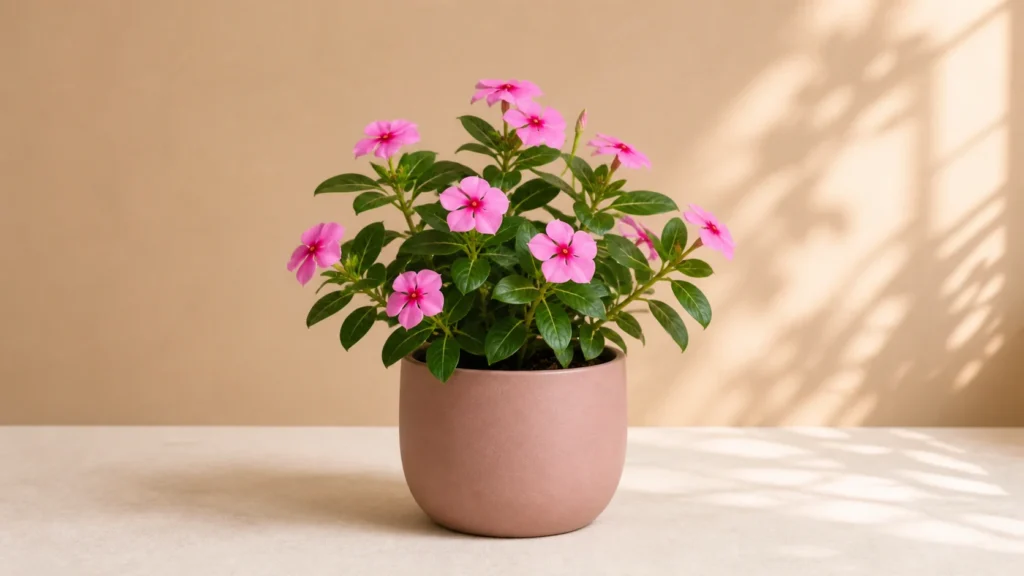
Madagascar Periwinkle
Catharanthus roseus
A warm-season flowering plant from Madagascar that blooms best in strong light and fast-draining soil but is toxic if ingested.
Watering frequency
Every 7-10 days
Ideal temperature
65-85°F / 18-29°C
Humidity
30-50%
Care difficulty
Easy
Air purifying
No/Not Known
Growth rate
Fast
Plant size
6-18 in / 15-45 cm
Soil type
Well-draining mix
Fertilizer need
Every 2-4 weeks while growing.
Care summary
- Light: Give full sun outdoors or the strongest indoor light available.
- Water: Let the surface dry, then water thoroughly and drain.
- Soil: Use a fast-draining mix and protect roots from prolonged saturation.
- Flowers: Modern cultivars often self-clean and need little deadheading.
- Safety: All parts contain active alkaloids and must not be eaten or used as a home remedy.
Common problems
- Yellow leaves: Check saturated soil, poor drainage, cold, and root disease.
- Drooping: Distinguish dry soil and heat from wet-root failure.
- Few blooms: Increase usable sun and avoid excessive nitrogen.
- Stem collapse: Inspect for root or stem rot promptly.
- Pests: Check buds and leaf undersides for aphids, mites, whiteflies, and thrips.
Plant care guide
About Madagascar Periwinkle
Madagascar Periwinkle (Catharanthus roseus) is a tender evergreen subshrub grown for five-petaled flowers in white, pink, rose, red, lavender, and patterned forms. It is also called Annual Vinca, Rose Periwinkle, or simply Vinca in the bedding-plant trade. The common name can be confused with true Vinca species, so the botanical name matters for both care and safety.
Kew's accepted record for Catharanthus roseus places its native range in eastern and southern Madagascar and notes that it is now widely introduced in warm regions. In temperate climates it is usually grown as a summer annual; in frost-free climates it can persist as a perennial.
This page includes indoor-container guidance because the plant can be kept at a very bright window, but it performs most naturally outdoors in warmth and sun. A dim living room rarely provides enough light for compact continuous flowering.
Why You'll Like It
Madagascar Periwinkle flowers through heat when many bedding plants slow down. Modern cultivars are compact, branch freely, and often drop spent blooms without intensive deadheading. The glossy dark-green leaves provide a clean background for bright flowers.
It works well in sunny patio containers, window boxes, and seasonal balcony displays. Indoors, it can serve as a temporary flowering plant at a bright south or west window rather than a permanent low-light houseplant.
For pet-accessible flowering spaces, choose a plant with verified non-toxic status instead. Madagascar Periwinkle's pharmaceutical history does not make the raw plant safe; its active chemistry is precisely why ingestion is dangerous.
What Kind of Plant Is It?
Madagascar Periwinkle belongs to the dogbane family, Apocynaceae. It has opposite glossy leaves, branching stems, and milky sap. Flowers develop at stem tips and leaf axils. Seed pods may form in pairs after pollination.
NC State Extension's Annual Vinca profile identifies Vinca rosea as an older name, recommends sun to partial shade with good drainage, and lists all plant parts as poisonous because of vinca alkaloids.
The plant is sensitive to prolonged wet soil and cool conditions. A common mistake is treating midday wilt during heat as proof that roots need constant saturation. Check soil: dry roots need water, while wet roots and collapsing stems indicate a different problem.
Popular Madagascar Periwinkle Series
Commercial annual vinca is often sold by series rather than as an unnamed species. Availability changes by region.
- Cora® series is bred for disease resistance and includes upright and cascading forms.
- Titan™ series is known for large flowers and vigorous uniform growth.
- Pacifica XP series offers many compact color selections for bedding and containers.
- Soiree Kawaii® includes smaller-flowered, mounded forms with a different texture from standard bedding vinca.
- Mediterranean series is associated with trailing or spreading habits for baskets and edges.
Use the verified series and cultivar on the tag. Do not turn a flower-color description such as “red periwinkle” into a supposed cultivar identity.
Where It Works Best
Outdoors, give full sun to bright partial sun in a warm, sheltered place. Good airflow and fast drainage are essential, especially in humid rainy weather. Containers should never sit in water-filled saucers.
Indoors, use the brightest unobstructed window available, usually south or west in North America. A grow light may be necessary to maintain flowering. Keep leaves away from cold glass and do not expect a bathroom's humidity to compensate for weak light.
Because every plant part is toxic, avoid children's play areas, pet-accessible patios, and surfaces where fallen flowers or prunings can be eaten.
How to Care for Madagascar Periwinkle
Light
Full sun supports compact growth and abundant flowers. In extremely hot climates, some afternoon protection can reduce stress, but excessive shade leads to thin stems and fewer blooms.
Indoor light is much weaker than outdoor sun. Place the plant directly at a bright window or under a suitable grow light. Acclimate greenhouse plants gradually to avoid bleaching.
Watering
Let the surface layer dry, then water thoroughly and drain. Established plants tolerate short dryness better than prolonged saturation. Check containers daily during hot outdoor weather without assuming they need water every time.
Seven to ten days is only an indoor estimate. A small summer patio pot may dry much sooner; a cool indoor pot may take longer. Soil feel and pot weight should decide.
Drooping in dry soil generally improves after watering. Drooping in wet soil, especially with yellow leaves or soft stems, suggests root damage. More water will worsen it.
Soil and Container
Use a fast-draining potting mix. Add perlite, pumice, or fine bark if a commercial mix remains wet too long. Drainage holes are mandatory. Avoid heavy garden soil in containers.
Choose a pot proportionate to the roots. Large volumes of wet mix increase disease risk. Raised containers and unobstructed drainage help during rainy periods.
Humidity and Temperature
Normal to relatively dry air around 30–50 percent is suitable. High humidity plus wet foliage and saturated soil increases disease pressure, so prioritize airflow rather than misting.
Maintain 65–85°F (18–29°C). Growth slows in cool weather, and frost kills the plant. Bring a container inside before cold nights if you intend to overwinter it.
Fertilizer
Feed lightly every two to four weeks from spring through early fall, while the plant is growing and flowering, with a balanced flowering-plant fertilizer used according to its label; reduce or pause in winter. Excess nitrogen produces soft green growth at the expense of flowers and may increase pest pressure.
Do not feed a wilted plant in dry soil or one with rotten roots. Correct moisture and light first.
Pruning and Deadheading
Many modern cultivars self-clean and do not require each flower to be removed. Trim dead, diseased, or stretched stems with gloves and clean tools. Pinching young non-flowering plants can encourage branching, but repeatedly cutting a modern compact cultivar may delay bloom.
Bag toxic prunings safely rather than leaving them where pets or children can reach them. Wash hands after handling sap.
How to Propagate Madagascar Periwinkle
Seed is the common method for annual production. Start seeds warm, follow the supplier's light and temperature directions, and use clean seed-starting media. Seedlings need strong light as soon as they emerge to avoid stretching.
Stem cuttings can preserve named cultivars where permitted. Take a healthy non-flowering tip, wear gloves, remove lower leaves, and place the node in a sterile airy medium. Maintain warmth and moderate humidity with airflow.
Plant patents or breeder restrictions may apply to modern commercial cultivars. Home propagation does not guarantee permission for resale. Never use diseased stems as cuttings.
Overwintering
In cold climates, many growers treat the plant as an annual. Overwintering requires strong indoor light, warmth, pest control, and reduced watering. A weak plant carried indoors can become a source of mites or whiteflies.
If preserving a named plant is important, take clean cuttings before cool weather rather than moving a large stressed container. Quarantine all material and discard any plant showing severe root disease.
Buying and Acclimating Madagascar Periwinkle
Choose a compact plant with firm stems, clean glossy leaves, and several buds rather than one stretched specimen carrying only open flowers. Inspect shoot tips for aphids and thrips, leaf undersides for mites or whiteflies, and the stem base for dark softened tissue. Avoid waterlogged pots sitting in decorative sleeves.
Read the label for series, mature habit, and disease-resistance claims. Upright and trailing cultivars fill different container roles. Preserve the verified label for future internal links rather than renaming the plant from its flower color.
At home, acclimate greenhouse plants to outdoor sun gradually. Start with bright shade or morning sun and increase exposure over several days. Wind and direct sun raise water use, so check the pot more often without keeping it permanently wet.
Quarantine indoor purchases and wash hands after handling. Do not place the pot temporarily on a pet-accessible floor or kitchen surface, because flowers, leaves, seeds, and prunings are all part of the toxic plant.
Rainy Weather and Disease Prevention
Extended rain is often harder on Madagascar Periwinkle than brief dryness. Move containers under cover when the mix cannot drain between storms, empty saucers, and maintain space between plants. Water at the soil level when possible rather than repeatedly wetting foliage late in the day.
Remove collapsed stems promptly with clean tools and do not compost obviously diseased material in a small home system. Sanitize reusable pots before planting another susceptible annual. Fungicide is not a substitute for drainage, spacing, clean plants, and appropriate watering.
Toxicity, Medicine, and Pet Safety
Madagascar Periwinkle is toxic to cats, dogs, horses, and humans if eaten. ASPCA's Periwinkle record uses the older name Vinca rosea and lists vomiting, diarrhea, low blood pressure, depression, tremors, seizures, coma, and death among potential signs.
Vinca alkaloids derived from this species contributed to important chemotherapy medicines, but pharmaceutical extraction, purification, dosing, and medical supervision are entirely different from eating leaves or preparing homemade tea. NCBI's medical overview of vinca alkaloids describes their cytotoxic effects and clinical drug use. It does not support self-medication with the plant.
Keep all parts, seeds, and prunings inaccessible. If ingestion occurs, contact a veterinarian, animal poison-control service, human poison-control service, or emergency medical professional as appropriate. Do not induce vomiting or administer a home remedy unless instructed.
Common Problems and Practical Fixes
Yellow lower leaves
Check soil drainage and temperature. Wet roots are common, while one old lower leaf may be normal. Remove standing water and inspect roots if yellowing spreads.
Plant droops at midday
Feel the soil. Dry mix during heat calls for thorough watering. Wet mix with persistent wilt suggests root disease or poor oxygen and requires inspection.
Few flowers
Increase usable light, avoid excessive nitrogen, and confirm that the plant is warm and healthy. Overwintered plants may need renewal.
Stem base turns dark or collapses
This suggests stem or root rot. Isolate the plant, discard severely diseased tissue, clean the container, and do not reuse contaminated mix.
Aphids, mites, whiteflies, or thrips
Inspect buds, tips, and leaf undersides. Isolate the plant and use a treatment labeled for the identified pest and flowering container plants. Avoid spraying open flowers in ways that harm pollinators outdoors.
Frequently Asked Questions
Is Madagascar Periwinkle the same as Vinca?
It is often sold as annual vinca and was formerly named Vinca rosea, but its accepted name is Catharanthus roseus. True Vinca species are different plants.
Can it grow indoors year-round?
It can be overwintered with intense light and warmth, but it is usually easier and healthier as a seasonal outdoor plant in cold climates.
Is it safe because medicines come from it?
No. The raw plant contains potent alkaloids and must not be eaten or used as a home remedy.
Does it need deadheading?
Many modern series self-clean. Remove diseased or unattractive material, but routine removal of every old flower is often unnecessary.
Why does it rot even though I water only weekly?
Calendar frequency does not guarantee dry roots. Pot size, rain, cool weather, and dense mix may keep soil saturated far longer than a week.
Can I grow it beside edible herbs?
Avoid placements where toxic leaves, flowers, seeds, or prunings could be mistaken for food or contaminate harvest handling. Separate ornamental and edible containers clearly.
Should I save seeds from a named hybrid?
Seedlings may not match the parent, and some cultivars are protected. Check the label and breeder information, wear gloves, and store all seed securely away from children and pets.
Can I use the flowers as a food garnish?
No. Flowers are included among the toxic plant parts and must not be used as edible decoration. Keep them clearly separated from food preparation, drinks, and children's craft materials.
Final Thought
Madagascar Periwinkle is a sun-loving seasonal flowering plant, not a low-light houseplant or a home medicine. Give it warmth, intense light, and excellent drainage, and handle all parts as toxic. Clear boundaries allow its flowers to be enjoyed without turning its important chemistry into unsafe advice.