
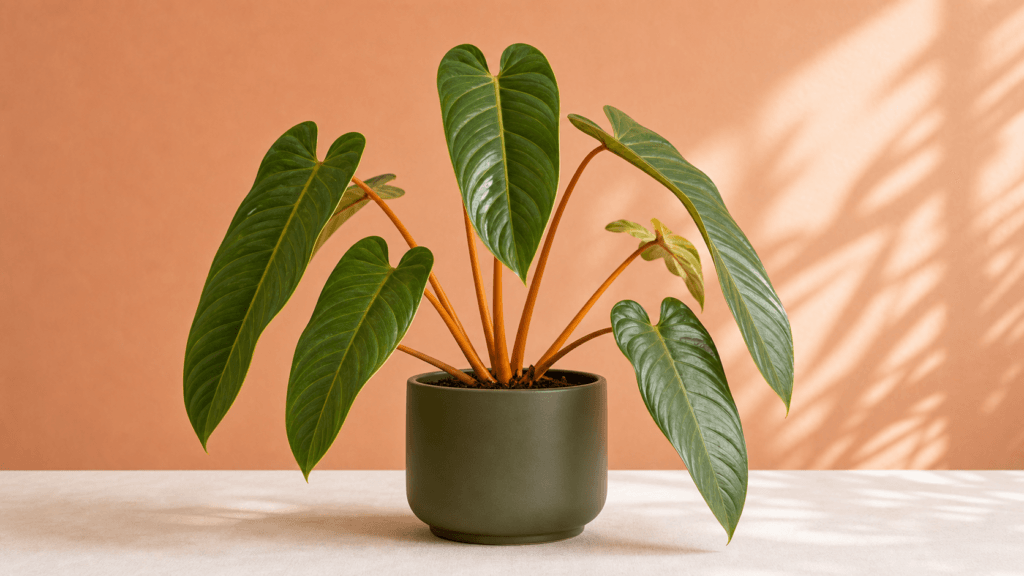
Philodendron Billietiae
Philodendron billietiae
A collector philodendron with long, narrow leaves and vivid orange petioles — dramatic, fast-growing, and easier than its rare-plant reputation suggests.
Watering frequency
Every 7-10 days
Ideal temperature
65-85°F / 18-29°C
Humidity
60-80%
Care difficulty
Easy
Air purifying
Yes
Growth rate
Fast
Plant size
3-6 ft / 0.9-1.8 m
Soil type
Chunky, well-draining aroid mix
Fertilizer need
Monthly while growing.
Care summary
- Light: Bright indirect light for the fastest, largest growth.
- Water: Let the top of the mix dry, then water thoroughly and drain.
- Soil: Chunky aroid mix (bark + perlite + potting mix).
- Support: A moss pole encourages larger leaves and upright growth.
- Humidity: Higher humidity keeps leaf edges clean.
- Safety: Not pet-safe; toxic if chewed.
Common problems
- Small leaves: not enough light, or no climbing support.
- Yellow leaves: overwatering or poor drainage.
- Brown, crispy leaf edges: low humidity or inconsistent watering.
- Drooping stems: underwatering or temperature stress.
- Thrips or spider mites: check leaf undersides on a stressed plant.
Plant care guide
About Philodendron Billietiae
Philodendron billietiae is a climbing aroid native to the Guianas and Pará in northern Brazil. Kew's accepted botanical record identifies Guyana, French Guiana, and northern Brazil as its documented native range. It has become a sought-after "statement philodendron" for one simple reason: its petioles — the stems that hold the leaves — are a vivid orange to yellow-orange. The long, narrow green leaves are striking on their own; the colored stems make the plant distinctive even in a crowded collection.
It is a species rather than a named cultivar or horticultural hybrid. Standard green plants share the characteristic narrow blades and colored petioles, although natural variation and variegated selections exist. It climbs using aerial roots, and a plant allowed to climb a suitable support can mature more fully than one left to flop over a pot edge.
The species was named in honor of a Belgian botanist, F. Billiet, and for decades it circulated mainly among tropical-plant specialists before the houseplant boom turned it into a collector's favorite. A variegated form — with cream or yellow marbling on the leaves — now commands premium prices, but the standard green form gives you the signature orange stems and long leaves for a fraction of the cost, and it grows faster than most of its variegated relatives.
For the basics of philodendron care — light, watering, soil, and troubleshooting that apply across the whole genus — see the Heartleaf Philodendron care guide; this page covers what billietiae specifically needs.
Why You'll Like It
Billietiae is one of the few plants that looks rare and expensive without being genuinely hard to grow. The orange petioles and long leaves give it a sculptural, premium presence that photographs beautifully, and it grows fast — given the right conditions, it puts out new leaves steadily through the growing season, each one larger than the last.
It is also far more forgiving than its collector reputation suggests. The care is essentially standard philodendron care: bright indirect light, a chunky mix, careful watering, and the humidity the plant prefers but doesn't strictly demand. It is an easy plant that looks like a hard one, which is the best combination in houseplants.
What Kind of Plant Is It?
Three traits define how billietiae behaves.
- It is a hemiepiphytic climbing aroid. In the wild it starts on the forest floor and climbs tree trunks, rooting into bark and moss as it goes. Indoors, that instinct shows up as aerial roots and a strong preference for climbing support.
- Its leaf size responds to support and growing conditions. A climbing philodendron can develop larger mature leaves when its stem and aerial roots have suitable support, but light, nutrition, root health, and age matter too. A moss pole or plank is useful; it is not a guarantee of a particular leaf size.
- It is a fast, tropical grower. Given warmth, bright indirect light, and steady moisture, it grows quickly and rewards consistent care with visible progress.
Where It Works Best
Give billietiae bright indirect light — a few feet from an east, west, or south window. It tolerates medium light but grows slower and with smaller leaves; in low light it stalls. A few hours of gentle morning sun are fine, but harsh afternoon sun through glass burns the leaves.
It suits living rooms, home offices, and bright bathrooms. If you can give it a spot with higher humidity — a bathroom with good light, or near a humidifier — it responds with cleaner leaf edges and faster growth. Keep it away from cold drafts and heat vents.
How to Care for Philodendron Billietiae
Watering: Water when the top inch or two of the mix feels dry — usually every 7-10 days in a bright, warm room — then water thoroughly and let the excess drain. The plant dislikes both extremes: a constantly soggy mix causes yellow leaves and root rot, while a bone-dry mix makes the long stems droop. The watering guide explains how to judge the mix by touch.
Light: Bright indirect light drives the fastest, largest growth. In medium light the plant survives but grows slower with smaller leaves; in low light it stretches and stalls. Move it brighter if new leaves come out smaller than the old ones.
Soil: Use a chunky aroid mix — orchid bark, perlite, and standard potting soil or coco coir in roughly equal parts. This airy structure lets water drain quickly while holding enough moisture for the roots; the soil guide explains why aroids need it.
Support: Provide a moss pole, a wooden stake wrapped in moss, or a plank, and tie the stems loosely to it as they climb. The aerial roots will grip the moss, and the plant will reward you with significantly larger leaves. This single addition changes the plant more than any other care tweak.
Temperature: Comfortable household temperatures of 65-85°F (18-29°C) suit it well. Keep it away from cold drafts and windows that drop below about 60°F (15°C) in winter.
Humidity: Billietiae prefers higher humidity — 60% or more is ideal — but tolerates average household air, with brown leaf edges as the cost of dry conditions. A humidifier, pebble tray, or bright bathroom helps; the humidity guide covers the practical options.
Fertilizer: Feed monthly during active growth (spring through early fall) with a half-strength aroid or balanced houseplant fertilizer. Stop feeding in winter when growth slows. The fertilizing guide covers the basics.
Grooming and direction: The leaves naturally angle toward the light, so rotate the pot a quarter-turn every week or two to keep the plant growing evenly instead of leaning hard toward one window. Wipe the long leaves occasionally with a damp cloth — dust dims the glossy surface that makes the plant look premium. Old lower leaves that yellow can be removed at the stem; like most climbing aroids, billietiae concentrates its energy upward.
How to Propagate
Stem cuttings are straightforward. Cut a section of stem with at least one node and one leaf — a node with a visible aerial root roots fastest — and set it in water or directly into moist aroid mix. Roots form within a few weeks; once established, pot the cutting in fresh chunky mix and give it a small support to climb. Take cuttings in spring or early summer for the fastest rooting. Each cutting inherits the orange petioles, so every new plant carries the same signature look.
When to Repot
Repot every one to two years in spring, when roots fill the pot or the mix breaks down and holds water too long. Move up one pot size and refresh the chunky mix — billietiae's roots like air, so repotting with fresh bark and perlite is genuinely beneficial. If the plant is climbing a moss pole, keep the pole when you repot and transfer the whole structure. The repotting guide walks through the process.
Toxicity and Pet Safety
Philodendron billietiae is not pet-safe. The ASPCA's philodendron guidance identifies insoluble calcium oxalates as the toxic principle and lists oral irritation, excessive drooling, vomiting, and difficulty swallowing among possible signs after chewing. Keep the plant out of reach of pets and children, and wash your hands after pruning because the sap may irritate skin.
If a pet chews the plant, remove it from reach and contact your veterinarian. For pet-friendly homes, Parlor Palm, Spider Plant 'Bonnie', or Pilea Peperomioides offer bold greenery without the toxicity.
Common Problems and Practical Fixes
- Small leaves: The two causes are not enough light or no climbing support. Move it brighter and give it a moss pole — climbing philodendrons grow dramatically larger leaves.
- Yellow leaves: Overwatering or poor drainage. Let the mix dry further between waterings and confirm the pot drains. The yellow leaves guide helps compare causes.
- Brown, crispy leaf edges: Low humidity or inconsistent watering. Raise the humidity and steady the watering rhythm; the brown tips guide covers the diagnosis.
- Drooping stems: Underwatering or temperature stress. Water thoroughly and move the plant away from cold drafts and vents.
- Thrips or spider mites: Fine silver streaking or webbing on the leaves usually means thrips or mites — common on stressed aroids. Isolate the plant and treat weekly with insecticidal soap or neem; the pest guide covers the full routine.
- Orange petioles looking washed out: The vivid orange fades toward yellow-green when light is too low. Move the plant to brighter indirect light and the new petioles will come in orange again — the color is a reliable indicator of how much light the plant is getting.
Frequently Asked Questions
How do I get bigger Philodendron billietiae leaves?
Two things: brighter light and a moss pole. Climbing philodendrons grow much larger leaves when their aerial roots can grip a support, and bright indirect light powers the growth. Fix both and the leaves will enlarge with each new flush.
Why are my billietiae leaves turning yellow?
Usually overwatering or poor drainage. Let the top of the mix dry before watering again and confirm the pot drains. Older lower leaves also yellow naturally as the plant grows.
Why are the leaves getting brown crispy edges?
Low humidity or inconsistent watering. Billietiae prefers 60%+ humidity; raise it with a humidifier or pebble tray and steady the watering rhythm.
Is Philodendron billietiae rare or hard to grow?
It is sought after and can be pricey, but it is not hard to grow — it wants the same bright indirect light, chunky mix, and careful watering as any other philodendron. The reputation outpaces the difficulty.
Why are the stems orange?
That's the plant's signature trait: the petioles (leaf stems) are a vivid orange-copper color, and it's natural, permanent, and the reason the plant is so popular. Nothing is wrong.
Is Philodendron billietiae toxic to pets?
Yes. All philodendrons contain insoluble calcium oxalate crystals and are toxic to cats and dogs if chewed. Keep it out of reach of pets and children.
What's the difference between regular and variegated billietiae?
The variegated form carries cream or yellow marbling on the leaves and commands far higher prices; the standard green form has the same long, narrow leaves and vivid orange petioles but grows faster and costs a fraction of the premium. For most growers, the green form delivers the full look without the price tag.
How often should I water Philodendron billietiae?
In a bright, warm room, every 7-10 days is a good starting rhythm — but check the top inch or two of the mix first and water when it feels dry. In winter, stretch the interval. Drooping long stems are the plant's own signal that it needs a drink.
Why are my billietiae leaves pointing sideways or leaning?
Leaves and stems grow toward the light, so a plant near a one-sided window leans noticeably. Rotate the pot weekly to even it out, and if the stems are trained up a moss pole, check that the ties are loose — a stem pinched by a tight tie will also bend oddly.
Can Philodendron billietiae grow in low light?
It survives but stalls: growth slows, new leaves come out smaller, and the orange petioles fade toward green. It genuinely needs bright indirect light to look its best. If your spot is dim, a Heartleaf Philodendron is the more forgiving choice.
Why are the new leaves smaller than the old ones?
New leaves shrinking usually means the plant has outgrown its light or its support. Check whether the growing tip has climbed past the bright zone or run off the top of the moss pole — move it to brighter light and extend the support, and the leaves will enlarge again with the next flush.
Final Thought
Philodendron billietiae is a rare-looking plant with an ordinary plant's demands. Give it bright indirect light, a chunky mix, steady moisture, and — most importantly — something to climb, and the long leaves and orange stems will do the rest, growing larger and more dramatic with every season. It is the rare statement plant that rewards attentive care without punishing ordinary mistakes, and it earns its place in any collection where a touch of the dramatic is welcome.