
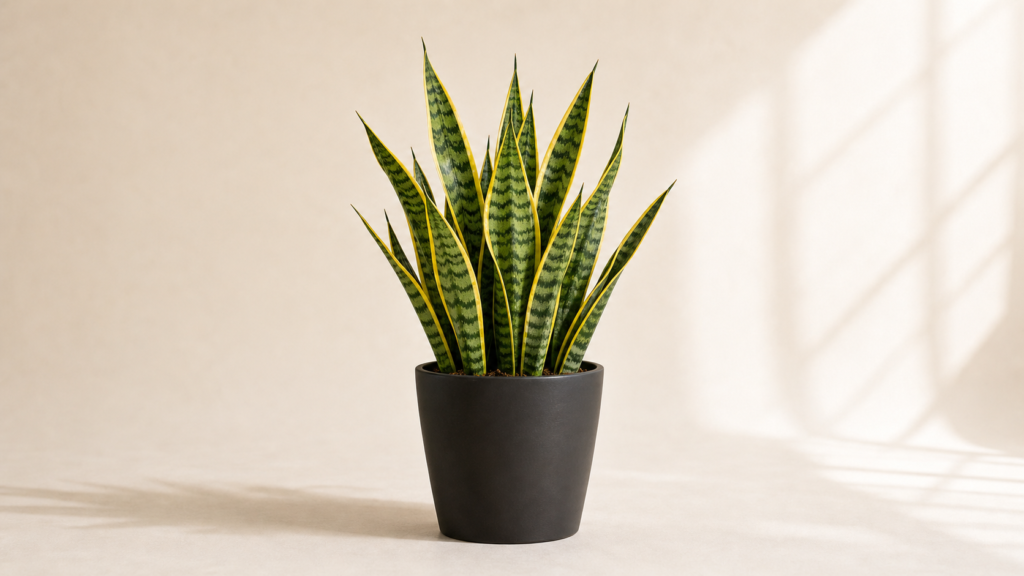
Snake Plant Laurentii
Dracaena trifasciata 'Laurentii'
The classic tall snake plant with bold yellow leaf edges — the most recognizable snake plant in garden centers, and one of the easiest houseplants alive.
Watering frequency
Every 2-4 weeks
Ideal temperature
60-85°F / 16-29°C
Humidity
30-50%
Care difficulty
Easy
Air purifying
Yes
Growth rate
Slow
Plant size
2-4 ft / 0.6-1.2 m
Soil type
Very well-draining cactus/succulent mix
Fertilizer need
Every 8-10 weeks, spring-summer.
Care summary
- Light: Medium to bright indirect light keeps the yellow edges bold.
- Water: Let the soil dry fully between waterings; water sparingly, then drain.
- Soil: Cactus/succulent mix in a pot with drainage holes.
- Growth: Slow, tall, and clumping; divide when crowded.
- Rule: When unsure, wait — overwatering is the main risk.
- Safety: Not pet-safe; toxic if chewed.
Common problems
- Yellow edges fading: not enough light — the yellow margin needs decent light to stay bright.
- Leaves falling over: overwatering, or a pot too small for the clump.
- Soft, mushy leaf bases: rhizome rot from persistently wet soil.
- Wrinkled leaves: underwatered for too long.
- Mealybugs or spider mites: check leaf axils on a stressed plant.
Plant care guide
About Snake Plant Laurentii
Snake Plant 'Laurentii' (Dracaena trifasciata 'Laurentii', formerly Sansevieria trifasciata 'Laurentii') is the classic tall snake plant: upright, sword-shaped leaves in deep green with bold yellow edges. Kew accepts Dracaena trifasciata and records Sansevieria trifasciata as its synonym, while NC State Extension's species profile provides a useful horticultural reference. 'Laurentii' is one of the most recognizable forms in the houseplant trade.
It shares its species with many familiar snake plant cultivars, although “snake plant” is also used for other related Dracaena species. Their broad care principles overlap. The two things that set Laurentii apart are the yellow margins, which need decent light to stay bright, and its height, which gives it a commanding architectural presence in a room.
This page covers the cultivar specifically. A separate general Snake Plant guide may later cover the broader species-level light, watering, soil, propagation, and troubleshooting principles.
Why You'll Like It
Laurentii is the plant people mean when they say "I can't kill it." It tolerates low light, dry air, and weeks of neglect, and its tall yellow-edged leaves read as sculpture in an entryway, a bedroom corner, or behind a sofa. It is also one of the best plants for beginners precisely because it forgives the mistakes beginners make — except overwatering.
For a similar architectural look with a softer, silver tone, the compact Snake Plant Moonshine is its design-minded sibling; if you want the same toughness in a shorter form, the dwarf Bird's Nest types (Hahnii) stay low and wide.
What Kind of Plant Is It?
Three traits explain how Laurentii behaves.
- It is a rhizomatous succulent-leaved perennial. The thick leaves store water, and the underground rhizome stores energy and produces new leaf fans. This is why the plant spreads into a clump over time and why division is the natural way to multiply it.
- It uses CAM photosynthesis. Like many plants from dry climates, it opens its leaf pores at night and keeps them closed during the day, which makes it extremely water-efficient — the biological reason it can go weeks between waterings.
- Its yellow edges are light-dependent. The yellow margin is a variegation trait that fades toward green when the plant gets too little light. Give Laurentii more light than you would a plain green snake plant if you want the edges to stay bold.
Where It Works Best
Laurentii tolerates a wide range of light, from low-light corners to bright indirect sun, and it survives in all of them. But the yellow edges are the part that needs light: in a genuinely dark corner they fade to pale green and the plant looks plain. Give it medium to bright indirect light — near an east or west window, or a few feet from a south window — and the yellow margins stay crisp.
It suits entryways, living rooms, bedrooms, and offices, and it handles dry air and temperature swings better than most houseplants. Keep it away from freezing windows in winter. The low-light houseplants guide explains how to judge whether a room is bright enough for any plant.
How to Care for Snake Plant Laurentii
Watering: Let the soil dry out completely between waterings, then water thoroughly and let the excess drain. In a warm, bright room this often lands around every 2-4 weeks in spring and summer; in winter it can stretch to once a month or less. When in doubt, wait — overwatering is the single most common cause of death. The watering guide explains how to read soil moisture by feel.
Light: Medium to bright indirect light is ideal for keeping the yellow edges bold. The plant tolerates low light, but the margins fade and growth slows in dark rooms. Avoid hours of harsh direct afternoon sun, which can bleach the leaf edges.
Soil: Use a very well-draining cactus or succulent mix, or regular potting soil lightened with perlite or coarse sand. Drainage holes are essential; a pot without them holds water against the roots and invites rot.
Temperature: Comfortable household temperatures of 60-85°F (16-29°C) suit it well. It tolerates cooler conditions but should not sit in cold drafts or against a freezing window.
Humidity: Dry air is not a problem — do not mist it. Surface moisture sitting in the leaf bases only encourages rot.
Fertilizer: Feed very lightly, every 8-10 weeks in spring and summer, with a balanced houseplant fertilizer at half strength. Skip feeding in winter and in low light; excess fertilizer on a slow-growing plant just builds salts in the soil.
How to Propagate
Two methods work, and they suit different situations.
Division (most reliable): When the clump fills its pot, remove the plant, shake off the soil, and pull or cut apart the rhizome so each section has roots and at least one leaf fan. Pot each division in fresh cactus mix and keep it lightly moist for the first couple of weeks. Division reproduces the exact cultivar, yellow edges included.
Leaf cuttings (slower and not true to the variegation): Cut a healthy leaf into 3-4 inch sections, mark the original lower end, let the cuts dry briefly, then insert them upright in a lightly moist, fast-draining medium. Roots and pups can form at the base, but ordinary leaf cuttings of 'Laurentii' generally revert to green and do not preserve the yellow margins. Use rhizome division when the cultivar pattern matters.
When to Repot
Repot when the rhizome crowds the pot, roots push through the drainage holes, or the tall clump keeps tipping the pot over — usually every 2-3 years, but judge by the plant. Choose a container only 1-2 inches wider, keep it on the shallow side, and use fresh fast-draining mix. Because Laurentii is top-heavy, a wider, heavier pot is genuinely useful. The repotting guide covers the full process.
Do not bury the leaves or rhizome deeply. Keep the plant close to its original level and leave room at the top for watering without flooding the leaf fans. A decorative cachepot can provide stability, but the inner pot must drain and all runoff must be removed.
Seasonal Care
In spring, inspect the pot for expanding rhizomes and resume very light feeding only after active growth appears. This is the best time for planned division. Increase sun exposure gradually; a plant that spent winter in low light can scorch when moved directly against hot glass.
During summer, brighter conditions may increase water use, but thick leaves still store substantial moisture. Check the entire root zone before watering. If the plant spends summer outdoors, protect it from repeated heavy rain and bring it inside before cool nights.
In autumn, stop feeding as growth slows. Winter is the highest-risk period for rot because light declines and a cool pot dries slowly. Keep the plant away from freezing windows and water only after confirming that the mix has dried appropriately at depth.
Choosing and Acclimating Laurentii
Look for firm upright leaves with continuous yellow margins, a stable base, and a pot free of sour odor or standing water. Minor scars are permanent but usually cosmetic. Soft leaf bases, spreading yellow tissue, or a collapsing center suggest excess moisture or rhizome damage.
Inspect the narrow gaps between leaves for mealybugs and scale. Quarantine a new plant and learn the nursery mix before watering. Dense peat in a decorative sleeve behaves very differently from a gritty mix in terracotta.
Do not repot automatically on arrival. A healthy plant can acclimate first; a waterlogged plant with soft rhizomes needs immediate inspection. Several simultaneous changes make later droop or yellowing harder to interpret.
Cleaning and Long-Term Shape
Wipe leaves with a soft damp cloth, supporting each blade so it does not crack. Avoid oily leaf-shine products. Remove a fully damaged leaf at the soil line with a clean tool; cutting the tip does not make that leaf grow again.
As the clump widens, division preserves the yellow-edged cultivar and prevents a thin nursery pot from splitting. If the leaves lean toward one window, rotate the container gradually rather than forcing individual blades upright.
Toxicity and Pet Safety
Snake Plant Laurentii is not pet-safe. The ASPCA lists the snake plant as toxic to cats and dogs, with saponins as the toxic principle and nausea, vomiting, and diarrhea among the clinical signs. Keep it out of reach of pets and small children.
If a pet chews the leaves, remove the plant from reach and contact your veterinarian or the ASPCA Animal Poison Control line. For pet-friendly homes with a similar tall, architectural look, Ponytail Palm or Cast Iron Plant are genuinely non-toxic alternatives.
Common Problems and Practical Fixes
- Yellow edges fading: Not enough light. Move the plant to a brighter spot; the existing margins will not fully recover, but new growth will come out yellow-edged again.
- Leaves falling over: Check for overwatering or rhizome rot first; if the base is soft and mushy, unpot, cut away dark tissue, and repot in dry fresh mix. If the roots are healthy, the pot is probably too small or too light for the tall clump — repot into a wider, heavier container.
- Soft, mushy leaf bases: Persistently wet soil causing rhizome rot. Remove the plant, trim all dark tissue, repot in fresh dry mix, and water much less afterward.
- Wrinkled, curling leaves: Underwatered for too long, or roots too crowded to take up water. Water thoroughly; if the pot is full of roots, divide or repot.
- Mealybugs or spider mites: Wipe the leaf axils with rubbing alcohol on a cotton swab and recheck weekly. The pest guide covers the routine.
Frequently Asked Questions
Why are the yellow edges on my snake plant fading?
Not enough light. The yellow margins need medium to bright indirect light to stay bold. Move the plant to a brighter spot — new leaves will grow in with strong yellow edges.
How tall does Snake Plant Laurentii get?
Indoors it typically reaches 2-4 feet (0.6-1.2 m) over several years, with individual leaves growing tall and upright. It is the tallest of the common snake plant types.
Why is my Laurentii falling over?
Either overwatering has softened the base (rot), or the clump has outgrown a light pot. Check the base first; if it is firm, repot into a wider, heavier container.
Is Snake Plant Laurentii toxic to pets?
Yes. It contains saponins and the ASPCA lists it as toxic to cats and dogs if chewed. Keep it out of reach.
Can I grow Laurentii in low light?
It survives in low light, but the yellow edges fade and growth nearly stops. For a truly dark corner, a plain green snake plant keeps its color better.
How is Laurentii different from other snake plants?
It is the tall, yellow-edged classic. Compared with Moonshine, which is compact and silver-green, Laurentii is taller, darker, and the one most people recognize. Their basic watering and drainage needs overlap, but Laurentii benefits from brighter light to preserve its yellow margins.
Will leaf cuttings keep the yellow edge?
Usually not. New pups from ordinary leaf sections commonly return to green. Divide the rhizome so each piece contains roots and a growing fan when you want a true 'Laurentii'.
Should I mist the leaves?
No. It tolerates normal or dry household air, and moisture trapped among the leaf bases can encourage rot. Clean dust with a damp cloth instead.
Final Thought
Snake Plant Laurentii is a classic for a reason: it is tall, striking, and tolerant of occasional missed watering, but persistently wet soil can still damage it quickly. Give it a well-draining pot, let the soil dry appropriately between waterings, and provide at least medium indirect light so the yellow edges stay bold. Those habits make it a reliable architectural plant without pretending it is impossible to harm.