
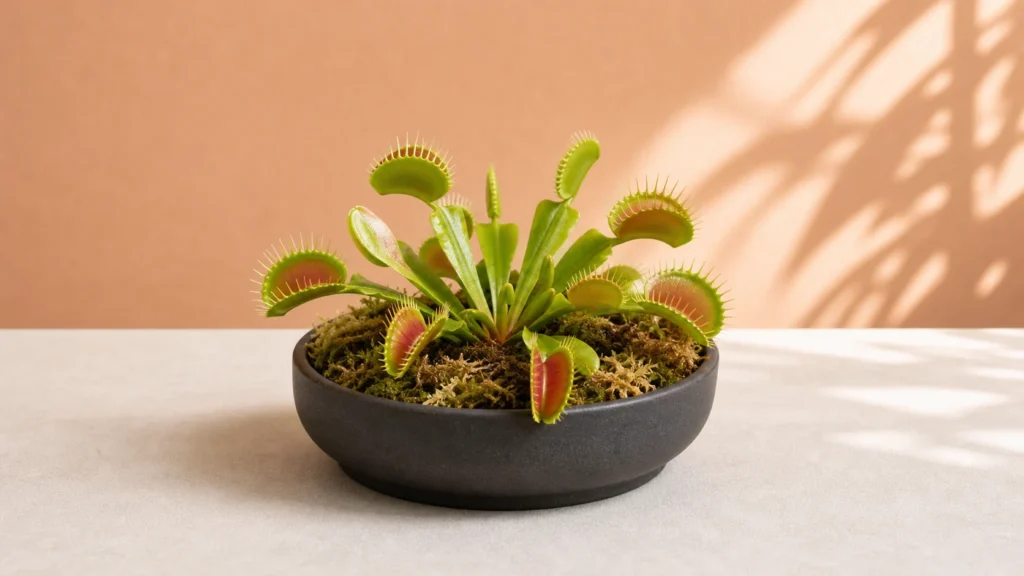
Venus Flytrap
Dionaea muscipula
A Carolina carnivorous plant with snap traps that needs intense light, mineral-free water, nutrient-poor media, wet-but-aerated roots, and seasonal care.
Watering frequency
Keep consistently moist
Ideal temperature
60-85°F / 16-29°C during active growth
Humidity
40-70%
Care difficulty
Hard
Air purifying
No/Not Known
Growth rate
Slow
Plant size
4-8 in / 10-20 cm
Soil type
Nutrient-free peat or sphagnum mix
Fertilizer need
No soil fertilizer.
Care summary
- Light: Provide outdoor full sun after acclimation or a strong close grow light indoors.
- Water: Keep the medium consistently moist with mineral-free water.
- Soil: Use unfertilized carnivorous-plant media and a plastic or glazed pot.
- Feeding: Never use meat or repeatedly trigger traps for entertainment.
- Dormancy: Outdoor plants follow a cool winter rest; indoor systems need deliberate seasonal management.
Common problems
- Weak pale traps: Increase usable light and check root-zone conditions.
- Black traps: Remove only fully dead traps; widespread loss needs diagnosis.
- Mineral burn: Stop tap water, fertilizer, and enriched potting products.
- Soft crown or bad odor: Treat as possible rot and improve aeration immediately.
- Drying media: Rehydrate promptly with rain, distilled, or suitable reverse-osmosis water.
Plant care guide
About Venus Flytrap
Venus Flytrap, Dionaea muscipula, is a carnivorous perennial native to a remarkably small area of the coastal plain of North Carolina and northeastern South Carolina. NC State Extension’s species profile explains its Carolina origin, wet sandy habitat, mineral-free water needs, and intolerance of ordinary fertilizer.
The paired lobes at the end of each leaf form a snap trap. Trigger hairs detect repeated movement; closure helps distinguish living prey from a raindrop or debris. The plant catches insects for nutrients, not energy. Light still powers photosynthesis, so feeding cannot rescue a plant kept in a dark novelty terrarium.
Why You’ll Like It
Venus Flytrap turns plant care into close observation. New traps change shape through the season, the mechanism can capture its own prey outdoors, and healthy plants may flower or produce divisions. It is also one of the clearest examples of why species-specific care beats generic houseplant rules.
It is not a low-light windowsill toy. Success depends on intense light, low-mineral water, unfertilized media, and appropriate seasonal management. An owner willing to build that small system can keep the plant for years rather than replacing a declining retail pot.
Compare Phalaenopsis Orchid for another plant requiring specialized media but very different water and light, or Spider Plant 'Bonnie' for a pet-safe conventional houseplant.
What Kind of Plant Is It?
The plant grows from an underground bulb-like rhizome and forms a low rosette. Each leaf includes a photosynthetic base and a trap. A single trap has a limited working life; after several closures or successful meals, it may blacken while the plant produces replacements.
Outdoor growth changes with season. Spring leaves may differ from summer leaves, and cool short days lead toward winter rest. Flower stalks arise above the traps. A small or recently stressed plant may conserve energy if the flower stalk is removed early, while a vigorous mature plant can be allowed to flower if seed is desired.
Popular Venus Flytrap Cultivars
All are cultivars of Dionaea muscipula, not separate carnivorous species. Named traits remain reliable only through vegetative propagation.
- ‘Akai Ryu’ / Red Dragon: Selected for deep red coloration under strong light.
- ‘B52’: Known for large traps under good cultivation.
- ‘King Henry’: A large-growing registered selection.
- ‘Fused Tooth’: Develops unusual fused marginal teeth under certain seasonal growth.
- Typical form: Seed-grown or unnamed plants with natural variation; not inferior simply because they lack a cultivar label.
Buy from a reputable nursery and avoid wild-collected plants. Native populations face habitat and collection pressures, and cultivated stock is the responsible route.
Where It Works Best
Outdoors in full sun is often simplest where climate and water management are suitable. Acclimate a nursery plant gradually to prevent burn. A sunny balcony can work if the pot does not overheat or dry unexpectedly and if local winter conditions are managed.
Indoors, a “bright window” is often insufficient. Use a strong grow light positioned and timed for active growth, with ventilation and temperature monitoring. The International Carnivorous Plant Society’s growing material emphasizes long daily light exposure, mineral-poor media, and distilled water. Avoid sealed decorative terrariums with stagnant air.
How to Care for Venus Flytrap
Light
Provide several hours of direct outdoor sun after acclimation or a strong indoor grow light for roughly a long summer day. Pale green weak traps, broad floppy leaves, and slow replacement often indicate inadequate light. Red trap color varies by genetics and season, so it is not the only health measure.
Water
Use rainwater, distilled water, or reverse-osmosis water that is known to be low in dissolved minerals. Ordinary hard tap water can accumulate salts and damage roots. Keep the medium consistently moist, but understand the difference between wet and oxygen-starved.
The tray method is practical: stand the pot in a shallow level of mineral-free water during active warm growth and allow occasional slight drawdown before refilling. Do not submerge the crown or maintain deep stagnant water indefinitely. Never let the media become completely dry.
Soil and container
Use unfertilized sphagnum peat mixed with perlite or silica sand, or suitable long-fiber sphagnum. Check every bag: ordinary potting mix, compost, and products with added fertilizer can harm the plant. Avoid limestone, enriched perlite, and mineral-leaching terracotta.
Plastic or fully glazed containers are practical. A taller pot provides a more stable moisture gradient and protects roots from rapid heating. Rinse media components with mineral-free water when appropriate.
Humidity and airflow
Venus Flytraps do not require a sealed high-humidity box. The International Carnivorous Plant Society’s more recent indoor cultivation discussion notes that plants can grow without extreme humidity when light and water are managed. Air movement helps prevent stagnant crown conditions. Humidity affects drying rate, so monitor the tray rather than misting traps.
Feeding
An outdoor plant usually catches enough prey. Indoors, feeding is optional when growth and light are strong. If feeding, offer a small live insect that fits comfortably inside one trap; the prey must stimulate the trap after closure. Never give hamburger, cheese, or human food. Do not feed every trap or repeatedly trigger them for entertainment.
Fertilizer
Do not add ordinary fertilizer to the medium at any time, including the spring-to-fall growth period. Advanced growers sometimes use carefully measured foliar methods, but that is outside a beginner plant page and mistakes can burn the plant. Correct light and water first.
Dormancy
Outdoor plants naturally experience shorter days and cool winter conditions, during which foliage may shrink or die back while the rhizome remains alive. Reduce standing water but do not let the media dry. Protect the pot from severe freezes beyond the plant’s local tolerance.
Indoor culture is more nuanced than the slogan “every flytrap must spend three months in a refrigerator.” The ICPS indoor article describes successful continuously lit indoor systems, while outdoor plants still need climate-aware winter handling. Choose one coherent method based on where the plant actually grows, rather than moving it randomly between warmth and cold.
How to Propagate Venus Flytrap
The easiest method is division. During repotting, separate an established offset that has its own growth point and roots, then pot it in the same mineral-poor medium. Rhizome or leaf-pull methods can work but require careful sterile handling and are not guaranteed.
Seed must be fresh and produces genetically variable plants, not clones of a named cultivar. A cultivar’s registered traits should be maintained through division or another vegetative method. Do not remove material from wild populations.
When to Repot
Repot when the medium decomposes, develops mineral problems, the plant has multiplied into a crowded clump, or roots need inspection. Late winter to early spring is convenient for outdoor seasonal plants. Handle the rhizome gently and keep the growth point at the surface rather than burying it deeply.
Pet and Household Safety
Venus Flytrap is classified Pet safe. The ASPCA includes Venus Fly Trap in its non-toxic plant database. Its traps are far too small to injure a cat or dog.
Pet safe does not mean edible. Chewing can destroy the plant, and consuming plant material or contaminated media may still cause stomach upset. Fertilizer, pesticides, and stagnant tray water are separate hazards. Contact a veterinarian if symptoms develop.
Common Problems and Practical Fixes
Traps turn black
One old or recently fed trap blackening is normal. Widespread blackening needs a review of mineral exposure, dry media, heat, low light, rot, and seasonal dormancy. Remove a trap only when fully dead.
Traps are small or do not close
Increase usable light and review overall vigor. Old traps lose responsiveness. Repeated manual triggering exhausts them, and a weak plant should not be force-fed.
Leaves are pale and floppy
This commonly indicates inadequate light, especially indoors. Increase grow-light intensity gradually while monitoring heat and water use.
The crown is soft or smells bad
Treat this as possible rhizome rot. Remove stagnant conditions, inspect the rhizome, trim clearly rotten tissue with clean tools, and repot healthy tissue in fresh appropriate medium.
White or crusty deposits appear
Suspect minerals from water, media, or the pot. Switch to verified low-mineral water and repot if accumulation is significant.
Frequently Asked Questions
Do I have to feed it flies?
No. Outdoor plants catch prey, and well-lit plants gain energy from photosynthesis. Insects supply nutrients rather than calories.
Can I use bottled drinking water?
Not automatically. Many drinking waters contain added minerals. Use distilled, rain, or verified low-mineral reverse-osmosis water.
Should I close the traps with my finger?
No. It spends energy and shortens the useful life of a trap without providing nutrients.
Can it live in a closed terrarium?
Closed terrariums often combine inadequate light, heat, and stagnant air. An open, well-lit setup with managed water is safer.
Is a black trap a dead plant?
No. Inspect the rhizome and new center growth. Individual traps naturally age; a firm pale rhizome and emerging leaves indicate life.
A Year-Round Outdoor Routine
For growers using an outdoor seasonal method, spring begins when the growth point resumes active leaves. Remove loose dead foliage without pulling the rhizome, refresh mineral-free water, and repot if the medium has deteriorated. Increase sun gradually if the plant was sheltered for winter. Early traps may be smaller than peak summer growth.
In summer, maintain full light, keep the medium moist, and monitor tray temperature. A shallow dark tray on a hot balcony can overheat roots. Rain is useful when air quality and surfaces are clean, but storms can also flood a container or wash foreign material into it. Outdoor prey normally eliminates any need for manual feeding.
Autumn brings shorter leaves and reduced vigor as the plant prepares for rest. Stop trying to force summer growth with fertilizer or extra food. Reduce the depth and duration of standing water while keeping the medium damp. The plant may retain some green tissue depending on climate.
Winter handling depends on local minimum temperatures. The rhizome can tolerate cool conditions and some frost in its native-like cycle, but a small exposed pot is more vulnerable than a plant in the ground. Protect it from severe prolonged freezing and cold drying wind. A refrigerator method should be used only with a researched sanitation and temperature protocol; it is not a casual default.
An Indoor Grow-Light Routine
An indoor setup needs measurable light, ventilation, and consistent water. Place a strong full-spectrum grow light close enough to support compact colored traps without overheating leaves. Use a timer for a long active-season photoperiod and observe the plant rather than relying only on the lamp’s advertised wattage.
The tray can dry faster under lights and fans, so check it frequently. Do not seal the plant in a dome to reduce maintenance. The ICPS indoor cultivation article shows that humidity is not the main requirement; balancing adequate water with an aerated crown is more important.
If choosing continuous indoor growth without a traditional dormancy, understand that this is an intentional advanced system supported by adequate light and culture, not permission to keep a plant year-round on a dim windowsill. Keep records of photoperiod, trap size, division rate, and root health so decline is detected early.
Buying Responsibly and Checking Health
Purchase nursery-propagated plants from a seller who can identify the species or cultivar and explain its growing conditions. Avoid suspiciously cheap bare-root plants with no propagation history and never collect from the wild. Responsible sourcing protects a geographically restricted species and usually provides a plant better adapted to cultivation.
A healthy plant has a firm center, several active leaves, and a pale firm rhizome beneath the surface. One or two black traps are normal. Widespread mush, a detached crown, sour odor, or mineral crust requires caution. Retail cubes sometimes contain a plug wrapped in fabric or dense media; inspect gently during an appropriate repot rather than tearing roots immediately after purchase.
Quarantine the plant and do not spray it with a general houseplant pesticide or fertilizer without confirming compatibility. Carnivorous plants can be sensitive to product residues and enriched carriers.
Flowering and Seed
Mature plants send up a tall flower stalk so pollinators remain away from the traps. Flowering consumes stored resources. A small newly purchased or recovering plant often benefits from having the stalk cut near the base while it is still short. A vigorous established specimen can flower if the owner wants seed.
Seedlings vary genetically and take years to mature. Seed from a named cultivar does not inherit the cultivar name automatically. Keep cultivar identity through division or another accepted vegetative method, and label propagation accurately.
Final Thought
Treat Venus Flytrap as a sun-loving Carolina carnivorous perennial, not a dim-room novelty. Intense light, mineral-free water, unfertilized media, responsible sourcing, and one coherent seasonal system matter far more than frequent feeding.