
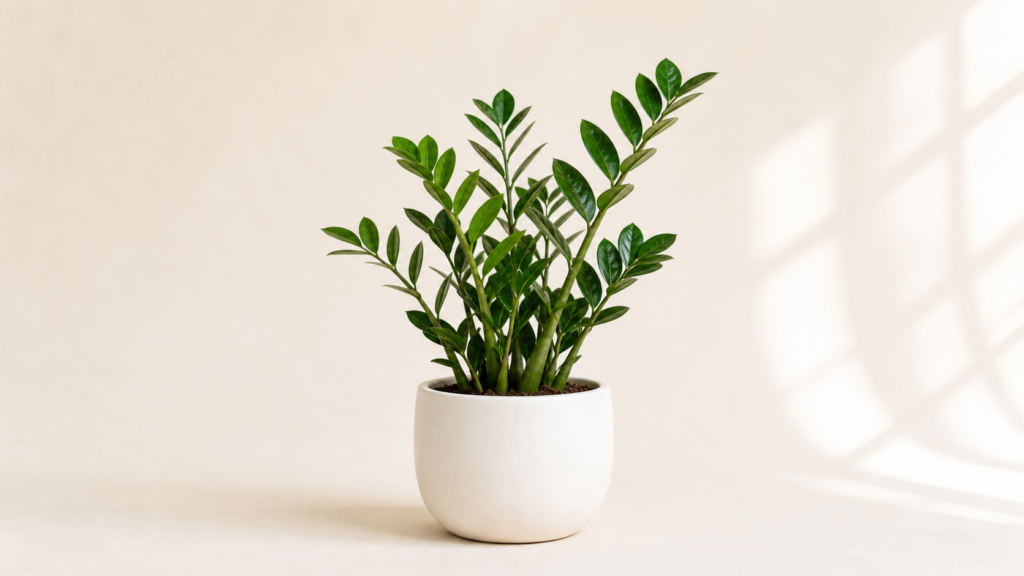
ZZ Plant
Zamioculcas zamiifolia
A glossy rhizomatous aroid that tolerates lower indoor light and missed waterings but declines quickly in a persistently wet root zone.
Watering frequency
Every 2-4 weeks
Ideal temperature
65-85°F / 18-29°C
Humidity
30-50%
Care difficulty
Easy
Air purifying
Yes
Growth rate
Slow
Plant size
2-4 ft / 0.6-1.2 m
Soil type
Fast-draining aerated mix
Fertilizer need
Every 8-10 weeks, spring-summer.
Care summary
- Light: Tolerates low light but grows best in medium to bright indirect light.
- Water: Let the mix dry substantially, then soak and drain completely.
- Soil: Use a fast-draining mix in a correctly sized pot with drainage holes.
- Rhizomes: Inspect firm underground storage organs if stems soften or yellow.
- Safety: Contains irritating calcium oxalates and is not pet-safe.
Common problems
- Yellow or soft growth: Check saturated mix, drainage, cold, and rhizome rot.
- Wrinkled leaf stalks: Review dry-down, root loss, heat, and rhizome condition.
- Slow growth: Consider season, light, root health, and the species' natural pace.
- Leaning pale growth: Increase useful filtered light and rotate gradually.
- Pests: Inspect leaflet joints and stalk bases for scale, mites, and mealybugs.
Plant care guide
About ZZ Plant
ZZ Plant is the established consumer name for Zamioculcas zamiifolia, an eastern and southern African aroid valued for glossy compound leaves and thick underground rhizomes. Kew’s accepted species record places its native range from Kenya to KwaZulu-Natal. Those rhizomes store water and help the plant tolerate dry periods. They do not make it immune to neglect, darkness, or rot.
What looks like a single “stem” rising from the soil is a compound leaf: a thick stalk carrying paired leaflets. New shoots emerge from the rhizome and unfurl pale green before hardening darker. Understanding that structure helps with propagation and with diagnosing a soft stalk at its base.
Why You’ll Like It
ZZ Plant is genuinely tolerant of variable indoor conditions. It can remain presentable in lower light, accepts a substantial dry-down, and does not require high humidity. Slow growth reduces pruning and repotting.
The useful description is “resilient,” not “indestructible.” Its main failure mode is excess water in low light. Owners who water on autopilot can lose the underground rhizomes before the glossy top shows obvious distress.
Compare Snake Plant for another drought-tolerant rhizomatous plant, Cast Iron Plant for a lower-light pet-safe alternative, or Ponytail Palm for a brighter plant with a visible water-storage base.
What Kind of Plant Is It?
ZZ Plant is a herbaceous evergreen with potato-like rhizomes beneath the mix. Roots and new compound leaves arise from these storage organs. A healthy rhizome is firm and pale to tan internally; a rotting one becomes soft, dark, or foul-smelling.
The plant may enter long periods with little visible change, especially after repotting or in winter. That does not mean it needs more fertilizer or a bigger pot. Underground root and rhizome development can precede a new shoot.
Popular ZZ Plant Varieties
- ‘Raven’: New growth emerges bright green and matures to deep purple-black; often sold under a protected trade program.
- ‘Zenzi’: A compact form with short crowded leaflets and thicker-looking growth.
- ‘Chameleon’: A selection marketed for yellow-toned new growth that matures greener.
- Variegated ZZ: A descriptive retail category rather than one universally verified cultivar; patterns and stability differ.
- Standard ZZ Plant: The familiar green form and the scope of this page.
Future cultivar pages should use verified cultivar or trade names instead of treating “variegated” as a complete identity.
Where It Works Best
Medium to bright indirect light produces the strongest, most balanced growth. Low light is tolerated, making the plant useful in offices and interior corners, but “low” still means some usable light. A windowless room with only intermittent ceiling lights is not a plant habitat.
In low light, soil dries slowly and new shoots may be sparse. Keep the plant away from cold drafts and intense hot sun through glass. Rotate gradually for upright growth, since stalks lean toward the main light source.
How to Care for ZZ Plant
Light
Provide low to bright indirect light, distinguishing survival from preference. Gentle morning sun can be acceptable after acclimation; intense afternoon rays may bleach or scorch leaves. If moving a plant from a dark shop, increase exposure in stages.
Water
Let the mix dry substantially, then water thoroughly and let all excess escape. Check pot weight and moisture below the surface. The 2–4-week field is only a starting point: a large low-light pot may need longer, while a root-filled plant in summer may dry faster.
Small frequent sips can leave the lower root zone chronically wet while never flushing salts. A full soak followed by a real dry-down is safer. If stalks are yellow and soft in wet soil, stop and inspect rhizomes rather than adding water.
Soil and container
Use a fast-draining houseplant mix amended with perlite, pumice, or bark. It should wet evenly and then regain air. Choose a pot with drainage holes only slightly larger than the rhizome cluster.
NC State Extension’s ZZ Plant profile likewise emphasizes well-drained soil, drying between waterings, bright indirect preference despite low-light tolerance, and propagation by division or leaf cutting.
Rhizomes can distort plastic pots as they expand, but an oversized replacement adds wet unused soil. A heavy cachepot improves stability as foliage gets tall; remove the inner pot to water and empty runoff.
Humidity and temperature
Ordinary household humidity is adequate. Dry air is rarely the primary problem, although hot vents can dehydrate leaflets and attract mites. Avoid cold drafts and temperatures that slow roots while soil remains wet. No routine misting is needed.
Fertilizer
Feed very lightly from spring through early fall, while new shoots are growing, perhaps every eight to ten weeks at reduced strength; pause in winter. Do not fertilize dry, rotting, newly divided, or dormant-looking plants. Excess salts remain in slow-drying soil and can damage roots.
Cleaning and pruning
Wipe leaflets gently with water and a soft cloth. Avoid commercial leaf shine. Cut a fully yellow or damaged compound leaf near the soil line with clean tools, without injuring nearby shoots. Pruning a stalk halfway does not make that same leaf branch.
How to Propagate ZZ Plant
Division is fastest. Remove the plant, identify a natural rhizome section with roots and one or more leaves, separate carefully, and pot it in a small draining container. Allow damaged surfaces a little time to dry before heavy watering.
Whole-leaf or leaflet cuttings can eventually form small rhizomes and roots. Insert the cut end into a lightly moist aerated medium under warm filtered light. The process may take many months, and the original leaflet can remain unchanged for a long time. Water propagation is possible, but patience and rot prevention remain essential.
Named cultivars should be propagated vegetatively to preserve their traits. A variegated leaflet may not produce a stable matching plant.
When to Repot
Repot when rhizomes strongly crowd or deform the pot, roots block drainage, or the mix has broken down. Spring and active growth are convenient, but an urgent rot inspection should not wait for a season.
Use gloves, support the root ball, and move up one modest size. Keep rhizomes at approximately their previous depth. After repotting, reevaluate drying time rather than following the old schedule.
Toxicity and Pet Safety
ZZ Plant is not pet-safe. It belongs to Araceae and contains insoluble calcium oxalate crystals. The ASPCA’s current houseplant warning includes ZZ Plant among oxalate-containing plants that can cause oral irritation, drooling, nausea, appetite loss, vomiting, or diarrhea when chewed.
Keep the plant and prunings away from pets and children, and wash hands after handling cut tissue if you are sensitive. Contact a veterinarian or poison-control professional after ingestion. Breathing or swallowing difficulty requires urgent attention.
Air-Purifying Claims
The legacy structured field is retained for database compatibility, but a ZZ Plant should not be sold as a substitute for ventilation. Sealed-chamber research does not demonstrate meaningful room-scale purification from a normal number of potted plants. Choose it for form and tolerance, not as a medical device.
Common Problems and Practical Fixes
Yellow leaves or soft stalk bases
Check whether the mix is wet and inspect roots and rhizomes. Remove rotten tissue with clean tools, preserve firm sections, and repot into fresh aerated mix. Cold plus wet soil is especially risky.
Wrinkled or collapsing stalks
Dry soil may indicate prolonged thirst, but wet soil can mean roots have rotted and cannot supply the leaf. Diagnose below the surface before watering.
Brown crisp leaflets
Consider severe drought, hot airflow, sun scorch, or salt injury. Look at placement and the pattern of damage. Existing tissue will not recover.
New growth is pale
Fresh ZZ shoots naturally emerge lighter and darken as they mature. If mature growth remains bleached or stretched, assess light, roots, and pests.
The plant does not grow
Slow growth can be normal. Review season, light, temperature, root health, and whether it was recently divided. Do not up-pot or fertilize automatically.
Scale, mites, or mealybugs
Inspect leaflet joints, stalk bases, and undersides. Isolate and treat with a product labeled for the identified pest, repeating according to instructions.
Frequently Asked Questions
Can ZZ Plant live without sunlight?
No. It tolerates lower light but still needs photosynthetically useful light. Use a grow light if the room lacks a suitable window.
How do I know when to water?
Check that the mix has dried substantially and the pot feels lighter. Then soak fully and drain. Do not use a calendar alone.
Does it like a tight pot?
It tolerates being snug, but a pot distorted by rhizomes or blocked drainage signals that repotting is due. Move up only modestly.
Can a single leaflet make a plant?
Yes, it can form a rhizome and roots, but the process is slow and not guaranteed. Division is faster.
Is it really indestructible?
No. Persistent wet soil, freezing drafts, total darkness, and chewing pests can kill it. Its tolerance reduces maintenance; it does not eliminate plant biology.
Seasonal Care
Spring is a useful time to assess a crowded pot and resume light feeding after new growth appears. Longer days may trigger pale green shoots from the rhizomes. Do not pull at their protective sheath or straighten them by force.
Summer warmth and brighter light can accelerate water use, but a ZZ Plant still needs a substantial dry-down. If it is moved outside, acclimate it to shade first and protect it from heavy rain that fills the pot. Strong wind can bend tall compound leaves.
In autumn, reduce fertilizer and observe slower drying. Bring an outdoor plant inside before cold nights, inspect it for pests, and quarantine it from the collection. A change in location can alter the watering interval even if the pot is unchanged.
Winter is when overwatering is most common. Low light and cooler roots mean that the center of a large pot may remain moist for weeks. Give the brightest safe indirect position, keep it away from freezing glass, and water only after checking deeply. Dry heated air is less dangerous than cold wet roots.
Choosing a Healthy ZZ Plant
Look for firm upright compound leaves, clean leaflet joints, and a pot without sour odor or standing water. New growth is naturally pale, but yellowing mature stalks with soft bases suggest excess moisture. If visible, roots should be firm and rhizomes solid rather than dark and collapsing.
Inspect for scale as fixed brown bumps, mites as fine stippling or webbing, and mealybugs as cottony clusters. Check deep at the stalk bases. Very glossy foliage may have been treated with leaf-shine product, which can hide pests; wipe a small area gently and inspect.
Named cultivars should have a reliable label. ‘Raven’ naturally darkens after emerging green, so a green new shoot does not mean the plant has reverted. Avoid paying a premium for a generic adjective without stable cultivar identification.
Quarantine a new plant and learn the nursery mix. Many retail ZZ Plants are sold in dense peat inside a decorative cover pot. Empty hidden water promptly, but avoid an unnecessary emergency repot if roots are healthy.
Recovering a Rotting Plant
If several stalks yellow and soften while the mix is wet, remove the plant and inspect it. Cut away clearly soft, dark, foul-smelling roots and rhizome tissue with a clean blade. Preserve only firm sections. Let major cut surfaces dry briefly, then place them in fresh aerated mix in a pot closely matched to the remaining root mass.
Do not water the reduced plant as if it still had its former roots and foliage. Provide warm filtered light and allow the mix to approach dryness between careful drinks. Recovery may be slow because the rhizome must rebuild roots before producing a shoot.
Healthy compound leaves or individual leaflets from the failing plant can be started as backup cuttings, but they take a long time. Label them and resist keeping the propagation medium saturated.
Display and Long-Term Management
A grouped retail pot may contain several separate rhizomes. Keeping them together produces a full display; dividing them creates multiple smaller plants. Neither choice is mandatory. If the crown becomes uneven, rotate gradually or divide during active growth rather than pruning healthy stalks merely for symmetry.
Use a stable pot because mature leaves can make a dry container top-heavy. A removable nursery pot inside a heavy cachepot combines drainage with stability. Keep fallen or cut material contained because the species is not pet-safe.
A Diagnostic Order
When a ZZ Plant changes, check deep moisture and rhizome firmness first, then temperature and light, then pests, and lastly nutrition. This prevents fertilizer and watering from being applied to a rotting plant. Record the date of each full watering; slow change makes memory unreliable over several weeks.
Final Thought
ZZ Plant earns its easy-care reputation through water-storing rhizomes and low-light tolerance, not immunity to bad conditions. Give it usable filtered light, a substantial dry-down, a small aerated pot, and strict separation from chewing pets.