5 Heat Tolerant Houseplants for Hot Apartments and Sunny Balconies
Five houseplants that actually like it hot — jade, aloe, ponytail palm, crown of thorns, and burro's tail — plus how to adjust your watering routine when temperatures climb.
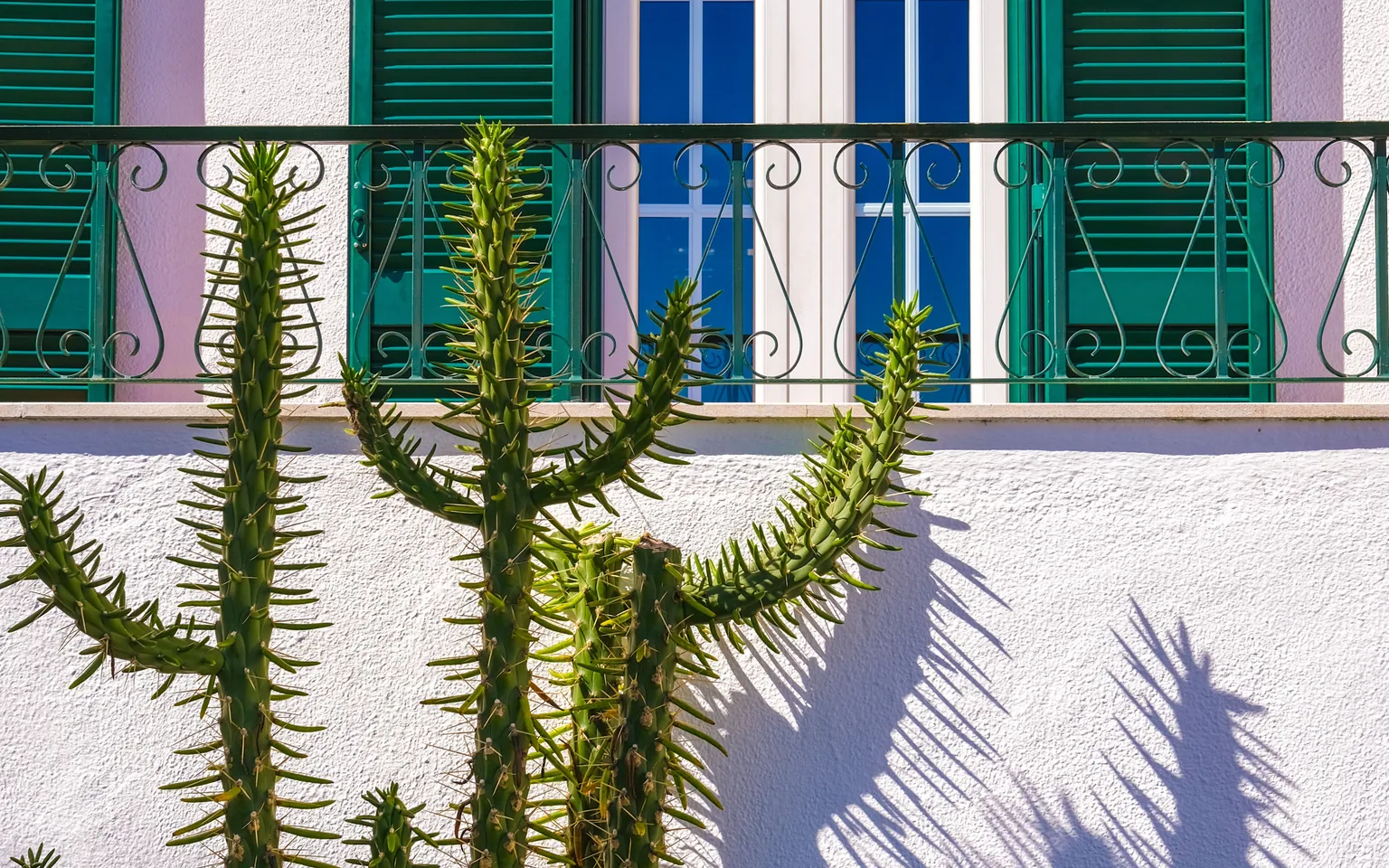
Most houseplant care advice assumes a stable indoor environment: 65–75°F, moderate humidity, no direct sun hitting the leaves for more than a few hours. But real homes are not climate-controlled terrariums. A south-facing apartment on the top floor can push into the 90s during a summer heatwave. A west-facing balcony gets hours of brutal afternoon sun. An un-air-conditioned room in August is basically a low-grade oven.
The plants that evolved for these conditions did so in deserts, savannas, and exposed rock faces — places where heat and drought are the default, not the exception. Their adaptations — water-storing leaves, reflective surfaces, deep root systems, CAM photosynthesis — make them not just tolerant of heat but dependent on it for healthy growth.
The five plants below are the best fit for hot, sunny indoor and balcony spaces. They are ranked from “handles heat” to “actively prefers it.”
How Heat Changes Your Watering Routine
Before getting to the plants, one rule that applies to all of them: heat changes how often you water. A plant that wants water every two weeks in spring might need it every five days when temperatures climb above 85°F. The soil dries faster, the plant transpires more, and the roots pull moisture at a higher rate.
That said, heat does not change the fundamental rule: check the soil before watering. Heat-loving plants are still vulnerable to root rot if they sit in wet soil — they just use water faster, so the soil dries more quickly. The finger test (top inch or two dry? then water) still applies; you will just hit that threshold sooner.
The side-by-side comparison of overwatered and underwatered plants is especially useful in summer, when heat stress and water stress produce overlapping symptoms that are easy to misread.
1. Jade Plant (Crassula ovata)
Jade plants are South African succulents that evolved on rocky, sun-baked hillsides where summer temperatures routinely exceed 100°F and rain is seasonal at best. Their thick, fleshy leaves store water, and the woody stems develop a tree-like structure that adds visual weight to a plant that is otherwise low-maintenance.
Jade plants thrive in direct sun — a south- or west-facing window, or a balcony with full afternoon exposure. In fact, direct sun brings out the red edges on the leaves, a stress coloration that many growers actively want. A jade plant in low light stays green and stretches leggy; in full sun, it stays compact and develops the red margins that make it look like a miniature tree.
On a hot balcony, jade plants will need more frequent watering than indoors — possibly every 5–7 days in peak summer — but the soil must dry completely between waterings regardless. A terracotta pot helps by wicking excess moisture away from the roots.
Light: Bright indirect to full direct sun. Water: Every 1–3 weeks, when soil is fully dry. Increases in high heat. Size: 1–4 feet indoors, slow-growing but long-lived. Pet safety: Toxic if ingested.
2. Aloe Vera (Aloe barbadensis miller)
Aloe vera is a classic for a reason: it is genuinely useful (the gel inside the leaves soothes minor burns and skin irritation) and it is one of the most heat-tolerant plants you can own. Native to the Arabian Peninsula, aloe is adapted to direct sun, high heat, and long dry periods. It stores water in its thick, toothed leaves and uses CAM photosynthesis to minimize water loss during the hottest parts of the day.
Aloe does best in bright direct light — a south-facing windowsill or an exposed balcony spot. In the right conditions, a mature plant will produce pups (small offsets at the base) that can be separated and potted up, turning one plant into several over a few years.
The one way to kill an aloe is overwatering combined with poor drainage. The roots rot quickly in wet soil, and because the leaves store so much water, the plant shows no visible signs of distress until the rot has already set in. Use a gritty, fast-draining mix — a cactus and succulent blend — and make sure the pot has a drainage hole.
Light: Bright indirect to full direct sun. Water: Every 2–4 weeks, when soil is completely dry. Size: 1–2 feet tall and wide. Pet safety: Toxic if ingested.
3. Ponytail Palm (Beaucarnea recurvata)
The ponytail palm is a desert native from eastern Mexico, and its signature feature — the swollen base called a caudex — is a water storage organ evolved to survive months of drought in full sun. A mature ponytail palm can go 3–4 weeks without water even in high heat, drawing on the reserves in its caudex while the thin, grass-like leaves minimize surface area for water loss.
This plant thrives on neglect in hot conditions. A south-facing window or a sunny balcony suits it perfectly, and it does not mind if temperatures climb into the 90s — in its native habitat, it routinely handles triple digits. The main risk is overwatering: the caudex rots if the soil stays damp. Let it dry out completely between waterings, and in winter reduce to monthly.
Ponytail palms are also pet-safe, which is rare among large, sculptural plants. If you have a hot, sunny space that both you and your pets share, this is one of the best options available.
Light: Bright indirect to full direct sun. Water: Every 2–4 weeks. Let soil dry completely. Size: 1–6 feet indoors, very slow-growing. Pet safety: Non-toxic.
4. Crown of Thorns (Euphorbia milii)
Crown of thorns is one of the few succulents that blooms nearly year-round if given enough light and warmth. Native to Madagascar, it is adapted to intense sun, rocky soil, and long dry spells. In a hot, sunny window or on a balcony, it produces clusters of small red, pink, or white flowers surrounded by colorful bracts.
This plant wants as much direct sun as you can give it. A south-facing window is ideal; a west-facing one works too, though the bloom may be slightly reduced. It also prefers temperatures above 70°F and will slow down or stop blooming if exposed to cold drafts or temperatures below 50°F.
The sap of Euphorbia species is a skin irritant — wear gloves when pruning and keep the plant out of reach of pets and children. Also, the stems are covered in sharp thorns (the “crown” in the name), so place it where it will not brush against anyone walking past.
Light: Full direct sun — at least 4–6 hours daily. Water: Every 1–2 weeks, when top inch of soil is dry. Size: 1–3 feet tall and wide. Pet safety: Toxic, and the sap is a skin irritant.
5. Burro’s Tail (Sedum morganianum)
Burro’s tail is a trailing succulent with overlapping, bead-like leaves that cascade down in dense ropes. Native to southern Mexico and Honduras, it grows on rocky cliffs in full sun and stores water in every one of those plump leaves, making it extremely drought-tolerant.
The best placement for a burro’s tail is a hanging basket in a bright, hot spot — a south-facing balcony, a sunroom, or directly in a south-facing window where the plant can trail downward. The more direct sun it gets, the more compact and blue-green the leaves become. In lower light, the leaves space farther apart and the plant loses its characteristic density.
The one practical note: burro’s tail leaves detach easily. Every time you move the plant, a few leaves will drop. Do not panic — each dropped leaf can root into a new plant if placed on top of dry soil. This is how the plant propagates in the wild: stems break, leaves scatter, and new plants grow from the fragments.
Light: Bright indirect to full direct sun. Water: Every 2–3 weeks. The leaves will wrinkle slightly when thirsty. Size: Trailing up to 3–4 feet. Pet safety: Non-toxic.
Caring for Heat-Loving Plants in Extreme Conditions
When indoor temperatures cross into the 90s or higher for sustained periods — during a heatwave with no air conditioning, for instance — even heat-tolerant plants benefit from a few adjustments:
- Move plants away from the glass on the hottest days. A south-facing window can amplify heat to well above the room temperature, enough to scorch even sun-loving leaves.
- Water in the morning, not during the heat of the day. Morning watering gives roots time to absorb moisture before evaporation peaks.
- Group plants together to create a microclimate with slightly higher humidity. Heat accelerates transpiration, and grouping slows the moisture loss.
- Do not fertilize during heatwaves. Heat stresses plants even when they are adapted to it, and fertilizer forces growth that the plant may not have the resources to sustain.
These adjustments are about managing extreme spikes, not changing your routine permanently. A jade plant or ponytail palm that handles 85°F without issue may still need protection when the thermometer hits 100°F for multiple days in a row.
Find more plants matched to your specific light and temperature conditions with the House Plant Finder.