Hoya Bloom Care Indoors: Flowers, Peduncles, and Seed Pods
Hoya bloom care indoors depends on maturity, bright light, steady watering, and protecting the old flower spurs. Learn what to do before and after a Hoya flowers.
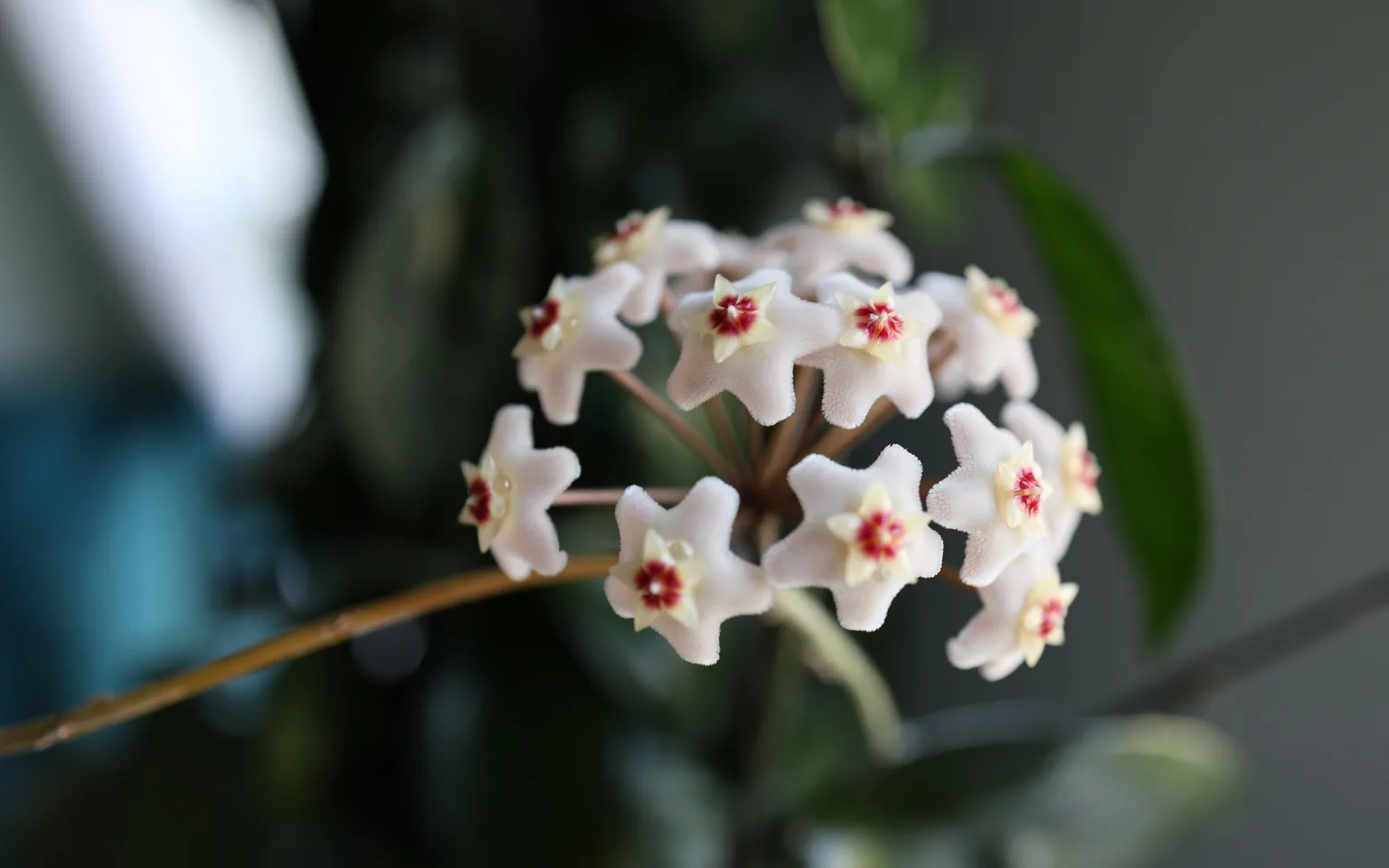
Hoya bloom care starts before the flower buds appear. Indoors, a Hoya usually blooms when the plant is mature enough, receives bright light, grows in an airy potting mix, and keeps its old flower spurs intact. Fertilizer can support the process, but it cannot replace age, light, and steady care.
The reason this topic keeps coming back is simple: Hoya flowers feel like an event. In a recent wave of public r/hoyas discussions, posts about many flowers, a first bloom, Hoya compacta blooming, and Hoya kerrii seed pods all pointed to the same reader need. People want to know what changed, what to keep doing, and what not to cut off after the flowers fade.
Good Hoya bloom care is mostly restraint: give the plant more usable light, avoid keeping the roots wet, feed modestly during active growth, and do not remove the peduncle unless it is clearly dead.
Hoya Bloom Care Starts With Plant Maturity
Many Hoyas do not bloom because they are young, not because anything is wrong. A rooted cutting may produce attractive leaves for years before it has the stored energy and stable root system needed to flower. This is especially true for small plants bought as single-node cuttings or young trailing vines.
A mature Hoya can still refuse to bloom if the light is weak, but age matters. If your plant is a small cutting with three leaves, the best Hoya bloom care is normal growth care: bright light, careful watering, and patience. Trying to force flowers with strong fertilizer can stress the roots before the plant is ready.
Look for signs that the plant is moving beyond juvenile growth. A mature plant usually has multiple vines, a stronger root system, and older woody sections. Some types also develop short, repeated flowering points called peduncles or spurs. Once those appear, the plant is closer to blooming, even if buds have not formed yet.
This is why an indoor Hoya should not be judged like a peace lily or anthurium. Some houseplants bloom as part of their retail look. Many Hoyas become better bloomers after they have settled in for a while.
Bright Light Is the Main Indoor Trigger
The most useful change for Hoya bloom care is often brighter light. Hoyas can sit in medium indoor light and look healthy, but many bloom more reliably in bright indirect light with some gentle direct sun. Morning sun or filtered late-afternoon light can be helpful. Harsh direct sun through hot glass can scorch leaves, especially if the plant was grown in lower light.
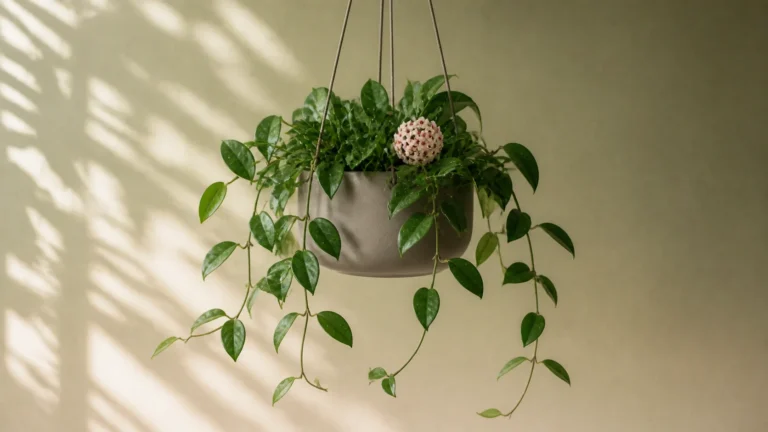
For Hoya carnosa, the plant profile for wax plant describes a houseplant vine with waxy leaves and fragrant flower clusters, grown in bright indoor conditions with a well-drained medium. That combination is the practical core: more light, but not a wet heavy pot.
If your Hoya grows leaves but never flowers, measure the light honestly. A spot that looks bright to your eyes may be too dim for flowering if it is across the room from a window. Move the plant closer to an east, south, or west window, or add a grow light that reaches the foliage rather than shining vaguely into the room.
Use the Houseplant Sunlight Check to assess daylight at the actual leaf position before increasing exposure. Its result is a placement starting point, not proof that a particular Hoya is ready to flower.
Do not move the plant from dim light to direct sun in one day. Acclimate it over one to two weeks. Older leaves formed in lower light are more likely to burn. New growth produced in the brighter spot will usually handle that location better.
Protect the Peduncle After Flowers Fade
The easiest Hoya bloom care mistake is cutting off the peduncle. A peduncle is the short flowering spur that holds the bloom cluster. After the flowers drop, that little stalk may look unfinished or odd, but many Hoyas can bloom again from the same point.
Do not remove a green or firm peduncle just because the flowers are gone. Leave it in place. Future buds may form there again. This is one reason Hoyas are satisfying long-term plants: the flowering structure can become more productive over time.
Only trim a peduncle if it is clearly dead, blackened, mushy, damaged, or part of a larger stem you are intentionally pruning. If you are cleaning up old blooms, remove the spent flowers and any sticky residue, but keep the spur.
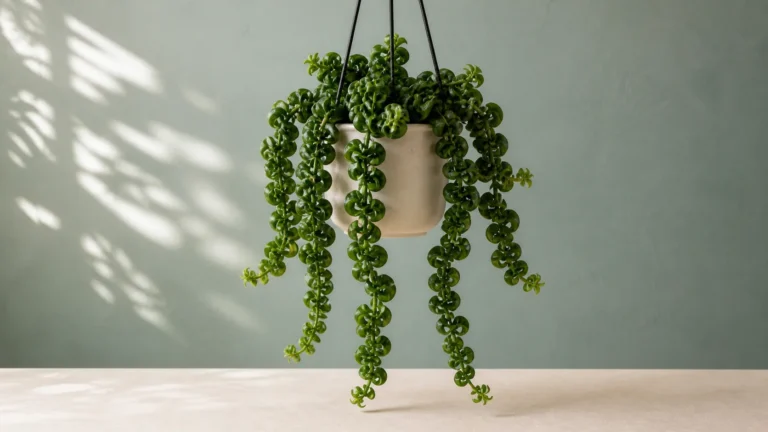
This point matters for Hindu Rope Plant, which is a compact form of Hoya carnosa. Its twisted leaves can hide stems and old spurs, so it is easy to snip more than intended. When cleaning a Hindu Rope Plant, slow down and identify the structure before cutting.
Water for Roots, Not Flowers
Blooming does not mean a Hoya suddenly wants soggy soil. Most indoor Hoyas do better when the potting mix dries partially between waterings. Thick leaves store moisture, and the roots need air. A pot that stays wet for too long can damage roots just when the plant needs steady support for growth and flowering.
Water deeply when the mix has dried enough for that plant and pot. In a chunky bark-based mix, this may happen sooner than in dense peat-heavy soil. In a cool room or oversized pot, it may take much longer. The goal is not a fixed schedule. The goal is wetting the mix thoroughly, letting excess water drain, and allowing air to return to the root zone.
If buds yellow and drop, do not assume the plant needs more water. Bud drop can come from drying out too hard, staying too wet, sudden temperature changes, low light, or repeated moves. Check the roots and soil before changing everything at once.
For general houseplant watering, the same diagnostic habits in how to water houseplants without overwatering are useful here: feel the mix, lift the pot, and adjust by conditions rather than by the calendar.
The Houseplant Watering Calculator can suggest a checking interval for the current pot and position. Thick leaves do not make every Hoya equally drought-tolerant, so confirm how far the mix has dried before watering.
Use an Airy Mix and a Sensible Pot Size
Hoya roots are much easier to manage in an airy potting mix. Many growers use a blend with bark, perlite, pumice, coco chips, or another coarse ingredient that creates air spaces. The exact recipe can vary, but dense soil that stays wet for a week is usually the wrong direction.
A small Hoya in a huge pot is a common problem. Extra soil holds extra water, and the roots may not use it quickly. If the plant is healthy but not blooming, do not automatically repot larger. Many Hoyas bloom well when slightly snug, as long as the roots are not trapped in sour, compacted mix.
Repot when the mix has broken down, drainage is poor, roots are severely crowded, or the plant dries out almost immediately after watering. If the plant is actively setting buds, wait unless there is a root emergency. Repotting can interrupt the flowering cycle.
Fertilizer Supports Blooming, But It Is Not a Switch
Fertilizer helps when the plant is already growing in enough light. It does not create flowers in a dark room. If your Hoya is in weak light, start by fixing the light and watering pattern before changing fertilizer.
During active growth, use a balanced houseplant fertilizer at a modest strength, following the product label. Some growers prefer bloom-support fertilizers with lower nitrogen and higher phosphorus, but that only helps when the rest of the conditions are already good. Overfeeding can build salts in the potting mix and stress the roots.
Flush the pot occasionally with plain water if you fertilize regularly, letting water run through the drainage holes. Do not fertilize a plant with damaged roots, severe drought stress, or obvious pest pressure. Stabilize the plant first.
Humidity, Temperature, and Air Movement Still Matter
Most Hoyas do not need a greenhouse to bloom indoors, but they dislike extreme swings. Normal warm household temperatures are usually fine. Aim for stable warmth, bright light, and no cold drafts. A plant sitting near an air-conditioning vent may pause growth even if the light is good.
Moderate humidity is helpful, especially for active growth and bud development. Dry indoor air alone does not always stop flowering, but very dry air combined with underwatering and heat can make buds fail. A pebble tray will not transform a dry room, but grouping plants or using a small humidifier can make conditions steadier.
Air movement matters because dense vines and thick leaves can trap moisture. Keep the plant in a place with normal room airflow, not pressed into a sealed corner.
What Hoya Seed Pods Mean
Seed pods are exciting, but they are not the main goal for most indoor growers. A seed pod usually means flowers were pollinated. If it matures and opens, the seeds may be viable for a short time, but growing Hoya from seed is slower and less predictable than rooting cuttings.
Seed-grown plants may not match the parent exactly, especially if cross-pollination happened. That uncertainty is part of the interest for collectors, but it is not the fastest way to duplicate a favorite plant.
If a seed pod appears, leave it on the plant until it matures and begins to split naturally. Keep normal care steady. Do not increase watering heavily just because the pod exists. The plant still needs light, air, and roots that are not waterlogged.
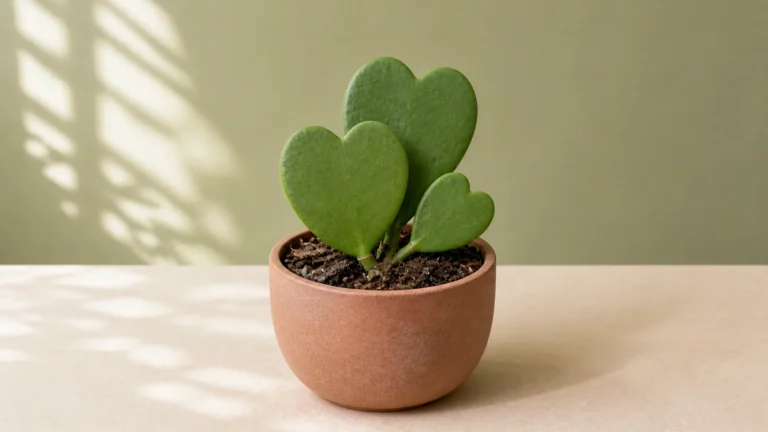
For Sweetheart Hoya, seed pods are especially interesting because the plant is often sold as a single heart-shaped leaf. A single leaf cutting without a node may stay alive for a long time without becoming a vining plant. A proper Sweetheart Hoya with nodes and vines has a very different long-term potential.
Quick Hoya Bloom Care Checklist
Use this checklist before blaming the plant:
| Question | What it means |
|---|---|
| Is the plant mature? | Young cuttings may need more time before flowering |
| Is the light bright enough? | Healthy leaves in dim light do not guarantee blooms |
| Is the potting mix airy? | Dense wet soil can weaken roots |
| Are old peduncles intact? | Many Hoyas rebloom from existing spurs |
| Is watering steady? | Buds can fail from both drought and wet roots |
| Is fertilizer modest? | Feeding supports growth but does not replace light |
Hoya bloom care is not about one trick. It is about letting the plant reach flowering age, giving it enough light to spend energy on blooms, protecting the peduncles that can flower again, and keeping the root zone airy. If you are choosing a Hoya for bloom potential, start with the Hoya Carnosa plant guide and match the plant to the brightest manageable spot in your home. That steady setup is the part of Hoya bloom care that pays off over time.