What to Do When Your Pothos Vines Get Too Long
Pothos vines getting too long can be pruned, supported, or propagated. Choose the right option for the plant's health, shape, and available space.
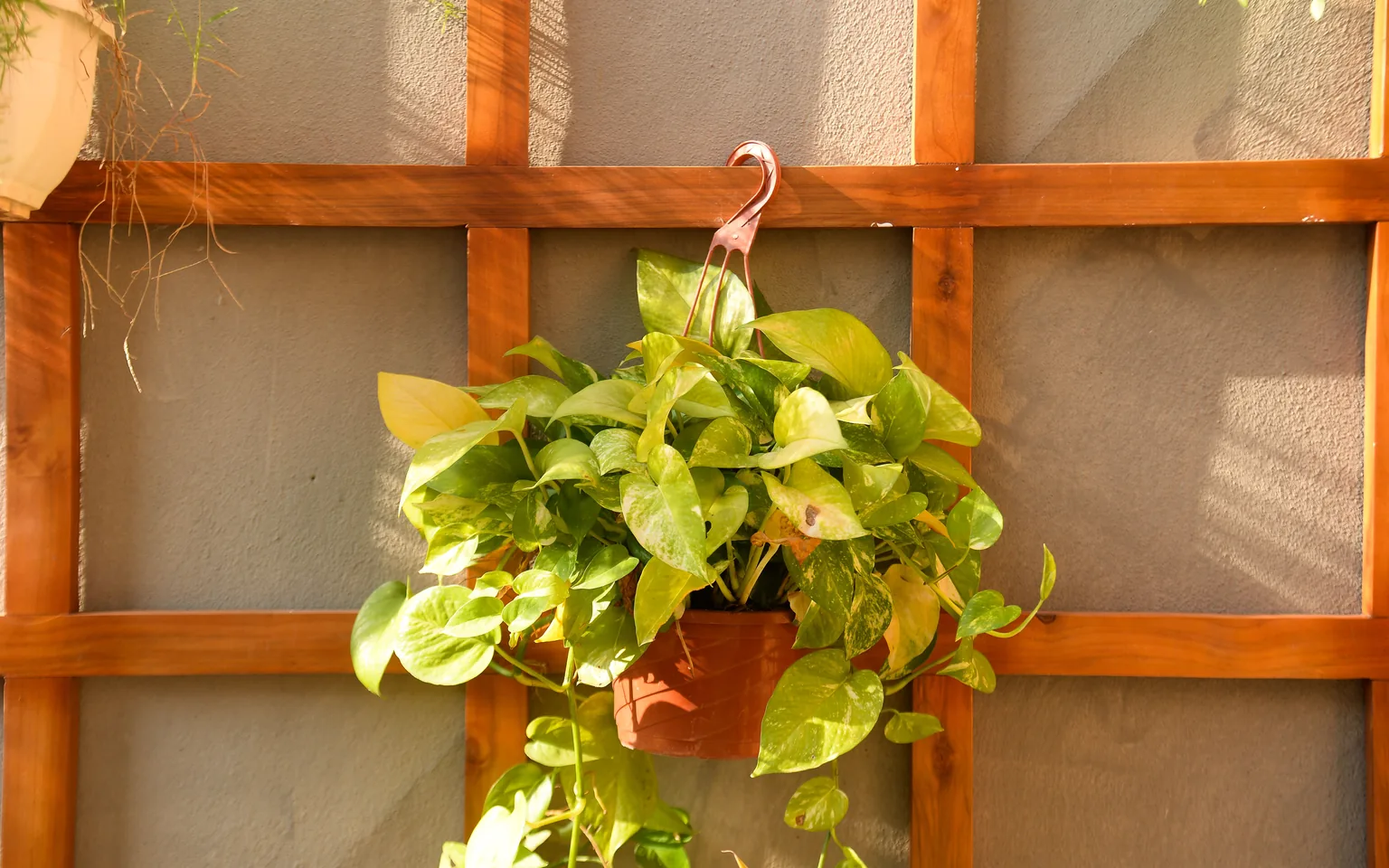
When pothos vines get too long for a shelf, hanging basket, or windowsill, the plant is not necessarily in trouble. Long stems are part of the trailing and climbing habit of Epipremnum aureum. Check whether the vines are healthy, then choose one goal: keep the cascade, guide the plant upward, or prune and use the cuttings to rebuild a fuller pot.
Public conversations in r/pothos about supporting long wall-trained vines turn natural growth into a practical design problem. The stems need physical support, useful light, and enough access for watering and pest checks. A dramatic wall is not successful if the plant cannot be moved without tearing it apart.
First Check Why Pothos Vines Get Too Long
Length alone does not show whether a pothos is thriving. Look at leaf size, spacing, color, and the condition of the stem.
A healthy vine usually produces firm leaves at reasonably regular intervals. If the newest leaves are becoming smaller while the gaps between nodes become longer, the plant may be stretching toward better light. Existing bare sections will not refill automatically, but better light can make future growth more compact.
Inspect the base of the plant as well. Yellow leaves, soft stems, a sour smell, or mix that stays wet for many days indicate a root-zone problem rather than a styling issue. Address moisture and drainage before asking the plant to support more growth.
Use the Houseplant Sunlight Check to evaluate the current position. Pothos can tolerate moderate or lower light, but tolerance is not the same as strong growth. The low-light houseplants collection helps compare plants that cope with dimmer rooms while still showing how growth expectations may change.
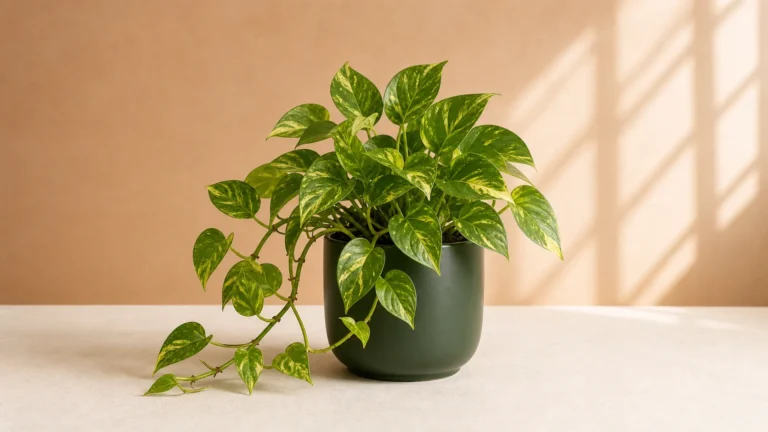
Option One: Keep the Long Trailing Shape
Keep the vines long when the leaves remain healthy and the plant fits the room. Spread the load across several smooth anchor points instead of allowing all stems to pull against one hook or shelf edge.
Use soft plant ties, removable plant clips, or rounded hooks. Leave room for stems to thicken, and avoid folding mature vines around sharp corners. A clip should support the stem without pinching it.
Plan an accessible route from the pot. You still need to lift or check the container, inspect leaf undersides, and remove the plant for cleaning. Leave enough slack near the pot so routine movement does not transfer force to the oldest nodes.
Avoid attaching aerial roots directly to painted walls. Roots can cling to textured surfaces and leave marks. A narrow plank or removable trellis creates a surface the plant can use without making the wall part of the root system.
Option Two: Train the Pothos to Climb
Pothos naturally trails when no support is available, but it can also climb. The NC State pothos profile describes it as a climbing or trailing plant and notes that supported plants can develop larger leaves.
Use a securely anchored trellis, plank, coir pole, or moss pole. Guide the vine upward with loose ties around the stem, not the leaf stalk. Place nodes close to the support so aerial roots have an opportunity to attach.
A moist moss pole may encourage rooting, but it adds maintenance and must not keep the entire pot wet. A dry pole or wood plank can still provide mechanical support. The essential feature is stability, not a specific product.
The Compare Houseplants tool can help you compare mature size and growth rate before choosing a permanent structure. A climbing setup needs more vertical clearance than a trailing basket, even when both begin with the same small plant.
Option Three: Prune Long Pothos Vines
Pruning is useful when vines drag on the floor, become hard to move, lose many leaves near the pot, or make the container heavy on one side. It is also the best route when you want a more compact shape.
Use clean, sharp scissors or pruners. Follow a vine back to the length you want, locate a node, and cut just above that node on the mother plant. A node is the slightly raised stem section where a leaf and often a small aerial root emerge. Nodes remaining on the plant can activate new growth.
Do not cut every vine to the same length automatically. A staged trim preserves foliage and creates a more natural outline. Start with the longest, barest, or damaged stems, then reassess after new growth begins.
If a vine has a long bare section near the pot but healthy leaves at its tip, trimming only the tip will not make the base full. Cut the vine into viable sections, root them, and return established cuttings around the pot edge.
Propagate the Pieces You Remove
Each cutting needs at least one node. Keep one or two healthy leaves where possible. A leaf and petiole without a stem node may remain green in water but cannot produce a complete new vine.
For water propagation, keep the node under water and the leaves above it. Replace cloudy water and move the cutting into potting mix after it develops a small branching root system. For direct-to-mix propagation, place the node in a light, well-draining medium and keep it lightly moist while roots form.
Rooted cuttings can become gifts, separate plants, or material for filling the original pot. Do not return unrooted cuttings to saturated soil and then increase watering for the established mother plant. The two root systems have different needs during the transition.
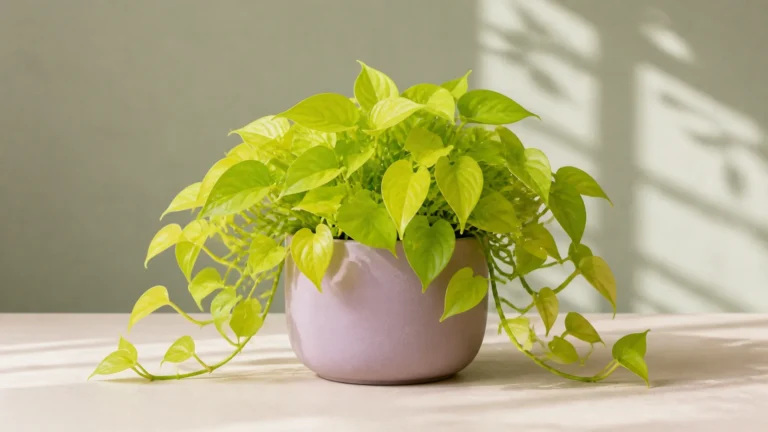
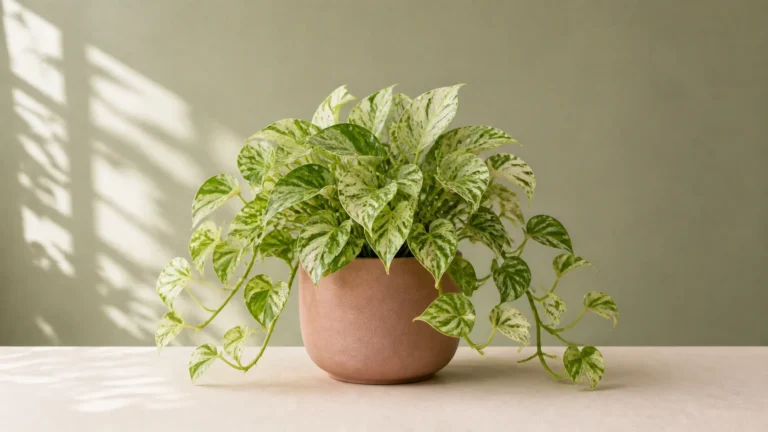
Different pothos cultivars grow at different rates under the same conditions, especially when variegation reduces green leaf area. The fast-growing houseplants collection provides useful context when deciding how much future length a shelf can support.
Do Not Repot Based on Vine Length Alone
A long pothos is not automatically root-bound. Slide the root ball out only when other evidence supports a check. Dense circling roots, roots filling nearly all available mix, repeated wilting despite correct watering, or very rapid dry-down are more useful signs than stem length.
Moving a plant into a pot that is much too large can leave unused mix wet around a relatively small root system. If the roots still fit comfortably, keep the pot and manage the foliage instead.
When a repot is justified, move up only one pot size and maintain drainage. The Houseplant Watering Calculator can provide a new checking interval after pot size, material, or light changes, but soil moisture should decide when you actually water.
Keep the Top of the Pot Full
Long vines can make a pothos look sparse at the crown even when the trailing section is healthy. Stronger indirect light helps future nodes remain closer together. Rooted cuttings planted around the edge add stems where the pot needs them.
Rotate the container gradually if all vines lean toward one window. Do not coil many feet of vine tightly on top of the soil; crowded wet stems can be damaged and make inspection difficult. A loose loop on the support is safer than burying stems across the pot surface.
Choose the Shape Before You Cut
If you want a soft cascade, retain healthy vines and distribute their weight. If you want larger leaves and an upright form, provide a stable climbing support and sufficient light. If you want a compact, full pot, prune in stages and return rooted cuttings near the base.
The most useful answer when pothos vines get too long is not one universal cutting point. It is a clear growth goal supported by the right light, structure, and access for routine care.