6 Best Bathroom Plants That Love Humidity and Low Light
Six plants built for the bathroom's tropical microclimate — warm, humid, and often low on natural light — plus what to do if your bathroom has no window at all.
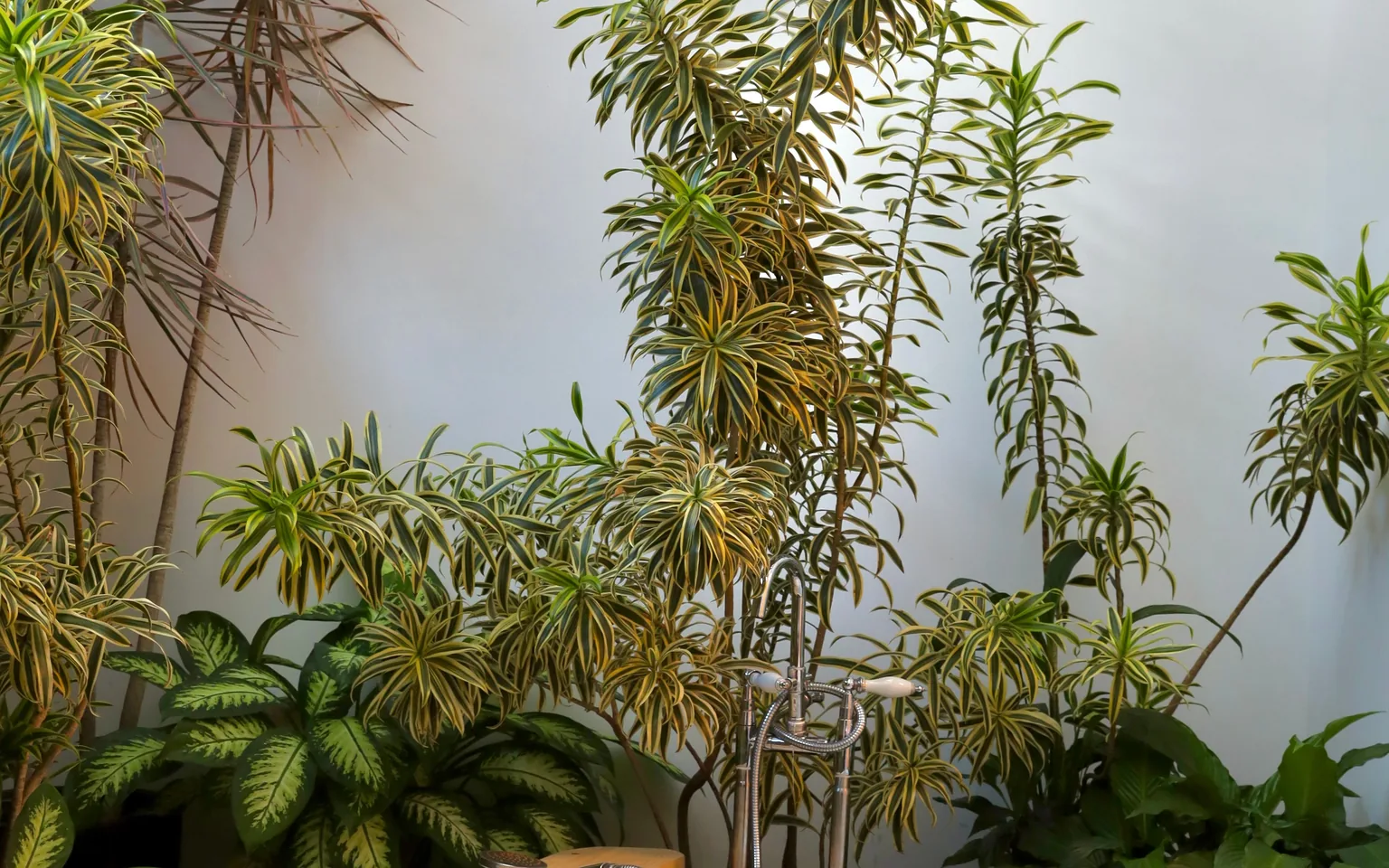
A bathroom is the closest thing most homes have to a tropical microclimate. The steam from showers spikes humidity to levels that would feel oppressive in a living room but are exactly what rainforest-floor plants evolved for. The temperature is warm and relatively stable. The space tends to be small, which makes it easy to create a lush, jungle-like feel with just two or three well-chosen plants.
The challenge is light. Most bathrooms have small, frosted windows, north-facing windows, or no windows at all. The plants that thrive here need to handle high humidity and low light simultaneously — a combination that eliminates many popular houseplants. Ferns love humidity but need some light. Succulents tolerate low light but rot in high humidity.
The six plants below are the ones that genuinely thrive at the intersection of steamy and dim. They are ranked from "needs a window" to "can survive with no natural light at all."
The Bathroom Plant Paradox: Humidity vs. Light
Before getting to the plants, it is worth understanding why this combination is so tricky. Most houseplant care advice treats humidity and light as independent variables: give the plant enough of each and it thrives. But in a bathroom, the two are locked in a tradeoff. You have abundant humidity — ideal for calatheas, ferns, and orchids — but often very limited light, which drastically reduces the plant's ability to use that humidity for growth.
The plants that work in bathrooms have evolved to maximize photosynthesis in low light while tolerating — and sometimes requiring — consistently high humidity. They tend to be understory plants from tropical forests, where the tree canopy blocks direct sun but humidity rarely drops below 70%.
1. Boston Fern (Nephrolepis exaltata)
If your bathroom has a window — even a small, frosted one — the Boston fern should be your first choice. It is the plant most closely associated with bathroom growing, and for good reason: the combination of filtered light and consistent humidity mirrors the forest-floor conditions it evolved for. In a bathroom, a Boston fern often requires less maintenance than in a living room, because the ambient humidity from showers replaces the need for daily misting.
Boston ferns need the soil to stay consistently moist — not soggy, but never fully dry. The humidity in the air also matters for the fronds: when humidity drops, the tips brown and the fern sheds. A bathroom naturally solves this. The plant also benefits from being placed somewhere it will catch indirect shower steam — a shelf near the shower or a hanging basket in the corner of the room works well.
If you notice brown tips despite good humidity, the culprit is usually tap water chemicals. Letting water sit out overnight before using it, or switching to filtered water, often eliminates the issue.
Light: Medium indirect — needs a window. Frosted north-facing is fine. Water: Keep soil consistently moist. Do not let dry out. Size: 2–3 feet wide, looks best in a hanging basket. Pet safety: Non-toxic.
2. Moth Orchid (Phalaenopsis)
Phalaenopsis orchids are the most widely available orchid for a reason: they bloom for months, they are less demanding than their reputation suggests, and they love bathroom conditions. In nature, Phalaenopsis grows on tree branches in tropical forests — its roots are exposed to humid air rather than buried in soil, and it gets dappled light filtered through the canopy above.
A bathroom with a frosted or east-facing window provides essentially the same conditions. The warmth and humidity keep the aerial roots — the silvery-green roots that grow out of the pot — hydrated without the need for frequent misting. The filtered light is enough for photosynthesis without burning the leaves.
The watering routine is different from most houseplants: instead of watering the potting medium directly, run tepid water through the pot once a week and let it drain completely. The roots should dry to a silvery color between waterings; green roots mean there is still enough moisture. Overwatering kills more orchids than underwatering because the roots suffocate and rot in perpetually wet media.
Light: Medium indirect — east-facing or frosted window ideal. Water: Once weekly, letting water run through and drain completely. Size: 1–2 feet tall when in bloom. Pet safety: Non-toxic.
3. Peace Lily (Spathiphyllum)
The peace lily is one of the most adaptable bathroom plants because it handles both humidity and low light. It thrives in the moist air and does not require a window with direct exposure — a north-facing window or even a bathroom with only borrowed light from an adjacent room can sustain one.
Peace lilies are also the most communicative plant on this list: the leaves droop visibly when the plant needs water, and they recover within hours. In a bathroom, the soil stays moist longer because transpiration is slower in high humidity, so the time between waterings extends naturally. Water when the leaves just begin to droop, and use a pot with a drainage hole — standing water in the outer decorative pot is a common cause of root problems.
One note: peace lilies produce white spathes (the "flower") most reliably in medium light. In a very dim bathroom, the plant will stay healthy and produce leaves but may not bloom. If blooms matter, place it as close to the light source as possible.
Light: Low to medium indirect. Handles low light well. Water: When leaves begin to droop — in a bathroom, may be every 7–14 days. Size: 1–3 feet tall. Pet safety: Toxic if ingested.
4. Chinese Evergreen (Aglaonema)
Chinese evergreens are one of the few plants that tolerate both low light and high humidity while also being forgiving about watering — a rare combination that makes them close to ideal for bathrooms. They are native to the tropical forest understory, where they grow in deep shade with consistently high humidity.
The green varieties — Aglaonema modestum, Aglaonema commutatum — handle the lowest light and are the best choice for bathrooms with small or north-facing windows. The variegated silver, pink, or red varieties need slightly more light to maintain their color, so reserve those for bathrooms with better natural light.
Chinese evergreens are also compact — most stay under 2 feet — which matters in bathrooms where floor and counter space is limited. A small Aglaonema on a bathroom vanity or shelf adds greenery without crowding the space.
Light: Low to medium indirect. Green varieties handle very low light. Water: Weekly, letting top inch of soil dry between. Size: 1–2 feet tall and wide. Pet safety: Toxic if ingested.
5. Spider Plant (Chlorophytum comosum)
Spider plants are not usually associated with bathrooms, but they thrive in the humidity and are tolerant of lower light than most people assume. The arching, grass-like leaves create a fountain shape that looks particularly good on a high shelf or in a hanging basket, where the runners with plantlets can trail down freely — a look that suits the vertical space above a bathtub or sink.
Spider plants prefer bright indirect light but tolerate medium light well. A bathroom with a small window is enough. The humidity from showers keeps the leaf tips from browning, which is the most common cosmetic complaint about spider plants in drier rooms. If you have kept a spider plant in your living room and struggled with crispy brown tips, moving it to the bathroom often solves the problem entirely.
Spider plants are also non-toxic, which matters in a bathroom if curious pets wander in. The ASPCA database confirms they are safe for both cats and dogs.
Light: Medium to bright indirect. Tolerates medium light. Water: Weekly, letting top inch of soil dry between. Size: 12–18 inches tall, with trailing runners. Pet safety: Non-toxic.
6. Snake Plant (Sansevieria)
If your bathroom has no window at all, the snake plant is the only realistic option on this list — and one of the only options period. Its CAM photosynthesis allows it to function in extremely low light, drawing on stored energy reserves that can sustain the plant for months in conditions that would kill anything else.
In a windowless bathroom, a snake plant will not grow much. The key is to treat it almost like a living sculpture rather than an actively growing plant: water it sparingly (every 4–6 weeks), avoid fertilizer, and accept that new leaves will be rare. The plant stays alive and green, and the existing leaves maintain their structured, architectural look year after year.
For a windowless bathroom, consider rotating two snake plants — keep one in the bathroom and one in a brighter room, swapping them every month or two. The plant in the brighter room builds up energy reserves, and the rotation ensures neither plant spends too long in the dark.
Light: Low to bright indirect. The only plant on this list that handles no natural light. Water: Every 4–6 weeks in a windowless bathroom. Soil must dry completely. Size: 1–4 feet, variety-dependent. Pet safety: Toxic if ingested.
A Quick Summary by Bathroom Type
| Bathroom Type | Best Plants |
|---|---|
| Window, bright (south/east-facing, clear glass) | Boston Fern, Moth Orchid, Spider Plant, plus any tropical — calatheas, alocasias, fittonias |
| Window, dim (north-facing or frosted) | Peace Lily, Chinese Evergreen, Pothos (not listed but also works) |
| Window, tiny (barely any light) | Snake Plant, ZZ Plant (the ZZ is also viable — essentially the same low-light strategy) |
| No window at all | Snake Plant — and supplement with a grow light if you want more options |
What About a Grow Light?
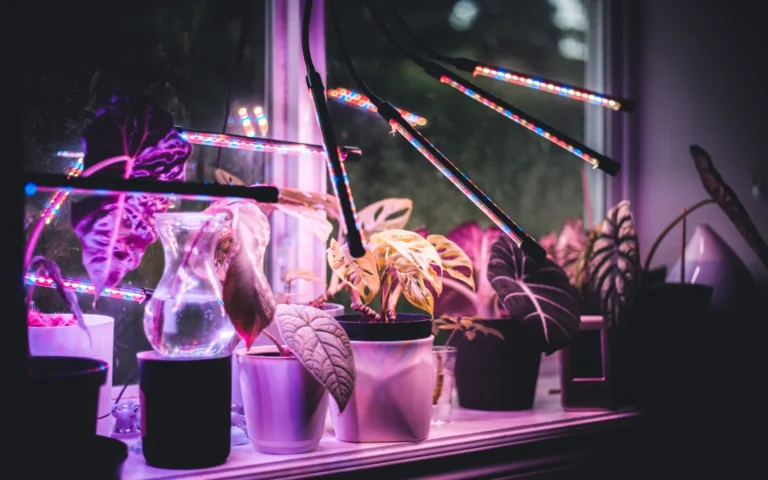
If your bathroom has no natural light but you want more than a snake plant, a small LED grow light changes the equation entirely. A clip-on grow light attached to a shelf or a bulb swapped into an existing bathroom fixture turns a "no light" room into a "low light" one, and suddenly the full list above becomes viable. A basic LED grow bulb costs $15–25 and adds perhaps a dollar a month to the electricity bill. It is the cheapest way to dramatically expand what you can grow in a windowless bathroom.
Use the House Plant Finder quiz to find more plants matched to your bathroom's specific light and humidity conditions.