Pothos Setup Care: Should It Trail, Climb, or Grow on a Shelf?
A good Pothos setup is not just about vines on a wall. Learn how to plan light, watering access, drainage, pruning, and support before the vines become hard to manage.
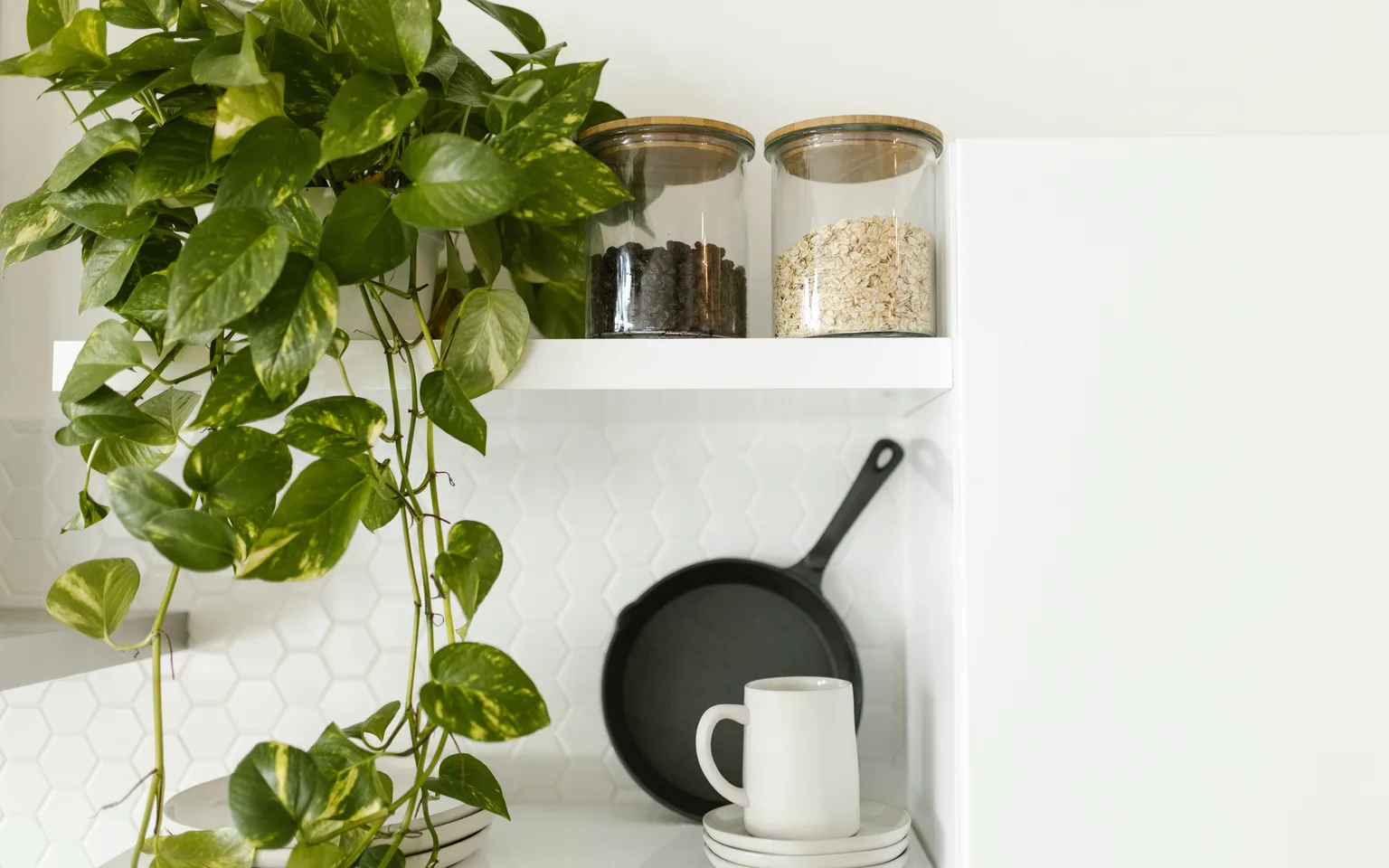
A Pothos setup works best when it is designed for care first and looks second. Long vines on a wall, shelf, or hanging planter can look effortless in a photo, but the plant still needs reachable soil, enough light, drainage, pest checks, and regular pruning. If the setup makes those jobs difficult, it will age badly.
This is why a recent discussions, Update Pothos setup, is a useful content signal. People are not only asking how to keep pothos alive. They are asking how to live with a fast-growing vine indoors. The real problem is not “Pothos care” in the abstract. It is how to arrange a Pothos setup so the plant stays full, accessible, and healthy after the first pretty month.
The main choice is simple: let pothos trail, train it upward, or keep it on a shelf where maintenance stays easy. Each choice can work. The best one depends on your light, wall surface, pets, watering habits, and tolerance for pruning.
Choose the Pothos Setup Before the Vines Get Long
Pothos (Epipremnum aureum) is forgiving, but it is not maintenance-free. It can trail from a high shelf, climb a moss pole or plank, run along a wall with clips, or fill a tabletop planter. The earlier you choose the direction, the cleaner the plant will look later.
Trailing pothos is the easiest setup for renters and beginners. Put the pot on a shelf, cabinet, bookcase, or hanging bracket and let the vines fall naturally. It creates instant softness, and you can still lift the pot down for watering. The drawback is that vines may become long and thin if the light is weak or pruning is ignored.
Climbing pothos is better when you want larger leaves and a more vertical shape. In nature, pothos climbs, and indoor vines often produce larger leaves when they have support, bright light, and time. A moss pole, wood plank, coir pole, or trellis can all work. The drawback is that the setup becomes harder to move.
A wall setup is the most dramatic but also the easiest to overcomplicate. If vines are pinned across the wall, every future watering, inspection, pest treatment, and move becomes more awkward. Wall clips can be useful, but they should guide the vine rather than trap the plant in a pattern you cannot maintain.
A shelf setup is the most practical middle ground. It gives the vine room to trail, keeps the pot reachable, and makes it easier to rotate, prune, and clean leaves.
Light Decides Whether a Pothos Setup Looks Full
Assess daylight at the intended shelf and along the vine route with the Houseplant Sunlight Check. A bright pot position does not guarantee that the far end of a wall receives enough light for dense growth.
If usable daylight remains limited, compare alternatives in the low-light houseplants collection. Low-light tolerance can make a simpler shelf arrangement workable, but it does not promise rapid wall coverage.
Pothos is famous for tolerating low light, but low-light survival is not the same as a full wall of leaves. A Pothos setup that sits too far from a window often develops long spaces between leaves. The vine keeps growing, but the look becomes sparse.
Bright indirect light is the best default. An east-facing window, a bright room with filtered southern or western light, or a shelf close to a bright window usually works well. If the wall is several feet from the window and the room reads dim during the day, use a grow light or choose a simpler trailing setup that can sit closer to the light.
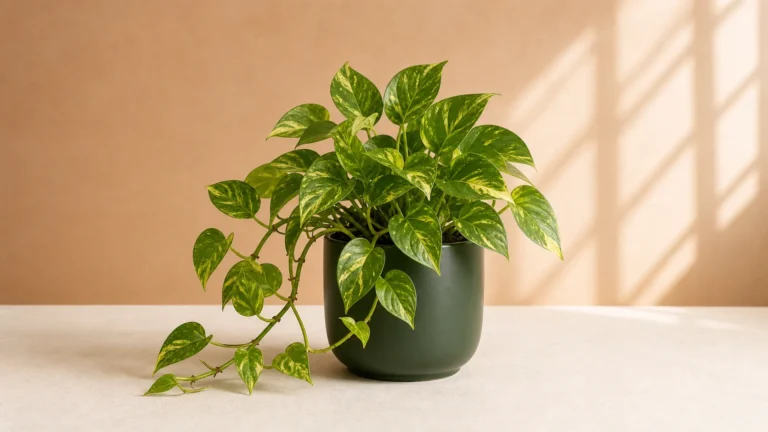
Variegated pothos needs more usable light than plain green pothos. Marble Queen Pothos, with its creamy white patterning, can lose contrast or slow down in dim conditions. Neon Pothos can hold its bright color better when it receives steady bright light. Golden Pothos is usually the most flexible of the common types.
The plant profile for Epipremnum aureum is a useful botanical reference for pothos as a trailing or climbing evergreen vine. For everyday indoor care, the practical takeaway is this: give the plant enough light to keep leaves close together before expecting it to cover a wall attractively.
Make Watering Access Non-Negotiable
The Houseplant Watering Calculator can suggest when to check the mix after changing the pot or position, but the actual moisture and drainage should decide when to water.
The most common Pothos setup mistake is placing the pot where watering becomes annoying. If you have to stand on a chair, detach vines, or guess whether the soil is dry, the setup is too complicated.
Keep the pot reachable. You should be able to touch the top of the soil, lift the inner nursery pot if needed, and check whether water is collecting in the outer container. A wall covered with vines is not worth much if the roots are sitting in stale water.
Use a pot with drainage. If you like the look of a decorative container, keep the pothos in a plastic nursery pot inside the cachepot. Water the inner pot, let it drain fully, and then return it. This is much safer than planting directly into a sealed wall planter with no drainage hole.
For watering rhythm, let the top 1 to 2 inches (2.5 to 5 cm) of mix dry before watering again. In brighter, warmer rooms, this may happen faster. In lower light, it may take longer. The method in watering houseplants without overwatering fits pothos well because the plant responds better to soil checks than calendar watering.
Plan the Vines Around Real Life
A Pothos setup should avoid curtains, blinds, heating vents, air conditioners, outlets, wall art, and doors. Vines are flexible, but they are still living stems. If you thread them through hardware or behind furniture, future care becomes harder.
Use removable plant clips or small hooks only where you can undo them. Do not wrap vines so tightly that the stem is pinched. Leave slack for growth and movement. If the vine is young and soft, guide it gently. Older woody sections may snap if forced into a sharp turn.
Avoid training vines across surfaces that need frequent cleaning. Kitchens, bathrooms, and shelves near humidifiers can collect dust or mineral residue on leaves. Pothos leaves are easy to wipe when the vine is reachable and frustrating to clean when it is webbed across a wall.
For renters, a shelf or hanging setup is usually safer than a fixed wall grid. It creates the same trailing effect without adhesives or holes across the room.
Pruning Is Part of the Setup
A Pothos setup that is never pruned often becomes long, bare near the pot, and leafy only at the ends. Regular pruning keeps growth denser.
Cut vines just above a node, which is the area where a leaf and aerial root point emerge. That node can push new growth from the remaining vine, and the cutting can often root. Do not just remove individual leaves to reduce length; that leaves the same long stem in place.
Use healthy cuttings to fill the pot. If the top of the planter looks thin, root several cuttings and plant them back into the same pot. This makes the setup look fuller from the base instead of relying on longer and longer vines.
Pruning also gives you a chance to inspect the plant. Look at the underside of leaves, the nodes, and the soil surface. Dense wall setups can hide early pest problems because the plant is visually spread out. If you notice sticky residue, webbing, cottony white clusters, or small scale bumps, compare symptoms with the broader guide to common houseplant pests before treating the whole wall.
Trailing, Climbing, or Shelf: Which Pothos Setup Is Best?
Use the setup that matches your maintenance style.
| Setup type | Best for | Watch out for |
|---|---|---|
| Trailing shelf | Easy maintenance and soft vines | Bare stems if light is too weak |
| Hanging basket | Vertical drama without wall clips | Harder watering if hung too high |
| Moss pole or plank | Larger leaves and upright growth | Less portable once established |
| Wall clips | Decorative vine paths | Difficult pest checks and moving |
| Tabletop pot | Small plants and frequent pruning | Needs trimming before vines tangle |
For most homes, the best first Pothos setup is a bright shelf or plant stand. It keeps the plant close to light, lets the vines trail, and gives you full control over watering and pruning. Once you know how fast the vine grows in that room, you can decide whether to train part of it up a pole or across a wall.
Match the Pothos Variety to the Setup
Golden Pothos is the most flexible choice for a first setup. It handles normal indoor conditions well, grows quickly, and looks good trailing or climbing. The Golden Pothos plant guide is the strongest starting point if you want one plant that can adapt to shelves, baskets, or poles.
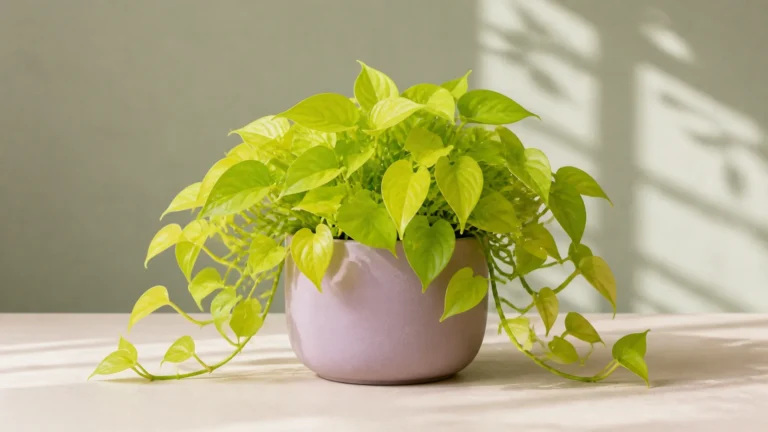
Neon Pothos is useful when the setup needs a bright color signal. Its chartreuse leaves can stand out on a plain wall or shelf, especially in bright indirect light. It can look duller if placed too far from the light source, so use the Neon Pothos plant guide when deciding where to put it.
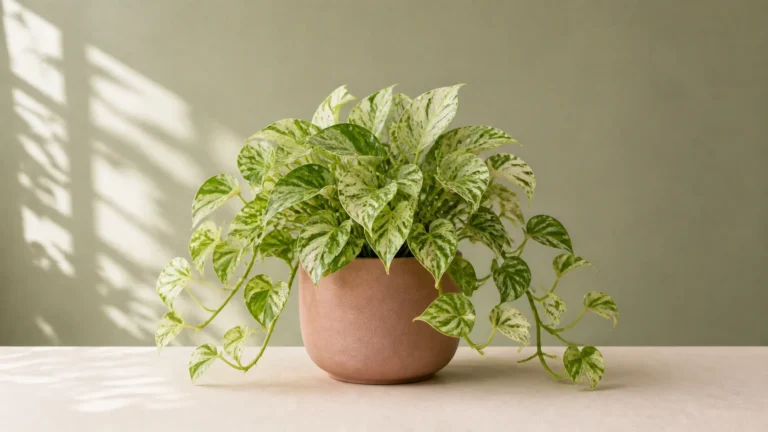
Marble Queen Pothos is best when you can provide brighter light and slower, more careful growth. Its white variegation gives a high-contrast look, but the plant may grow more slowly than Golden Pothos. A dim wall can reduce the effect, so a shelf near a bright window is often better than a long wall run.
Pet Safety and Placement
Pothos is not a pet-safe houseplant. The plant contains insoluble calcium oxalate crystals, and the toxic plant listing for Golden Pothos is a useful reference when planning placement around cats and dogs.
This matters more in a wall or shelf setup than it does with a simple pot. Long vines can hang into pet reach even when the pot is high. If a cat can climb the shelf or bat at the trailing stems, the setup is not actually out of reach.
For homes with curious pets, keep pothos in a room pets do not access, use a higher contained shelf, or choose plants from the pet-safe houseplants list instead.
The Best Pothos Setup Is Easy to Maintain
A good Pothos setup should pass a boring test: can you water it, prune it, inspect it, and move it without dismantling the room? If the answer is yes, the setup has a much better chance of staying attractive for years.
Start with bright indirect light, a reachable pot with drainage, and a simple direction for the vines. Let the plant trail from a shelf if you want easy care. Train it up a pole if you want stronger vertical growth. Use wall clips sparingly, and prune from nodes before vines become thin or tangled.
Pothos is forgiving enough to experiment with, but the best setup is the one you can actually care for every week.