Common Houseplant Pests: Identification and First Steps
Identify the 5 most common houseplant pests — spider mites, mealybugs, fungus gnats, scale, and thrips — with clear symptoms, photos, and safe first-response treatment steps.
You bring home a new plant, set it on the shelf, and a week later you notice something moving on the leaves. Or tiny black flies hovering around the soil. Or white cottony fluff on the stems.
Houseplant pests are a normal part of keeping indoor plants. They do not mean you are a bad plant parent, and they do not mean your plant collection is doomed. But they do need to be addressed quickly, because most pests reproduce fast and spread to nearby plants.
This guide covers the five most common houseplant pests, how to identify each one by what you see, and the safest first steps to take before the problem gets worse.
Why Houseplant Pests Happen
Most houseplant pests enter your home on new plants. A plant from a garden center, a cutting from a friend, or even a plant brought in from outdoors for winter can carry pests that are too small to notice at first. The University of Minnesota Extension notes that spider mites, mealybugs, and fungus gnats are the three most reported houseplant pests, especially during winter when plants are brought indoors.
Pests can also enter through open windows during warm months, particularly spider mites and thrips, which are small enough to drift on air currents.
Stressed plants are more vulnerable. A plant that is underwatered, overwatered, or placed in the wrong light is less able to defend itself, and pests are attracted to weakened plants. Healthy, well-cared-for plants are not immune, but they tend to resist infestations better and recover faster.
The single most important habit for preventing pest problems is quarantining new plants for at least two weeks before placing them near your existing collection. This gives any hidden pests time to reveal themselves while they are still isolated.
The 5 Most Common Houseplant Pests
1. Spider Mites
What they look like: Spider mites are tiny — about the size of a grain of sand — and difficult to see individually. They appear as tiny moving specks, usually red, brown, or pale yellow. Their most recognizable sign is fine webbing, similar to spider webs, between leaves and stems.
Where to check: Undersides of leaves. Spider mites feed by piercing leaf tissue and sucking out plant fluids, which causes a stippled or speckled appearance — tiny yellow or pale dots across the leaf surface. As the infestation progresses, leaves may look dull, dusty, or bronzed.
Plants most affected: Calathea, Alocasia, English Ivy, Peace Lily, and palms. Plants with thin leaves are generally more susceptible than succulent-leaved plants. Colorado State University Extension provides detailed lifecycle and treatment guidance for spider mites on indoor plants.
First steps:
Isolate the plant immediately.
Rinse the entire plant with a steady stream of lukewarm water, focusing on the undersides of leaves where mites congregate.
Apply neem oil or insecticidal soap, coating all leaf surfaces thoroughly.
Repeat the rinse and treatment every 5-7 days for at least three rounds, because spider mite eggs hatch continuously and a single treatment will not catch them all.
2. Mealybugs
What they look like: Mealybugs are small, soft-bodied insects covered in a white, cottony or waxy coating. They look like tiny bits of cotton fluff clustered in leaf joints, along stems, and on the undersides of leaves. Adult females are about 3-5 mm long and visible to the naked eye.
Where to check: Stem nodes (where leaves meet the stem), leaf undersides, and the crevices where new growth emerges. Mealybugs also leave behind a sticky, sugary substance called honeydew, which can attract ants and cause a black sooty mold to grow on leaves.
Plants most affected: Succulents, Pothos, Philodendron, Ficus, Dracaena, and citrus indoor plants. The Royal Horticultural Society offers detailed identification photos and biological control options for glasshouse mealybugs.
First steps:
Isolate the plant.
Dip a cotton swab in 70% isopropyl alcohol and touch it directly to each mealybug. The alcohol dissolves their protective coating and kills them.
For heavier infestations, spray the entire plant with insecticidal soap or neem oil.
Check the soil surface and pot rim — mealybugs can hide in the top layer of soil. If soil-dwelling mealybugs are present, you may need to repot with fresh soil after treatment.
Repeat weekly for 2-3 weeks to catch newly hatched individuals.
3. Fungus Gnats
What they look like: Fungus gnats are small, dark-colored flies about 2-3 mm long that resemble tiny mosquitoes. They are weak fliers and tend to hover near the soil surface or crawl along the pot rim. The adults are annoying but harmless — the real damage comes from their larvae, which live in the soil and feed on organic matter and fine root hairs.
Where to check: Top layer of moist soil, especially in plants that are kept consistently wet. You will notice the adults flying up when you disturb the plant or water the soil.
Plants most affected: Any plant in consistently moist soil, especially those in peat-heavy potting mixes. Seedlings and young plants are most vulnerable to root damage from larvae.
First steps:
Let the top 2-3 cm of soil dry out between waterings. Fungus gnat larvae cannot survive in dry soil. This is the most effective long-term solution. Learning to water properly without overwatering directly addresses the root cause.
Place yellow sticky traps in the soil to catch adult flies and reduce the breeding population.
For persistent infestations, water with a diluted hydrogen peroxide solution (one part 3% hydrogen peroxide to four parts water) to kill larvae in the soil.
Consider top-dressing the soil with a layer of sand or fine gravel, which prevents adults from laying eggs in the soil.
4. Scale Insects
What they look like: Scale insects appear as small, raised bumps on stems and leaves, usually brown, tan, or yellowish. They look like part of the plant rather than an insect, which is why they often go unnoticed until the infestation is well established. Adult scale insects are stationary — they attach themselves to the plant and do not move.
Where to check: Stems, leaf undersides, and along leaf veins. Like mealybugs, scale insects produce honeydew, so sticky leaves or black sooty mold are often the first visible signs.
Plants most affected: Ficus, Ferns, Orchids, Ivy, and Citrus indoor plants. The Royal Horticultural Society provides identification images and management guidance for scale insects found on indoor plants.
First steps:
Isolate the plant.
Gently scrape off visible scale insects with a fingernail, soft brush, or cotton swab dipped in rubbing alcohol. Scale’s protective shell makes it resistant to sprays, so physical removal is important.
After removing visible adults, spray with neem oil or insecticidal soap to target any remaining crawlers (the mobile juvenile stage).
Repeat the inspection and removal weekly for 3-4 weeks. Scale insects have a life cycle that means new crawlers will emerge over several weeks.
5. Thrips
What they look like: Thrips are tiny, slender insects about 1-2 mm long, usually black, brown, or pale yellow. They are difficult to see individually but their damage is distinctive: silvery or pale streaks and patches on leaf surfaces, often accompanied by tiny black specks (their droppings) scattered across the damaged areas.
Where to check: New growth, flower buds, and leaf undersides. Thrips feed by rasping the surface of leaves and sucking out the cell contents, which gives the leaves a bleached, scarred, or silvery appearance. Flowers may fail to open properly or may emerge deformed.
Plants most affected: Monstera, Philodendron, Calathea, Orchids, and any plant with soft new growth or showy flowers.
First steps:
Isolate the plant.
Rinse the plant thoroughly with lukewarm water, focusing on new growth and leaf undersides.
Apply insecticidal soap or neem oil, ensuring complete coverage of all surfaces.
For severe infestations, consider using blue sticky traps, which are particularly attractive to thrips.
Prune off heavily damaged leaves and any deformed flower buds, as these often harbor large numbers of thrips.
Quick Identification Table
| Pest | Appearance | Location | First visible sign | Treatment difficulty |
|---|---|---|---|---|
| Spider mites | Tiny specks + fine webbing | Leaf undersides | Stippled, yellow-speckled leaves | Moderate (requires repeated treatment) |
| Mealybugs | White cottony clusters | Stem joints, leaf undersides | Sticky honeydew, white fluff | Moderate (manual removal needed) |
| Fungus gnats | Tiny dark flies near soil | Soil surface | Flying insects when plant is disturbed | Easy (reduce watering + sticky traps) |
| Scale insects | Brown/tan bumps on stems | Stems, leaf veins | Sticky leaves, sooty mold, raised bumps | Hard (protective shell resists sprays) |
| Thrips | Tiny slender insects | New growth, flowers | Silvery streaks, black specks on leaves | Moderate-Hard (hides in buds and new growth) |
What to Do First When You Find Pests
Regardless of which pest you have identified, the first response is the same. The UC IPM program emphasizes that prevention through pest exclusion and proper cultural practices is the most effective long-term strategy for managing houseplant pests.
Isolate the affected plant. Move it away from all other plants immediately. Most pests spread by crawling or flying to nearby plants. Even a few inches of separation is better than nothing, but a separate room is ideal.
Identify the pest. Use the table above to match what you are seeing. Correct identification determines the right treatment — using the wrong method wastes time and lets the infestation grow.
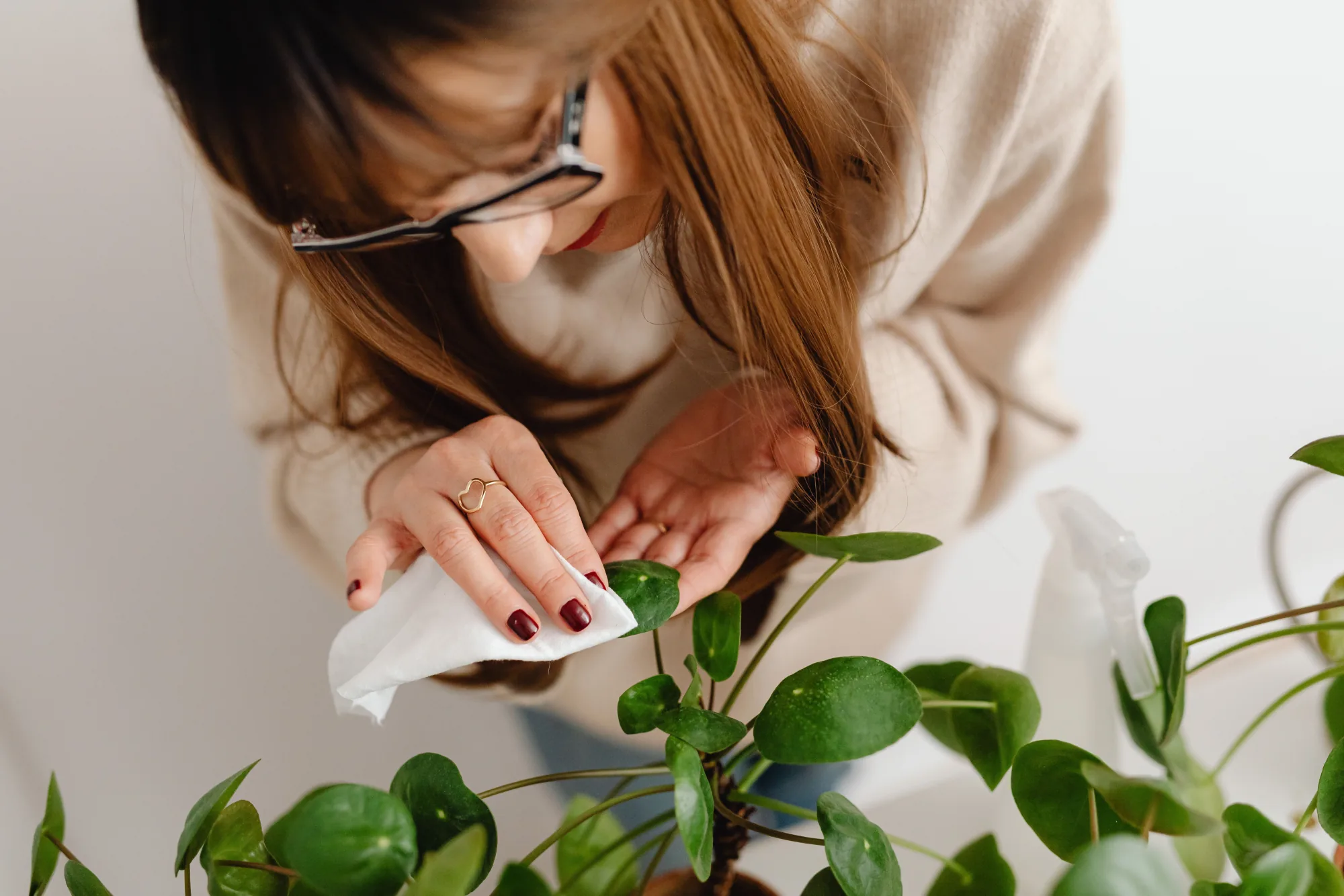
Remove visible pests manually. Rinse the plant with water, wipe leaves with a damp cloth, scrape off scale, or dab mealybugs with alcohol. Physical removal reduces the population quickly before you apply any treatment.
Apply the appropriate treatment. Neem oil and insecticidal soap are the two most versatile treatments for houseplant pests. Both are low-toxicity and safe for indoor use. Always follow the product label, and test on a small leaf area first if you are concerned about plant sensitivity.
Monitor and repeat. Most pests have life cycles that require repeated treatment. A single application will kill adults but not eggs. Plan to repeat treatment every 5-10 days for at least three rounds, and keep checking the plant for signs of new activity.
Check nearby plants. Even if they look fine, plants that were near the affected plant may have early-stage infestations. Inspect them carefully and consider treating them preventively.
How to Prevent Houseplant Pests
Prevention is far less effort than treatment. Here are the habits that make the biggest difference:
Quarantine every new plant for at least two weeks. Keep it in a separate area and inspect it every few days. Most pest problems are imported on new plants, and a short quarantine catches them before they spread.
Inspect your plants regularly. Make it a habit to check leaf undersides when you water. Early detection is the difference between wiping off a few mealybugs and fighting an infestation across your entire collection.
Avoid overwatering. Consistently wet soil attracts fungus gnats and creates conditions that stress plants, making them more vulnerable to all pests.
Keep plants healthy. A plant that is correctly watered, properly lit, and regularly fed is more resistant to pests. Stressed plants send chemical signals that actually attract certain pests.
Clean dusty leaves. Dust on leaves can harbor spider mite populations and block light. Wipe large leaves with a damp cloth and rinse small-leaved plants in the shower periodically.
Use clean tools and pots. Wash scissors, pots, and saucers between uses. Pests and pathogens can transfer on contaminated tools.
When to Throw Away a Plant
This is not a pleasant topic, but it is an honest one. Sometimes, removing one plant is the right decision to protect the rest of your collection.
Consider discarding a plant if:
The infestation has not responded to three or more rounds of proper treatment over 3-4 weeks.
The plant is also suffering from root rot, disease, or severe stress, making recovery unlikely.
The pest has already spread to multiple plants and removing the source plant is the fastest way to stop the spread.
The plant was inexpensive or easily replaced, and the time and effort of treatment outweighs its value.
Throwing away a plant does not mean you failed. It means you are protecting the plants that still have a chance.
FAQs About Houseplant Pests
Where do houseplant pests come from?
Most commonly, they arrive on new plants from garden centers or cuttings from friends. Pests can also enter through open windows during warm months. Soil that has been stored outdoors or in a garage can harbor fungus gnat larvae or other insects. Always inspect new plants before bringing them into your home.
Can houseplant pests spread to other plants?
Yes. Most houseplant pests are mobile — spider mites spin webbing and crawl between nearby plants, mealybugs and scale crawlers can walk short distances, fungus gnats and thrips can fly. This is why isolation of an affected plant is the first and most important step.
Are houseplant pests harmful to humans?
Generally no. Spider mites, mealybugs, fungus gnats, scale, and thrips do not bite humans or transmit diseases. Some people may experience mild skin irritation from contact with certain pest secretions or from neem oil used in treatment. Always wash your hands after handling infested plants.
What is the best natural pest treatment for houseplants?
Neem oil, insecticidal soap, and physical removal are the three most effective low-toxicity options. Neem oil disrupts pest feeding and reproduction. Insecticidal soap breaks down pest cell membranes. Physical removal — rinsing, wiping, scraping — is immediately effective and does not require any chemicals. For most infestations, a combination of all three works best.
How long should I quarantine a new houseplant?
At least two weeks. Ideally, quarantine for three to four weeks to be thorough. During this time, keep the plant in a separate area, inspect it every 3-4 days with a flashlight, and look for webbing, cottony masses, flying insects, or leaf damage. If no signs appear after the quarantine period, the plant is safe to integrate with your collection.
Protect Your Plant Collection
Pests are a normal part of growing houseplants. The key is catching them early, identifying them correctly, and responding with the right treatment before they spread. Inspect your plants regularly, quarantine every new arrival, and do not hesitate to take action at the first sign of trouble.
Looking for plants that match your home and are easier to care for? Try the House Plant Finder quiz to discover indoor plants that fit your space, light, and lifestyle.