6 Pet-Safe Houseplants for Homes with Cats and Dogs
Six houseplants verified non-toxic by the ASPCA — spider plant, Boston fern, parlor palm, calathea, haworthia, and African violet — that balance visual appeal with genuine pet safety.
The combination of a curious cat and a toxic houseplant is not a hypothetical risk. The ASPCA Animal Poison Control Center handles thousands of plant ingestion cases every year, and the list of common houseplants that are toxic to pets is longer than the list of safe ones. Pothos, philodendrons, peace lilies, snake plants, ZZ plants, and most succulents in the Euphorbia family — all staples of beginner plant collections — are on the toxic list.
The good news is that there are genuinely attractive, easy-to-grow plants that are verified non-toxic by the ASPCA. Not "probably fine," not "nontoxic in small amounts" — confirmed safe across the organization's toxicology database. The six below are the ones that strike the best balance between visual appeal, ease of care, and verified pet safety.
A Note on "Pet-Safe" vs. "Non-Toxic"
The ASPCA uses "non-toxic" to mean that ingestion is not expected to cause systemic poisoning — vomiting, organ damage, neurological symptoms. A non-toxic plant can still cause mild gastrointestinal upset if a pet eats a large quantity of it, in the same way that eating an entire loaf of bread might make a person feel sick without being poisonous. The distinction matters: non-toxic means you do not need to panic if your cat takes a bite. It does not mean the plant should be treated as a snack.
Also, the plant itself is only part of the equation. Fertilizers, pesticides, and soil additives can be toxic even when the plant is not. If you have pets that dig or nibble, use pet-safe fertilizers and avoid chemical pest treatments on plants within reach.
1. Spider Plant (Chlorophytum comosum)
Spider plants are the workhorses of the pet-safe plant world. They are non-toxic, fast-growing, and visually distinctive — the arching green-and-white striped leaves create a fountain shape that looks great in a hanging basket or on a high shelf. They are also one of the easiest plants to propagate: a healthy spider plant sends out runners with small plantlets that can be snipped off and potted immediately.
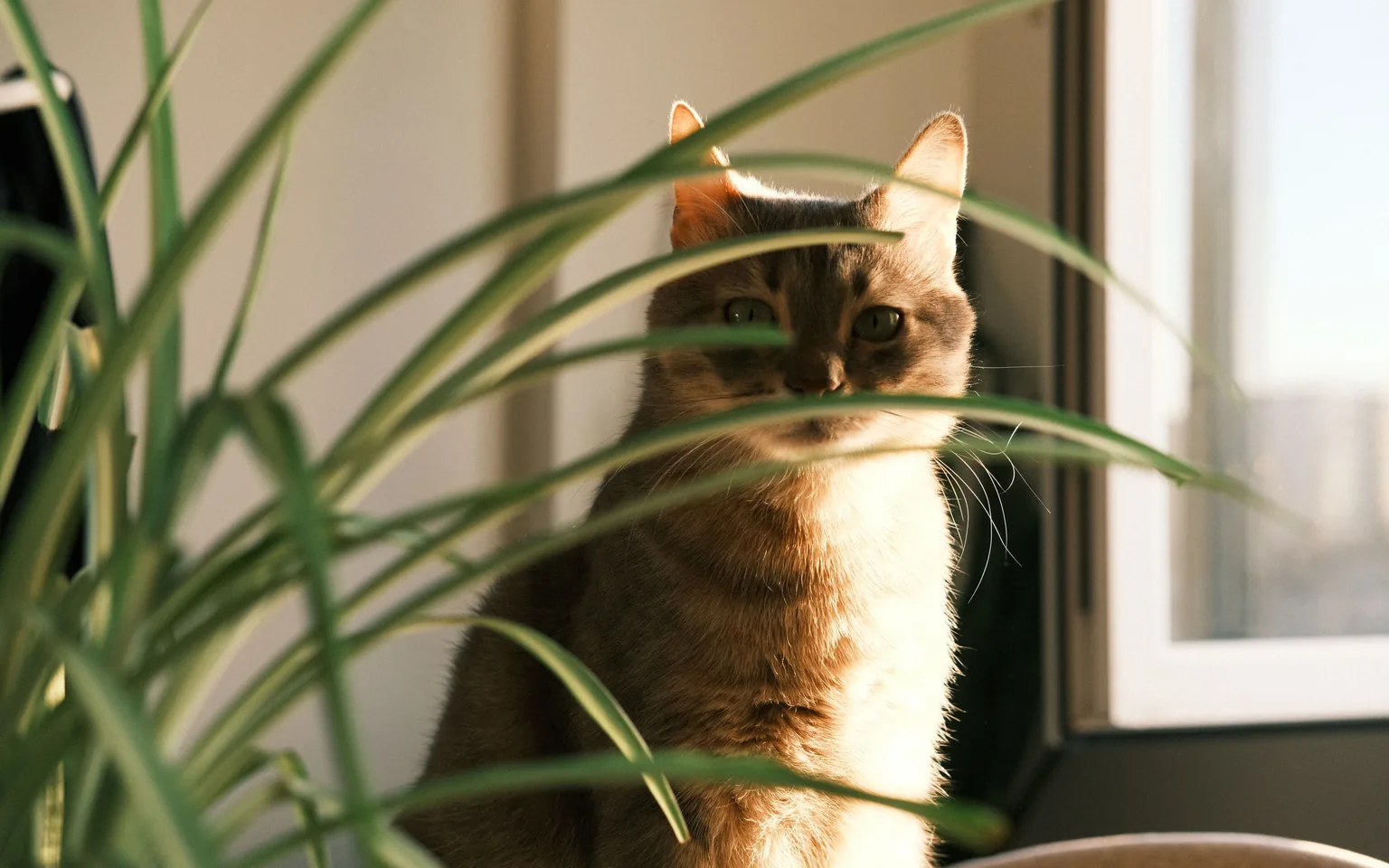
The one complication is that cats are often attracted to spider plants specifically. The leaves have a texture and movement that mimics grass, and some cats treat them like a salad bar. The plant itself will not harm the cat, but persistent chewing will damage the plant and may cause the cat to vomit from eating too much fibrous plant material. Hanging the spider plant out of reach solves both problems — the cat cannot reach it, and the trailing runners create a cascading visual effect that is more dramatic from above anyway.
Light: Bright indirect preferred; tolerates medium light. Water: Weekly, letting top inch of soil dry between. Size: 12–18 inches tall, with runners up to 2 feet. Why it is safe: ASPCA confirms non-toxic to both cats and dogs.
2. Boston Fern (Nephrolepis exaltata)
Boston ferns are another member of the short list of plants that are both genuinely attractive and verifiably pet-safe. The dense, feathery fronds make them one of the most texturally interesting plants you can own, and they thrive in the humid environment of a bathroom — which also happens to be a room where pets typically have limited access.
The care requirement to be aware of is humidity. Boston ferns need consistent moisture in both the soil and the air. In a dry room, the fronds turn brown and shed, creating a mess. But in a bathroom with a window — where the steam from showers provides regular humidity — they are surprisingly low-maintenance. A pebble tray beneath the pot also helps in drier spaces.
Misting does help Boston ferns, unlike many plants where misting evaporates before it matters. Doing it in the morning gives the water time to absorb before it evaporates. For more detail on keeping humidity-loving plants happy, our complete humidity guide covers the methods that actually work.
Light: Medium to bright indirect. Water: Keep soil consistently moist; do not let it dry out. Size: 2–3 feet tall and wide. Why it is safe: ASPCA confirms non-toxic to both cats and dogs.
3. Parlor Palm (Chamaedorea elegans)
The parlor palm is the pet-safe answer to the question "what can I put in a low-light corner that is not a fake plant?" It grows slowly but steadily, reaching 3–4 feet indoors over several years, and the delicate, bamboo-like fronds add a tropical feel to spaces where many plants would not survive.
Parlor palms tolerate low light better than most palms — a north-facing room or a spot a meter or two from an east-facing window is sufficient. They prefer consistent moisture but are more forgiving than ferns if you forget a watering. The main risk is spider mites in dry indoor air, which can be managed by occasionally misting the fronds or wiping them with a damp cloth.
One practical note: parlor palms are one of the few tall plants that are pet-safe. If you want a floor plant rather than a tabletop plant, and you have pets, this is among your best options.
Light: Low to medium indirect. Water: Weekly, keeping soil lightly moist but not soggy. Size: 2–4 feet indoors. Why it is safe: ASPCA confirms non-toxic to both cats and dogs.
4. Calathea (Calathea ornata, C. makoyana, and others)
Calatheas — often called prayer plants because their leaves fold upward at night — are arguably the most visually striking plants on the pet-safe list. The leaves come in patterns of pink stripes, dark green ovals, and silver brushstrokes that look almost painted on. There are dozens of varieties, and none are toxic to pets.
The tradeoff is that calatheas have specific care preferences. They need humidity above about 50%, consistent soil moisture without sogginess, and water that is free of fluoride and chlorine. Tap water left out overnight or filtered water prevents the brown leaf edges that calatheas are prone to developing. The brown tips guide explains why tap water chemicals cause this and how to avoid it.
A bathroom or kitchen — rooms with naturally higher humidity — is the ideal placement. If you can meet the humidity requirement, the visual payoff is significant: few houseplants look as premium as a healthy calathea.
Light: Medium to bright indirect. Avoid direct sun. Water: Weekly, keeping soil evenly moist. Use filtered or aged tap water. Size: 1–2 feet tall and wide, depending on variety. Why it is safe: ASPCA confirms non-toxic to both cats and dogs.
5. Haworthia (Haworthia attenuata and H. fasciata)
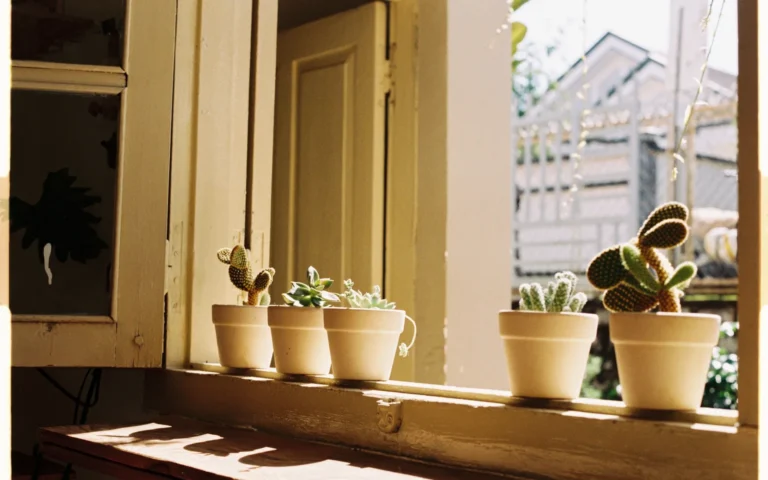
The pet-safe succulent category is surprisingly small. Most popular succulents — jade plants, aloe vera, euphorbias, kalanchoes — are toxic to pets. Haworthias are the exception: small, rosette-forming succulents with striped, pointed leaves that look like miniature aloe plants but are completely non-toxic.
Haworthias are drought-tolerant and compact — they rarely exceed 6 inches in diameter — making them ideal for windowsills, desks, and small shelves where pets might otherwise access plants. They need bright indirect light and very infrequent watering: every 2–3 weeks in summer, monthly in winter. The most reliable way to water them correctly is the soak-and-dry method — water thoroughly, then wait until the soil is bone-dry before watering again.
Because they stay small, haworthias are easy to place in areas pets cannot reach while still enjoying natural light — a high shelf near a window, for instance.
Light: Bright indirect. Some direct morning sun is fine. Water: Every 2–3 weeks. Let soil dry completely between. Size: 3–6 inches diameter. Why it is safe: ASPCA confirms non-toxic to both cats and dogs.
6. African Violet (Saintpaulia ionantha)
African violets are one of the few flowering houseplants that bloom reliably indoors and are safe for pets. They produce clusters of purple, pink, or white flowers above fuzzy, rounded leaves, and under the right conditions they can flower almost continuously throughout the year.
The care is specific but not difficult: African violets need bright indirect light (an east- or north-facing windowsill works well), consistently moist soil, and water applied to the soil rather than the leaves — wet leaves develop brown spots. A self-watering pot designed for African violets, which waters from below through a wick, removes most of the guesswork.
The potting mix matters too. African violets need a lighter, more peat-based mix than standard houseplant soil — the roots are fine and shallow, and heavy soil compacts around them, restricting growth. A dedicated African violet mix is worth the few extra dollars.
Light: Bright indirect. East-facing window ideal. Water: Keep soil consistently moist; water from below if possible. Size: 6–12 inches diameter. Why it is safe: ASPCA confirms non-toxic to both cats and dogs.
A Quick Toxicity Check for Any Plant
Before buying any plant for a pet household, cross-reference it against the ASPCA Toxic and Non-Toxic Plants database. The scientific name — not the common name — is the reliable lookup. "Palm" is a common name used for dozens of unrelated plants, some toxic and some safe. Chamaedorea elegans (parlor palm) is safe; Cycas revoluta (sago palm) is severely toxic. The only way to be sure is to check the botanical name.
The ASPCA database is available at aspca.org/pet-care/animal-poison-control/toxic-and-non-toxic-plants and is searchable by both common and scientific name.
Use the House Plant Finder quiz to discover more plants filtered by your specific home environment — light, humidity, room type, and care difficulty.