Brown Tips on Houseplants: What They Mean and What to Check
Brown tips on your houseplant leaves? Learn the 5 most common causes — from dry air to overwatering — and exactly what to check and fix for each.
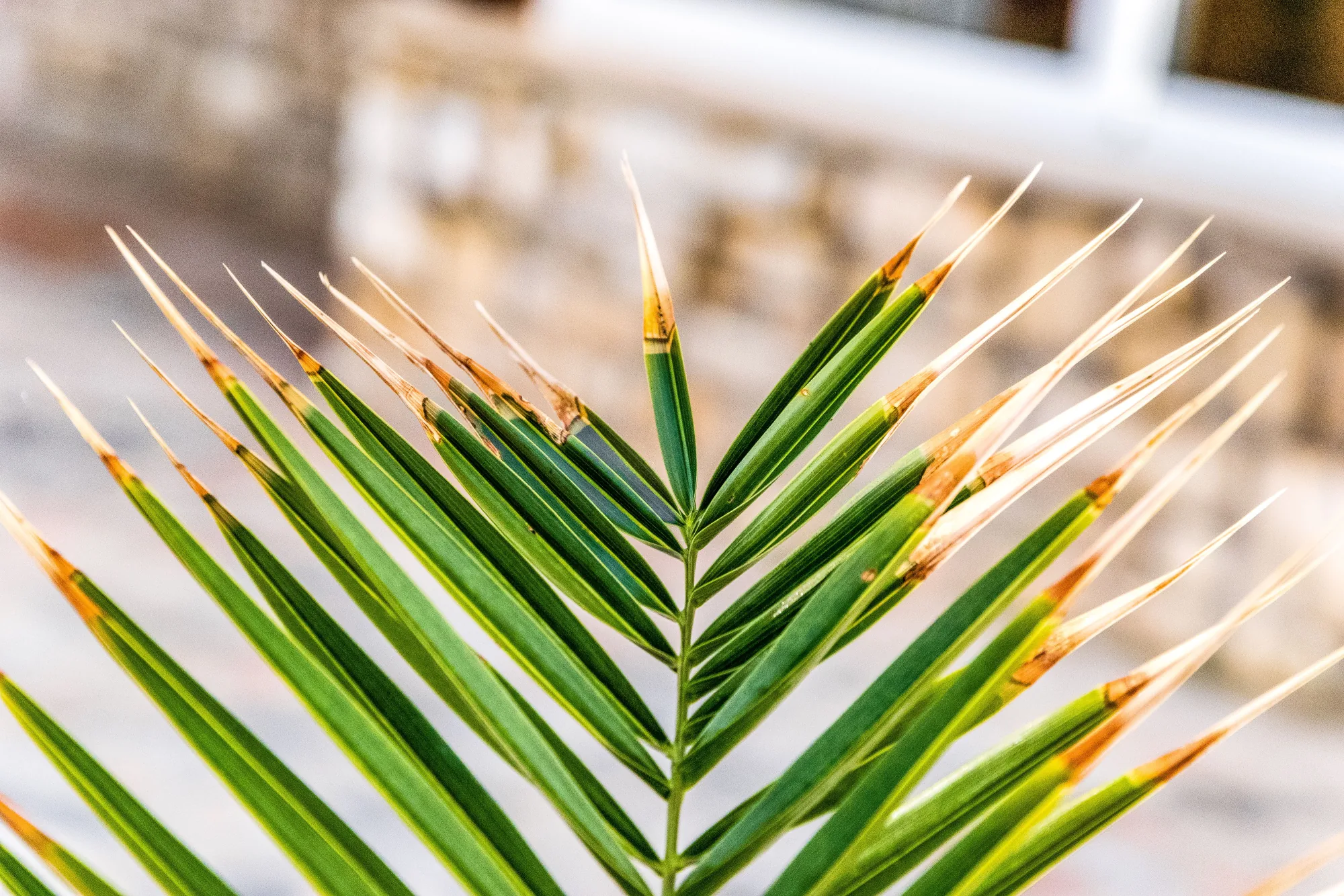
You notice it one morning: the tips of your houseplant’s leaves are turning brown and dry. A Calathea that looked perfect last week now has crispy edges. A Spider Plant that was lush and green is developing papery brown tips.
Brown tips are one of the most common houseplant problems, and they are also one of the most frustrating because the cause is not always obvious. The good news is that brown tips are rarely a sign that your plant is dying. They are usually a stress signal — a way for the plant to tell you that something in its environment needs adjusting.
This guide walks through the five most common causes of brown leaf tips, helps you figure out which one applies to your plant, and gives you a specific fix for each.
Why Do Houseplant Leaves Get Brown Tips?
Brown tips happen when the edges of a leaf — the parts farthest from the stem and the main water supply — dry out and die. Because leaf edges are the last to receive water and nutrients, they are usually the first to show stress.
The brown part itself will not turn green again. Once leaf tissue has died and dried, it is permanent. But preventing new brown tips from forming is entirely possible once you identify and fix the underlying cause.
The 5 Most Common Causes of Brown Tips
1. Low Humidity
Low humidity is the most common cause of brown tips, especially during winter when indoor heating dries the air. Most popular houseplants come from tropical environments where humidity naturally stays between 50% and 80%. A typical heated home in winter can drop to 20% to 30% humidity — drier than a desert.
When the air around a plant is too dry, moisture evaporates from the leaf surface faster than the roots can replace it. The leaf edges, being the most exposed and the farthest from the water supply, are the first to dry out and turn brown.
Plants most affected: Calathea, Spider Plant, Boston Fern, Peace Lily, Parlor Palm, Fittonia, and Prayer Plant. Plants with thin or delicate leaves are more vulnerable than succulent-leaved plants like Snake Plant or ZZ Plant.
How to fix it: Increase the humidity around the plant. The most effective methods include using a humidifier, placing the plant on a pebble tray with water, or moving it to a naturally humid room like a bathroom or kitchen. For a complete guide, read about how to increase humidity for houseplants.
2. Inconsistent Watering
Plants that swing between bone-dry soil and soaking wet soil often develop brown tips. When the soil dries out completely, the leaf edges are the first to suffer. When the soil is then flooded, the roots may struggle to recover, and the stress shows up at the tips.
This is different from overwatering, which typically causes yellowing or root rot. Inconsistent watering causes a cycle of dehydration and rehydration stress that damages the leaf edges over time.
How to fix it: Establish a watering routine where you check the soil moisture regularly and water when the top 2-5 cm feels dry. Do not wait until the plant wilts to water it, and do not drench it to compensate for a missed watering. Learn more in the guide on how to water houseplants without overwatering.
3. Too Much Direct Sun
Some plants develop brown tips when they receive too much direct sunlight, especially in the afternoon. The leaf edges scorch and dry out. This is most common when a shade-loving plant is placed in a south- or west-facing window, or when a plant that was indoors all winter is moved outdoors in summer.
Sunburn on houseplants usually appears as patches of brown or bleached tissue on the parts of the leaf that face the light source. The tips and edges, being the most exposed, are often the first to burn.
Plants most affected: Calathea, Fittonia, Peace Lily, Ferns, and any plant labeled for “bright indirect light” or “low light.”
How to fix it: Move the plant away from direct sun. Most houseplants prefer bright indirect light — bright enough to read by, but without sunbeams hitting the leaves directly. Understanding how much light your houseplants need will help you find the right spot.
4. Salt and Mineral Buildup
Over time, tap water and fertilizer leave minerals and salts behind in the soil. As these accumulate, they can burn the root tips and cause brown leaf edges. This problem develops slowly — a plant may be fine for months or years before symptoms appear.
Signs that mineral buildup may be the cause include a white or yellow crust on the soil surface or around the rim of the pot, and brown tips that appear on multiple plants in the same household even though their care routines are different.
How to fix it: Flush the soil with filtered or distilled water every few months. Pour water slowly through the soil and let it drain freely out the bottom, repeating two or three times. This leaches accumulated salts out of the root zone. If the problem is severe, repot with fresh soil. Use filtered, distilled, or left-out tap water for sensitive plants.
5. Root Bound or Pot Too Small
When a plant has outgrown its pot, the roots fill the entire container and begin circling around themselves. Water runs straight through the pot without being absorbed, and the roots cannot take up enough moisture or nutrients. The result is chronic dehydration that shows up as brown tips — even if you are watering regularly.
How to tell: If water drains immediately through the pot when you water, or if you can see roots growing out of the drainage holes, the plant is likely root bound. You can also gently remove the plant from its pot to check — if the roots form a dense, circling mass, it is time to repot.
How to fix it: Repot into a pot one size larger with fresh soil. Follow this step-by-step repotting guide for the full process. After repotting, the plant should begin producing new, healthy growth within a few weeks.
Quick Diagnosis Table
Use this table to narrow down the likely cause based on what you are seeing:
| What you notice | Most likely cause | First step |
|---|---|---|
| Brown tips + dry air in winter | Low humidity | Add a humidifier or pebble tray |
| Brown tips + soil goes from bone dry to soaking wet | Inconsistent watering | Establish a regular soil-check routine |
| Brown tips + plant in direct sun, scorched patches | Too much direct sun | Move away from the window |
| Brown tips + white crust on soil surface | Salt and mineral buildup | Flush soil with filtered water |
| Brown tips + roots visible at drainage holes | Root bound | Repot into a slightly larger pot |
| Brown tips + mushy stems, wet soil, sour smell | Root rot | Inspect roots immediately and trim rotten roots |
Should You Cut Off Brown Tips?
Yes — for aesthetics. The brown portions will not recover, and trimming them makes the plant look healthier. Use clean, sharp scissors and trim at an angle that follows the natural shape of the leaf tip. Do not cut into the green, living tissue — only remove the dry, brown part.
Trimming brown tips does not hurt the plant, but it does not solve the underlying problem. New brown tips will continue to appear unless you identify and fix the cause.
How to Prevent Brown Tips
Most brown tip problems can be prevented with a few consistent habits. The Royal Horticultural Society provides detailed guidance on identifying and managing brown leaf tips and margins across common houseplant species.
- Match your plant to your home’s humidity. If your home is very dry, choose plants that tolerate dry air: Snake Plant, ZZ Plant, Jade Plant, or Ponytail Palm. If you love humidity-loving plants like Calathea or Boston Fern, commit to providing the humidity they need.
- Water consistently. Check the soil every few days rather than watering on a fixed schedule. The goal is moist-but-not-soggy soil, not alternating between desert and swamp.
- Use filtered water for sensitive plants. Calathea, Spider Plant, and Peace Lily are particularly sensitive to tap water minerals. Leaving tap water out overnight allows chlorine to dissipate, but does not remove minerals. Filtered or distilled water is more effective.
- Repot before roots become severely bound. Check your plants every spring to see if they need a larger pot. A plant that needs repotting every year or two will develop fewer problems than one left in the same pot for years.
- Keep plants away from heating vents and radiators. Hot, dry air blowing directly on a plant will dry out leaf tips rapidly.
FAQs About Brown Tips on Houseplants
Should I cut the brown tips off my plant?
Yes, you can trim brown tips for appearance. They will not turn green again, so removing them makes the plant look healthier. Use clean scissors and trim at a slight angle that matches the natural leaf shape. Do not cut into the green tissue.
Can brown tips mean overwatering?
Yes, but it is less common than low humidity or inconsistent watering. Overwatering more typically causes yellowing leaves or root rot. If you see brown tips combined with yellowing, soft stems, or soil that stays wet, check for signs of root rot rather than assuming the brown tips alone indicate the problem.
Do brown tips mean my plant is dying?
Usually not. Brown tips are a stress signal, not a death sentence. As long as the rest of the plant is producing new growth and the leaves are mostly green, the plant is alive and can recover once you fix the underlying cause.
Which houseplants are most prone to brown tips?
Calathea, Spider Plant, Boston Fern, Peace Lily, Parlor Palm, and Fittonia are among the most humidity-sensitive houseplants and are the most prone to developing brown tips in dry indoor environments.
Does tap water cause brown tips?
In some areas, yes. Tap water contains chlorine, fluoride, and dissolved minerals that can accumulate in the soil over months. Plants like Calathea and Spider Plant are especially sensitive. Using filtered or distilled water, or flushing the soil every few months, can help reduce mineral buildup.
Keep Your Plant Tips Green
Brown tips are a message from your plant, not a failure on your part. Once you figure out what your plant is telling you — dry air, inconsistent watering, too much sun, mineral buildup, or a pot that is too small — you can fix the problem and prevent new brown tips from forming.
Not sure which plants will thrive in your home’s actual humidity and light? Take the House Plant Finder to find plants that match your real conditions.