
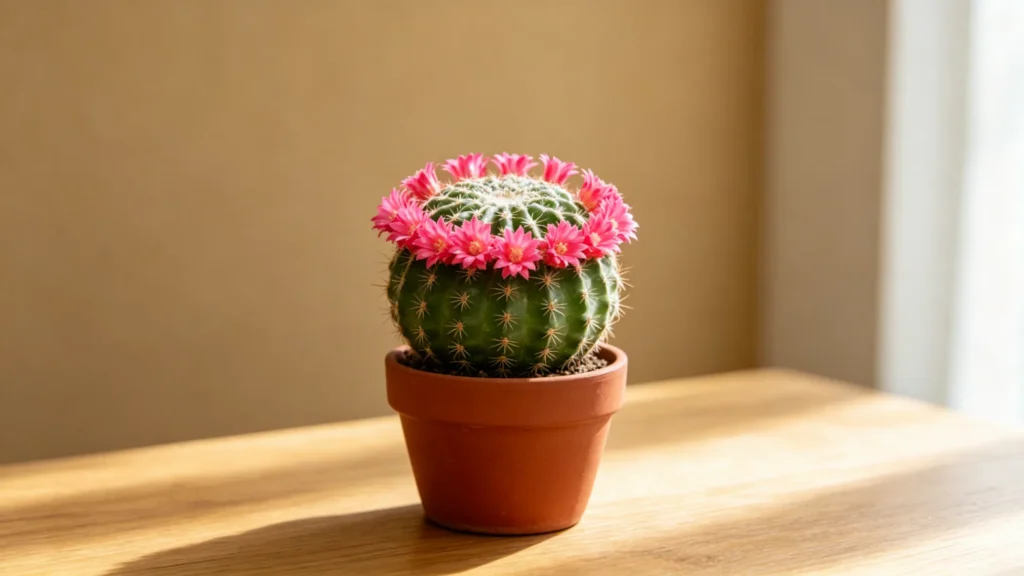
Dwarf Chin Cactus
Gymnocalycium baldianum
A compact Argentine cactus with curved spines and pink to crimson flowers, suited to bright filtered light, a gritty mix, and careful dry-down watering.
Watering frequency
Every 2-3 weeks
Ideal temperature
60-80°F / 16-27°C
Humidity
40-50%
Care difficulty
Easy
Air purifying
No/Not Known
Growth rate
Slow
Plant size
2-4 in tall and wide / 5-10 cm tall and wide
Soil type
Well-draining cactus or succulent mix
Fertilizer need
Monthly, spring-early fall.
Care summary
- Light: Bright filtered light; introduce gentle direct sun gradually.
- Water: Water only when the mix is fully dry, then drain well.
- Soil: Use a coarse, well-draining cactus or succulent mix.
- Humidity: Average room humidity is fine.
- Blooming: Give bright light and a cooler, drier winter rest.
- Safety: Provisional Pet safe category from same-family evidence; spines can injure.
Common problems
- No new growth: allow for seasonal rest; check light, temperature, roots, mix, and pests before feeding.
- Soft or mushy body: overwatering or poor drainage.
- Shriveled or wrinkled body: underwatering or root damage.
- Pale, stretched growth: too little light.
- No flowers: too little light or too warm a winter rest.
- Brown or sunken patches: sunburn or cold damage.
- Pests: mealybugs, scale, or fungus gnats.
Plant care guide
About Dwarf Chin Cactus
Dwarf Chin Cactus (Gymnocalycium baldianum) is a small, rounded cactus in the Cactaceae family from Argentina. Its dark green to gray-green body, curved spines, and vivid pink to crimson flowers make it an appealing choice for a bright windowsill. Unlike a cactus bought for eventual height, this is a compact plant whose flowers can become the visual focus.
The Royal Horticultural Society lists Dwarf Chin Cactus as its common name. "Chin cactus" is used more widely within Gymnocalycium, so the additional word Dwarf helps identify this profile. The genus name means "naked calyx," referring to the relatively bare flower tube; "chin" is not an English translation of that Greek-derived name.
Why You'll Like It
Dwarf Chin Cactus offers a satisfying contrast between a modest green body and substantial flowers. Its compact growth makes it easy to keep in view while you work, provided the desk is genuinely close to suitable light. A decorative shelf across a dim room will not provide the same growing conditions.
An established plant tolerates intervals of dry soil, and normal indoor humidity is sufficient. It does not need pruning into shape, a climbing support, or a large container. That makes its routine simpler than many large tropical foliage plants, although the small size does not make it immune to root rot.
The tradeoff is patience and restraint. Growth is slow, flowering is seasonal rather than guaranteed, and adding more water or fertilizer cannot substitute for adequate light. The spines are comparatively short but can still puncture skin. Handle the pot or use protective gloves and a paper cradle instead of gripping the globe.
What Kind of Plant Is It?
Dwarf Chin Cactus is a globular cactus, usually forming a solitary, flattened globe rather than a clump of offsets. A mature plant commonly remains around 2–4 inches (5–10 cm) tall and wide. It has roughly 9–11 ribs, with curved radial spines emerging from the areoles. Individual plants vary, so identification should use several features rather than a precise spine count.
Its summer flowers are generally pink to crimson and around 1.5 inches (4 cm) across. The flowering body stays low, unlike the hanging stems of Monkey Tail Cactus or the flat segments of Fishbone Cactus. This profile is for G. baldianum, not every compact cactus marketed under the broader Chin Cactus name.
History of Dwarf Chin Cactus
The name began as Echinocactus baldianus, published in 1905, before the combination Gymnocalycium baldianum appeared in 1925. Kew's botanical record documents the accepted name and its earlier synonym. A nursery label bearing the older name does not indicate a different cultivar.
It Is Not the Familiar Moon Cactus
The colorful Moon Cactus sold as a red, orange, or yellow globe on a green stem is a different arrangement. NC State Extension's Moon Cactus profile describes color forms of Gymnocalycium mihanovichii grafted onto another cactus, commonly a dragon-fruit-type rootstock. The upper colored plant is the scion; the lower supporting plant is the rootstock.
Gymnocalycium baldianum is neither the identity of that familiar colored top nor its standard rootstock. An ordinary green Dwarf Chin Cactus can grow on its own roots. Shared genus membership is not a reason to combine their profiles or assume they require identical handling. If a seller offers a grafted G. baldianum, ask which rootstock is present, because its needs also influence watering and temperature.
Related Cacti
Dwarf Chin Cactus is best understood alongside the other cacti in the same database, since they share the Cactaceae family but differ in habit and care.
- Star Cactus (Astrophytum asterias): Another small, low-growing globe cactus, nearly spineless with a flattened body and yellow flowers; a similar desktop cactus with a different silhouette.
- Monkey Tail Cactus (Cleistocactus colademononis): A trailing, white-fuzzy cactus with red or pink flowers, offering a hanging-basket alternative to the Dwarf Chin Cactus's compact globe.
- Fishbone Cactus (Disocactus anguliger): A forest cactus with flattened zigzag stems and night-blooming flowers, needing more regular moisture and gentler sun.
These plants are related but not interchangeable; match the care to each plant's native habit rather than assuming they all behave the same.
Where Dwarf Chin Cactus Works Best
Choose a bright windowsill with filtered light or gentle morning sun. An east-facing window is often practical; stronger south- or west-facing glass may need a sheer curtain, especially in hot weather. Window direction is only a starting point: outdoor shade, glazing, distance, and season determine the light that reaches the plant.
Its compact size works well in a small collection, but keep each plant in a separate pot so watering can match its roots. Avoid enclosed glass bowls without drainage. If you bring it outside in warm weather, start in bright shade, protect it from prolonged rain, and increase sun gradually. Place it where curious pets cannot reach the spines.
Dwarf Chin Cactus Care
Light
Use bright filtered light indoors, with gentle direct sun introduced gradually. Strong midday sun through hot glass can scorch a plant accustomed to a nursery bench. Move it toward brighter conditions over one to two weeks, watching for bleaching or tan patches rather than aiming for a fixed number of sun hours.
A globe that grows taller and narrower may be stretching for light. Improve exposure gradually; existing distorted tissue will not immediately become round again. Avoid interpreting every reddish tint as damage, but investigate rapid color change accompanied by sunken or damaged tissue.
Watering
Water only when the mix has dried out completely, typically every two to three weeks in the growing season, and then water deeply so excess drains away. This is a drought-tolerant cactus that dislikes soggy roots, so let the mix dry fully between waterings. In fall and winter, reduce watering and give the plant a cooler, drier rest, which encourages spring flowering. Adjust the interval to your pot, light, and room rather than following a fixed calendar.
Soil and Container
Use a coarse, well-draining cactus or succulent mix, such as a commercial cactus mix amended with perlite or pumice. The mix should drain promptly and let air reach the roots. Choose a small pot with drainage holes, since an oversized pot stays wet too long for this slow-growing globe. Repot every two or three years only when the plant has outgrown its pot.
Humidity
Dwarf Chin Cactus tolerates average household humidity and does not need a humidifier. It prefers drier conditions, so a normal living room or windowsill is fine. The main risk is excess moisture in the root zone rather than dry air, so focus on drainage and watering rather than humidity.
Temperature
Aim for 60–80°F (16–27°C) during active growth. A cooler winter position around 50–60°F (10–16°C), combined with an almost dry root ball, is a practical indoor rest routine. Use 50°F (10°C) as this guide's firm minimum rather than testing the plant's possible cold tolerance. This is a conservative household limit, not a demonstrated lethal threshold. Keep it away from frost, cold glass, and wet outdoor winter conditions.
Fertilizer
Feed monthly from spring through early fall during active growth with a diluted balanced or cactus fertilizer, preferably higher in potassium to support flowering. Stop feeding in winter during the rest period, and avoid feeding a stressed or recently repotted plant.
Pruning and Grooming
No routine pruning is needed. Remove loose, fully dried flower remains gently, without pulling living tissue from the crown. Do not cut a healthy globe to encourage branching or assume it needs dividing. Occasional offsets can be retained unless they crowd the pot; a solitary plant is normal, not a failure to grow.
Propagating Dwarf Chin Cactus
Seed is the normal planned propagation route because this species is usually solitary. The RHS recommends sowing in early spring at about 19–24°C (66–75°F). Use clean, finely textured, freely draining seed mix and bright filtered light. Keep the surface lightly moist while seeds germinate, avoiding standing water and harsh direct sun.
Seedlings need a different moisture balance from established cacti: do not immediately subject tiny seedlings to the adult fully-dry routine. Introduce ventilation gradually and reduce moisture as they strengthen. Germination and subsequent growth vary with seed freshness and conditions; there is no dependable date by which every seed will sprout or flower.
If your particular plant produces a genuine offset, it may be removed once large enough to handle. Let any cut surface dry and seal before placing it in a small pot of gritty mix. An offset is an occasional opportunity, not something owners should expect on schedule. Wear gloves and support both plants without pressing on their spines.
Repotting Dwarf Chin Cactus
Inspect the roots each spring and repot about every two to three years if the plant or deteriorating mix requires it. Routine repotting is easiest as growth resumes; avoid disrupting an actively flowering plant unless there is a root-health problem. A slow-growing cactus does not need a larger pot simply because a year has passed.
Use drainage holes and a pot only slightly wider than the healthy root system. Loosen old compacted mix carefully, remove clearly dead roots, and keep the original planting depth. Allow trimmed roots to dry before resuming watering. Do not pack damp mix high around the base or bury the globe under decorative stones.
Afterward, keep light bright but gentle and reassess moisture before each watering. If the roots were severely reduced, they cannot use water at the previous rate. A smaller suitable pot may be safer than a larger one.
Toxicity and Pet Safety
This database uses Pet safe as a provisional editorial category based on same-family evidence, not a species-specific veterinary assessment. The ASPCA Easter Lily Cactus record lists Echinopsis multiplex, another member of Cactaceae, as non-toxic to cats and dogs. This does not establish that every cactus, or this particular species, has the same safety profile. A species-specific non-toxic listing has not been verified for this profile.
Keep the plant out of reach rather than treating the category as permission to chew it. Physical injury, swallowed plant material, and residues from plant-care products are separate concerns from chemical toxicity. If a pet eats the plant or shows mouth discomfort or vomiting, contact a veterinarian and provide a photo and botanical name.
Short curved spines can still puncture a paw, mouth, or hand. Its manageable size does not make it a touch-safe plant.
Common Problems and Practical Fixes
- Little or no new growth: Slow growth during cool or short-day periods can be normal. For a persistent stall in warm, bright conditions, check light, temperature, root health, compacted mix, pests, and genuine root crowding before adding fertilizer or repotting.
- Soft, mushy tissue: Check the base and roots immediately. If rot is present, simply drying the pot may not stop it; remove affected material with a clean tool and retain only firm, healthy tissue. Replace persistently waterlogged mix and correct the watering conditions.
- Wrinkling: Compare the stem's firmness with moisture deeper in the pot. Dry mix and healthy roots suggest thirst; wrinkling while the mix is wet suggests impaired roots, so do not automatically add water.
- Pale, stretched growth: Too little light. Move the plant to brighter light gradually.
- No flowers: Often too little light or a winter rest that was too warm or wet. Give the plant bright light and a cooler, drier rest.
- Brown or sunken patches: Sunburn from sudden direct sun, or cold damage. Acclimate to sun gradually and protect from frost.
- Pests: Mealybugs and scale can hide in the ribs and areoles; inspect and treat with a product labeled for indoor plants.
Frequently Asked Questions
Is Dwarf Chin Cactus the same as Moon Cactus? No. This profile covers Gymnocalycium baldianum. The familiar colored Moon Cactus is generally a form of G. mihanovichii grafted onto another cactus.
Does it flower easily? Established plants can flower while still compact, but light, maturity, and seasonal conditions matter. No indoor routine guarantees flowers every year.
Is it safe for pets? The database's Pet safe category is provisional and based on another cactus in the same family, not a verified non-toxic record for this species. Prevent chewing and contact with the spines.
How often should I water it? Use two to three weeks only as a starting reference during growth. Water when the root ball has dried throughout, and keep a cool, resting plant much drier.
Final Thought
Dwarf Chin Cactus is a rewarding compact cactus when its identity and limits are clear. Give it bright filtered light, a draining pot, and time to dry between waterings. Enjoy flowers when they arrive, accept its naturally slow growth, and treat its spines and provisional pet-safety classification with appropriate caution.