Overgrown Monstera in a Small Apartment: Prune, Support, or Move It?
An overgrown Monstera does not always need a bigger pot. Learn how to decide whether to prune, support, repot, propagate, or reposition a large Monstera in a small apartment.
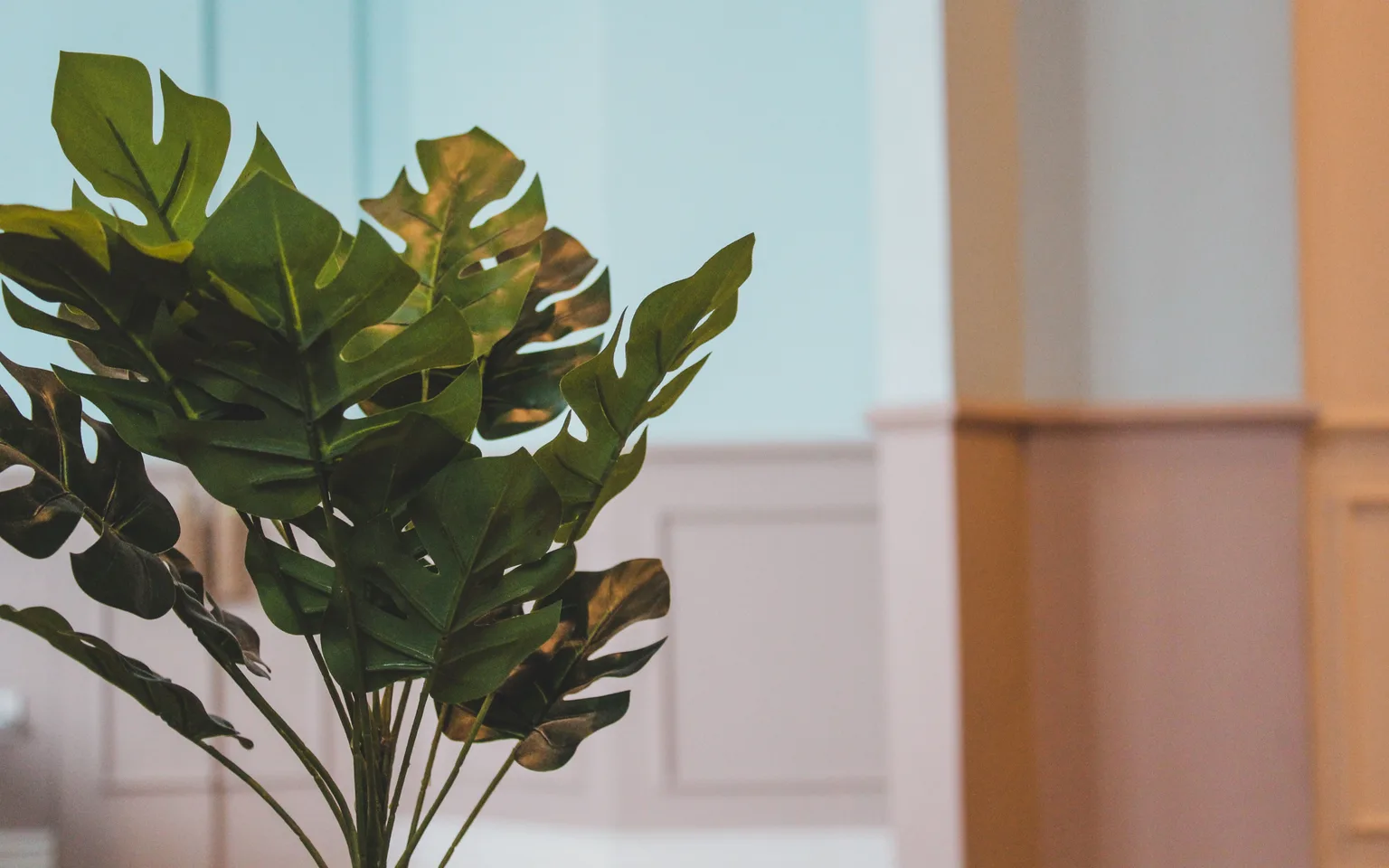
An overgrown Monstera is usually a space problem before it is a plant health problem. If the leaves are green, the stems are firm, and the plant is still growing, the main question is not "How do I save it?" The better question is whether the plant needs pruning, vertical support, a heavier pot, a new position, or a planned downsizing.
That question showed up clearly in a recent public Reddit discussion, HELP! What should I do with my Monstera? It's outgrown my apartment. The appeal of the post is easy to understand: large Monstera deliciosa plants can become beautiful and inconvenient at the same time. They start as friendly tabletop plants, then turn into wide, leaning, furniture-grabbing houseplants with heavy leaves and stems that want more room than the apartment can give.
Here is the practical order of decisions: support first if the plant is leaning, prune if the stems have outgrown the space, repot only if the roots prove they need it, and move or divide the plant when the room simply cannot handle its mature size.
Is Your Overgrown Monstera Too Big or Just Unsupported?
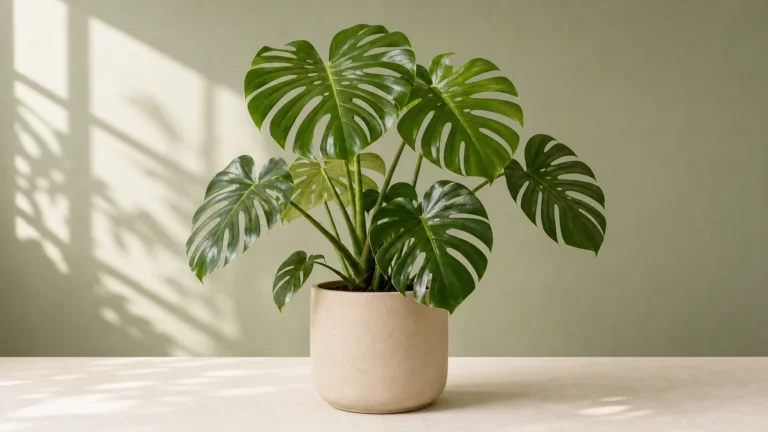
Many overgrown Monstera plants look larger than they really are because the stems have no direction. In the wild, Monstera deliciosa climbs. Indoors, it will not automatically become a tidy upright plant just because it sits near a window. Without a pole, plank, trellis, or other support, the main stems often grow sideways and the aerial roots reach into open air.
That sideways habit creates the apartment problem. A plant with five large leaves can occupy half a room if every petiole points in a different direction. The same plant can become much easier to live with when its main stem is tied to a support and trained upward instead of outward.
Before cutting anything, look at the structure:
- If the plant tips to one side, it probably needs support or a heavier cachepot.
- If the longest stems are healthy but crawling across the room, it needs pruning or training.
- If the pot falls over even when the soil is dry, the center of gravity is wrong.
- If roots are circling tightly, emerging from drainage holes, or drying the pot in a day or two, repotting may be part of the answer.
- If the plant blocks a doorway, window, desk, or walkway, the placement is failing even if the care is good.
The plant profile for Monstera deliciosa describes a climbing tropical plant that can become large, with aerial roots and showy divided leaves. That background matters. A mature Monstera is not misbehaving when it gets big. It is following its natural growth habit in a room that may not have been planned for the adult plant.
Support an Overgrown Monstera Before You Repot
Repotting is not the automatic fix for an overgrown Monstera. A bigger pot gives the roots more soil, but it does not make a sprawling stem stand upright. It can also create a watering problem if the new pot holds more wet mix than the root system can use.
Use support when the plant is healthy but floppy. A moss pole, cedar plank, coir pole, bamboo stake, or sturdy trellis can all work. The exact material matters less than stability. For a small apartment, a flat plank or narrow trellis against a wall often uses less horizontal space than a thick central pole.
Attach the main stem loosely with soft plant ties. Do not bind petioles tightly to the pole, because petioles need to move and angle toward light. The goal is to support the main vine, not force every leaf into a flat display. If aerial roots are long and flexible, guide them toward the support or potting mix, but do not break them trying to make the plant look perfect in one afternoon.
After you add support, rotate the plant less often. Constant rotation can encourage leaves to reorient in several directions, which makes the plant wider again. In a small room, it is usually better to choose the viewing side and let the plant grow with a clear front and back.
When to Prune an Overgrown Monstera
Pruning is the right move when support will not solve the space problem. If a stem has grown beyond the corner, reaches into furniture, or makes the pot unstable, cutting it back is normal plant management. It is not a sign that you failed.
The important detail is where you cut. Cutting off a leaf blade or leaf stalk may make the plant look smaller for a moment, but it does not shorten the real framework. To reduce size, cut the stem near a node. A node is the part of the stem where a leaf and aerial root emerge, and it is the point that can produce new growth or roots.
Use clean, sharp pruners. Make one deliberate cut instead of crushing the stem. If the cutting has at least one node and a healthy leaf, it can usually be propagated. That turns one oversized plant into a smaller parent plant plus a new cutting, which is often easier emotionally than throwing away good growth.
For a very large plant, prune in stages. Remove one long stem, wait to see how the plant responds, then decide if more cuts are needed. Heavy pruning is possible on a healthy plant, but gradual pruning gives you more control over the final shape.
What to Do With Monstera Cuttings
Healthy Monstera cuttings can be rooted in water or in a chunky, moist-but-aerated potting mix. The cutting needs a node; a leaf with only a petiole will not become a new plant. Aerial roots are helpful but not mandatory if a node is present.
Water propagation is easy to watch. Place the node in water, keep the leaf above water, and change the water when it becomes cloudy. Once the roots are several inches long, move the cutting into a small pot with drainage. Do not jump straight into a huge pot. A small cutting in a large wet pot is a common path to root rot.
Soil propagation is less dramatic but often transitions more smoothly because the new roots form in a potting environment from the beginning. Use a light, chunky mix and keep it slightly moist, not saturated.
If your apartment is already too full, do not feel obligated to keep every cutting. Give cuttings away, trade them locally, or keep only the best one. Propagation is a tool, not a requirement to multiply a plant you already do not have room for.
Repot Only When the Roots Need It
An overgrown Monstera may need a new pot, but size above the soil is not proof. Check the root system first. A plant that dries extremely fast, has roots circling tightly around the pot, or pushes roots out of drainage holes may be root-bound. A plant that is simply leaning may only need support and a heavier outer pot.
When repotting is needed, go up one pot size, usually 2 inches (5 cm) wider in diameter. Avoid a dramatic jump from a medium pot to a large floor planter. Too much unused soil stays wet longer, especially indoors, and a heavy wet mix can make watering harder to read.
Use a pot with drainage and a chunky aroid-style mix. Monstera roots need oxygen as much as moisture. A mix that contains potting soil plus bark, perlite, or other coarse material is easier to manage than dense all-purpose soil alone.
The best timing is active growth, usually spring through early summer. Repotting in winter is possible when a plant is unstable or suffering, but it is not ideal for routine size management. For more general timing and root-ball decisions, the same principles in how to repot a houseplant apply here: match the pot to the root system, not to the size you hope the plant becomes.
Place a Large Monstera Like Furniture
A large Monstera is not a tabletop accent anymore. Treat it like a piece of furniture that needs a footprint, a light source, and a safe traffic path.
The worst locations are narrow hallways, busy doorways, tight spots beside a sofa, or corners where leaves are brushed several times a day. Repeated contact tears leaves, bends petioles, and slowly makes the plant look battered. A heavy pot in a walkway is also easy to kick or tip.
Better locations include:
- A bright corner near a window, with the plant trained upward.
- A wall-adjacent spot where the support can lean visually into the room.
- A room divider position only if the pot is stable and the walkway is wide.
- A window area where leaves do not press against hot or cold glass.
Light still matters. Monstera can tolerate medium indoor light, but a large plant in weak light often becomes wider and leggier as it searches for usable brightness. If the apartment has only one good window, place the plant where it can use that light without blocking daily life. If it cannot get enough light in the only practical location, a grow light may be more useful than another pruning session.
Assess the usable daylight at the leaves with the Houseplant Sunlight Check before choosing a new position. After a move or justified repot, the Houseplant Watering Calculator can suggest a new checking interval; confirm moisture in the mix rather than watering by that estimate alone. If the mature footprint still will not fit, compare smaller alternatives by mature size and care needs with Compare Houseplants.
When Letting Go Is the Best Plant Care
Sometimes the honest answer is that the plant has outgrown the home. That does not mean it should go in the trash. A healthy overgrown Monstera can often be divided, reduced, traded, or rehomed.
Rehoming is especially reasonable when the plant is too heavy to move safely, blocks essential space, or needs more light than the apartment can provide. A large, healthy specimen may be perfect for someone with a brighter living room, office lobby, studio, or sunroom.
If you want to keep a connection to the original plant, take one or two cuttings first. A smaller rooted cutting can fit on a shelf or plant stand while the mature parent moves to a better space.
Quick Decision Guide for an Overgrown Monstera
Use this quick guide before making the first cut:
| What you see | Best first move | Why it helps |
|---|---|---|
| Plant leans but stems are not too long | Add support | Corrects direction without removing growth |
| Pot tips over easily | Heavier cachepot or support | Solves stability before root disturbance |
| Roots circle tightly or dry too fast | Repot one size up | Gives roots enough room without excess wet soil |
| Long stems block the room | Prune at nodes | Reduces real size and creates cuttings |
| Lower plant is bare and top is heavy | Prune and propagate | Resets the shape |
| Apartment cannot fit the plant | Rehome or keep a cutting | Matches the plant to a better space |
An overgrown Monstera is a good problem if the plant is healthy. Start with structure, not panic. Support the main stem, prune from nodes when the footprint is too large, repot only when the roots justify it, and place the plant where it can grow without fighting the room. If you are choosing a Monstera for a small space now, read the full Monstera Deliciosa plant guide with the adult size in mind.