Air Layer a Large Philodendron Before Cutting? A Node-First Guide
Before cutting a large climbing Philodendron, locate viable nodes, assess aerial roots, and decide whether attached-stem pre-rooting is worth the wait.
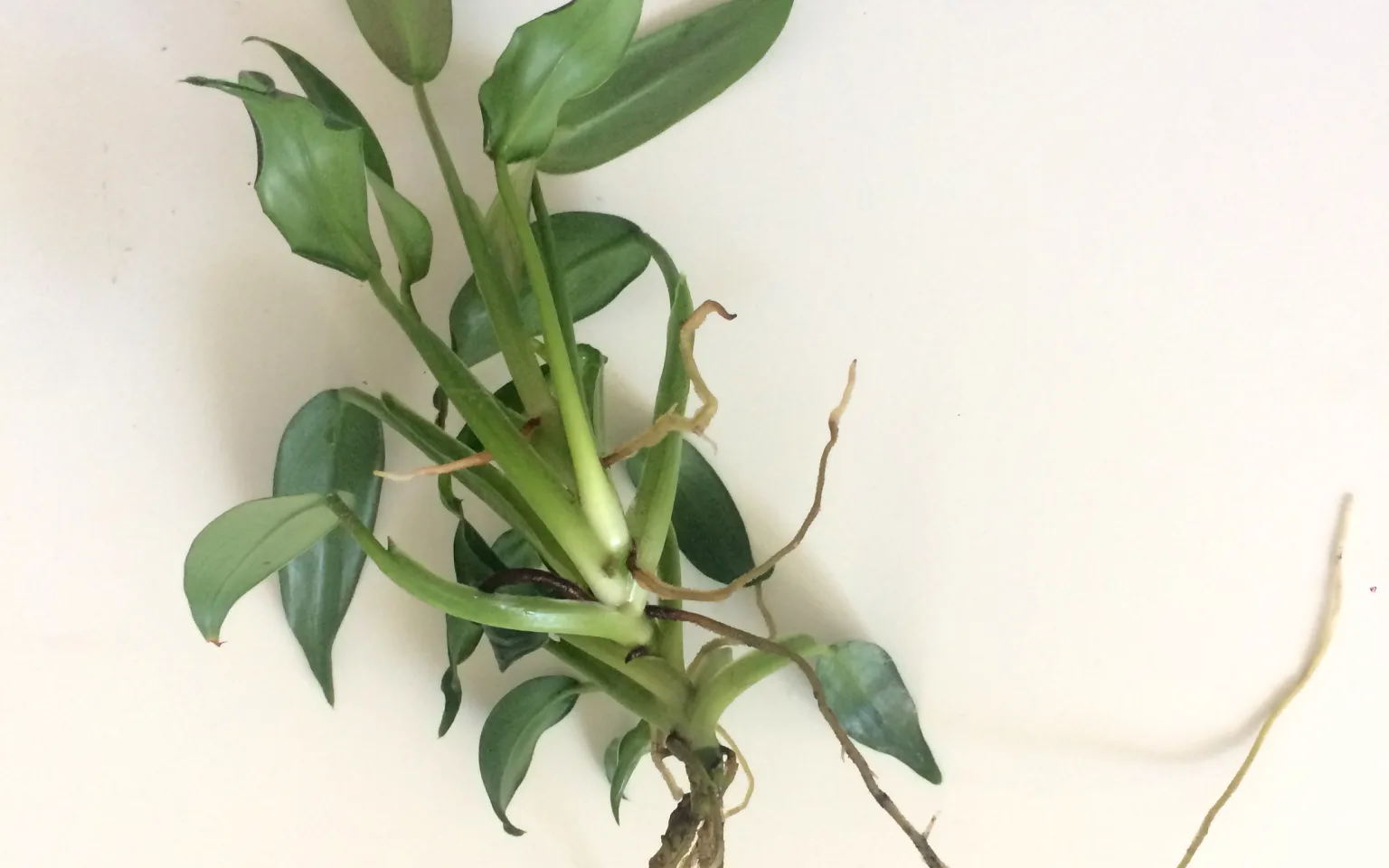
To air layer Philodendron before cutting a large top section, first identify a healthy stem node that will remain on the cutting. You can encourage roots at that node while the stem is still attached to the parent plant, then separate it only after a useful root system has developed. An aerial root is a promising starting point, not proof that the severed top can already support its leaves.
Why Rooting Before the Cut Can Help
A large Philodendron top may carry several leaves and a substantial stem. Once separated, its leaves continue to lose water while the new root system is still developing. An attached section can continue receiving water from the parent during the rooting period. That does not make the process risk-free, but it can make the transition less abrupt than chopping a large, poorly rooted top and hoping it recovers.
Layering is the broad term for forming roots on a stem while it remains attached. The Iowa State University Extension guide to layering houseplants explains the principle and notes that large or lanky plants may be candidates. The exact technique must fit the stem and species. A method illustrated for a woody plant is not automatically appropriate for a soft, climbing Philodendron.
There is also a simpler home-grower approach: hold moist, airy rooting material around a node that is already producing aerial roots, without making a wound. This is often called pre-rooting. Classic air layering may include wounding a stem before wrapping it; pre-rooting an unwounded Philodendron node should not be confused with that procedure.
Find the Node Before Choosing a Cutting Point
The node is the part of the stem associated with a leaf attachment and often an aerial root or dormant bud. The length of stem between nodes is the internode. The petiole is the stalk holding a leaf blade; a petiole and leaf alone are not a stem cutting with a viable node.
Trace the main vine with your eyes before touching a blade. Mark which node or nodes the top would keep and which would remain on the parent. Identify where aerial roots emerge, where the stem is fixed to its support, and whether the top will be physically stable after separation. Photographing both sides can help when dense foliage hides the stem.
The RHS Philodendron growing guide describes how climbing types can be trained and propagated from stem sections. If you cannot confidently see a viable node, delay the cut. A neat-looking slice through an internode does not substitute for planning where the next roots and shoots can develop.
Check the Parent Plant and the Aerial Roots
Pre-rooting is better attempted on a plant that is actively growing and reasonably healthy. Check the potting mix, drainage, stem firmness, and recent growth. If the parent is already yellowing rapidly, wilting in wet mix, or dealing with pests, solve that problem first. Propagation is an additional stress, not a cure for a failing root system.
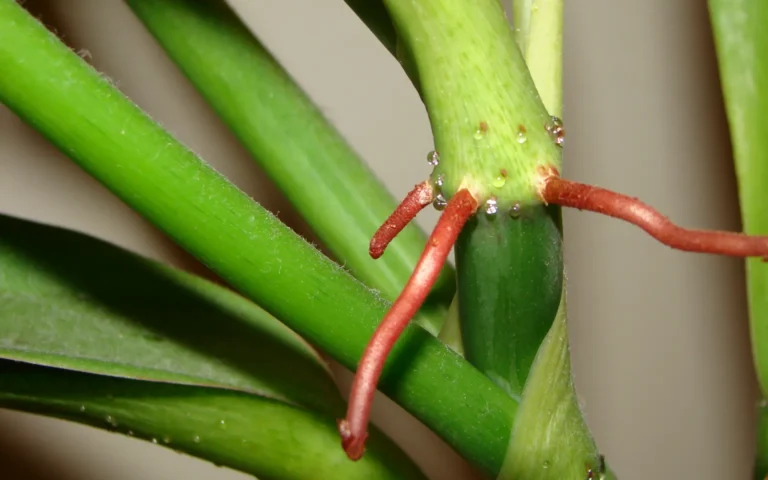
Existing aerial roots can make the intended node easier to position against a rooting medium. But a long aerial root that has grown in open air may not function like a root established in a moist substrate after the cutting is potted. Look for new, firm branching roots developing in the material you plan to keep around the node. Avoid pulling or bending an older aerial root sharply to fit a bag.
Leaf count matters too. A very large top with many leaves has more surface area to supply after separation. You do not need to strip healthy leaves automatically just to make the wrap easier. First see whether a stable, appropriately sized top can be planned around the available nodes.
Pre-Root at a Node Without Trapping Water
Choose a visible node near the proposed top section. Place a small amount of clean, lightly damp, airy rooting material around the node or an existing aerial root. Hold it in place so it contacts the node but does not crush the stem. If you use a wrap, make it easy to open for inspection; avoid a permanently sealed, dripping pocket against soft tissue.
Keep the parent in stable bright indirect light. A sudden move into intense direct sun increases water demand at the exact time you are handling the stem. The Houseplant Sunlight Check can help compare a new position with the current one. Maintain the rooting material lightly moist, not saturated, and monitor the node for darkening, softness, or an unpleasant smell.
This is a cautious pre-rooting approach, not a promise that every cultivar will root on the same timetable. Do not girdle a soft Philodendron stem merely because a general air-layering diagram shows bark removal on a woody branch. If a more invasive technique is considered, use species-specific advice and make sure you understand where the stem’s living tissue is.
When Is It Ready to Separate?
If you air layer Philodendron before cutting, the decision to separate should be based on roots, not on how long the wrap has been in place.
There is no universal number of days. Wait until the new roots are firm and sufficiently developed to occupy a small pot and support the intended top. One short aerial root tip is not the same as a rooted cutting. Open the wrap carefully and check the roots themselves instead of using a calendar date as the only criterion.
When ready, use a clean, sharp tool to cut below the rooted node, preserving the roots and stem tissue planned for the cutting. Pot the section in a draining container that fits the roots; a very large pot full of wet mix will not improve establishment. Secure a heavy top so it does not rock and tear fresh roots. Afterward, keep light and temperature steady, water according to the new root zone, and watch for progressive wilting or stem softness.
If the plant is growing slowly in a dim season, waiting for better conditions may be safer than forcing a schedule. A direct node cutting can still be reasonable for a smaller top with manageable foliage and a healthy parent. The choice depends on size, available nodes, existing roots, and the grower’s ability to hold the stem stable while it roots.
What a Community Question Reveals
A public r/philodendron discussion about chopping a White Wizard captures a common decision: whether existing aerial roots make a large cut safe and whether leaves should be removed first. The discussion is a useful signal of the question growers face, not a substitute for inspecting the actual nodes and root development of your plant.
The Bottom Line
To air layer Philodendron before cutting, plan the node and the future top first. Pre-rooting an attached node may reduce the abrupt loss of the parent’s water supply, but aerial roots alone do not guarantee success. Keep the material moist and airy, wait for substantial new roots, and separate only when both the parent and the intended cutting are ready.
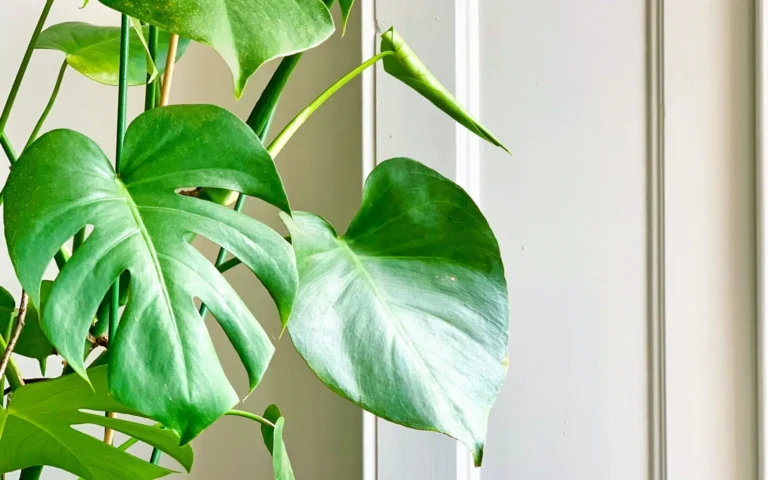
Featured image: Jolarti’s Philodendron photograph, CC BY-SA 4.0