Philodendron Aerial Roots: Leave, Train, or Trim?
Philodendron aerial roots are usually normal growth. Learn when to leave them alone, guide them to a support, trim an obstruction, or check for a real problem.
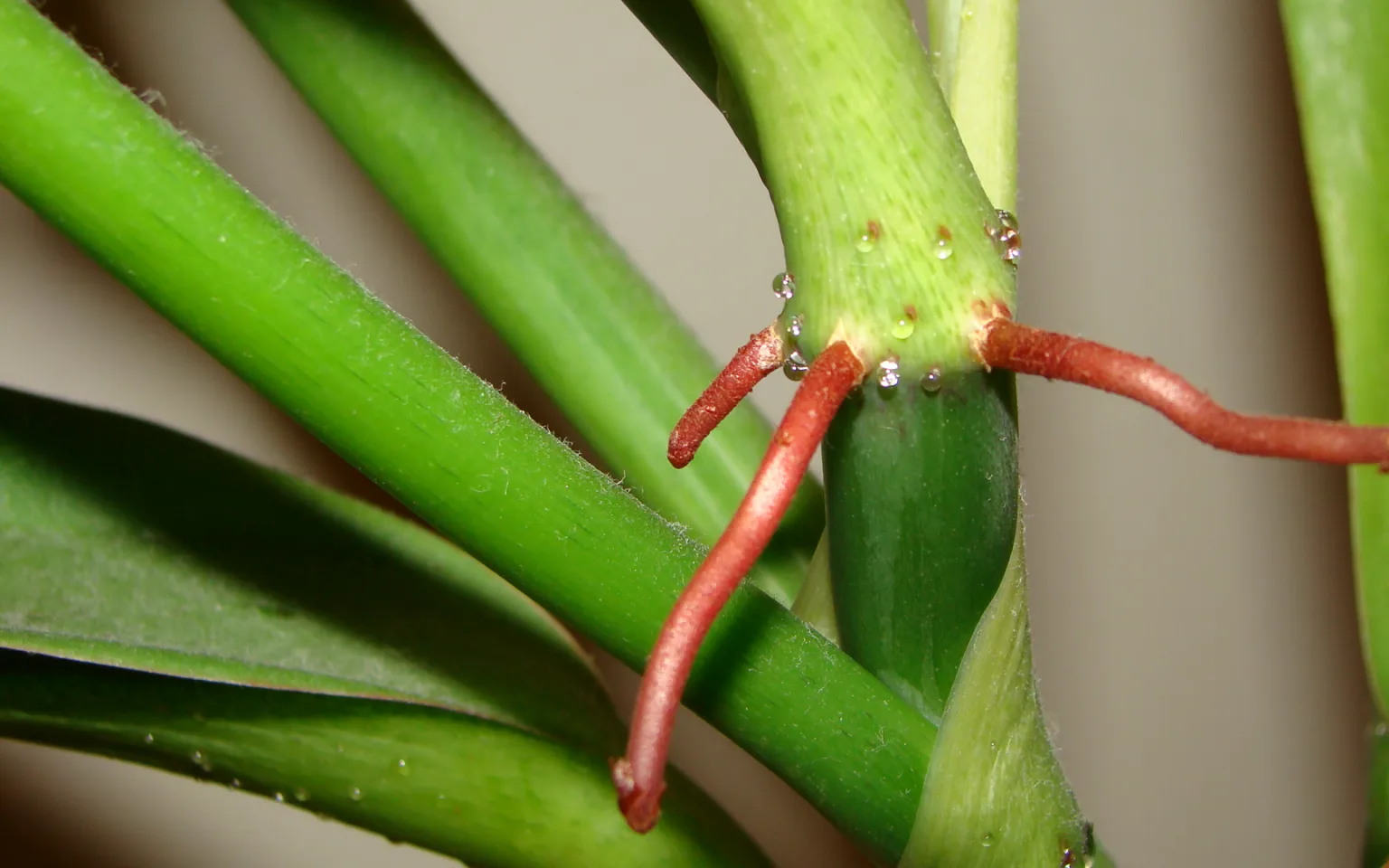
Philodendron aerial roots are usually a normal part of climbing growth, not a sign of root rot. You can leave a firm root alone, guide it toward a suitable support, or carefully shorten one that is getting in the way. The better choice depends on the plant's growth habit, the space around it, and whether the stem and potted root system otherwise look healthy.
Where Philodendron Aerial Roots Come From
On many climbing Philodendrons, aerial roots emerge from nodes along the stem. In nature, climbing forms use roots to attach to surrounding structures. The RHS growing guide for Philodendrons describes their climbing habit and the value of support for suitable types.
An aerial root may begin as a small brown nub, then extend when conditions allow. Its appearance can vary between species, individual stems, and humidity conditions. A long root hanging in air may look dramatic, but length alone tells you little about the condition of roots inside the pot. It also does not prove the plant is thirsty.
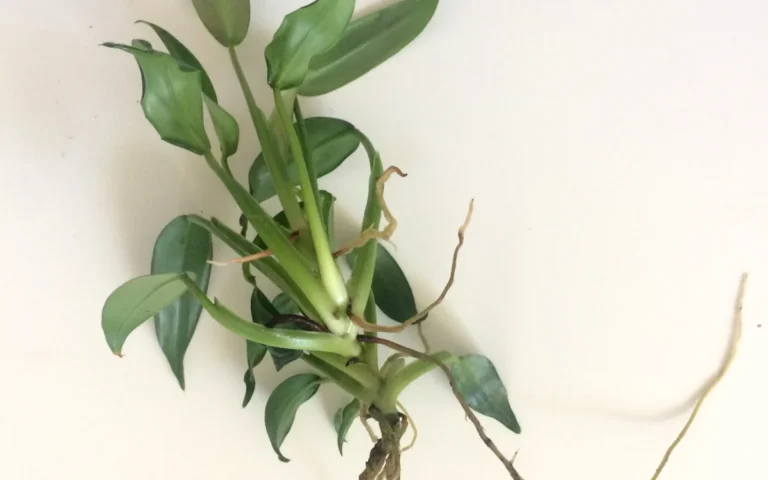
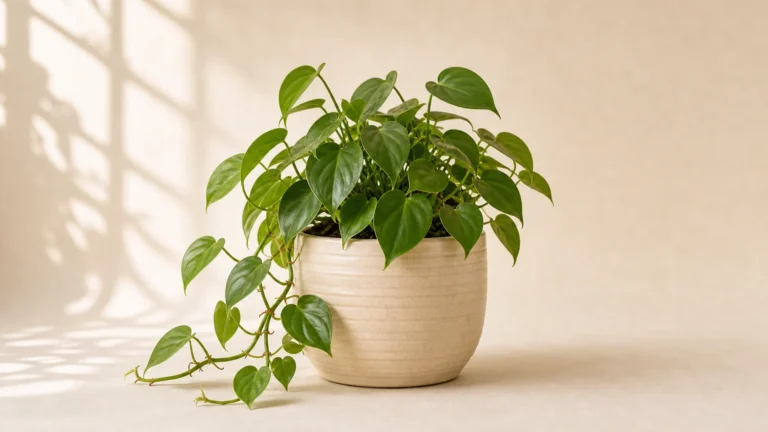
The featured Heartleaf Philodendron card shows a representative climbing plant in the library. It is not meant to identify every Philodendron in a collection or equate a velvet-leaved Micans with every plain green heartleaf specimen. The RHS Micans profile is useful when that name appears on a plant label.
When to Leave an Aerial Root Alone
If the root is firm and not interfering with furniture or a walkway, doing nothing is often the simplest option. It may later contact a pole or another surface. Removing every new root for tidiness creates unnecessary cuts and can take away opportunities for the vine to anchor itself.
Some roots dry at the tip when they remain exposed to room air. That alone does not mean the whole plant is unhealthy. Look at the overall pattern: new leaves, stem firmness, potting-mix condition, and the older root's texture. A root can be brown without being rotten. Soft, foul-smelling tissue is a different observation and deserves investigation.
If you prefer a trailing display, aerial roots can remain suspended. Not every trailing Philodendron needs a moss pole. Give the vine enough room so roots are not repeatedly snagged or torn when the pot is moved.
When to Guide Roots Toward a Support
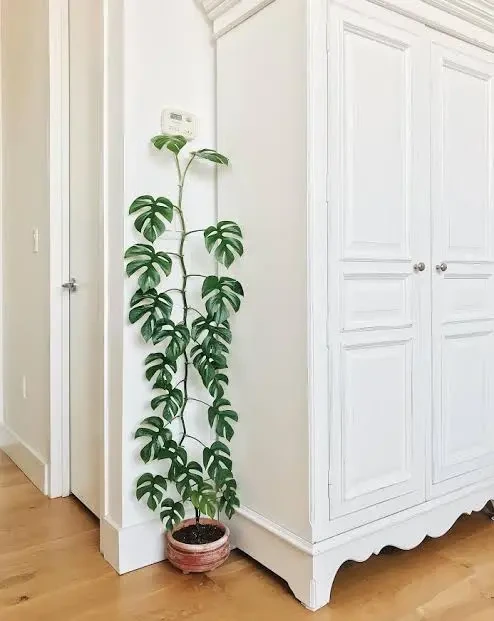
For a climbing form, place a stable pole, plank, or trellis near the main stem. Gently position a node with an aerial root against the support, then loosely secure the stem if necessary. Do not cinch a tie around the petiole, which supports and positions the leaf rather than anchoring the vine.
A moisture-retaining moss pole may encourage contact and rooting when maintained appropriately, but the support should not become an excuse to keep the potting mix constantly wet. A dry board or trellis can still provide a growth direction even if roots do not immediately attach. Inspect ties periodically as the stem thickens, and keep the whole pot stable as the vine gains height.
Think about light when choosing the display position. A tall pole placed in a dark corner may look good for a week but provide less usable light for future growth. Compare locations with the Houseplant Sunlight Check and keep the change gradual if the plant has been in a dim spot.
When Trimming Is Reasonable
Trimming is a practical choice when an aerial root is entering an unsuitable gap, catching on curtains, or obstructing routine care. Use clean, sharp scissors or pruners and shorten only the portion that is causing trouble. Support the stem with one hand so the cut does not pull at the node. Never yank a root that has already attached to a wall, cabinet, or pole; detaching it forcefully can injure the vine or the surface.
If the root tip is completely dry and brittle, a small tidy cut is also reasonable. Do not remove the entire system of healthy aerial roots because one tip has dried. Before pruning many roots, ask whether moving the pot, adding a support, or rerouting the vine would solve the space problem with fewer wounds.
Use ordinary tool hygiene. Clean blades between plants, particularly when another plant has shown disease symptoms. After cutting, keep an eye on the node; a clean, dry cut is different from a spreading soft or black area.
What Actually Needs Investigation
The presence of aerial roots is not a diagnosis. Check further if the main stem becomes black or soft, the pot stays wet for an unusually long time, several leaves yellow rapidly, the plant wilts despite a wet root ball, or you notice a foul smell. These signs point toward a possible root-zone or stem problem, and trimming an exposed aerial root will not solve it.
Lift the nursery pot from any decorative container and look for standing water. Check the mix below its dry-looking surface and examine the base of the stem. If the plant is declining, evaluate drainage, watering, temperature, and pests before adding fertilizer or repeatedly repotting. The Heartleaf Philodendron care profile provides a baseline for the common trailing type, but the actual plant and its conditions still determine the response.
Why Growers Disagree About the Look
In a public r/philodendron discussion featuring Micans aerial roots, the roots are treated as an attractive part of the vine. Other growers prefer a tidier silhouette. Both preferences are compatible with healthy care. The visual choice matters less than avoiding stem damage and ensuring the plant has suitable light, water, and room to grow.
The Bottom Line
Most Philodendron aerial roots can be left alone. Train them toward a support when you want a climbing vine, or trim a specific root when it interferes with your space. Investigate the root zone only when there are additional symptoms such as soft tissue, persistent wetness, widespread yellowing, or decline.