How to Grow Bigger Monstera Leaves Indoors
Bigger Monstera leaves develop on future growth. Learn how maturity, usable light, climbing support, root health, and measured feeding work together.
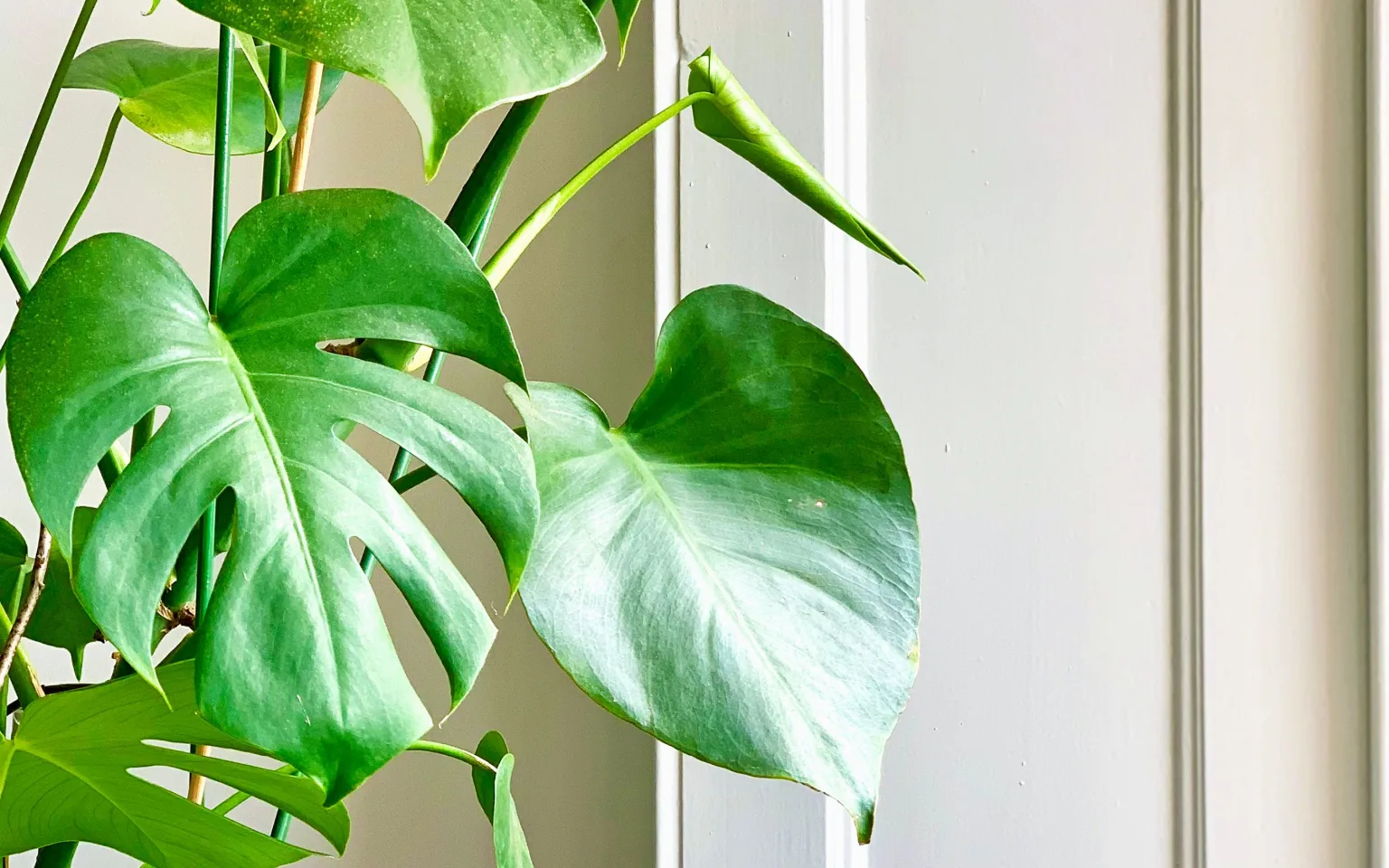
To grow bigger Monstera leaves, focus on the leaves the plant makes next. Existing leaves will not expand because you move the pot or add fertilizer. A maturing Monstera deliciosa with adequate light, a stable place to climb, healthy roots, and consistent care has a better chance of producing larger new foliage. No single treatment guarantees a particular leaf size or number of splits.
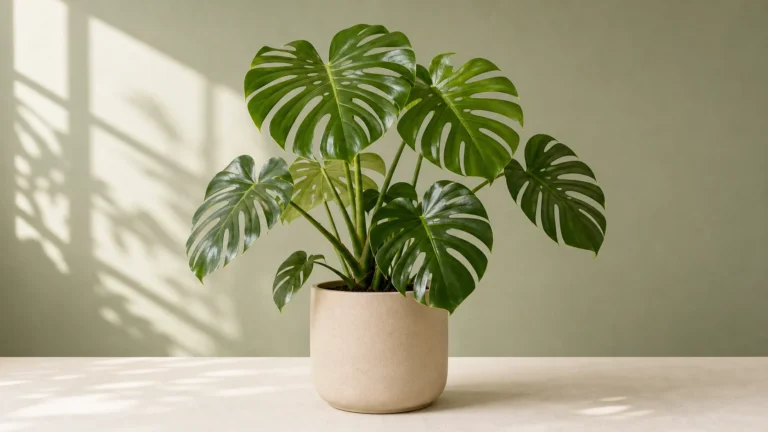
How to Grow Bigger Monstera Leaves: First Read the Growth Pattern
A small, unfenestrated leaf on a young plant is not necessarily a symptom. Juvenile Monstera foliage often looks different from mature foliage. As the vine develops, later leaves may become larger and develop holes or edge splits, called fenestrations. The University of Minnesota Extension's Monstera guide describes the plant's climbing habit and changing foliage.
The more useful question is whether new leaves are getting smaller than previous leaves on the same growing stem. A plant that once made large leaves but now produces a run of smaller ones may have lost usable light, support, or root function. A single unusual leaf is less informative than a sequence of two or three.
Compare leaves from the same vine when possible. A pot containing several vines at different stages can make the plant look inconsistent even when each vine is developing normally. Also distinguish leaf size from fenestration: a small leaf without holes does not prove nutrient deficiency, and a split leaf does not prove every growing condition is ideal.
Give the Leaves Light They Can Actually Use
A room can feel bright to you while the plant, several feet from the window, receives relatively little light. Window orientation, distance, shade from nearby buildings, curtains, and the season all change the light available at leaf level. The University of Minnesota Extension guide to indoor lighting explains why position matters and how supplemental light differs from daylight.
Start by assessing the plant's present position rather than assuming a brighter room is enough. The Houseplant Sunlight Check can help compare candidate spots. If you move the plant closer to a window, make the change gradually and watch for pale or scorched patches. Bright indirect light is a sensible target; prolonged harsh direct sun is not a shortcut to bigger leaves.
Observe the next few leaves after changing the light. Leaves that have already formed will not retroactively grow larger. A plant also needs time to acclimate, so do not treat a lack of immediate change as proof that the adjustment failed.
Give the Main Stem a Stable Route Upward
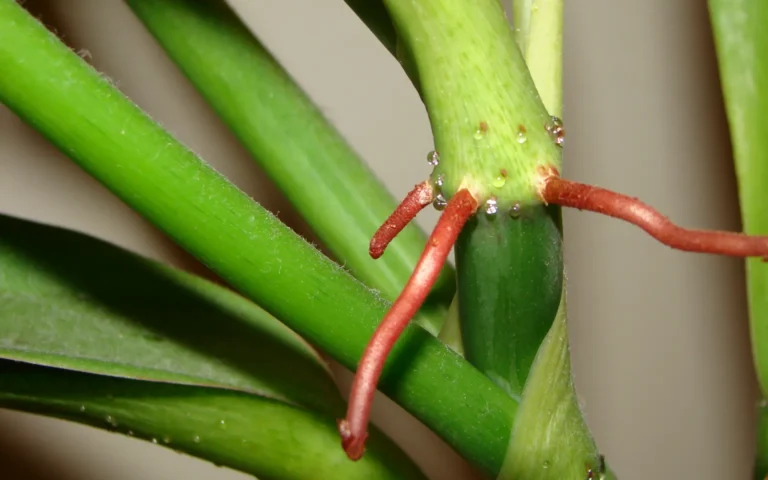
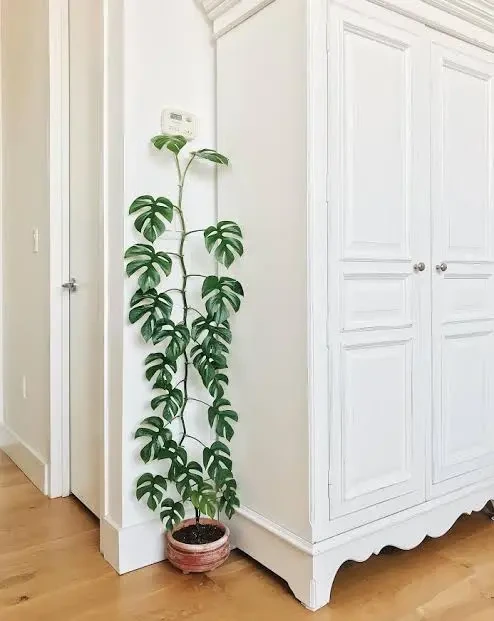
Monstera deliciosa is a climbing plant, not just a collection of upright leaves. A mature vine can use its aerial roots to attach to a structure. Providing a trellis, sturdy pole, or other suitable support lets the stem grow upward and makes the plant easier to manage. Support is one part of encouraging mature growth, but a pole alone cannot compensate for low light or unhealthy roots.
Place the support beside the main stem, where nodes and aerial roots can reach it. Secure the stem loosely if needed; do not tie leaf stalks tightly to the pole. Petioles need room to move and orient their leaves. Check that the pot and support are stable together before adding height to a top-heavy plant. A tall, wet pole in a light pot can create a tipping problem instead of solving one.
You do not have to force every aerial root into a moss pole. Some will attach, some will not, and a dry support can still provide physical structure. If you choose a moisture-retaining pole, maintain it without keeping the potting mix constantly saturated.
Check Roots and Watering Before Upsizing the Pot
The root system has to support new growth. A draining pot and a substrate that holds some moisture without staying waterlogged matter more than an oversized container. Repotting simply because you want larger leaves can backfire: a much larger volume of mix may stay wet around a relatively small root ball.
Consider repotting when evidence points to a root-space or substrate problem. Roots densely circling inside the pot, very rapid drying, poor water penetration, or deterioration of the mix are more useful clues than the calendar. If you do repot, choose a modest increase in pot size and a container with drainage. Avoid changing the pot, light, pole, and fertilizer all at once; otherwise it becomes hard to tell which change helped or hurt.
Check moisture below the surface before watering. The top of a chunky mix can look dry while the center remains wet. Water thoroughly when the root zone needs it, let excess drain away, and do not leave the pot standing in a filled cachepot. Persistent yellowing, a soft stem base, or a sour smell calls for a root-zone check before any leaf-size project.
Feed a Growing Plant, Not a Struggling One
Fertilizer can replenish nutrients used during active growth. It cannot replace light, repair damaged roots, or make an existing leaf expand. Follow the product label, start conservatively, and adjust to the plant's growth and light conditions. When growth slows markedly in a dim season, reduce or pause feeding rather than maintaining a summer schedule by habit.
Too much fertilizer can leave salts in the substrate and stress roots. If leaf tips burn or the potting mix develops a persistent crust, investigate the entire watering and feeding routine. Do not respond to every small leaf by doubling the dose.
Growers often compare spectacular progress photos. One public r/Monstera growth discussion shows why questions about light, support, and feeding come together. It is a useful example of what people want to know, not evidence that another home can reproduce the same growth rate or fertilizer schedule.
Track the Next Three Leaves
If you are still wondering how to grow bigger Monstera leaves after changing the setup, measure the next leaves rather than the old ones.
Record the size of each new leaf on one stem, the distance between nodes, its fenestrations, and where the plant sits relative to the window. A simple photo with a ruler or the same reference object makes comparisons more reliable. Change one or two limiting conditions, then allow enough time for new leaves to emerge before judging the result.
If the new foliage is progressively larger and the stem is firm, the current setup may be working. If leaves continue to shrink, return to the basics: usable light, root health, watering, stability of the support, and signs of pests. On the Monstera deliciosa plant profile, use the care details as a baseline, then adjust for your room and plant rather than copying a social-media timetable.
The Bottom Line
How to grow bigger Monstera leaves is a question about future growth, not a one-step treatment. Maturity sets part of the potential; light, climbing support, roots, and measured care determine how well the plant can develop from there. Fix obvious constraints, keep the plant stable, and judge progress by the next several leaves.