7 Hard-to-Kill Houseplants for People Who Forget to Water
Compare seven genuinely resilient houseplants ranked by which kind of neglect they tolerate — drought, low light, or total indifference — and pick the one that matches your habits.
There is a particular frustration that comes with killing a plant that was sold as "impossible to kill." You followed the tag's instructions. You watered it. And somehow it still ended up as a pot of dry twigs — or worse, a pot of mush.
The problem is that "hard to kill" means different things for different people. A plant that shrugs off two weeks without water might still collapse in a dark corner. A plant that thrives in low light might rot if you water it on a weekly schedule rather than checking the soil first. "Low maintenance" is relative to what kind of maintenance you are bad at.
The seven plants below are ranked not by a single toughness score, but by what specific form of neglect they tolerate best. Pick the one that matches your particular brand of forgetfulness.
1. ZZ Plant (Zamioculcas zamiifolia)
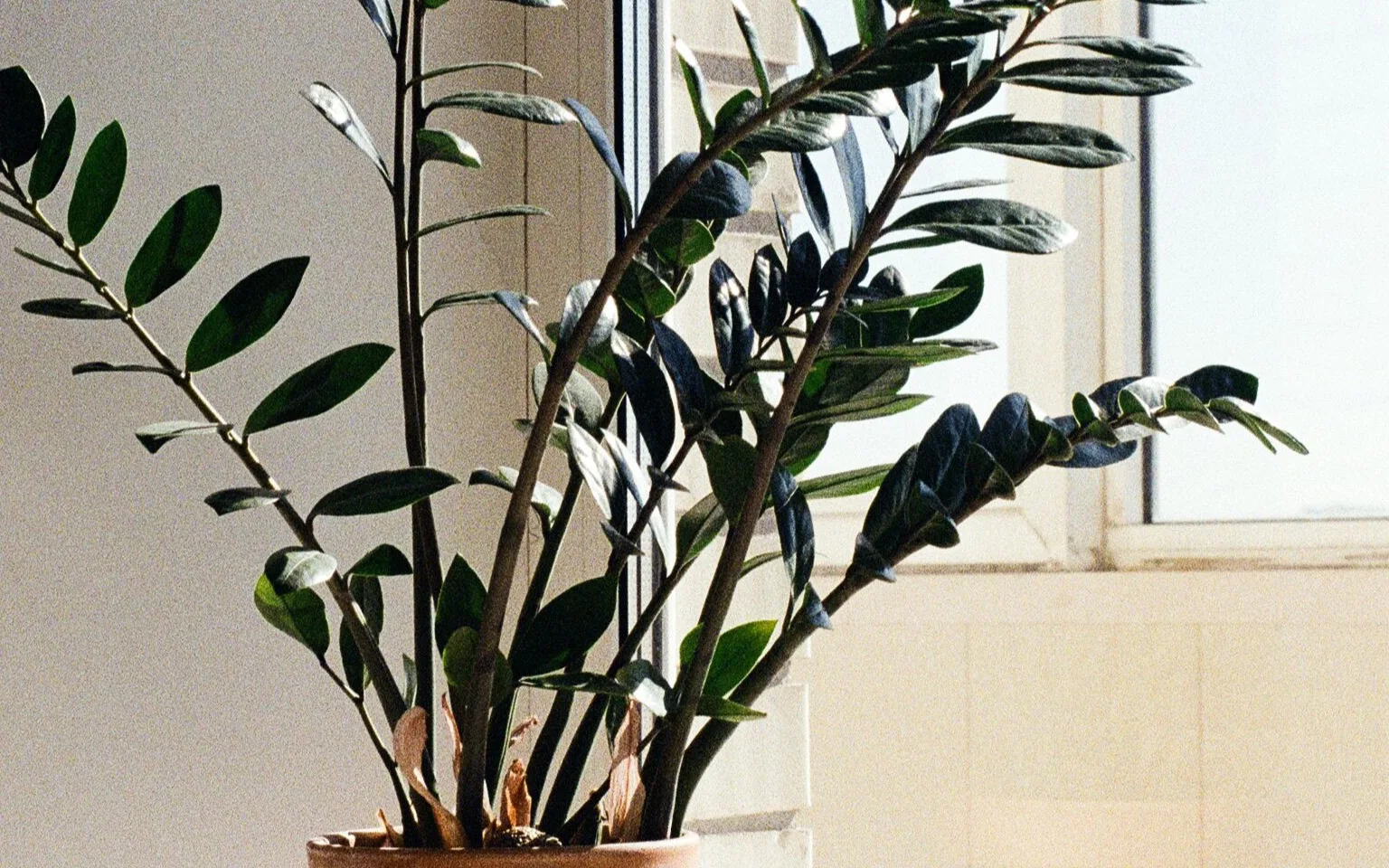
If you have killed every plant you have ever owned, start here. The ZZ plant stores water in potato-like rhizomes beneath the soil, meaning it can go months without water — not weeks, months. The thick, waxy leaves resist pests and disease, and the plant grows in light conditions ranging from bright indirect all the way down to a windowless room with fluorescent office lighting.
In fact, the most common way to kill a ZZ plant is not neglect but overcare: watering it before the soil is completely dry. If you are the type who hovers over your plants, checking for the slightest sign of thirst, the ZZ will actually be safer if you set a calendar reminder to water it once a month and otherwise leave it alone.
A 2018 study in the Journal of Environmental Horticulture confirmed that ZZ plants maintain photosynthetic function under extremely low light — far lower than most houseplants can tolerate — which is why they survive in offices, bathrooms, and hallways with no natural light at all.
Light: Low to bright indirect. Survives in windowless rooms with fluorescent light. Water: Every 3–4 weeks, only when soil is completely dry all the way through. Size: 2–3 feet tall, upright growth habit. Pet safety: Toxic if ingested.
2. Snake Plant (Sansevieria trifasciata)
Snake plants use CAM photosynthesis — they open their stomata at night rather than during the day, which means they lose almost no water through their leaves. This is why they can go weeks between waterings even in bright light. In low light, they can stretch to a month or more.
Beyond drought tolerance, snake plants are structurally resilient. The upright, blade-like leaves do not snap easily, they are not prone to pests, and they do not drop leaves when stressed — they just stop growing until conditions improve. This makes them uniquely suited for people who travel frequently or who simply do not want to think about their plants very often.
One note on watering: the biggest risk to a snake plant is water sitting in the crown — the center of the leaf rosette. Water the soil directly, not the leaves, and make sure the pot has a drainage hole. A well-draining potting mix with added perlite or sand helps prevent root rot.
Light: Low to bright indirect. Tolerates direct morning sun. Water: Every 2–4 weeks. Err on the side of too dry. Size: 6 inches to 4 feet, depending on variety. Pet safety: Toxic if ingested.
3. Pothos (Epipremnum aureum)
Pothos is the plant that taught an entire generation of apartment dwellers that they could keep something alive. It is forgiving, fast-growing, and visibly communicative — the leaves droop slightly when it needs water, then recover within hours of being watered. This makes it an excellent learning plant because it gives you real-time feedback without punishing you for mistakes.
Pothos tolerates low light, but it shines in medium to bright indirect light, where the leaves grow larger and the variegation — the marbled patterns of light green, gold, or white — becomes more pronounced. In dim corners, the leaves may revert to solid green, but the plant itself will not fail.
It is also one of the easiest plants to propagate. Snip a stem below a node, drop it in water, and within two weeks roots appear. When a friend says "I keep killing every plant I get," hand them a rooted pothos cutting. It is the plant equivalent of training wheels.
Light: Low to bright indirect. Variegation fades in very low light. Water: Weekly to biweekly, when top inch of soil feels dry. Size: Trailing up to 3+ m if left unpruned. Pet safety: Toxic if ingested.
4. Cast Iron Plant (Aspidistra elatior)
The common name is not marketing hype. Aspidistras earned the "cast iron" label during the Victorian era, when they survived in parlors lit only by gas lamps, choked with coal dust and cigar smoke. If a plant can handle 19th-century London, it can handle your apartment.
The cast iron plant grows slowly — do not expect dramatic transformations month to month — but it is nearly impossible to kill. It tolerates low light, erratic watering, temperature fluctuations, and dry air with equal indifference. The broad, dark green leaves reach 18–24 inches and create a lush, tropical look in spaces where more demanding plants would not survive.
The main vulnerability is overwatering, which can cause rhizome rot. Let the top two inches of soil dry out between waterings, and during winter you can stretch to three weeks or more.
Light: Low to medium indirect. Avoid direct sun, which scorches the leaves. Water: Every 1–2 weeks, letting top two inches dry between. Size: 2–3 feet tall and wide. Pet safety: Non-toxic.
5. Chinese Evergreen (Aglaonema)
Chinese evergreens are native to the tropical forest floors of Southeast Asia, where they grow under dense tree canopies in low light and compete with massive root systems for moisture — which is to say, they evolved to handle difficult conditions. They are one of the few plants that genuinely thrive in low light rather than merely tolerating it.
There are dozens of Aglaonema varieties, ranging from deep green to silver-streaked to pink-blushed. The variegated types need slightly more light to maintain their color, but the all-green varieties — Aglaonema modestum, for example — can grow in rooms where reading without a lamp is difficult.
Chinese evergreens are sensitive to cold drafts and temperatures below 60°F, so keep them away from air conditioning vents and exterior doors in winter.
Light: Low to medium indirect. Green varieties handle very low light. Water: Weekly, letting top inch of soil dry between. Size: 1–3 feet tall and wide, depending on variety. Pet safety: Toxic if ingested.
6. Rubber Plant (Ficus elastica)
The rubber plant is for people who want the visual drama of a fiddle leaf fig without the drama. It grows into a small indoor tree — 6–8 feet over several years — with broad, glossy leaves in deep burgundy or variegated green. Unlike its diva cousin, the rubber plant does not throw a fit if the light changes or you miss a watering.
Rubber plants prefer bright indirect light and will grow faster with it, but they tolerate medium light and do not drop leaves at the first sign of stress. They are also drought-tolerant in the way many thick-leaved plants are: the leaves store water, so a missed watering is an inconvenience, not a death sentence.
The main thing to watch for is dust accumulation on those large leaves, which can block light absorption. Wiping the leaves with a damp cloth once a month keeps them functioning — and keeps the plant looking its glossy best.
Light: Medium to bright indirect. Tolerates medium light with slower growth. Water: Every 1–2 weeks, when top inch of soil feels dry. Size: 2–8 feet tall indoors, depending on pruning. Pet safety: Mildly toxic if ingested. The sap can irritate skin.
7. Ponytail Palm (Beaucarnea recurvata)
Despite the name, the ponytail palm is not a palm — it is a succulent, and its swollen base, called a caudex, functions as a water reservoir. A well-established ponytail palm can go 3–4 weeks without water and show no signs of stress. It is the plant equivalent of a camel.
Ponytail palms like bright light — a south-facing window is ideal — and they are one of the few indoor plants that can handle direct afternoon sun. They grow slowly, about a foot per year in good conditions, and can eventually reach 6–8 feet indoors over many years.
The main things that will kill a ponytail palm are overwatering (the caudex rots if kept wet) and cold drafts. Beyond that, it is one of the most self-sufficient plants you can own.
Light: Bright indirect to direct sun. Handles afternoon sun. Water: Every 2–4 weeks. Let soil dry completely between. Size: 1–6 feet indoors, slow-growing. Pet safety: Non-toxic.
Which One Fits Your Neglect Style?
| If you… | Get this plant |
|---|---|
| Forget plants exist for months at a time | ZZ Plant or Snake Plant |
| Travel frequently and are gone for weeks | Ponytail Palm or Snake Plant |
| Live in a dim apartment with few windows | Chinese Evergreen or ZZ Plant |
| Want a bigger statement plant | Rubber Plant |
| Want fast visible growth to stay motivated | Pothos |
| Have pets that nibble everything | Cast Iron Plant or Ponytail Palm |
| Have killed every plant you have tried | ZZ Plant — start here |
No plant is truly unkillable — overwater anything enough and it will rot. But if you match the plant to your specific habits rather than buying whatever the garden center labels "easy," the odds of success shift dramatically in your favor.
Try the House Plant Finder quiz to find plants matched to your actual light conditions and care habits.