Houseplant Soil pH Explained: Test, Read, and Adjust It
Not sure when or how to fertilize your houseplants? Learn the seasonal schedule, how to choose the right fertilizer, and how to avoid the #1 mistake: using too much.
Soil pH is the quiet variable in houseplant care. Light, water, and fertilizer get all the attention, but pH decides whether the nutrients in your soil are actually available to your plant. A potting mix can contain plenty of iron and yet deliver none of it — because at an alkaline pH the iron locks into forms roots cannot absorb, and the plant goes yellow anyway.
The pH scale runs from 0 to 14, with 7 neutral. Below 7 is acidic, above 7 is alkaline, and the scale is logarithmic: a pH of 5 is ten times more acidic than a pH of 6, not one step more. Most soils and potting mixes sit between 4 and 8.5, and most houseplants are happiest slightly acidic, between roughly 5.5 and 6.5. That range keeps the macronutrients and micronutrients a plant needs simultaneously available — a Purdue Extension publication on soil pH charts exactly how availability of each nutrient rises and falls across the scale.
This guide covers what pH means in a pot, which plants care about it most, how to test it, and — importantly — when adjusting it is not worth the trouble.
Why pH Matters More in a Pot Than in a Garden
In open garden soil, pH is buffered by a huge volume of minerals, organic matter, and microbial life. It drifts slowly. A potted plant lives in a small, closed system: a liter or two of potting mix, watered on your schedule, with nowhere for dissolved minerals to go but stay.
That makes container pH both more volatile and more fixable:
Every watering changes it. Hard tap water delivers dissolved calcium and magnesium carbonates that nudge pH upward, month after month. Rainwater and distilled water are mildly acidic and nudge it down or leave it alone.
Every fertilizer changes it. Most common fertilizers acidify the root zone slightly over time.
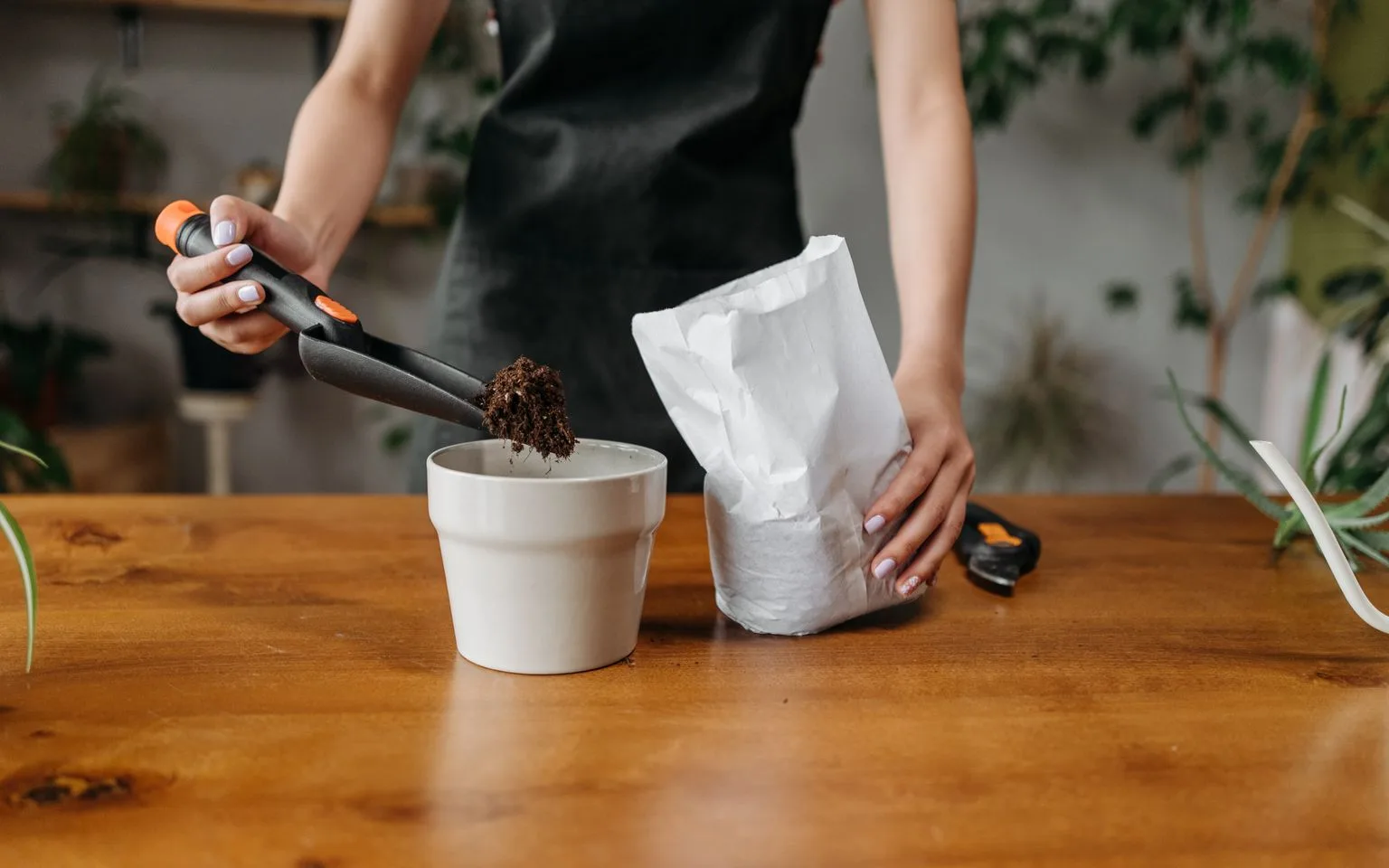
Repotting resets it. Fresh potting mix arrives at whatever pH the manufacturer blended — typically 5.5 to 6.5 for peat- or coir-based mixes. This is the cheapest, most reliable pH correction available to a houseplant keeper, and it is one of the quiet benefits of the annual repot covered in our step-by-step repotting guide.
The practical consequence: pH problems in houseplants usually appear in plants that have been in the same soil for years, watered consistently with hard tap water, and never repotted. The fix is often just fresh mix.
Acidic vs Alkaline: What the Symptoms Look Like
You cannot see pH directly, but you can see its consequences. Because specific nutrients lock up at specific pH extremes, symptoms point at the direction of the drift.
When the mix has drifted too alkaline (pH above ~7): Micronutrients lock up first. The classic sign is interveinal chlorosis — leaves yellowing between the veins while the veins themselves stay green — starting on the youngest leaves, caused by iron unavailability. New growth may come in small and pale. This is the most common pH-related pattern in houseplants because tap water pushes pots alkaline over time.
When the mix has gone too acidic (pH below ~5): Calcium and magnesium become scarce. Growth tips may weaken, older leaves can yellow uniformly or develop necrotic patches, and the plant generally looks like it is starving despite regular feeding. Over-fertilized soil that has accumulated salts often reads acidic too, and the salt damage shows up as brown, crispy leaf edges — our brown tips guide covers how to recognize and flush salt buildup.
One caution before blaming pH: identical symptoms come from overwatering, root rot, and simple nutrient deficiency. Yellowing leaves have at least a dozen causes — the full diagnostic framework is in our article on why houseplant leaves turn yellow. pH is the explanation to reach for when the basics check out and the plant has been in old soil for a long time.
Which Houseplants Actually Care
Most foliage houseplants — pothos, monsteras, philodendrons, snake plants, ZZ plants — are unfussy about pH anywhere in the 5.5 to 7 range. A short list is genuinely particular:
| Plant | Preferred pH | Notes |
|---|---|---|
| Gardenia | 5.0–6.0 | The poster child for acid soil; chlorosis is near-guaranteed in alkaline mix |
| Azalea & Camellia (indoor varieties) | 4.5–5.5 | Need genuinely acidic mix to hold foliage |
| African Violet | 6.0–6.8 | Slightly acidic; very sensitive to salt accumulation, which travels with hard water |
| Peace Lily | 5.5–6.5 | Shows iron chlorosis clearly when drift goes alkaline |
| Citrus (indoor) | 5.5–6.5 | Interveinal chlorosis in alkaline conditions is a common indoor citrus complaint |
| Most tropical foliage | 5.5–7.0 | Flexible; rarely the limiting factor |
If you grow nothing from the top of that table, pH is a background variable you can mostly ignore. If you grow gardenias or azaleas indoors, it is a primary care requirement, and using an acid-formulated potting mix from the start beats adjusting forever after.
How to Test Your Potting Mix
Three practical options, in ascending order of accuracy:
1. Digital pH Meter (fast, imprecise)
Cheap soil pH meters cost little and answer fast, but the needle-type meters sold as three-in-one kits are unreliable in soilless potting mix, which lacks the moisture and ion content they are designed for. Treat a cheap meter as a rough screen: a reading of 6.5 should be trusted only as “somewhere between 6 and 7.” Insert-probe meters also read only where the probe touches, and potting mix is famously non-uniform. Extension guidance is blunt that home kits and devices generally do not match laboratory accuracy — Oregon State’s soil testing advice recommends them only as a first alert, never for problem-solving.
2. pH Test Strips (cheap, good enough for pots)
Slurry method: mix one part potting mix with two parts distilled water, stir, wait thirty minutes, and dip a strip into the water. Strips read in 0.5 steps and cost almost nothing. For houseplant purposes — answering “am I near 6 or near 8?” — they are usually sufficient.
3. Laboratory Soil Test (definitive, overkill for most)
A lab test gives a precise pH plus nutrient levels for a modest fee. It is worth it for a valuable collection, a recurring mystery, or before you start amending soil for acid-loving plants. It is overkill for a pothos in its second year.
Adjusting pH — and When Not To
The honest expert position: most houseplant pH problems are solved by repotting into fresh mix and changing the water source, not by chemistry. But if a test confirms a real drift, here is the toolbox.
To lower pH (make more acidic):
Repot into a peat- or coir-based mix, which is naturally acidic, or an acid-formulated mix for gardenias and azaleas.
Water occasionally with a dilute acidifying product or use filtered/rainwater instead of hard tap water. Changing the water changes the direction of drift permanently; chemicals change it temporarily.
Elemental sulfur lowers pH but works slowly through microbial action and is poorly suited to small indoor volumes — easy to overshoot.
To raise pH (make more alkaline):
Dolomite lime raises pH and adds calcium and magnesium, but houseplant doses are tiny — a fraction of a teaspoon per pot — and pots have no buffer against overshoot.
Switching some of your watering to hard tap water, if you have been using distilled water exclusively for years, is often enough.
When not to adjust: if the plant looks healthy, leave the pH alone. Chasing a perfect number with amendments in a two-liter pot creates swings the plant feels more than the original drift. And never adjust pH and change your fertilizing routine at the same time — you will not know which change did what. If the plant is struggling, rule out watering problems and light levels first; they cause trouble an order of magnitude more often than pH does.
Frequently Asked Questions
What is the ideal pH for houseplant soil?
Between 5.5 and 6.5 — slightly acidic — suits the large majority of tropical foliage houseplants. Acid-lovers like gardenia and azalea prefer 4.5 to 5.5. Very few houseplants want alkaline soil.
Does tap water make soil acidic or alkaline?
It depends on your water. Hard tap water (high in dissolved calcium and magnesium) pushes potting mix alkaline over months of watering. Softened water adds sodium, which harms plants independently of pH. Rainwater, distilled, and most filtered waters are mildly acidic or neutral and keep the mix closer to where it started.
Can I use vinegar to lower soil pH?
You can, but you should not. Vinegar gives a brief acid dip and then breaks down, and dosing is uncontrolled in a small pot — the roots experience a swing, not a stable adjustment. Fresh acidic potting mix or an acid-formulated product does the same job predictably.
How often should I test houseplant soil pH?
Once is a reasonable baseline; again only when symptoms suggest a drift — chlorosis on new growth, general decline in old soil, or a plant that stopped responding to fertilizer. A healthy plant in mix under two years old almost never needs a test.
pH Is a Background Variable — Until It Isn’t
For most houseplant keepers, pH deserves exactly this much attention: repot on a reasonable schedule, notice whether your tap water is hard, and reach for a test strip only when a plant declines without an obvious cause. That routine keeps 95 percent of pots in range without any chemistry. The remaining 5 percent — the gardenias, the indoor citrus, the decade-old soil — is where understanding pH pays for itself.
Curious which plants will thrive in your home without soil-level fuss? Try the House Plant Finder quiz to discover indoor plants matched to your environment and how much care you actually want to give.