Monstera Aerial Root Care: Cut, Redirect, or Support?
Monstera aerial roots are normal climbing structures. Learn when to leave them, guide them into soil or support, and prune them without damaging the stem.
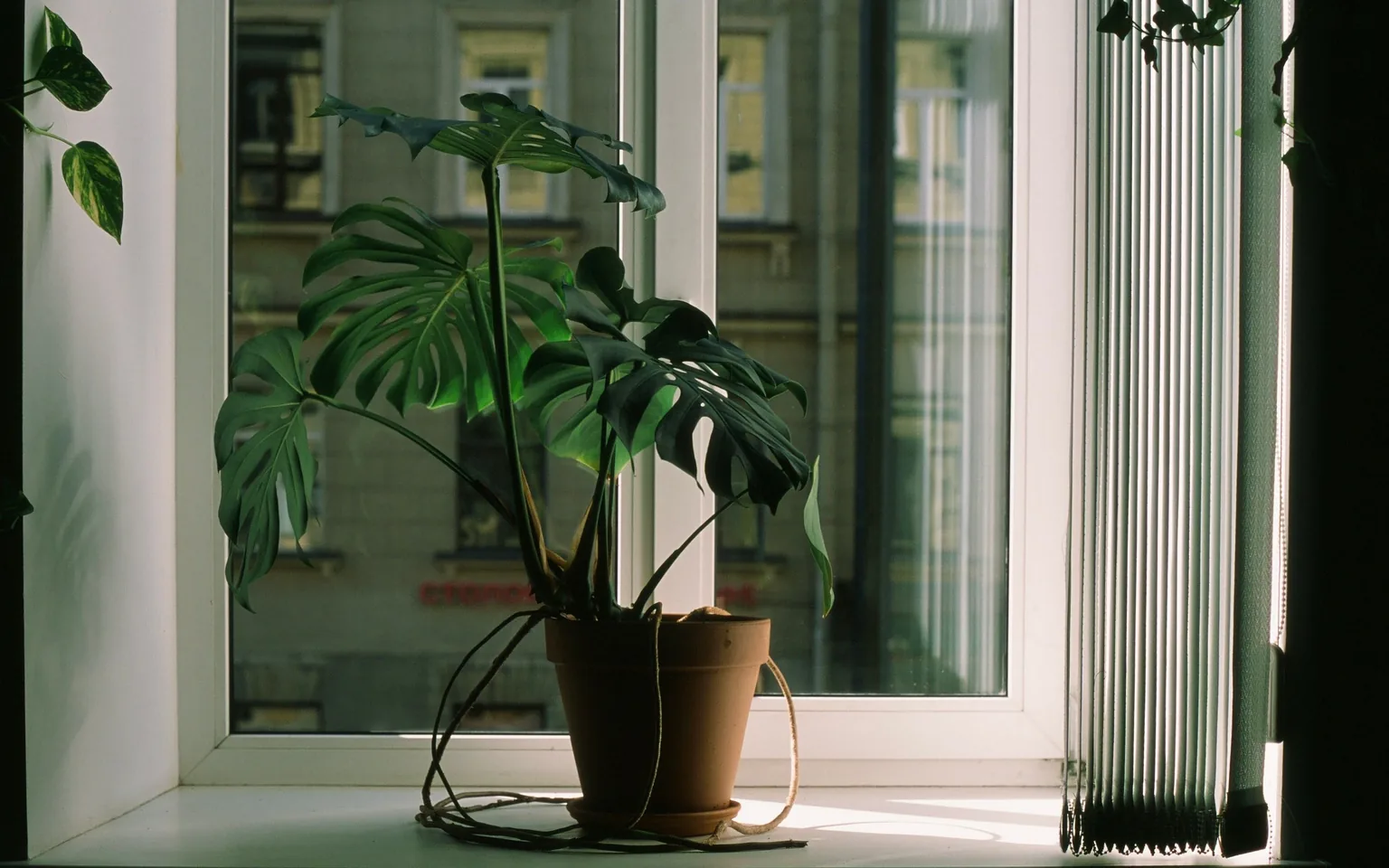
Monstera aerial root care is usually simple: leave healthy roots alone, gently guide them toward a support or potting mix when useful, and trim only those that are damaged or genuinely in the way. Brown, firm roots emerging from the stem are a normal part of the plant's climbing habit, not evidence of root rot or disease.
Small milestones such as the first aerial root described in r/Monstera receive attention because growers closely watch every node, root, and new leaf. Understanding what each structure does makes the plant easier to support and reduces unnecessary cutting.
What Monstera Aerial Roots Do
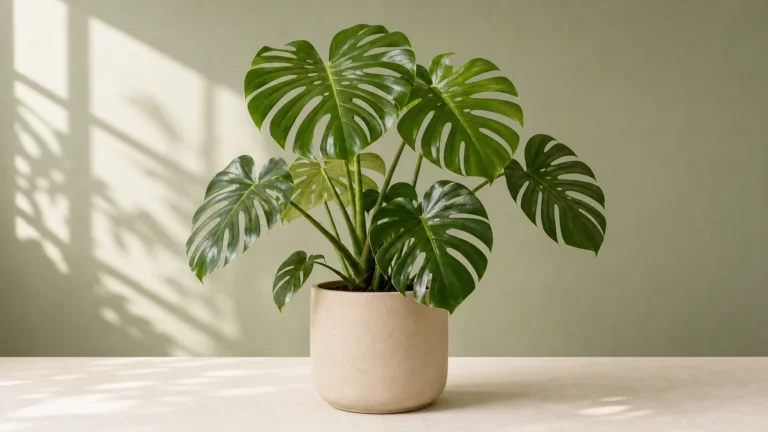
In its native habitat, Monstera deliciosa grows as a climbing vine. Aerial roots emerge from nodes along the stem and help the plant attach to trees or other structures. Some remain in the air; others reach moist organic material or the ground.
Indoor aerial roots do not need to perform every wild function. They may remain short and firm, grow across a shelf, reach toward the pot, or attach to a textured support. Their direction depends on stem orientation, humidity, light, and nearby surfaces.
The NC State Monstera profile describes the species as a clinging climbing vine and recommends sturdy support. That growth habit is why repeatedly removing every aerial root treats the visible result rather than the plant's need to climb.
Normal Aerial Root or a Problem?
A healthy aerial root is usually tan to brown, firm, and attached to a solid green stem. Its tip may be lighter while actively growing. An older root can become dry or corky without harming the plant.
Root rot is mainly a root-zone problem. Suspect it when the potting mix remains wet, the underground roots are soft or dark, the stem base loses firmness, or the pot smells sour. A dry brown aerial root by itself does not show that underground roots are rotting.
Inspect aerial-root junctions for pests. Cottony clusters can indicate mealybugs, while silvery leaf scarring and black specks elsewhere may fit thrips. The root did not cause those symptoms; it simply creates another crevice where insects can hide.
Option One: Leave the Roots Alone
If aerial roots do not obstruct a walkway, damage a wall, or interfere with care, doing nothing is the lowest-risk option. They do not need to be misted daily, wrapped individually, or coated with a product.
Keep the plant in suitable light and water according to the potting mix. The Houseplant Sunlight Check can help assess whether stretching and one-sided growth are linked to the position. Better placement often improves the overall form more than trimming roots.
Avoid repeatedly bending a new root to test it. Young roots can be flexible, but older roots become woody and snap more easily.
Option Two: Guide Roots Toward a Support
A plank, trellis, coir pole, or moss pole can give the main stem a stable vertical direction. Position the support close to the back of the stem and secure the stem with soft ties. Do not bind the petioles, which need freedom to orient each leaf.
Guide an aerial root only while it moves without force. Place it against the support or tuck it under a loose tie. A root may attach to a moist moss pole, but attachment is not guaranteed. A dry pole can still serve as physical support even when roots do not enter it.
The support must be anchored securely. A light pole in loose mix can tilt with the plant and damage roots. Install or improve support during repotting when possible, so you can see where major underground roots sit.
Option Three: Direct a Long Root Into the Pot
If an aerial root naturally reaches the soil, you can lay its tip on the mix or guide it gently into an open space. Do not fold it sharply or bury the stem. Once in contact with moist mix, the root may branch and contribute to anchorage and water uptake.
This method is optional. Do not add a much larger pot solely to capture one aerial root. Overpotting increases the volume of mix that can remain wet around the existing root ball.
Use the Houseplant Watering Calculator after any pot or substrate change to estimate a new checking rhythm, then confirm moisture manually before watering.
Option Four: Prune an Aerial Root
You can shorten an aerial root that is dead, repeatedly catches on furniture, grows into an unsafe area, or prevents practical movement of the plant. Use clean, sharp pruners and cut the root close to the stem without slicing the node or stem tissue.
Removing one or two roots is unlikely to damage an established, healthy Monstera. Avoid stripping every healthy aerial root from a large climbing plant at once. If the plant keeps producing long roots into open space, improve its support and orientation before making pruning a repeated routine.
Never pull or tear a root from the stem. A clean cut creates less damage than twisting the attachment point.
Aerial Roots, Nodes, and Propagation
An aerial root and a node are related but not interchangeable. The node is the stem region that can contain a leaf attachment, axillary bud, and root tissue. A viable Monstera stem cutting needs a node. A leaf and petiole without stem-node tissue may remain green in water but cannot produce a complete new vine.
An existing aerial root can help a node cutting establish because root tissue is already present. It is not a requirement for every cutting, and an aerial root cut away from its node will not become a new Monstera by itself.
Before pruning a long stem, identify each node and decide where the remaining plant should branch. This keeps a routine aerial-root trim from accidentally becoming a major propagation cut.
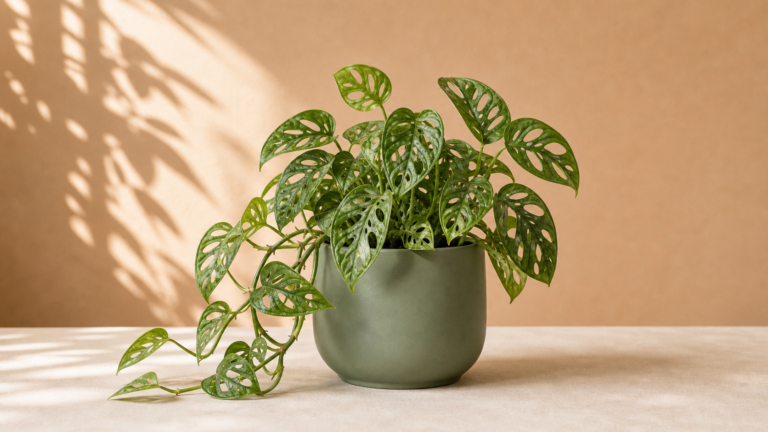
Swiss Cheese Vine (Monstera adansonii) follows the same basic pattern but has thinner stems and smaller roots. It benefits from gentle support, and its slender growth is easier to damage with tight clips.
Support, Light, and Leaf Size Work Together
A support does not automatically create larger or more fenestrated leaves. Maturity, genetics, root health, light, and consistent care all contribute. Support helps the plant hold a climbing orientation so those other factors can work.
Compare mature size and care needs before choosing a permanent setup. The Compare Houseplants tool helps distinguish plants that share a climbing habit but need different amounts of space. The fast-growing houseplants collection is also useful when planning a support that will not be outgrown immediately.
Avoid attaching stems directly to painted walls. Aerial roots can adhere to porous surfaces and leave marks. A removable board or freestanding support protects the wall and makes repotting easier.
When to Investigate Further
The aerial root itself rarely requires urgent action, but inspect the whole plant when you see:
- a soft, blackened, or foul-smelling stem base;
- potting mix that remains saturated for an unusually long time;
- repeated collapse of new growth;
- cottony insects around nodes and roots;
- expanding silvery leaf scars with dark specks; or
- a plant leaning far enough to split its stem.
Address the underlying root, pest, or support problem rather than blaming the aerial root. If the plant is healthy but inconveniently large, pruning and propagation may be a space-management decision rather than treatment.
Monstera Aerial Root Care in One Decision
Leave the root if it causes no problem. Redirect it when it reaches a support or the pot without force. Prune it cleanly when it is damaged or impractical. In every case, support the main stem and keep the petioles free.
Good Monstera aerial root care respects the plant's climbing structure. The roots are not untidy mistakes that must be removed. They are useful signals that the stem is maturing and needs a stable direction for future growth.