Thrips on Monstera: Identification, Treatment, and Recovery
Thrips on Monstera can cause silvery scars, black specks, and distorted new leaves. Learn how to confirm the pest, contain it, and judge recovery.
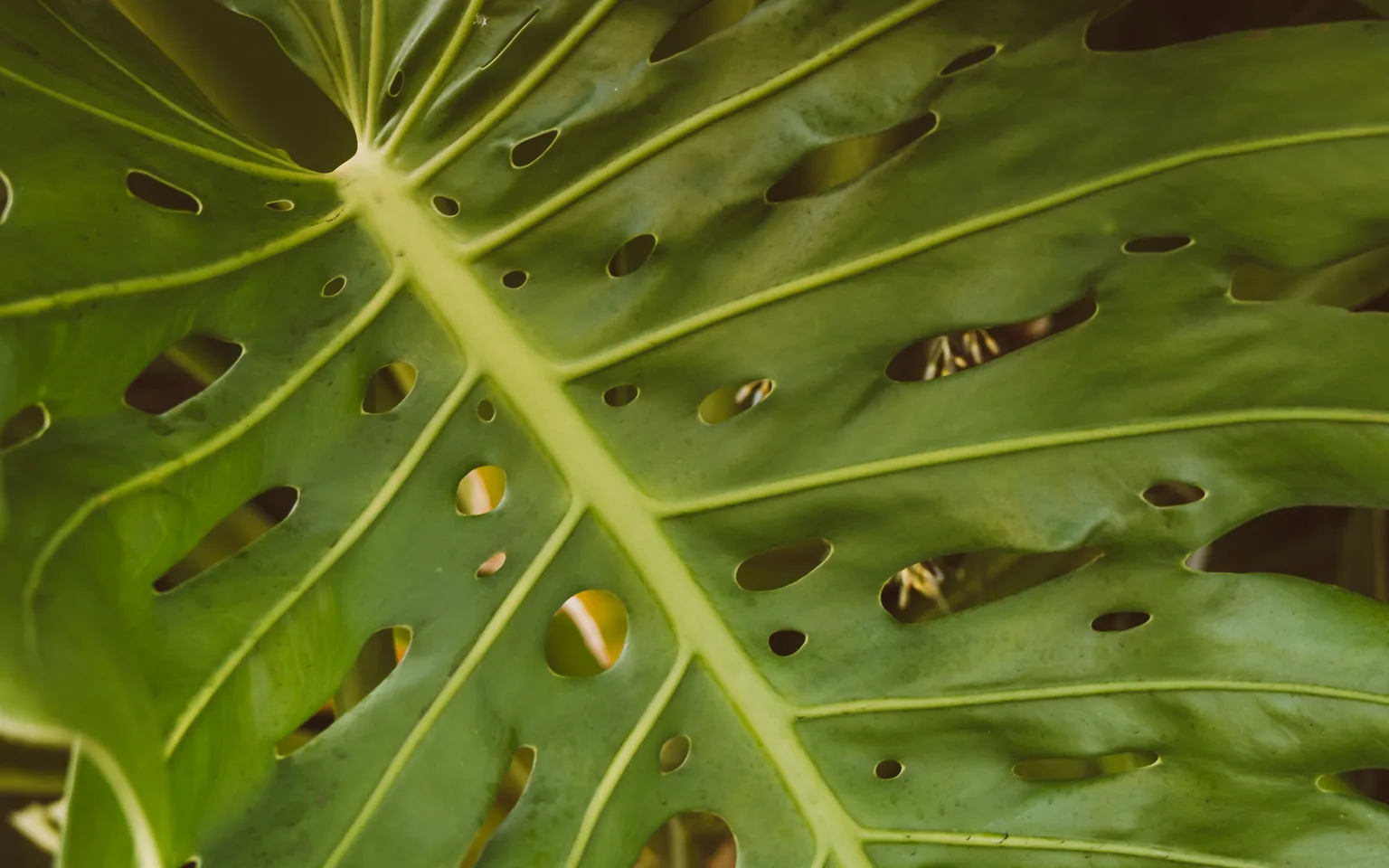
Thrips on Monstera usually leave a pattern rather than one decisive symptom: silvery or bronze scarring, tiny black specks, distorted new leaves, and damage that continues to appear after the first treatment. Isolate the plant, confirm that the signs fit thrips, reduce the active population, and repeat a label-approved treatment often enough to interrupt the pest's life cycle.
Public discussions such as "finally beat thrips" in r/Monstera show why this pest creates so much anxiety. A large Monstera leaf makes every scar visible, while larvae can remain hidden in tight new growth. The objective is not to make old damage disappear. It is to stop new damage and see clean growth resume.
Quick Identification: Are These Thrips on Monstera?
Thrips are slender insects that are often less than 1/8 inch (3 mm) long. Adults and larvae may be cream, yellow, tan, brown, or dark, depending on species and life stage. Their size makes direct identification difficult without a magnifier.
Look for several signs occurring together:
- irregular silvery-gray or bronze scars where surface cells have been damaged;
- shiny black dots of excrement near scarred areas;
- distorted, creased, or undersized new leaves;
- pale stippling that expands into larger damaged patches;
- insects or larvae inside rolled leaves, cataphylls, and other protected spaces; and
- continuing damage on leaves that were clean a few days earlier.
The UC IPM houseplant problem guide describes thrips as small, slender insects that can cause scarring, distorted growth, black excrement dots, and silvery-gray damaged areas. Those signs are more useful together than any single photo comparison.
To check a suspicious leaf, hold a sheet of white paper beneath it and tap the leaf or gently shake the stem. Tiny moving slivers on the paper support the diagnosis. A magnifier can help distinguish the narrow body shape. The UC IPM thrips guide recommends this light-colored-sheet method for monitoring adults and larvae.
What Thrips Can Be Confused With
Not every small insect around a Monstera is a thrips. Fungus gnats are dark flies usually associated with moist potting mix; adults fly up from the soil rather than feeding across the leaf surface. Springtails are tiny soil organisms that may jump when disturbed and usually do not create silvery leaf scars. Spider mites tend to produce fine stippling and delicate webbing. Scale insects remain attached as bumps, while mealybugs form cottony clusters.
Physical damage can also look similar. A leaf that rubbed against a wall, dried while unfurling, or was creased during shipping may have a pale scar without insects or fresh black specks. Mark the edge of a suspicious patch or photograph it. Static damage is less concerning than a pattern that expands or appears on new leaves.
The Name My Plants tool can help organize plant identification, but pest diagnosis still requires inspecting the plant itself. Do not choose a pesticide based only on the plant name or one blurry image.
Why Monstera Damage Looks So Severe
Monstera deliciosa has broad leaves that display small injuries clearly. Thrips feeding while a new leaf is rolled can create extensive scarring by the time that leaf opens. Damage may follow folds or appear around the fenestrations because the affected tissue developed while compressed.
Variegated plants require extra caution. White and cream areas contain less chlorophyll and are already more prone to browning. A crispy white margin without black specks, moving insects, or distorted green tissue is not enough to diagnose thrips.
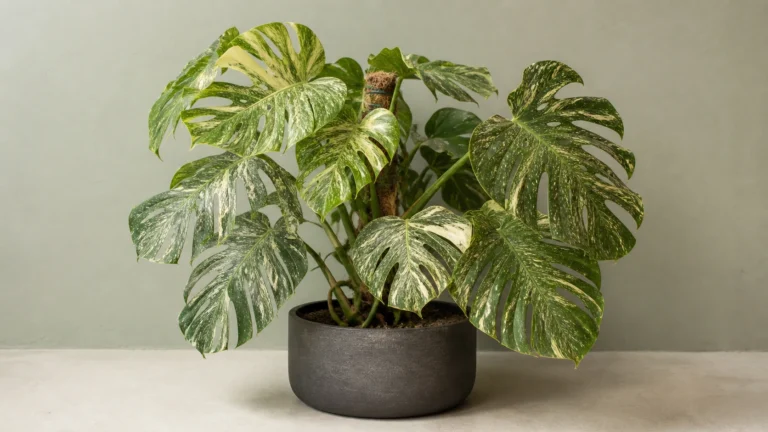
Isolate the Plant and Map the Exposure
Move the affected Monstera away from other plants without brushing its leaves against them. A separate room is more useful than the far end of the same shelf. Inspect every plant that touched it or shared the immediate growing area, especially other aroids with tender new growth.
Clean fallen debris from the floor, shelf, saucer, and soil surface. Wash reusable tools after contact with the plant. Do not move cuttings from the affected plant into a propagation station beside healthy plants.
Isolation is containment, not proof of treatment. Keep checking neighboring plants because damage may become visible after the initial inspection. If the collection is crowded, the Compare Houseplants tool can help identify which nearby plants share similar care positions and may have been exposed in the same cluster.
Reduce the Active Population First
Rinse sturdy leaves with water, including the undersides, petioles, and accessible crevices. Wipe large leaves with a damp cloth, using a fresh section as you move across the plant. Remove only leaves that are heavily damaged or difficult to clean; keeping functional green tissue helps the plant recover.
Physical cleaning will not reach every life stage, but it lowers the number of active insects before another treatment is applied. Vacuum or wipe the surrounding area and dispose of debris promptly.
For a minor infestation, horticultural oil or insecticidal soap may be appropriate when the product label includes indoor ornamental plants and thrips. The UC IPM houseplant guidance lists washing, disposal of infested parts, horticultural oil, and insecticidal soap among control options. Product availability and legal uses differ by location, so the label controls the plant, pest, application site, interval, and safety instructions.
Why One Treatment Rarely Ends the Problem
Thrips can occupy protected leaf tissue and tight plant structures, and different life stages may not be equally exposed during one application. Reinspect on the schedule given by the product label and repeat only as directed. A fixed internet rule such as "spray every five days" should not replace the interval on the product you are using.
Track each treatment date and what you observed. Sticky cards can help reveal adult activity, but they do not show every larva or prove that the plant is clear. Continue inspecting leaves and new growth directly.
Avoid combining products unless their labels explicitly permit it. Oil, soap, and other sprays can damage foliage when applied too heavily, in strong light, or too close together. Test sensitive variegated foliage on a limited area when the label advises it.
Keep Recovery Care Stable
Pest treatment already stresses the plant. Avoid stacking a complete repot, severe pruning, strong fertilizer, and a major light change into the same week unless the roots have a separate urgent problem.
Place the plant in suitable bright indirect light. Use the Houseplant Sunlight Check to reassess the position without pushing a treated plant directly into harsh sun. Check moisture before watering; a plant that has lost leaves or slowed growth may use water more slowly.
The Houseplant Watering Calculator provides a starting interval based on plant, pot, light, and season, but treatment day is not automatically watering day. Keep the root zone aerated and avoid leaving the pot in standing water.
How to Tell Whether Thrips Treatment Worked
Old silver scars, holes, and distorted tissue will not become green again. Judge recovery by change over time:
- repeated inspections find no moving thrips or fresh black specks;
- sticky-card activity falls rather than rebounds;
- newly opening leaves have fewer or no feeding scars;
- the newest growth expands normally; and
- nearby plants remain free of matching damage.
One clean leaf is encouraging but not final proof. Continue monitoring through several inspection cycles. The University of Minnesota's indoor plant insect guide emphasizes regular examination and identification before management.
A Practical Thrips on Monstera Checklist
Confirm a pattern of scars, black specks, distorted growth, and insects rather than assuming. Isolate the plant, inspect neighbors, clean the foliage and growing area, then use only a treatment labeled for the situation. Record repeat inspections and keep light, watering, and root conditions stable.
Thrips on Monstera are persistent, but they are easier to manage when identification and monitoring lead the process. Do not chase perfect-looking old leaves. A contained plant and clean new growth are the meaningful signs that the infestation is ending.