When and How to Fertilize Houseplants: A Beginner’s Guide
Not sure when or how to fertilize your houseplants? Learn the seasonal schedule, how to choose the right fertilizer, and how to avoid the #1 mistake: using too much.
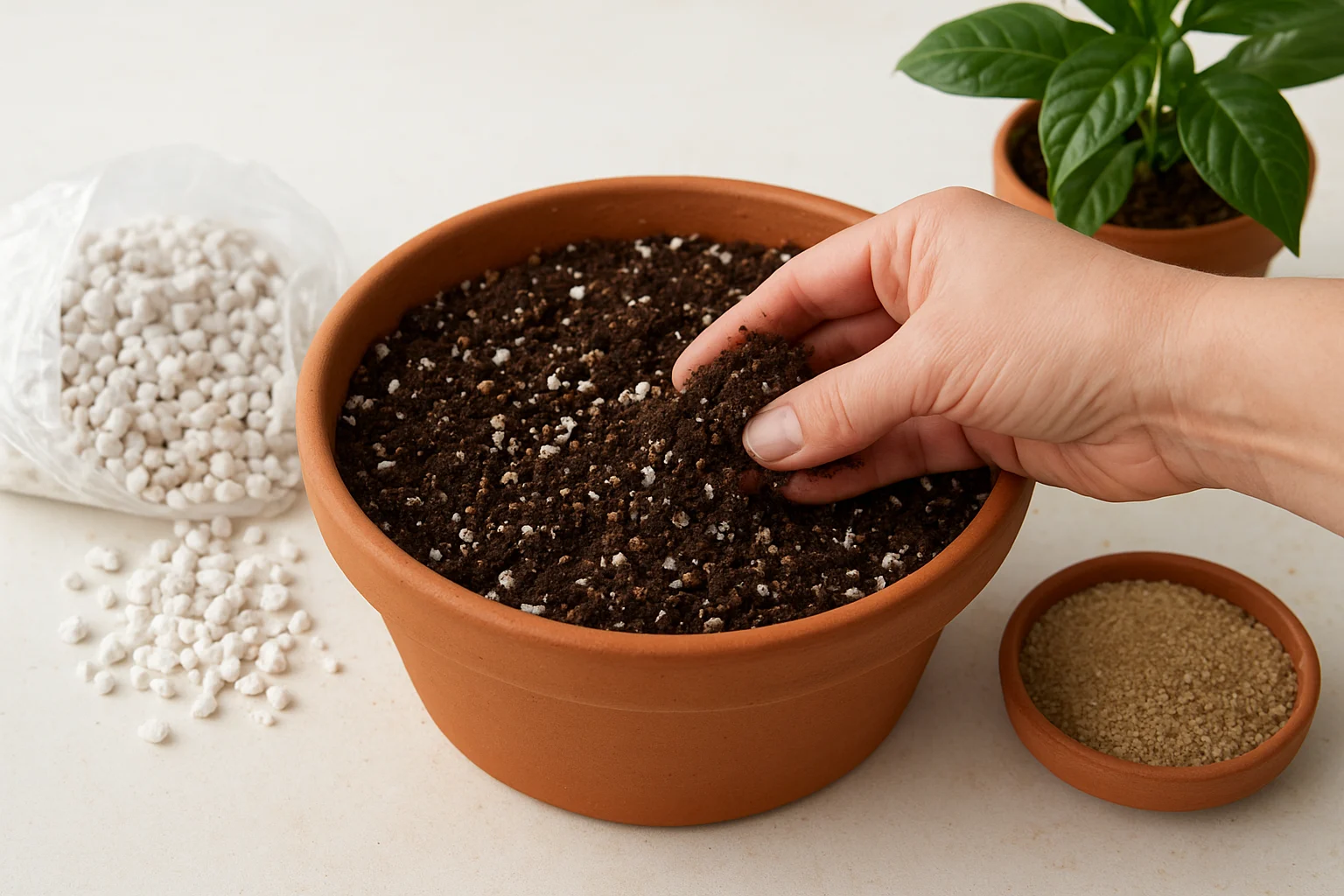
Your plants are alive, they are growing, they look healthy — and now you are wondering if you should fertilize. Fertilizing comes after you have figured out watering and light. The most important rule: use less than you think. Overfertilizing does far more damage than under-fertilizing. A plant that gets slightly less than it could use grows a bit slower. A plant that gets too much burns.
Here is when to fertilize, what to use, how to read a label, and how to avoid the most common mistake.
Do Houseplants Really Need Fertilizer?
In nature, plants grow in soil that is constantly replenished by decaying organic matter, weathering minerals, and the activity of soil organisms. In a pot, none of that happens. The plant uses up the nutrients in its potting mix over time, and those nutrients are not replaced unless you add them.
Most bagged potting mixes contain enough nutrients — either from compost, worm castings, or added slow-release fertilizer — to sustain a plant for roughly three to six months. After that, the plant is living on whatever you provide.
Signs that a plant may need fertilizer include: leaves that are paler than they used to be, especially the older leaves; noticeably slower growth during the growing season, even with good light and water; and new leaves that are smaller than older ones. These symptoms can also indicate other problems — check your watering and light before concluding that fertilizer is the solution.
Most houseplants that die in homes are killed by overwatering, overfertilizing, or insufficient light — not by nutrient deficiency. Fertilizer supports growth; it does not rescue a struggling plant.
When to Fertilize — The Seasonal Schedule
Houseplants do not need fertilizer year-round. Their nutrient demand follows their growth cycle, which is driven by light and temperature.
Growing Season — Spring and Summer
Fertilize every two to four weeks during the active growing season. This is when your plant is producing new leaves and stems, and it uses the nutrients you provide immediately. In most homes, the growing season runs from roughly March through September, though it varies depending on your climate and window light.
Dormant Season — Fall and Winter
Reduce or stop fertilizing entirely. Shorter days and lower light levels slow plant metabolism. Most houseplants are not producing meaningful new growth during these months, so the nutrients sit unused in the soil. Worse, they can accumulate as salts that burn roots.
For most houseplants, the standard advice is to stop fertilizing from October through February and resume only when you spot new growth in early spring.
When Not to Fertilize — Three Situations to Skip
Right after repotting. Fresh potting mix already contains nutrients — usually enough for three to six months. Fertilizing immediately after repotting can overwhelm roots that are already stressed from the disturbance. Wait at least four to six weeks.
When a plant is stressed. If your plant is drooping, yellowing, or recovering from pest damage, fertilizer is not the answer. Fertilizer pushes growth, and a stressed plant needs stability, not stimulation. Address the underlying problem first.
During winter dormancy. As noted above. A plant that is not actively growing does not need — and cannot use — added nutrients.
Types of Houseplant Fertilizer
You do not need a shelf full of products. One good balanced fertilizer covers the needs of most houseplants. But understanding the options helps you choose the format that fits your care style.
| Type | How It Works | Best For |
|---|---|---|
| Liquid fertilizer | Mixed with water, applied during regular watering. Absorbed immediately. | Attentive owners who water regularly and want precise control. Works for most houseplants. |
| Slow-release granules | Mixed into soil or sprinkled on top. Releases nutrients gradually over 2 to 6 months. | Busy owners who want a “set and forget” approach. One application per season. |
| Fertilizer spikes/sticks | Pushed into the soil, dissolve slowly over weeks. | Convenient but distribute nutrients unevenly — the area around the spike gets concentrated fertilizer while the rest of the pot gets little. Use with caution. |
| Organic options (worm castings, compost tea, fish emulsion, seaweed extract) | Natural slow nutrient release. Improve soil structure and add beneficial microbes in addition to feeding. Lower burn risk. | Organic gardeners and anyone concerned about chemical fertilizer buildup. Slightly slower results but gentler on plants. |
For most indoor plant owners, a balanced liquid fertilizer is the most practical choice. It is inexpensive, easy to find, and gives you precise control over how much your plants receive.
How to Read a Fertilizer Label — NPK Explained
Every fertilizer package displays three numbers, like 10-10-10 or 20-20-20. These are the NPK ratio: Nitrogen (N), Phosphorus (P), and Potassium (K). Each number represents the percentage of that nutrient by weight.
Nitrogen (N) — the first number. Supports leaf and stem growth. This is the nutrient that drives the lush green foliage most houseplant owners want. Fertilizers with a higher first number (like 3-1-2 or 10-5-5) are designed to promote leafy growth.
Phosphorus (P) — the second number. Supports root development, flowering, and fruiting. Flowering houseplants — Peace Lily, Anthurium, African Violet — benefit from a slightly higher phosphorus ratio during bloom periods.
Potassium (K) — the third number. Supports overall plant health, water regulation, and disease resistance. It does not drive visible growth the way nitrogen does, but plants deficient in potassium are weaker and more susceptible to stress.
What to choose for most houseplants: A balanced fertilizer — one where all three numbers are equal, like 10-10-10 or 20-20-20 — is appropriate for the vast majority of foliage houseplants. Dilute it to half the recommended strength, apply every two to four weeks during the growing season, and you will cover your plants’ needs without complication.
Look for a complete fertilizer — one that includes micronutrients like iron, magnesium, and calcium in addition to the NPK numbers. Most commercial liquid houseplant fertilizers include these; the label will say “with micronutrients” or list them individually.
How to Fertilize Step by Step
The actual process is simple. The most important step is the dilution.
Choose a balanced liquid fertilizer. A 10-10-10 or 20-20-20 labeled for houseplants is ideal. Check that it includes micronutrients.
Dilute to half strength. If the label says to use one teaspoon per liter of water, use half a teaspoon. Half-strength fertilizer applied consistently is safer and more effective than full-strength applied less often. Plant roots in containers are more sensitive to fertilizer concentration than roots in the ground.
Water the plant first — never fertilize dry soil. Dry roots absorb fertilizer salts too quickly, which can cause root burn. Water the plant normally, let the excess drain, then apply the fertilizer solution. Some plant owners fertilize as part of their regular watering by simply mixing diluted fertilizer into the watering can. This works well as long as the soil is not bone-dry when you start.
Apply until it drains from the bottom. The fertilizer solution should reach all the roots, not just the ones at the top of the pot.
Repeat every two to four weeks during spring and summer. You do not need to be precise to the day. Fertilizing roughly twice a month during the growing season and stopping during winter is a routine that works for most plants.
The Most Common Fertilizing Mistake — Using Too Much
Overfertilizing is more common — and more damaging — than under-fertilizing. When you apply more fertilizer than the plant can use, the excess salts accumulate in the soil. These salts draw water out of the roots through osmosis, effectively dehydrating the plant from below. The technical term is fertilizer burn.
Signs of overfertilizing:
White crust on the soil surface — visible salt accumulation
Brown, crispy leaf edges and tips — our brown tips guide covers the visual symptoms in detail
Wilting despite moist soil — the plant cannot absorb water because the soil salt concentration is too high
Stunted or distorted new growth
Leaf drop shortly after fertilizing
How to fix overfertilizing: Flush the soil. Run room-temperature water through the pot for several minutes, letting it drain freely. This leaches excess salts out of the soil. Do this in a sink or outdoors where the runoff can drain away. After flushing, hold off fertilizing for two to three months. The plant needs time to recover.
If the crust is thick or the plant is severely affected, repot into entirely fresh soil. Our repotting guide covers the process.
A helpful rule of thumb: if you are unsure whether to fertilize, skip it. A plant will survive weeks or even months without added nutrients. It will not survive a severe case of fertilizer burn.
Special Cases — Succulents, Cacti, and Orchids
Not all houseplants follow the standard fertilizing schedule.
Succulents and cacti. These plants evolved in nutrient-poor environments and need very little fertilizer. Feed at quarter-strength, once a month during the growing season only. Many succulent growers fertilize just two or three times per year — once in early spring and once in mid-summer — and get excellent results.
Orchids. Phalaenopsis and other common indoor orchids benefit from orchid-specific fertilizer, which is formulated for the bark-based media they grow in rather than soil. The standard advice in the orchid community is “weekly, weakly” — a very dilute solution applied every week during active growth, then reduced during rest periods.
Carnivorous plants. Venus flytraps, pitcher plants, and sundews should not be fertilized at all. They evolved to capture insects specifically because their native soils are nutrient-poor. Fertilizer will damage their roots.
FAQ
How often should I fertilize my houseplants?
Every two to four weeks during spring and summer, the active growing season. Reduce or stop entirely during fall and winter when most plants are dormant and not producing new growth.
What is the best fertilizer for houseplants?
A balanced liquid fertilizer — labeled 10-10-10 or 20-20-20 — that includes micronutrients, diluted to half the recommended strength, is appropriate for the vast majority of common foliage houseplants. There is rarely a need for specialized products unless you are growing flowering plants, orchids, or succulents.
Can I use outdoor plant fertilizer on houseplants?
It is not recommended. Outdoor fertilizers are often more concentrated and are designed for plants in the ground, where excess salts can leach away through the soil. In containers, concentrated outdoor fertilizer can burn roots quickly. Use a product specifically labeled for indoor or container plants.
What happens if I do not fertilize my houseplants?
Growth will slow, and leaves may become paler over time, but most plants will survive without fertilizer for a long time — potentially years. Under-fertilizing is far safer than over-fertilizing. If you are unsure or nervous about fertilizing, start with a very dilute solution once a month and observe how your plants respond.
How do I know if I am overfertilizing?
Look for a white crust on the soil surface, brown crispy leaf edges, wilting despite moist soil, and symptoms appearing shortly after a fertilizer application. If you see these signs, flush the soil with water immediately and hold off fertilizing.
When Fertilizer Matters (and When It Doesn’t)
You can grow houseplants successfully for months without fertilizer. The plant will not die. It will not suddenly collapse. It will grow a little slower than it could.
Fertilizing is about giving your plants the resources to reach their potential — fuller leaves, faster growth, healthier color. It is not about rescue or survival. Approach it as a supplement, not a fix, and you will almost certainly get it right.
Start with a balanced liquid fertilizer at half strength. Apply it every few weeks during spring and summer. Stop during winter. Watch how your plants respond. They will tell you if they need more or less.
Looking for plants that match your actual care style, whether you are the type to fertilize on schedule or the type to forget for months at a time? Try the House Plant Finder quiz to discover indoor plants suited to the way you really care for them.