
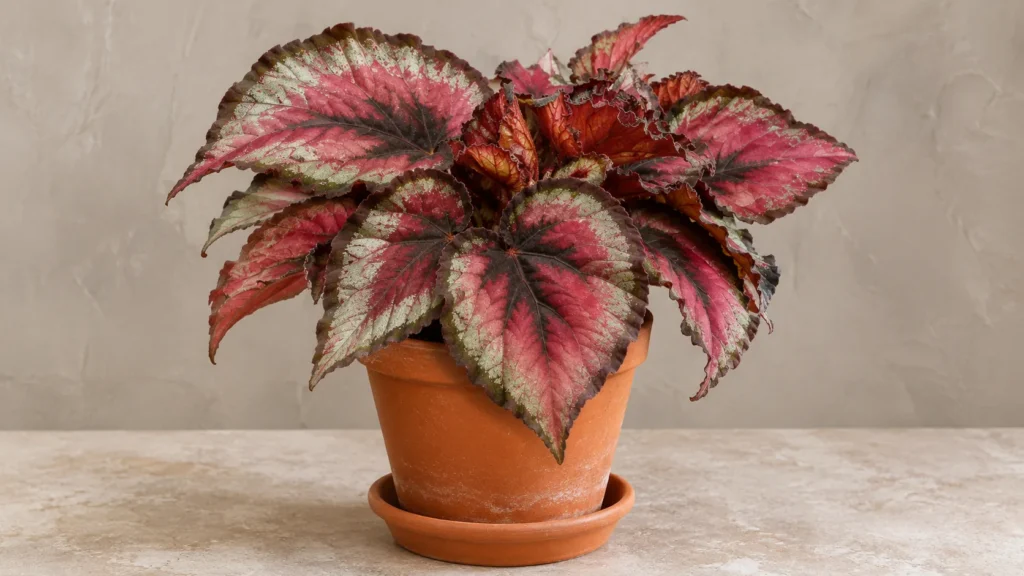
Rex Begonia ‘Red Tango’
Begonia rex 'Red Tango'
A compact rex begonia with metallic red-purple leaves edged in silver, best grown in filtered light, an airy mix, and stable moderate humidity.
Watering frequency
Every 5-7 days
Ideal temperature
65-75°F / 18-24°C
Humidity
50-70%
Care difficulty
Medium
Air purifying
No/Not Known
Growth rate
Moderate
Plant size
6-12 in / 15-30 cm
Soil type
Airy, moisture-retentive mix
Fertilizer need
Feed lightly every 3-4 weeks during active growth; pause when growth slows.
Care summary
- Light: Bright filtered light; avoid hot direct sun.
- Water: Let the surface approach dryness, then water and drain.
- Soil: Use a modest pot with drainage and an airy, well-draining mix.
- Humidity: Stable humidity helps, but leaves need airflow.
- Safety: Keep away from pets and children who may chew it.
Common problems
- Wilting: dry root ball, root damage, or heat stress.
- Rot: mix stays wet or crown is buried.
- Fading color: light is too weak or too intense.
- Brown edges: moisture swings, salts, or dry air.
- Mildew or spots: wet foliage and poor airflow.
- Pests: mites, thrips, or mealybugs.
Plant care guide
About Rex Begonia ‘Red Tango’
Rex Begonia ‘Red Tango’ is a named foliage cultivar, with metallic red to reddish-purple leaf centers and a contrasting silver or pale green edge. The pattern shifts with light and leaf age, but this is not a nearly black begonia. Costa Farms identifies it as Begonia rex ‘Red Tango’ and describes reddish-purple foliage often edged in silver. Optimara's Rex Begonia catalog lists ‘Red Tango’ as item 35009. These named grower records support the cultivar identity more reliably than a lookalike photograph alone.
A Diefenbacher Greenhouses grower review describes heart-shaped leaves with a dark red center, brighter red beyond it, and a green-white variegated margin. The foliage may be irregularly marked; individual leaves need not match like printed copies. Its compact, mounding habit makes it suitable for a tabletop pot. The American Begonia Society's Rex Cultorum overview explains the rhizomatous ancestry and foliage emphasis of this garden group.
Commercial grower catalogs use the name ‘Red Tango’ for this rex begonia. If a plant's exact cultivar matters, use a reliable grower label alongside its leaf pattern and growth habit.
Why You’ll Like It
‘Red Tango’ gives a small plant a striking range of red-purple, silver, and green. Bright filtered light tends to strengthen its color, as Costa Farms notes, while the patterned leaves remain interesting even when the plant is not flowering. It stays as a low mound rather than growing into a tall cane.
Like other rex begonias, it can often be propagated from a healthy leaf or a section of rhizome. This is useful when refreshing an older pot or sharing a labeled cultivar. The main challenge is moisture balance: fine roots need a slightly moist but airy mix, and the foliage can scorch in direct sun or mark in stagnant, wet air.
What Kind of Plant Is It?
‘Red Tango’ belongs to the Rex Cultorum foliage group, which descends from Begonia rex. Its leaves are asymmetrical and arise from a thickened, spreading rhizome near the soil surface. Expect a low, somewhat uneven mound rather than upright bamboo-like canes. This habit differs from cane begonias such as Polka Dot Begonia.
Rex begonias are grown primarily for leaves. Small pale flowers may appear, but flowering is not required for a healthy specimen. The rhizome stores some energy, while its fine feeder roots still need oxygen and a porous growing mix.
How ‘Red Tango’ Compares with Other Rex Begonias
Leaf color alone can be misleading, so compare the whole pattern and retain a nursery label when buying.
- ‘Red Tango’: A red-purple center with a silver or pale green outer band, on a compact rex begonia.
- ‘Midnight Magic’: Dark green, spiraled and puckered leaves with vivid red margins and undersides.
- ‘Escargot’: A pronounced silver-and-green spiral rather than ‘Red Tango’s broader red field.
- ‘Fireworks’: Silver foliage with dark veins and a burgundy center, producing a different overall pattern.
- Iron Cross Begonia: Begonia masoniana is a different rhizomatous begonia, known for a dark cross on textured green leaves.
When identifying a plant sold as ‘Red Tango’, compare its leaves and growth habit with a labeled specimen. Similar red-and-silver rex begonias can be difficult to distinguish from a photograph alone.
Where It Works Best
Place it in bright filtered light, such as an east-facing window or behind a sheer curtain. The RHS indoor Begonia guide recommends bright filtered light for houseplant begonias. Strong midday sun can burn the thin leaf surface, while deep shade may weaken growth and mute the red-purple color.
Judge light by new, fully expanded leaves. If they become smaller and duller, increase filtered light gradually. If they bleach or develop dry tan patches, move the pot farther from direct sun. Keep it away from cold glass, heaters, and air-conditioning drafts. A room humidifier with gentle airflow is usually more practical than a sealed terrarium.
How to Water Rex Begonia ‘Red Tango’
Check the plant every five to seven days during active growth, but water according to the mix. Let the surface approach dryness while the root zone remains faintly moist, then water evenly and allow excess to escape. Do not keep a reservoir beneath the pot.
The plant can wilt from genuine thirst, but wilting also occurs when rotten roots cannot supply the leaves. Test the mix and lift the pot before adding water. Dry, lightweight compost suggests a thorough drink; a heavy wet pot with limp stems calls for root inspection and better aeration.
Apply water to the mix rather than repeatedly wetting the crown and leaves. Cool water trapped on foliage, especially overnight, can encourage spotting and rot. Bottom watering is acceptable for rehydrating an evenly rooted pot, but remove it from the water after the mix is moist and periodically water from above to flush salts.
Reduce frequency when winter light or growth slows. Some rex begonias enter partial dormancy and lose leaves. Keep the rhizome barely moist rather than following the summer schedule or discarding a firm dormant plant.
Soil, Pot, and Repotting
Use a porous mix that holds some moisture without collapsing. A peat-free indoor mix amended with perlite or fine bark is a practical starting point. The mix should wet evenly and drain promptly. Garden soil and compacted old compost restrict the fine roots.
Choose a modest pot with drainage, only slightly wider than the root system or active rhizome. A relatively shallow pot can suit a spreading rhizome, but depth should fit the actual roots. Oversized containers remain wet long after the plant has used the available oxygen. The American Begonia Society’s rhizomatous Begonia guidance likewise recommends a shallow container, coarse fast-draining mix, and moving up only one pot size after roots fill the current pot.
Keep the rhizome at or near the surface rather than burying it deeply. Repot when roots have filled the container, the mix breaks down, or the rhizome has outgrown the display. A rhizome creeping over the rim is not automatically an emergency.
Humidity, Temperature, and Feeding
Aim for stable humidity around 50–70% with air movement. Dry air can crisp leaf margins, but saturated air and wet foliage favor mildew and Botrytis. Misting creates only a brief humidity change and may spot the leaves, so a room humidifier is the more controlled option.
Temperatures around 65–75°F (18–24°C) suit many foliage begonias. Protect the plant from cold below roughly 55°F (13°C), sudden chills, and hot glass. The warmer the room, the more important shade, humidity, and careful moisture become.
Feed lightly during visible growth. A balanced fertilizer at one-quarter to one-half label strength every three or four weeks is safer than heavy feeding. Apply to moist mix and stop or reduce feeding during dormancy. Pale leaves can reflect excessive light or root damage, so do not diagnose every color change as hunger.
Propagation
If the plant has a rhizome, a section with at least one growth point can be rooted in a lightly moist, airy medium. Keep part of the rhizome exposed and provide warmth plus humidity without waterlogging.
Rex and rhizomatous begonias can also produce plantlets from leaf tissue. The American Begonia Society’s vegetative propagation guide describes whole-leaf, wedge, and cone methods and notes that each leaf section needs a main vein. For a simple whole-leaf method, insert the petiole into propagation mix, keep the leaf supported, and wait for plantlets to form near the cut tissue.
Propagation is slow and vulnerable to rot. Use a clean tool, do not let the cover touch the leaf, and vent heavy condensation. Keep the propagated plant labeled as ‘Red Tango’ only when the parent plant came with a reliable cultivar label.
Pet and Human Safety
Rex Begonia ‘Red Tango’ is not pet-safe. The ASPCA Begonia profile lists soluble calcium oxalates, vomiting and salivation in cats and dogs, and identifies underground parts as the most toxic. Keep pots, fallen leaves, rhizome pieces, and propagation trays away from animals.
If a pet chews the plant, remove access and contact a veterinarian or animal poison-control service for advice. Do not induce vomiting unless instructed. Wear gloves if sap irritates your skin, avoid touching your eyes, and keep discarded plant material away from children.
Buying and Acclimating the Plant
Choose a plant with a firm rhizome or stem base, active central growth, and no powdery coating, wet lesions, webbing, or cottony insects. A few cosmetic tears are less concerning than soft tissue at soil level. Photograph the nursery label and receipt before the tag is lost; provenance helps preserve the cultivar identity.
Quarantine it from the collection for several weeks and inspect both leaf surfaces with a magnifier. Keep the first location stable rather than repotting, fertilizing, and changing humidity on the same day. If the nursery mix is dangerously saturated or pest-infested, repotting may be necessary, but otherwise allow the plant to adjust before disturbing fine roots. Some leaf loss after a major environmental change is possible; judge recovery by firm new growth.
Common Problems
- Red or silver color fades: Compare new leaves under slightly brighter filtered light, but avoid sudden direct sun. Genetics and temperature also influence color.
- The plant collapses in wet mix: Inspect the rhizome and roots for soft brown tissue. Remove rot, save healthy leaf or rhizome cuttings, and repot into an airy mix.
- Brown crisp margins: Review drying, fertilizer salts, hot drafts, and humidity together.
- White powder or gray fuzzy patches: Isolate the plant, remove affected debris, keep leaves dry, and improve airflow. The American Begonia Society disease guide covers powdery mildew, Botrytis, bacterial spot, and root or crown rots.
- Tiny pale stippling or distorted new leaves: Inspect for mites or thrips with magnification.
- Cottony clusters: Mealybugs hide at petiole joints and along the rhizome. Treat with a product labeled for indoor begonias and test sensitive foliage first.
Frequently Asked Questions
Is ‘Red Tango’ a rex begonia? Yes. Costa Farms identifies it as Begonia rex ‘Red Tango’, and Optimara lists it among its rex begonias. Keep the original label because other red rex cultivars can look similar.
Can it grow in low light? It may persist in medium light, but deep shade produces weak growth and muted color. Bright filtered light is the better target.
Why did it lose leaves in winter? Reduced light can trigger partial dormancy in rex types. If the rhizome is firm, reduce water and wait for renewed growth rather than saturating the pot.
Can one leaf make a new plant? Rex and rhizomatous begonias commonly propagate from leaf tissue containing a main vein. Confirm the plant’s growth type and keep conditions clean, warm, humid, and lightly moist.
Final Thought
Rex Begonia ‘Red Tango’ is a compact foliage plant with a documented commercial name and a recognizable red-purple, silver, and green leaf pattern. Give it filtered light, a modest draining pot, an airy root zone, steady humidity, and water when the surface begins to dry. Preserve the cultivar label so its identity stays as clear as its care.