
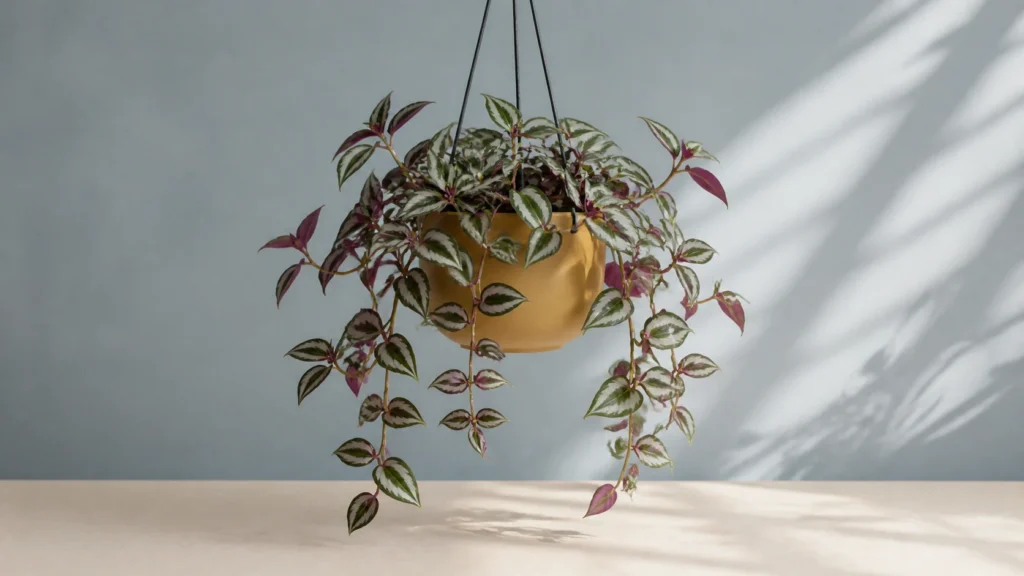
Tradescantia Zebrina
Tradescantia zebrina
A fast-growing trailing plant with striped silver-and-purple leaves that shimmer in bright light — easy, colorful, and best kept out of reach of pets.
Watering frequency
Every 5-7 days
Ideal temperature
65-75°F / 18-24°C
Humidity
40-60%
Care difficulty
Easy
Air purifying
No/Not Known
Growth rate
Fast
Plant size
6-12 in / 15-30 cm, trailing 3+ ft
Soil type
Well-draining potting mix
Fertilizer need
Monthly, spring-summer.
Care summary
- Light: Bright indirect light keeps the stripes vivid.
- Water: Water when the top inch of soil dries.
- Soil: Well-draining mix; avoid soggy pots.
- Growth: Fast trailing grower; pinch stems to stay full.
- Propagation: Stem cuttings root easily in water or soil.
- Safety: Not pet-safe — sap irritates skin and mouths.
Common problems
- Leggy stems with bare gaps: too little light.
- Fading stripes: light too weak or too harsh.
- Crispy brown leaf tips: dry air or underwatering.
- Root or stem rot: soil staying soggy.
- Skin irritation: sap contact in sensitive people.
Plant care guide
About Tradescantia Zebrina
Tradescantia zebrina is the fast-growing, vividly striped trailer sold under several common names — inch plant, zebrina, silver inch plant, and wandering dude among them. Native from Mexico to Colombia, it belongs to the spiderwort family (Commelinaceae), and the species name zebrina means "zebra-striped," a direct reference to the plant's most distinctive feature: each oval leaf is striped green, silver, and white on top, with a solid rich purple on the underside. The NC State Extension profile for Tradescantia zebrina explains the origin of the "inch plant" nickname — the leaf nodes sit roughly an inch apart along the stem, and the plant grows so readily that it can seem to add an inch of stem wherever you look.
The purple-and-silver combination is the whole point of the plant. Grown in bright light, the leaves shimmer with a metallic, almost glittering sheen — NC State notes the foliage "sparkles" in bright light — and the purple backs of the leaves show through as the stems trail over the edge of a pot or hanging basket. It is one of the most colorful easy-care trailers you can own, and one of the fastest to fill out a container or cover a shelf.
A note on the older common name "wandering Jew": it is increasingly retired because of its offensive history, and modern retailers use "wandering dude," "inch plant," or simply the species name. Two cultivars add variety: 'Burgundy' has deeper purple leaves, and 'Quadricolor' carries pink, purple, silver, and green stripes in a single leaf. For a pinker take on the same trailing habit, the related cultivar Tradescantia Nanouk carries pink, green, and cream stripes and roots just as easily from cuttings.
Why You'll Like It
Tradescantia zebrina delivers color and growth rate that almost no other easy houseplant matches. In bright light it grows quickly enough that you can watch it change week to week, trailing several feet from a hanging basket within a season. That speed also makes it endlessly forgiving: when a plant gets leggy, you cut the stems back hard, root the cuttings, and return them to the pot for an instantly fuller plant — a free and permanent rejuvenation cycle.
It is also genuinely low-maintenance in the right spot. It tolerates average household humidity, wants water only when the top of the soil dries, and is rarely troubled by pests when healthy. The NC State profile describes it as a fast-growing, low-maintenance houseplant suited to hanging baskets, and it doubles as a colorful groundcover or patio container plant in warm climates.
The colors do real work in a room, too. Silver-and-purple foliage picks up and reflects light, making a bright corner feel more alive, and the trailing habit softens the hard edges of shelves and cabinets. It is the plant you reach for when a spot needs color fast — and the plant you share cuttings of, because everyone who sees it will ask.
What Kind of Plant Is It?
Three facts explain how Tradescantia zebrina behaves.
- It is a creeping, rooting trailer. The stems are succulent and sprawling, and they root at the nodes wherever they touch soil or water. This is why propagation is trivial — a single node is enough to start a new plant — and why the plant fills containers so aggressively. In USDA zones 9-11 it naturalizes as a groundcover; in colder climates it lives as a houseplant or a summer patio annual, exactly as NC State describes.
- The leaf colors are light-sensitive. The vivid silver stripes and purple undersides are strongest in bright light and fade toward plain green in dim spots. This makes the plant an honest light meter: gorgeous stripes mean the light is right, fading stripes mean move it somewhere brighter. (There is an upper limit — NC State notes that intense southern sun can also fade the colors, so bright indirect light is the sweet spot.)
- It is a mildly toxic succulent-ish plant. The leaves and sap contain irritating compounds. NC State grades the toxicity as low severity but explicitly warns that the leaf and sap cause contact dermatitis and oral and stomach irritation, and tags the plant as a potential problem for dogs, cats, and children. It is not a plant to put in reach of pets or toddlers.
Where It Works Best
Tradescantia zebrina wants bright, indirect light — near an east window, a few feet from a south or west window, or under bright artificial light. NC State recommends full sun to partial shade outdoors, with the note that too much intense southern sun fades the color; indoors, the equivalent is a bright-but-filtered spot. Put it where it gets good light without long hours of direct afternoon sun, and the stripes stay crisp and the purple stays deep.
It is a natural hanging-basket plant: the stems trail beautifully over the pot rim, and the purple leaf backs are on display as the stems cascade. It also works on shelves, in mixed planters where it spills over the edge, or as a tabletop trailer that you pinch back regularly to keep bushy.
Average household conditions suit it fine. Normal room humidity is acceptable (though it appreciates a bit more), and comfortable household temperatures of 65-75°F (18-24°C) are ideal, with slightly cooler winters acceptable. Outdoors, it makes a fast, colorful filler for window boxes and containers in warm months, but bring it in before nights stay cool — it has no frost tolerance.
How to Care for Tradescantia Zebrina
Light: Bright indirect light is the goal. In too little light the stems stretch with wide gaps between leaves and the stripes fade to plain green; in harsh southern sun the colors can bleach. Find the bright-but-filtered middle, and rotate the pot occasionally so the plant grows evenly.
Watering: Water when the top inch of soil feels dry — typically every 5-7 days in an average room, less in winter. The plant likes steady moisture but hates sitting in soggy soil, which rots the stems and roots. NC State's guidance is to water regularly but let the soil dry between waterings and reduce watering in winter. The watering guide explains the "moist, not soggy" rhythm this plant wants.
Soil: Use a well-draining houseplant mix. The plant tolerates a range of soils but rots in dense, water-holding ones, so add perlite if your mix feels heavy. A pot with drainage holes is essential.
Temperature and humidity: 65-75°F (18-24°C) is ideal, with normal household humidity fine. If the leaf tips crisp up in very dry air, a pebble tray or nearby humidifier helps; the humidity guide covers the options. Keep it away from cold drafts and heat vents.
Fertilizer: Feed monthly in spring and summer with a balanced houseplant fertilizer at half strength, and stop in fall and winter. Fast growth means it uses more food than a slow grower, but it still does not need heavy feeding — the fertilizing guide has the general timing.
Pruning and pinching: This is the maintenance that keeps the plant beautiful. Pinch or cut the stem tips regularly to encourage branching, and whenever stems get leggy, cut them back hard — the plant regrows quickly from the base. The cuttings root so easily that you can return them to the pot for a fuller plant instead of discarding them.
How to Propagate
Stem cuttings make Tradescantia zebrina one of the easiest houseplants to multiply. Cut a healthy stem tip a few inches long, remove the lower leaves so a bare node remains, and either:
- Root in water: Place the cutting in a jar of water with the node submerged, keep it in bright indirect light, and roots appear within a week or two. Once the roots are an inch or so long, pot the cutting in soil.
- Root directly in soil: Press the cutting into moist potting mix at a node and keep the soil lightly moist. Because the stems root at the nodes wherever they touch soil, this method works almost as fast as water rooting.
NC State lists stem cuttings as the recommended propagation method for this species. A few cuttings returned to the same pot is also the standard trick for turning a leggy plant back into a full one — no waiting for regrowth, just instant density.
When to Repot
Tradescantia zebrina grows fast and will fill a pot quickly, so repot once a year in spring, or whenever roots are circling the bottom and the plant is drying out faster than before. Move up one pot size and use fresh well-draining mix. Because the plant is so forgiving, repotting is also the perfect moment to refresh the whole plant: trim leggy stems, root the cuttings, and replant them alongside the parent for an instantly fuller pot. The repotting guide walks through the standard technique.
Toxicity and Pet Safety
Tradescantia zebrina is not pet-safe. The NC State Extension profile grades the toxicity as low severity but flags the leaves and sap as the toxic parts, causing oral and stomach irritation if eaten and contact dermatitis — skin redness and irritation — if the sap touches skin. NC State tags the plant as a potential problem for dogs, cats, and children, and the ASPCA's database lists closely related Tradescantia species (sold as inch plants) as toxic to cats and dogs. If a pet or child chews the leaves, expect irritation of the mouth and stomach; wash skin that touches the sap, and contact a veterinarian or poison control if symptoms are significant. Keep it on high shelves or hanging baskets well out of reach — and remember that trailing stems can grow back down into reach, so give it genuinely safe clearance. The pet-safe houseplants guide lists reliable alternatives for homes with animals.
Common Problems and Practical Fixes
- Leggy stems with wide bare gaps: Not enough light. Move the plant to a brighter spot and pinch the stems back — the cuttings root easily and can be replanted for a fuller pot.
- Fading, washed-out leaves: Usually light extremes — too dim or too much harsh sun. NC State notes both situations fade the color. Move it to bright, filtered light and the stripes return on new growth.
- Crispy brown leaf tips: Dry air, underwatering, or inconsistent moisture. Check the soil, water when the top inch dries, and add humidity if the air is very dry.
- Mushy stems or root rot: Soil staying soggy. Let the soil dry further between waterings and make sure the pot drains. Cut away rotted stems; the healthy parts root easily as cuttings.
- Skin irritation when handling: The sap is a mild irritant for some people. Wear gloves or wash your hands after pruning — the pest and handling notes aside, this is simply a plant that rewards a little care in handling.
Frequently Asked Questions
Why is my Tradescantia zebrina turning plain green? The stripes fade when the light is too low — or, less commonly, when harsh direct sun bleaches the color. Move it to bright, indirect light and new leaves will come back striped.
How do I make my inch plant bushier? Pinch or cut the stem tips regularly. Each cut point branches into two, and the removed cuttings root in water or soil and can be replanted into the same pot for instant fullness.
Is Tradescantia zebrina toxic to pets? Yes. The leaves and sap cause mouth and stomach irritation if eaten and skin irritation on contact. NC State flags it as a problem for dogs, cats, and children, and the ASPCA lists related inch-plant species as toxic. Keep it out of reach.
How often should I water an inch plant? When the top inch of soil dries — typically every 5-7 days in a normal room, less in winter. It wants steady moisture but will rot in soggy soil.
Why are the stems long and bare at the base? That is normal for a fast trailer — the older stem loses leaves as the plant grows — but it gets worse in low light. Cut the bare stems back and root the tips to keep the plant full and young.
Can Tradescantia zebrina live outdoors? In warm climates (USDA zones 9-11) it grows as a groundcover or container plant in full sun to partial shade. In colder areas, treat it as a summer patio annual or keep it indoors year-round — it has no frost tolerance.
Why are the leaves curling or crisping at the tips? Usually dry air or irregular watering. Keep the soil evenly moist but not soggy, and add humidity if your air is very dry.
Final Thought
Tradescantia zebrina is the plant you buy when you want color and growth without waiting. Give it bright, filtered light, water when the top inch dries, and pinch the stems to keep it full, and it repays you with shimmering silver-and-purple trails that grow fast enough to share. Two cautions keep it honest: it fades in the wrong light, and it is genuinely not safe for pets or toddlers to reach. Keep it high, keep it bright, and this is one of the most rewarding easy plants in the house.