
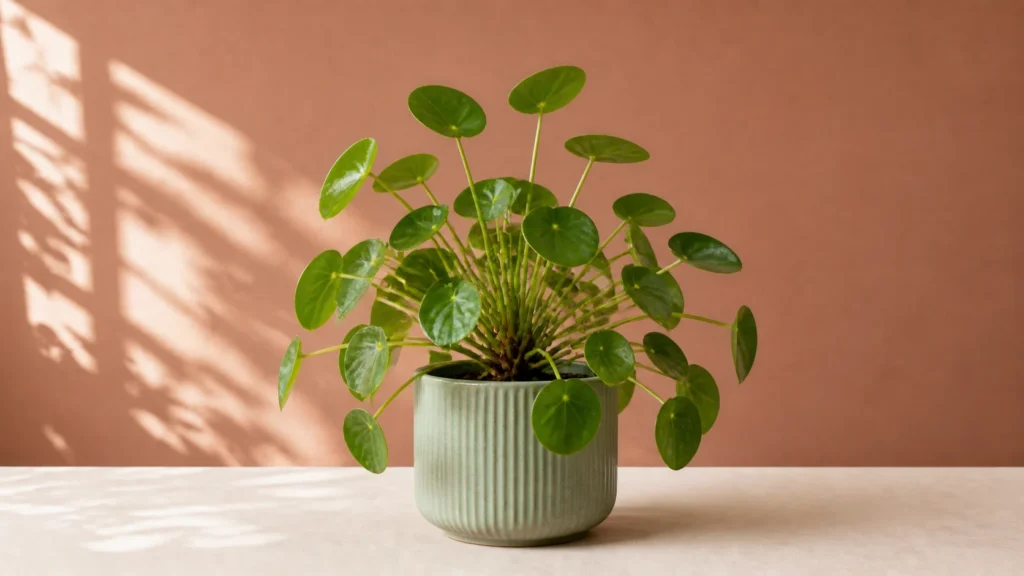
Chinese Money Plant
Pilea peperomioides
A shareable plant with round, coin-shaped leaves; NC State lists it as non-toxic to cats and dogs.
Watering frequency
Every 7-10 days
Ideal temperature
60-75°F / 16-24°C
Humidity
40-60%
Care difficulty
Easy
Air purifying
No/Not Known
Growth rate
Moderate
Plant size
8-12 in / 20-30 cm
Soil type
Well-draining potting mix with perlite
Fertilizer need
Monthly, spring-summer.
Care summary
- Light: Bright indirect light; rotate the pot weekly to keep stems straight.
- Water: Allow the top inch of soil to dry, then water thoroughly and drain.
- Soil: Well-draining mix in a pot with drainage holes.
- Growth: Produces baby plants (pups) at the base — easy to share.
- Safety: Pet-safe and child-safe.
Common problems
- Drooping leaves: usually underwatering or too much direct sun.
- Leaves curling downward: too much light or uneven watering.
- Leggy, crooked stems: not enough light, or not rotating the pot.
- Yellow leaves: overwatering or poor drainage.
- Brown spots: sunburn or hard-water minerals.
- Mealybugs: white cottony clusters in leaf axils.
Plant care guide
About Chinese Money Plant
Pilea peperomioides — known as the Chinese Money Plant, Pancake Plant, or UFO Plant — is a compact evergreen perennial native to the cool, shady mountains of Yunnan Province in southern China. The NC State Extension profile notes that it is a member of the nettle family (Urticaceae) whose round, fleshy leaves attach at the center of the stem, making them look like floating lily pads.
Its look is unmistakable: glossy, circular, dark green leaves, each held at the end of a thin upright stem, growing into a tidy clump. It rarely flowers indoors, and the leaves are what everyone falls for. The plant has a friendly social history too — it was famously passed from hand to hand by a Norwegian missionary in the mid-20th century, which is why it is also called the Missionary Plant and why sharing its pups has become a tradition.
The botanical name explains the look: peperomioides means "resembling a peperomia," because the round leaves reminded the botanist who first described the species of the unrelated Peperomia group — even though its true family is the nettles (Urticaceae). For most of the 20th century it was a quiet botanical curiosity; houseplant culture rediscovered it in recent decades, and it is now one of the most recognizable shapes in indoor gardening, photographed endlessly on modern shelves and desks.
Why You'll Like It
Few plants combine this much charm with this little effort. The round leaves give it a playful, graphic look that fits a modern shelf, desk, or windowsill, and it stays compact — no sprawling vines, no towering stalks.
It is also the most shareable plant you will own. Healthy Pileas push up baby plants (pups) from the soil around the mother, and each one roots easily on its own. Give them away, trade them, or fill your own shelves — the plant practically propagates itself.
And it is genuinely pet-safe: the NC State profile describes it as safe for pets and children, a rare bonus in the houseplant world. For other non-toxic options, the pet-safe houseplants guide has a full list.
What Kind of Plant Is It?
Three traits explain most of how Pilea behaves.
- It is a stemmed rosette, not a vine or a trunked plant. Every leaf has its own thin stem rising from the base, which is why the plant reads as a small "tree" of coins and why leggy stems are its most common complaint.
- It is strongly phototropic. The stems grow toward light, so a plant near a one-sided window gradually leans and develops crooked, lopsided growth unless you rotate the pot regularly.
- It reproduces by pups. Offsets emerge from the root system around the mother plant, which is why a mature Pilea becomes a small colony and why dividing it is the natural way to multiply it.
Where It Works Best
Pilea wants bright, indirect light — a few feet from an east, west, or south window, or on a bright north windowsill. It can take some gentle morning sun, but strong direct sun scorches the leaves, leaving brown patches and causing the leaf edges to curl downward.
It does well in living rooms, home offices, and kitchens where temperatures stay comfortable. Keep it out of cold drafts and away from radiators. Because it leans toward the light, put it somewhere you can easily rotate it — a weekly quarter-turn keeps the stems straight and the silhouette even.
How to Care for Pilea Peperomioides
Watering: Water when the top inch of soil feels dry — typically every 7-10 days in a bright room — then water thoroughly and let the excess drain. The plant gives clear signals: drooping leaves mean it needs water (they recover within hours), while yellowing leaves usually mean the opposite, that the soil has stayed wet too long. Consistency matters more than frequency, and the watering guide explains how to read the soil rather than the calendar.
Light: Bright indirect light keeps growth compact and leaves flat and even. In medium light the plant survives but grows slower; in low light stems stretch and the plant loses its tidy shape. Direct sun causes the leaves to curl down at the edges and burn in patches.
Soil: Use a well-draining mix — standard potting soil with perlite added — and a pot with drainage holes. Pilea roots are prone to rot in heavy, waterlogged soil.
Temperature: Comfortable room temperatures of 60-75°F (16-24°C) suit it perfectly. Avoid cold drafts and sudden swings, which can cause leaf drop.
Humidity: Average household humidity is fine. The plant tolerates dry air well; a boost of humidity helps keep leaf edges crisp but is not required.
Fertilizer: Feed monthly in spring and summer with a balanced houseplant fertilizer at half strength. The plant is not a heavy feeder; overfeeding builds salts that brown the leaf tips. The fertilizing guide covers the basics of feeding houseplants.
Rotation: Turn the pot a quarter-turn every week or two. This one habit prevents the crooked, one-sided growth that makes Pileas look scraggly.
Seasonal adjustment: Growth slows in winter. Water less often, stop feeding, and keep the plant away from both cold windows and heating vents. Pilea tolerates a slightly cool room, but a drafty windowsill in January can cause leaves to drop.
How to Propagate
Pups make propagation almost effortless. When a baby plant at the base has several leaves and a few roots of its own, gently remove some soil around it and separate it from the mother with a clean knife or your fingers. Pot it in a small container with moist, well-draining mix and keep it out of direct sun for the first couple of weeks while it settles in.
You can also root stem cuttings in water: cut a healthy stem just below a leaf node, remove the lowest leaf, and set it in water until roots form, then pot it up. Pups are faster and more reliable, so start there.
When to Repot
Repot every year or two in spring, or when roots fill the pot and pups are crowding the surface. Move up one pot size and use fresh, well-draining mix. Repotting is also the perfect moment to remove and pot up extra pups — the plant recovers quickly. The repotting guide walks through the process.
Toxicity and Pet Safety
Pilea peperomioides is non-toxic and considered safe for pets and children. The NC State profile explicitly notes its safety for pets and kids, and it is not on the ASPCA's toxic plant list. As with any plant, a pet that chews leaves in quantity may get a mild stomach upset, but this is one of the safest common houseplants you can grow in a home with animals.
Common Problems and Practical Fixes
- Drooping leaves: Usually underwatering, or occasionally too much direct sun. Water thoroughly; if the plant is in harsh sun, move it back from the window. Drooping from dryness recovers within hours.
- Leaves curling downward at the edges: Too much light or uneven watering. Move it to brighter-indirect-only light and steady the watering rhythm.
- Leggy, crooked stems: Not enough light, or a pot that never gets turned. Move it brighter and rotate weekly; cut back the most stretched stems to encourage fresh growth from the base.
- Yellow leaves: Almost always overwatering or poor drainage. Let the soil dry further between waterings and check that the pot drains. The yellow leaves guide helps compare watering, light, and age-related yellowing.
- Brown spots or patches: Sunburn, or minerals in hard tap water. Move the plant out of direct sun; consider filtered water.
- Mealybugs: White cottony clusters on stems and leaf joints. Wipe with rubbing alcohol on a cotton swab and recheck weekly — one pass rarely clears every life stage. See the pest guide for details.
- Leaves falling off entirely: Often a sudden environmental change — a move, a cold draft, or a period of overwatering. Check the soil and the temperature, then wait; Pilea usually regrows from the stem once conditions stabilize.
Frequently Asked Questions
Why are my pilea's leaves drooping?
The most common reason is underwatering — the stems go limp and the leaves angle downward until the plant gets a thorough drink, then they recover within hours. Too much direct sun can cause a similar droop with curling edges.
Why is my Chinese money plant growing sideways?
Pilea stems grow toward the light. If the pot sits near a window on one side, the plant leans and the stems bend. Rotate the pot a quarter-turn weekly and the growth will even out.
Why are the leaves curling?
Downward curling at the leaf edges usually means too much direct light or uneven watering. Move the plant to bright indirect light and steady the watering.
Is the Chinese money plant safe for pets?
Yes. It is not on the ASPCA's toxic list, and NC State's profile describes it as safe for pets and children — one of the reasons it is so popular in family homes.
Why is my pilea turning yellow?
The usual cause is overwatering or soil that stays wet too long. Let the top inch dry before watering again, and confirm the pot has good drainage. Older lower leaves also yellow and drop naturally as the plant grows.
How do I get more baby pileas?
Healthy, well-lit plants produce pups at the base on their own. Give it bright indirect light and steady watering, and separate the pups once they have several leaves and a few roots.
How often should I water a Chinese money plant?
In most rooms, every 7-10 days is a good starting rhythm — but always check the top inch of soil first and water when it is dry. In winter, stretch the interval. Drooping stems are the plant's own signal that it is thirsty.
Why are my pilea's leaves curling upward like cups?
Upward cupping usually means the plant is too dry — either underwatered or sitting in air that is too warm and dry. Give it a thorough drink and, if the room is very dry, move it away from heaters or add a little humidity.
Why does my pilea have brown spots?
Brown patches on the leaf surface are usually sunburn from direct sun, or mineral damage from hard tap water. Move the plant back from the window and switch to filtered water if your tap is hard. Crisping leaf edges can also come from salt buildup in the soil — flush the pot occasionally with clean water.
Do Pilea plants flower?
Yes — mature plants occasionally push up tiny clusters of greenish-white flowers on thin stalks from the base or leaf axils. They are small and easy to miss, and they do not change the plant's care. Some growers pinch the flower stalks off to keep energy flowing to the leaves; either approach is fine.
Why is my Pilea growing one tall stem with no pups?
A single tall stem usually means the plant has light but has never been encouraged to branch. Pinch the growing tip back above a leaf node — the stem will branch into two, and the plant will typically start producing pups from the base. It is the same trick used to keep the plant compact from a young age.
Can Pilea grow in a bathroom or kitchen?
A bright bathroom works well if it gets indirect light — the extra humidity suits the plant. A kitchen windowsill with soft light also works. In both cases, keep it away from the direct path of hot steam or a cold draft, which can stress the leaves.
Final Thought
The Chinese Money Plant earns its popularity the honest way: it looks great, stays small, asks for very little, and reproduces itself so generously that it practically begs to be shared. Give it bright indirect light, water when the top inch dries, and turn the pot every week — the two real habits it asks for are rotation and restraint with water. Do that, and you will have a neat little coin-tree on your shelf and a steady supply of baby plants for everyone you know.