Philodendron vs Pothos: 5 Ways to Tell Them Apart
Compare leaf shape, texture, new growth, aerial roots, and care to tell heartleaf philodendron and golden pothos apart.
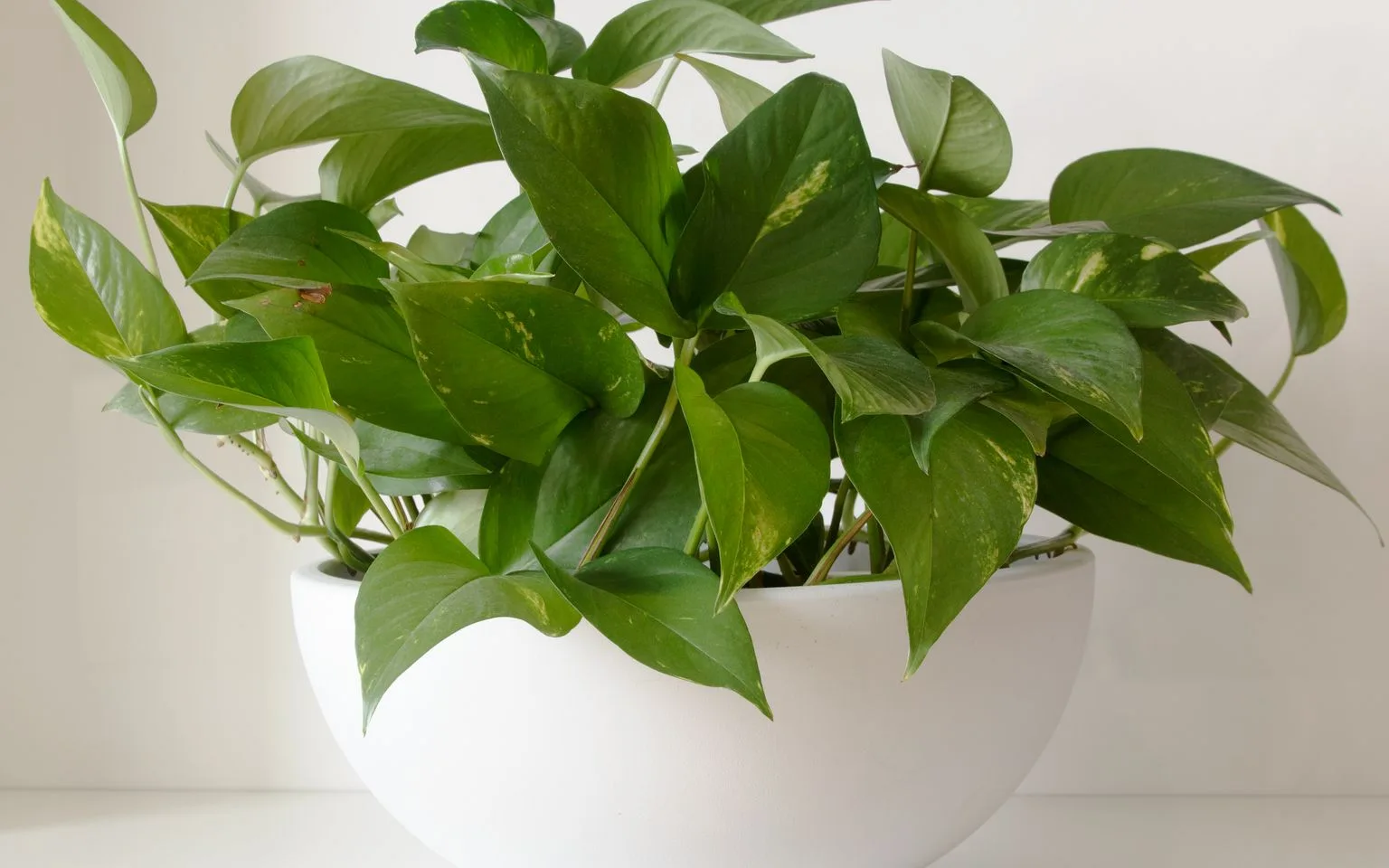
Heartleaf philodendron and golden pothos are the two most confused houseplants in the world, and it is not your fault if you cannot tell them apart. They have nearly identical heart-shaped leaves, the same trailing habit, the same care routine, and they sit side by side in every garden center. Even plant tags get them wrong — pothos spent decades sold under the name "Scindapsus," and some shops still label heartleaf philodendron as pothos today.
They are, however, different plants from different genera: pothos is Epipremnum aureum, heartleaf philodendron is Philodendron hederaceum. Both come from tropical forests and belong to the aroid family, which is why they look like siblings. Telling them apart comes down to five details, and once you know them, you will never confuse the two again — the plant profile for Epipremnum aureum maintained by North Carolina State's Extension plant database is a good reference for checking the botanical side of this.
The 30-Second Answer
If you only remember one thing, make it this: look at how a new leaf emerges. Philodendron new leaves grow out of a small papery sheath called a cataphyll, which dries up and falls off the stem after the leaf opens. Pothos new leaves simply unfurl from the stem directly, with no sheath — and the newest leaf often emerges a slightly lighter green than the rest.
Here is the full comparison, with each difference explained below.
| Feature | Pothos (Epipremnum aureum) | Heartleaf Philodendron (Philodendron hederaceum) |
|---|---|---|
| New leaf | Unfurls directly from the stem, no sheath | Emerges from a papery cataphyll that dries and falls off |
| Leaf texture | Thick, waxy, slightly bumpy | Thin, smooth, soft, slightly matte |
| Leaf base | Asymmetric — one lobe deeper than the other | Symmetrical heart shape |
| Aerial roots | One thick root per node | Clusters of 2 to 6 thin roots per node |
| Growth habit | Trails or climbs, stems stay | Trails or climbs, internodes longer, more open growth |
1. New Leaves: The Cataphyll Test
This is the definitive difference. Philodendrons protect every new leaf with a cataphyll — a modified leaf that wraps the emerging blade like a small green paper cone. Once the true leaf opens and hardens off, the cataphyll turns brown, papery, and drops off, leaving a clean scar ring on the stem.
Pothos has no cataphyll. The new leaf unfurls straight out of the growing point, often with the previous leaf's stem wrapped around its base. If you see dried papery husks stuck along the stems of your plant, or a small cone enclosing the newest leaf, you have a philodendron.
You do not need to catch a leaf mid-emergence. Old cataphyll scars stay visible on philodendron stems for the life of the plant — look for faint ring marks just below each leaf joint.
2. Leaf Texture and Thickness
Pick up a leaf and feel it. Pothos leaves are noticeably thicker with a waxy, almost succulent surface, and the leaf often feels slightly bumpy or quilted. Heartleaf philodendron leaves are thinner, softer, and smoother, with a gentle matte finish — closer to a thin leather than a wax coating.
This difference matters practically: pothos leaves shed dust and water more readily and tolerate a bit more neglect, while the thinner philodendron leaves show water spots and physical damage more easily.
3. Leaf Shape: Symmetry at the Base
Both leaves are heart-shaped, but only one is a symmetrical heart. Philodendron hederaceum leaves have two fairly even lobes where the leaf meets the stem. Pothos leaves are subtly asymmetric — one side of the heart is deeper and rounder than the other, a fingerprint of its evolutionary history climbing tree trunks in the Solomon Islands, where wild pothos develops dramatically irregular mature leaves and splits that indoor plants never reach.
The asymmetry is easier to feel than to see at first. Fold a suspect leaf down its midrib: a pothos half will not match its mirror; a philodendron's will nearly match.
4. Aerial Roots
Where the leaf meets the stem, look for aerial roots — the little brown threads both plants use to grip trees in the wild.
- Pothos: one single, thick aerial root per node, often quite stubby.
- Philodendron: a cluster of two to six thin, wiry roots emerging together from the same node.
On mature plants this is one of the fastest checks, and it works even when no new growth is present. An Extension houseplant reference from South Dakota State University covers pothos' growth habit in detail if you want to compare against a documented example.
5. Growth Habit and internodes
Both plants trail and climb, but they build their vines differently. Philodendron internodes — the gaps between leaves along the vine — run longer, giving the plant a more open, airy look with leaves spaced out. Pothos grows tighter, with leaves closer together, producing a denser curtain in a hanging pot.
When both climb a moss pole the difference sharpens: philodendron vines zig-zag with visible stem between leaves, while pothos stacks leaf after leaf nearly on top of each other, each new blade slightly larger than the last under good light.
Common Confusion Pairs Beyond the Basics
Heartleaf philodendron versus golden pothos is the classic mix-up, but the confusion spreads across cultivars:
- Brasil philodendron vs. Marble Queen pothos. Both show green-and-cream variegation. Apply the cataphyll and aerial root tests — variegation patterns alone will not settle it.
- Satin pothos (Scindapsus pictus). Not a pothos at all, despite the name. Its silver-flecked, matte leaves and curling leaf edges give it away instantly.
- Philodendron Micans vs. pothos. Micans is a velvet-leafed philodendron with fuzzy, burgundy-backed leaves — nothing in the pothos family looks like it.
If a tag says "pothos" but the plant has papery sheaths on its stems and clusters of thin aerial roots, trust the plant over the tag.
Care: Do the Differences Matter?
Honestly, not much. Both are tropical aroids that want bright indirect light, a well-draining mix, and water when the top few centimeters of soil dry out — the care fundamentals covered in our guide to houseplant light requirements and watering guide apply to both equally.
Two small differences worth knowing:
- Cold and draft tolerance. Philodendrons sulk faster in cold drafts; keep both away from winter windows that drop below about 50°F (10°C), but move the philodendron first.
- Variegation retention. Variegated pothos (Golden, Marble Queen) reverts to solid green in dim corners faster than variegated philodendrons. If your golden pothos is going all-green, it is asking for more light — and if yellowing rather than reverting is the problem, our article on why houseplant leaves turn yellow separates the benign causes from the serious ones.
Both plants root effortlessly in water from stem cuttings, both are genuinely beginner-proof picks on our hard-to-kill houseplants list, and both tolerate the lower light of north-facing rooms well enough to appear on most low-light houseplant roundups.
A Note on Pets
One similarity that matters: both plants contain insoluble calcium oxalate crystals and are toxic to cats and dogs if chewed, causing oral irritation and vomiting. Neither is typically fatal, but if you share your home with pets, keep both on a high shelf, and choose from the plants on our pet-safe houseplants guide for anything within paw's reach.
Frequently Asked Questions
Are philodendron and pothos the same plant?
No. They are both tropical aroids in the arum family (Araceae), but they belong to different genera — Philodendron and Epipremnum — and evolved separately in different parts of tropical America and Southeast Asia respectively. Their similar look is convergent adaptation to the same forest understory lifestyle.
Which is easier to care for?
Pothos, by a small margin. Its thicker, waxier leaves store more water and tolerate irregular watering, dim light, and dry air slightly better. Heartleaf philodendron is a close second and forgives nearly as much — both are excellent beginner plants.
Can they grow in the same pot?
They can, and the combination is popular for a full mixed planter, since their care is nearly identical. The philodendron's longer internodes will weave through the pothos' denser growth. Give the combination bright indirect light and one shared watering routine.
How do I identify a pothos with no new growth?
Use the permanent features: one thick aerial root per node, waxy bumpy leaf texture, and an asymmetric leaf base. The cataphyll test needs new growth, but aerial root arrangement and leaf texture work year-round.
Two Plants, One Skill Set
Once the five tells are in your head — cataphyll, texture, symmetry, aerial roots, internodes — philodendron and pothos go from "identical twins" to obviously different plants. The distinction is satisfying knowledge and practically useful, because knowing which one you own takes the guesswork out of predicting how it will grow, trail, and climb in your space.
Not sure which trailing plant fits your home's light and your watering habits? Try the House Plant Finder quiz to get matched with plants suited to your actual conditions.