
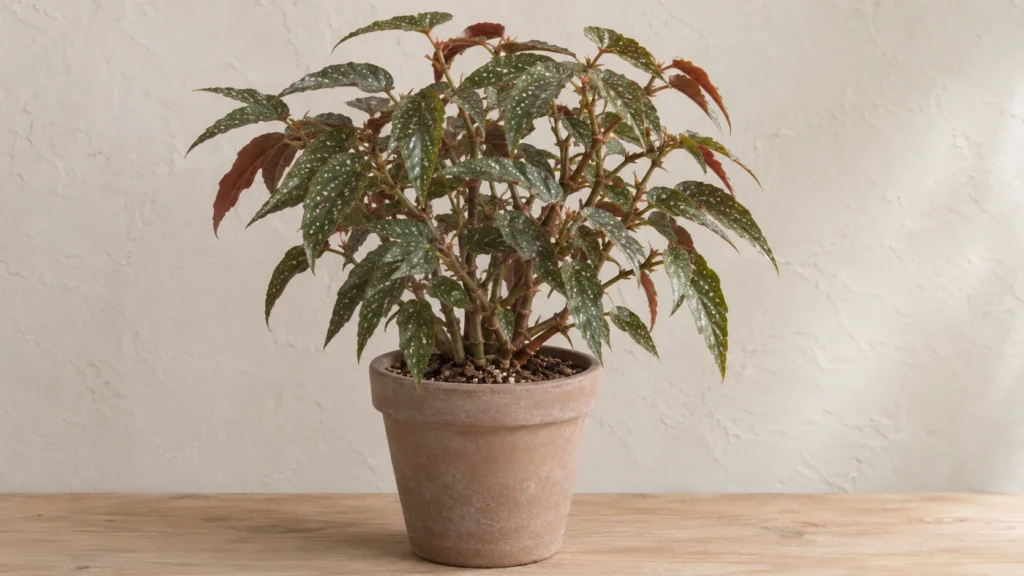
Begonia ‘Aerial’
Begonia 'Aerial'
A compact, spotted begonia that some sellers also call Sardine Begonia.
Watering frequency
Check weekly; water after the upper mix partly dries
Ideal temperature
About 60-80°F / 16-27°C; protect from frost
Humidity
Moderate humidity with good airflow
Care difficulty
Medium
Air purifying
No/Not Known
Growth rate
Moderate
Plant size
Often sold as a compact, branching potted plant; mature size varies
Soil type
Loose, well-draining potting mix
Fertilizer need
Feed lightly during active growth
Care summary
- Light: Give bright filtered light.
- Water: Let the upper mix partly dry before watering and draining.
- Soil: Use a loose mix in a pot with drainage holes.
- Identity: Check the nursery label when identifying a named plant.
- Safety: Keep away from pets that may chew it.
Common problems
- Soft stems or yellow leaves: Check for prolonged wetness and root damage.
- Dry, brown edges: Review watering and dry airflow.
- Weak, stretched growth: Increase filtered light gradually.
- Bleached leaves: Avoid harsh direct sun.
- Pests: Inspect for mites, thrips, and mealybugs.
Plant care guide
About Begonia 'Aerial'
Begonia 'Aerial' is a spotted, relatively small-leaved begonia sold by commercial nurseries. Some sellers also call it Sardine Begonia. Its dark green leaves may show pink and silver spots, with burgundy coloring underneath.
Steve's Leaves describes a branching, shrub-like habit; Baker's Acres also sells the plant under the name 'Aerial'. When choosing a named plant, keep its nursery label and compare mature leaves, undersides, branching habit, and flowers. Several begonias have similar spots.
Where It Works Best
A bright window with filtered light can maintain a compact, leafy form. Strong afternoon sun may damage the leaves, while too little light can stretch the stems and reduce the visible pattern. Start with gentle morning light or a bright position behind a curtain, then adjust gradually. Keep the pot away from cold drafts and heating vents. Leave enough room around the plant for airflow as it branches.
Begonia 'Aerial' Care
Check the mix before watering. When its upper portion has partly dried, water thoroughly and allow excess to drain. Never leave the pot sitting in a full saucer. A loose mix that holds a little moisture while letting air reach the roots is a sensible starting point for a branching begonia. In warm, active growth, inspect it more often; in cool, dim periods, inspect less often and let the mix dry a little further.
Moderate humidity can help foliage stay attractive, but constant leaf wetness and still air can invite disease. A room humidifier and gentle circulation are better tools than repeated misting. Feed lightly during active growth, following the fertilizer label at a diluted rate. Do not use fertilizer to compensate for inadequate light or damaged roots.
Pinch or prune a long stem above a node to encourage branching. Healthy stem pieces with nodes can be rooted in a lightly moist, airy medium to preserve a selected plant. Seedlings from a named clone may differ and should not automatically be called 'Aerial'. Repot when roots have crowded the container or the mix has broken down, using only a modestly larger drainage pot.
Problems and Pet Safety
Soft stems and yellow leaves warrant checking roots and prolonged wetness. Crisp margins can reflect dry air, irregular watering, or accumulated salts. Leggy growth suggests the plant may need more filtered light. Inspect leaf undersides for mites, thrips, and mealybugs before assuming that poor growth is a nutrient shortage.
The ASPCA's Begonia guidance lists begonias as toxic to cats and dogs. Keep the plant and cuttings out of reach and contact a veterinarian if a pet chews it.
Frequently Asked Questions
Is Sardine Begonia another name for 'Aerial'? Some sellers use Sardine Begonia for this plant. Check the nursery label if the exact cultivar matters to you.
How can I recognize 'Aerial'? Look for a branching habit, small spotted leaves, and burgundy coloring underneath. Compare a whole plant and its label rather than relying on one leaf.
Is this simply a small Polka Dot Begonia? Not necessarily. Several begonias have spotted leaves. Compare growth habit and a reliable supplier label rather than identifying a cultivar by leaf size alone.
Sources
- Steve's Leaves: Begonia 'Aerial' — nursery trade name and described morphology.
- Baker's Acres: Begonia inventory — independent trade-name use.
- ASPCA: Begonia — pet safety.