
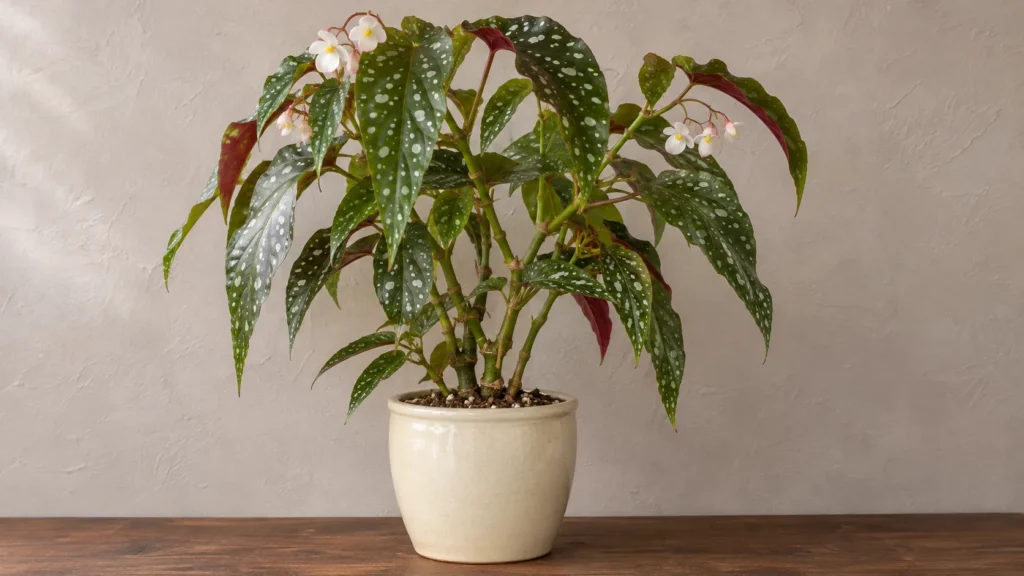
Begonia ‘Sierra Mountain King’
Begonia 'Sierra Mountain King'
A spotted, upright cane begonia sold under the cultivar name 'Sierra Mountain King'; its formal registration status has not been established.
Watering frequency
Check weekly; water after the upper mix partly dries
Ideal temperature
About 60-80°F / 16-27°C; protect from frost
Humidity
Moderate humidity with good airflow
Care difficulty
Medium
Air purifying
No/Not Known
Growth rate
Moderate
Plant size
Upright canes may reach several feet indoors with support and age
Soil type
Airy, well-drained potting mix
Fertilizer need
Feed lightly during active growth
Care summary
- Light: Give bright filtered light or mild morning sun.
- Water: Let the top of the mix partly dry, then water and drain.
- Growth: Stake or prune long jointed canes as needed.
- Soil: Use a loose mix in a drainage pot.
- Safety: Keep cuttings and foliage away from pets.
Common problems
- Soft canes or yellow leaves: Check for overly wet roots.
- Long, weak stems: Increase filtered light and consider support.
- Crispy edges: Check moisture, airflow, and fertilizer buildup.
- Bleached leaves: Reduce harsh direct sun.
- Pests: Inspect for mites, thrips, and mealybugs.
Plant care guide
About Begonia 'Sierra Mountain King'
Begonia 'Sierra Mountain King' is an upright cane begonia sold under this cultivar name by nurseries. Kartuz Greenhouses' photograph index lists it among other begonias.
A collector's account attributes the cross B. maculata × B. lubbersii to Cynthia Bishop in 2001. Begin With Plants also describes those parents. The breeding history is reported by these sources; a supplier label is especially useful when distinguishing this plant from other spotted cane begonias.
The plant is grown for pointed, asymmetric leaves with pale spots and its upright, jointed stems. The leaf pattern can resemble other spotted cane begonias, including B. maculata. Growth habit, mature leaves, flowers, and nursery provenance are more useful together than a single leaf photo.
Where It Works Best
A bright position with filtered light supports sturdy canes and visible spotting. A little morning sun may be useful; strong midday or afternoon sun can bleach or scorch leaves. Give the plant room to grow vertically. A heavier pot or simple stake can steady older stems without forcing a young plant to stand unnaturally straight. Keep it away from freezing temperatures, drafts, and hot vents.
Begonia 'Sierra Mountain King' Care
Water when the upper mix has partly dried. Pour enough to moisten the root ball, then drain completely. Check more often during warm active growth and less often when the plant is cool or slowing down. A loose, airy potting mix and a pot with drainage holes reduce the risk of stem and root rot. Avoid leaving the container in standing water.
Moderate humidity is helpful, but foliage should not remain wet in stagnant air. Use gentle circulation and avoid routine misting. Feed lightly with a balanced fertilizer while the plant is producing leaves and stems; do not feed as a substitute for adequate light. Repot only when roots fill the pot or the mix has degraded, increasing pot size gradually.
Prune an elongated cane just above a node to encourage branching. A node is the joint from which a leaf and new shoot can grow. Healthy stem cuttings with nodes can be rooted in a lightly moist, airy medium to preserve a named clone. Seedlings may vary and should not automatically bear the cultivar name.
Problems and Pet Safety
Soft canes and yellow leaves call for a check of the mix and roots. Thin, stretched stems suggest too little light; bleached leaf patches suggest too much direct sun. Crispy edges may reflect irregular watering, hot dry airflow, or fertilizer salts. Inspect undersides for mites, thrips, and mealybugs before treating loss of vigor with fertilizer.
The ASPCA's Begonia entry identifies begonias as toxic to cats and dogs. Keep leaves, cuttings, and discarded stems away from pets and call a veterinarian after ingestion.
Frequently Asked Questions
Is 'Sierra Mountain King' a rex begonia? The sources reviewed describe an upright cane begonia, not a low rhizomatous rex type.
Is its parentage confirmed? The reported B. maculata × B. lubbersii cross is repeated in collector and nursery accounts, but an original breeder or registration record was not located.
Why are its leaves less spotted than online photos? Light, leaf age, and plant-to-plant variation can affect appearance. Check the plant's source label before using spotting alone to decide identity.
Sources
- Kartuz Greenhouses: Begonia photograph index — name in nursery circulation.
- Collection de Bégonias: 'Sierra Mountain King' — reported breeder, cross, and date.
- Begin With Plants: 'Sierra Mountain King' — independent retail description and reported parentage.
- American Begonia Society: Registered Cultivars — register checked for the name.
- ASPCA: Begonia — pet safety.