
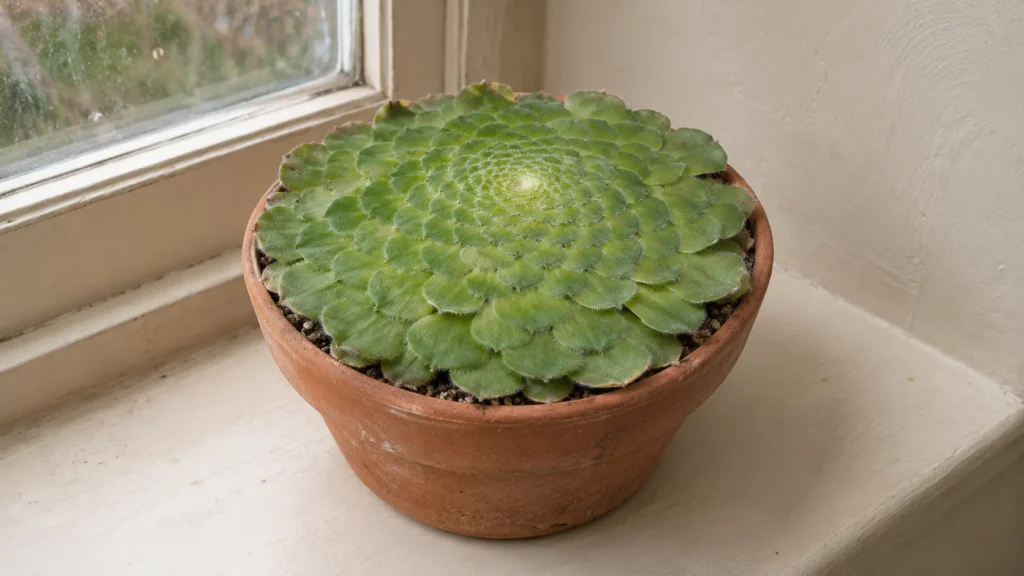
Flat-Topped Aeonium
Aeonium tabuliforme
An almost stemless Aeonium that makes a broad, tightly overlapping green rosette resembling a flat dinner plate.
Watering frequency
Check weekly; water after partial dry-down during active growth
Ideal temperature
55-75°F / 13-24°C; protect from frost
Humidity
Average room humidity with airflow
Care difficulty
Medium
Air purifying
No/Not Known
Growth rate
Slow
Plant size
Usually under 4 in / 10 cm tall; a mature rosette can spread 8-12 in / 20-30 cm
Soil type
Gritty, sharply draining succulent mix
Fertilizer need
Feed lightly during visible growth only.
Care summary
- Light: Bright light with protection from abrupt harsh sun.
- Water: Water the mix after partial dry-down; avoid wetting the tight crown.
- Soil: Use a draining pot and gritty medium.
- Shape: The species makes a single, low, broad rosette.
- Flowering: The main rosette typically dies after flowering.
- Safety: Keep away from chewing pets while exact toxicity evidence is unconfirmed.
Common problems
- Soft inner leaves or a wet crown: trapped water and poor air movement.
- Rising, loose rosette: inadequate light or normal growth adjustment.
- Dry brown patches: abrupt direct sun or heat reflected through glass.
- Collapsing central rosette after bloom: natural end of the flowering rosette.
- Cottony pests: check the tightly packed leaf layers for mealybugs.
Plant care guide
About Flat-Topped Aeonium
Flat-Topped Aeonium (Aeonium tabuliforme) is a distinctive succulent from Tenerife in the Canary Islands. Instead of forming a small tree, it layers many pale-green leaves into a broad, low disc. The RHS species profile describes its compact, flat rosette and yellow, star-shaped flowers. “Dinner Plate Aeonium” and “Flat Aeonium” describe the shape; “Saucer Plant” is another informal name. The Kew accepted-name record lists Sempervivum tabuliforme as a botanical synonym. Some horticultural sources spell the accepted genus combination Aeonium tabulaeforme; this spelling does not identify a separate plant.
The species is unlike Tree Aeonium, Black Rose Aeonium, and Kiwi Aeonium, which all develop rosettes on visible branching stems. That contrast is useful for identification and for care: a broad, closely packed rosette can trap water in the center, and there may be no side branches to keep after flowering.
Why You'll Like It
Its almost geometric leaf pattern gives a small pot a surprisingly architectural look. A plant can remain low even as its diameter increases, so it suits a bright sill or a shallow-looking but genuinely draining container. View it from slightly above to appreciate the overlapping leaves. Its form is also a good teaching example of how different members of one succulent genus can be; “Aeonium” does not always mean a stemmed mini-tree.
This is a plant for someone willing to keep the pot bright and check water carefully. It does not need tropical humidity or frequent spraying. In fact, wetting the tightly layered center repeatedly can create more risk than benefit. The plain green leaves are attractive without needing a dark or variegated cultivar label.
What Kind of Plant Is It?
The main body is typically a single, tightly packed rosette. Leaves overlap around a central growing point. The edges can collect dust or shelter small pests, so look into the layers occasionally without pulling healthy leaves apart. It may seem almost still for stretches of time; slow growth is normal, but a permanently soft or decaying center is not. Watch the center for firm new leaves rather than expecting a tall stem.
The flowering structure rises from the rosette's center. This species is generally monocarpic at the rosette level: the flowering rosette completes its life cycle after blooming. The RHS Aeonium trial notes the flat, non-branching habit and its distinctive geometry. Do not promise that a single rosette will produce replacement offsets after flowering. Seed or a successfully established cutting must be planned before a valued plant reaches that stage.
Where Flat-Topped Aeonium Works Best
Give it a very bright window with good airflow. Bright filtered light or gentle direct morning sun is a useful starting point indoors. A plant from a shaded greenhouse should be acclimated gradually before receiving stronger sun. Unlike a tall Aeonium, it is less likely to topple, but the expanding rosette needs horizontal room. Keep the outer leaves from resting against wet glass, a damp wall, or consistently moist potting mix.
Flat-Topped Aeonium Care
Light. Strong usable light helps the disc stay dense and symmetrical. The RHS profile recommends a bright protected setting in cultivation. Leaves that tilt upward or loosen can reflect light exposure, heat, or natural adjustment; consider the plant's recent conditions before making a large move. Sudden intense sun can mark the leaf surfaces, especially after indoor growth.
Water. During visible growth, water the potting mix when it has partly dried. Direct water toward the mix rather than into the central rosette, and let excess water drain away. Because the plant is low and broad, check beneath the leaves for a consistently damp stem base. In a hot pause or a cool, low-light room, allow more drying time. Do not keep it wet to force faster growth. A light pot, firm crown, and healthy center are more useful signals than a fixed calendar interval.
Soil and pot. Use a gritty, sharply draining medium in a container with a drainage hole. A broad pot can accommodate the rosette, but the root ball should not be surrounded by a large volume of slow-drying mix. Avoid burying the lowest leaf layer. A thin mineral top dressing can keep leaves off wet soil if applied without covering the crown or blocking airflow.
Temperature and humidity. Normal indoor humidity is suitable. Protect from frost and from cold, saturated soil. In a very hot window, leaf edges may dry or the rosette may close somewhat; provide air movement and light filtering instead of simply adding more water. A bright, temperate room is generally easier to manage than an overheated, stagnant glass enclosure.
Fertilizer. Feed lightly only while the plant makes new leaves. A concentrated dose can damage a small root system and will not correct poor light or soggy soil. Remove dead outer leaves only after they detach easily; pulling living leaves can injure the tight rosette.
Propagation and Flowering
The RHS species profile lists seed and rosette cuttings as propagation methods. Seed is useful when a plant flowers and sets viable seed, but offspring may take time to reach the familiar disc shape. A cutting must include viable stem tissue; a loose leaf is not a reliable substitute for a stem or rosette cutting. Because this species is often a single rosette, do not damage its sole growing point merely to attempt propagation. If a mature plant begins to flower, decide whether seed collection is realistic before cutting the bloom.
Repotting Flat-Topped Aeonium
Repot when roots fill the container, drainage has deteriorated, or the rosette needs more lateral clearance. Handle the plant by the pot and root ball, not by lifting the leaf disc. Set it at the same depth in fresh, gritty mix and keep the center dry. After repotting, resume watering according to root and leaf condition rather than automatically soaking a disturbed plant every few days.
Safety Around Pets
A species-specific ASPCA ingestion assessment for A. tabuliforme was not found. As a precaution, keep the plant away from animals that chew leaves; this does not establish that the species is toxic. If a pet eats it and seems unwell, contact a veterinarian and supply the botanical name. The ASPCA plant-list introduction notes that eating plant material can cause gastrointestinal upset even for plants listed as non-toxic.
Common Problems and Practical Fixes
- Soft center: Check for water trapped between leaves, wet soil, and poor airflow. Act before decay reaches the whole crown.
- Brown dry patches: Consider a recent sudden increase in direct sun or heat reflected through glass.
- Loose, rising leaves: Reassess light and growing conditions; do not try to flatten the rosette manually.
- Aging outer leaves: A few dry leaves are normal. Many soft, translucent leaves point toward moisture trouble.
- Mealybugs: Inspect between the closely overlapping leaves and isolate the plant if pests appear.
Frequently Asked Questions
Is Flat-Topped Aeonium the same as Echeveria?
No. Both can form rosettes and belong to Crassulaceae, but Flat-Topped Aeonium is Aeonium tabuliforme. Their different genus and species affect flowering and propagation.
Will the rosette survive flowering?
The flowering rosette normally dies after completing its bloom. Do not rely on an unbranched plant producing a new rosette afterward.
Should I mist the flat leaves?
No routine misting is needed. Moisture held in the tightly layered center can create avoidable problems; water the mix and provide airflow.
Final Thought
The low, layered disc is the reason to choose Flat-Topped Aeonium. Keep it bright, drain the pot well, and treat its single rosette and flowering cycle as different from the branching Aeoniums.