
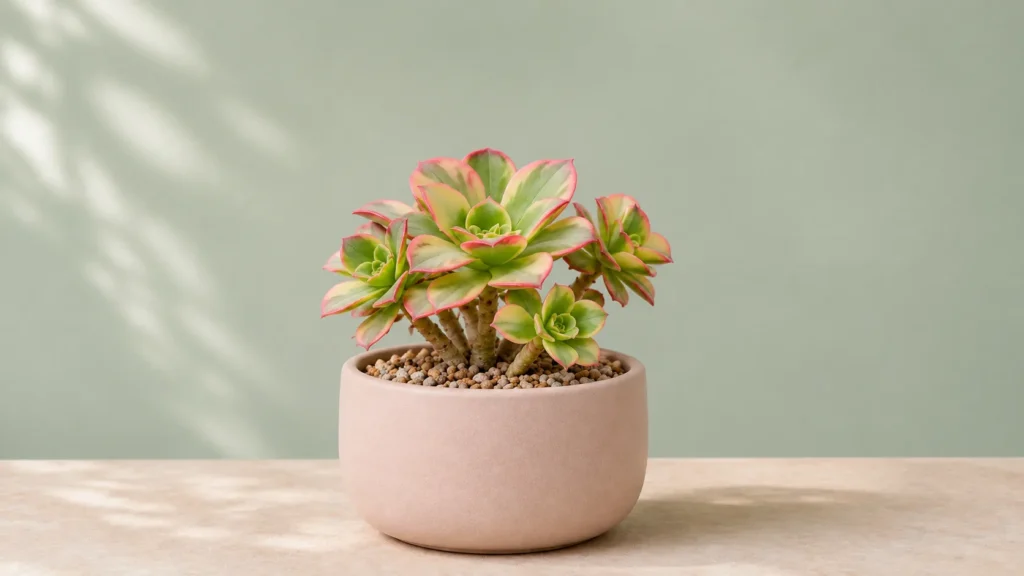
Kiwi Aeonium
Aeonium haworthii 'Dream Color'
A branching, tricolored Aeonium sold as 'Kiwi', with yellow and green leaves edged red in strong light.
Watering frequency
Check weekly; water after partial dry-down during active growth
Ideal temperature
55-75°F / 13-24°C; protect from frost
Humidity
Average room humidity
Care difficulty
Medium
Air purifying
No/Not Known
Growth rate
Moderate
Plant size
Small pots; branching indoor clumps can reach about 1 ft / 30 cm across
Soil type
Gritty, fast-draining succulent mix
Fertilizer need
Feed lightly during active growth only.
Care summary
- Light: Very bright light supports compact tricolored rosettes.
- Water: Water after partial dry-down while growing; reduce during pauses.
- Soil: Use a gritty mix and a pot with drainage.
- Color: Yellow-green variegation and red edges shift with conditions.
- Propagation: Use rosette stem cuttings to preserve the cultivar.
- Safety: Keep from chewing pets until exact toxicity evidence is available.
Common problems
- Fading red leaf edges: inspect light level and seasonal growth.
- Brown or crisp pale sections: abrupt intense sun or heat damage.
- Green, loose rosettes: low light or growth that is reverting.
- Soft base or stem: waterlogged roots.
- Cottony insects: inspect rosette centers for mealybugs.
Plant care guide
About Kiwi Aeonium
Kiwi Aeonium is the familiar retail name for the variegated pinwheel plant that the RHS accepts as Aeonium haworthii ‘Dream Color’. Its branching stems carry compact rosettes that can show lemon yellow, green, and red margins together. The RHS lists A. haworthii ‘Kiwi’ and ‘Variegatum’ among names used for this selection. This page uses Kiwi Aeonium as the customer-facing name and ‘Dream Color’ as the botanical cultivar identity. “Variegated Pinwheel” and “Tricolor Aeonium” are useful trade descriptions, but a vague tricolor label alone should not override a verified nursery tag.
The plant belongs to Crassulaceae. It is related to Tree Aeonium and Black Rose Aeonium, yet the leaf pattern is its own attraction. It is a named selection, not a naturally occurring species called “Kiwi.” A plain green A. haworthii is different from this variegated selection.
Why You'll Like It
The small rosettes make a lively, multiheaded display in a pot that can still fit on a sunny sill. The red edge acts like a fine outline around the pale leaf sections, while the branching structure fills the pot over time. The color changes with sun exposure and season, so the plant offers more visual variation than a solid-green Aeonium. It is a good choice for someone who has bright light and enjoys watching small shifts in foliage color.
Kiwi Aeonium is not a plant for a dark corner. Light supports compact growth and variegation, but the pale sections are also more prone to scorching when a sheltered plant is suddenly exposed to intense midday sun. A measured transition is more useful than a blanket instruction to place it in the strongest sun immediately.
What Kind of Plant Is It?
The patterned leaves contain less green tissue in their yellow areas. That makes the position of each rosette important: a branch receiving more light may show a stronger red edge, while a shaded branch may look greener. Look at several new leaves over time rather than judging the cultivar from one older leaf. If a branch consistently grows solid green, keep a record of it and monitor for reversion before using that branch as a cultivar cutting.
The RHS Aeonium trial describes this selection's neat rosettes and stable variegation under trial conditions. Stability does not mean each leaf has identical colors, nor does it mean poor light can maintain a compact habit indefinitely. Older leaves may dry and fall as new rosettes form at the stem tips.
Where Kiwi Aeonium Works Best
Choose a bright east, south, or west window. Morning sun is a gentle starting point for a newly purchased plant. If moving it outdoors, increase direct sun exposure gradually and check the pale portions for tan or white damage. Keep the pot where it receives air circulation without being blasted by a heater. A south-facing window may need a little distance or light filtering during a very hot afternoon, while a weak winter window may require the plant to sit nearer the glass.
Kiwi Aeonium Care
Light. Strong light maintains compact rosettes and helps the red margin appear. If new leaves emerge widely spaced, move closer to light. If pale leaf sections develop dry patches soon after a move, reduce harsh direct exposure and acclimate more slowly. The RHS cultivar profile recommends a bright, protected position with well-drained compost.
Water. When the plant is visibly growing, water after the mix has partly dried. Saturate the potting mix, let it drain, and wait for another partial dry-down. In hot weather or a dim, cool room, the plant may pause; adjust water to its actual growth and the moisture in the pot. Do not use a small daily splash, which wets the surface while leaving roots unevenly supplied. A firm rosette and dry mix are more reassuring than a wet pot with soft lower leaves.
Soil and pot. A gritty succulent mix with a drainage hole is the practical default. A modest pot size helps the medium dry at a useful rate. If a decorative outer pot holds runoff, empty it after each watering. When repotting, do not bury low rosettes or cover the stem base with persistently damp material.
Temperature and humidity. Average indoor humidity is adequate. Protect from frost and prolonged cold, wet conditions. Heat behind glass can burn pale tissue even when the same window seemed ideal in a cooler season. A little afternoon protection during extreme heat can preserve leaves without moving the plant into deep shade.
Fertilizer and pruning. Feed sparingly when new leaves are developing. Fertilizer cannot replace light and will not restore a scorched leaf. Remove only dry older leaves. If the plant becomes uneven, trim a healthy branch and root its rosette, leaving the parent in a bright place to develop new growth.
How to Propagate Kiwi Aeonium
Use a healthy rosette with a short stem as a cutting. Let the cut dry, then set it in a slightly moist, gritty medium with bright filtered light. Avoid saturating the mix until roots form. Stem cuttings preserve the named cultivar's visible pattern more predictably than seed. Select a branch that actually shows the desired variegation; do not propagate a persistently all-green shoot and assume it will turn tricolored. The RHS profile lists rosette cuttings as a propagation method.
Repotting and Growth
Repot when roots crowd the pot or the old mix no longer drains promptly. Choose the next modest pot size and inspect stems for firmness. A plant may pause in growth during heat or low light. If the center remains sound and the roots are healthy, wait for better conditions rather than increasing water or fertilizer to force new leaves. Preserve the original cultivar label with any cuttings so the identity stays traceable.
Safety Around Pets
This review did not find a cultivar-specific ASPCA ingestion record for ‘Dream Color’. The project's “Not pet safe” field is a conservative precaution under an evidence gap, not a confirmed poisoning claim. Keep the plant away from pets that chew foliage. If ingestion and symptoms occur, contact a veterinarian and provide both the retail name ‘Kiwi’ and the botanical cultivar name. The ASPCA plant-list guidance warns that eating even non-toxic plant material can upset an animal's stomach.
Common Problems and Practical Fixes
- Red edging fades: Review light and season. New leaves may regain stronger color in better light; transition gradually.
- Pale leaves scorch: Check whether the plant was moved into direct afternoon sun or against hot glass.
- Growth turns solid green: Observe several successive leaves on the same branch. If reversion persists, avoid using that branch for cultivar propagation.
- Soft stem or dark roots: Improve drainage and reduce watering; save a firm cutting if the lower plant is failing.
- Mealybugs: Inspect the rosette centers and stem joints, isolate the pot, and treat promptly.
Frequently Asked Questions
Are ‘Kiwi’ and ‘Dream Color’ different plants?
RHS treats ‘Kiwi’ as a synonym of Aeonium haworthii ‘Dream Color’. Retail labels vary, so keep the exact purchased label as provenance.
Why did the yellow leaves turn greener?
Light level, leaf age, and seasonal growth can change the visible balance of colors. Persistent all-green growth on one branch may be reversion.
Can I grow it in low light?
Low light usually weakens the compact rosettes and color. A bright window is the safer choice.
Final Thought
Kiwi Aeonium combines a compact branching shape with a vivid leaf pattern. Give it bright light gradually and keep the roots well drained. If you want the ‘Dream Color’ cultivar specifically, check the plant's label when buying it.