
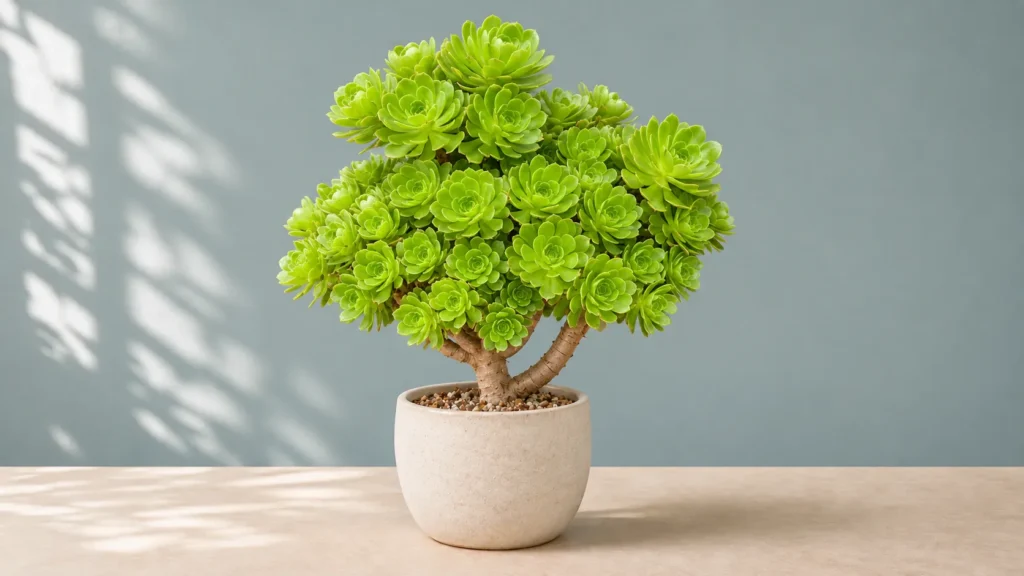
Tree Aeonium
Aeonium arboreum
A green, branching succulent whose spoon-shaped leaves form rosettes at the ends of woody stems; best in a very bright window.
Watering frequency
Check the mix weekly; water when partly dry during active growth
Ideal temperature
55-75°F / 13-24°C; protect from frost
Humidity
Average room humidity
Care difficulty
Medium
Air purifying
No/Not Known
Growth rate
Moderate
Plant size
Small nursery pots; branching indoor specimens can reach 1-3 ft / 0.3-0.9 m
Soil type
Gritty, fast-draining succulent mix
Fertilizer need
Light feeding during active growth only.
Care summary
- Light: Give several hours of bright light; introduce direct sun gradually.
- Water: Water thoroughly when the mix has partly dried, then drain.
- Soil: Use a gritty mix and a pot with a drainage hole.
- Season: Reduce water when heat or low light slows growth.
- Growth: Rosettes form on branching, eventually woody stems.
- Safety: Keep out of pets' reach while species-specific ingestion evidence is unconfirmed.
Common problems
- Long bare stems and loose rosettes: insufficient light or normal loss of old lower leaves.
- Soft stem or blackened roots: prolonged wet soil, especially while growth is slow.
- Crisp patches: sudden exposure to strong direct sun.
- Shrinking rosettes: check heat, water, and seasonal growth before treating as disease.
- Cottony insects: check for mealybugs in leaf axils.
Plant care guide
About Tree Aeonium
Tree Aeonium (Aeonium arboreum) is a green, branching succulent in the Crassulaceae family. Its leaves form spoon-shaped rosettes at the tips of stems, creating a miniature tree silhouette as older stems become woody. The RHS species profile records the species from Gran Canaria and describes its terminal rosettes and yellow flower clusters. The name Houseleek Tree reflects its growth form; Irish Rose and Green Aeonium are other names a buyer may encounter. Those names refer to this green species here, rather than to every plant in the genus.
Tree Aeonium is a useful first Aeonium for a bright room because its natural green color and branching habit make its structure easy to read. It is distinct from the near-black Black Rose Aeonium, the tricolored Kiwi Aeonium, and the almost stemless Flat-Topped Aeonium. The genus includes many species and cultivars, so a plant merely labeled “Aeonium” should not automatically be assigned to A. arboreum.
Why You'll Like It
A mature plant offers several green rosettes at different heights without needing a large floor pot. You can keep a young plant on a sunny sill and later display a branching specimen where its silhouette is visible. Rosette cuttings can also be rooted to renew an aging, bare-stemmed plant. Unlike a soft foliage plant, Tree Aeonium tolerates dry indoor air; the important constraints are usable light, drainage, and a watering routine that changes with growth.
What Kind of Plant Is It?
Aeoniums are not Echeverias, although both belong to the stonecrop family and arrange leaves in rosettes. Tree Aeonium usually lifts those rosettes on conspicuous stems. Lower leaves naturally age and fall, leaving a bare section beneath a healthy crown. A long, weak stem with widely spaced leaves, however, can also signal inadequate light. Check new growth before deciding whether the plant is simply maturing or stretching.
The Kew genus record accepts Aeonium in Crassulaceae. The genus-level name does not identify a cultivar. In particular, purple-leaved A. arboreum selections and the independently named ‘Zwartkop’ are often blended together in retail descriptions; keep the seller's exact label when one is supplied.
Where Tree Aeonium Works Best
Choose a south- or west-facing window with strong light, or a bright east-facing window with direct morning sun. Set the pot close enough to the glass to receive useful light but away from cold winter contact. Rotate it occasionally if the crown leans toward one side. A dim shelf across a room is unlikely to maintain compact rosettes. In a mild season it can move outdoors after gradual acclimation, but bring it back before frost and inspect for pests first.
Tree Aeonium Care
Light. Give the brightest practical position. Strong sun supports compact growth, but a plant grown indoors or under shade can scorch if moved straight into harsh midday sun. Increase exposure over several days and watch for pale, dry patches. The RHS cultivation advice recommends a protected, bright position and a gritty potting medium.
Water. Water when the potting mix has partly dried during visible growth. Wet the root ball thoroughly, then let excess water escape. Do not keep a saucer full of water. There is no reliable fixed number of days: pot size, light, temperature, and whether the plant is growing all matter. If the rosettes contract and growth slows during hot weather, use less water until active growth resumes. In a cool, dim winter room, drying will also be slower. Treat the plant's condition and the mix as the guide rather than assuming every Aeonium follows the same calendar.
Soil and pot. Use a fast-draining succulent mix with extra mineral grit if the base mix holds water for a long time. A drainage hole is essential. A heavy pot can stabilize a branching plant, but an oversized pot stores too much unused wet mix around a small root system. Keep the lowest leaves above the soil surface to discourage rot.
Temperature and humidity. Ordinary room humidity is acceptable. Give good air movement and protect from freezing. A very hot window behind glass can stress the crown even when the plant needs bright light; move it slightly back or provide light shade during a heatwave. Cool nights and bright days can support good growth, provided the mix is not kept cold and saturated.
Feeding and pruning. Feed lightly only when new leaves are forming. Excess fertilizer will not repair stretched growth caused by weak light. Remove dry lower leaves gently. If the plant becomes top-heavy, take a healthy rosette with a short stem as a cutting or stake the existing plant while you improve its light.
How to Propagate Tree Aeonium
Take a healthy rosette with several centimeters of stem using a clean blade. Let the cut surface dry briefly, then place it in a lightly moist, gritty medium in bright filtered light. Keep the medium barely moist while roots establish; a waterlogged cutting can rot before it roots. The RHS profile lists rosette cuttings and seed as propagation methods. A stem left on the parent plant may produce new side shoots, but the number and timing vary.
Repotting and Flowering
Repot when roots crowd the pot, the mix breaks down, or the plant has become unstable. Move up only one modest pot size and check roots for firm, healthy tissue. Mature rosettes can send up a large cluster of small yellow flowers. The flowering rosette may die after blooming, while unflowered branches can remain. If seed is not the goal, many indoor growers focus on keeping healthy side rosettes rather than encouraging flowers.
Safety Around Pets
A species-specific ASPCA toxicity assessment for Aeonium arboreum was not found. As a precaution, keep the plant out of reach of pets that chew plants; this does not mean a particular toxin has been established. If a pet eats it and develops symptoms, contact a veterinarian and provide the botanical name. The ASPCA plant-list guidance also notes that eating plant material can cause gastrointestinal upset even when a plant is listed as non-toxic.
Common Problems and Practical Fixes
- Tall, loose growth: Move closer to a bright window, but transition to direct sun gradually. Existing stretched sections will not compact again; new growth shows whether conditions improved.
- Mushy stem or leaves: Stop watering, inspect the roots, and remove rotten tissue. Improve drainage before restarting a lighter routine.
- Wrinkled leaves: Check the mix first. A very dry pot needs water, while a wet pot with wrinkled leaves may have damaged roots.
- Shrinking rosette in heat: Watch for a seasonal pause, especially if the center remains firm. Reduce water rather than forcing growth with fertilizer.
- Mealybugs: Inspect between leaves and along branching stems; isolate the plant while treating the infestation.
Frequently Asked Questions
Is Tree Aeonium the same as Black Rose Aeonium?
No. Green Aeonium arboreum and the named, near-black ‘Zwartkop’ selection look different. Compare the Black Rose Aeonium profile and use the nursery label when identifying a plant.
Can I keep it in low light?
It may survive temporarily, but weak light usually produces long stems and loose rosettes. A bright window is much more reliable.
Why are lower leaves falling?
Dry older leaves are often normal as the stem lengthens. Sudden loss of many soft leaves, especially with wet soil, calls for a root check.
Final Thought
Give Tree Aeonium a bright position, a draining pot, and water that follows active growth. Its green branching form makes an easy visual reference for the more colorful members of the genus.