
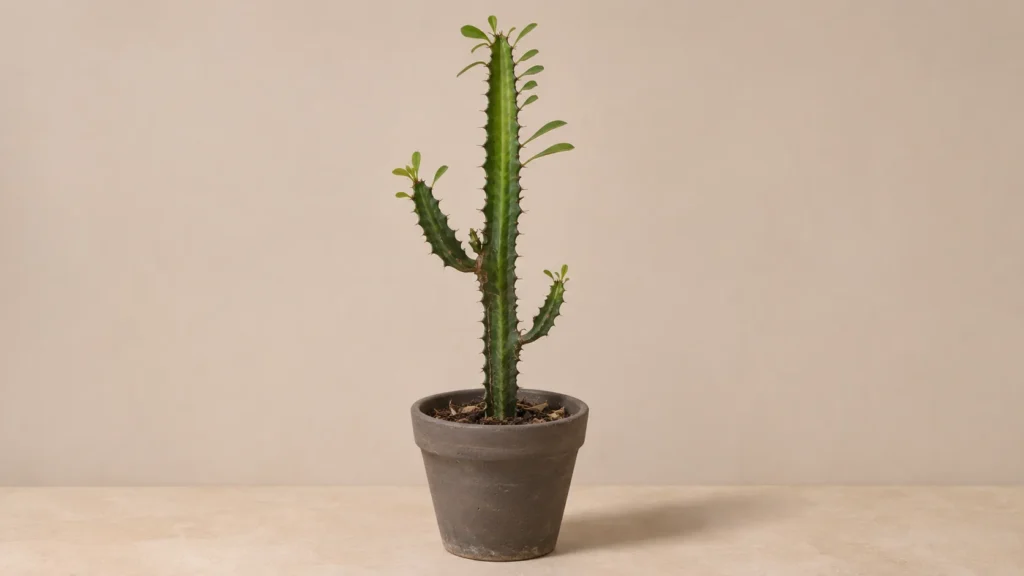
African Milk Tree
Euphorbia trigona
An upright, branching succulent spurge with angular green stems, paired spines, and small leaves along its ridges.
Watering frequency
Water thoroughly after the mix has dried; reduce watering in cool, dim periods
Ideal temperature
About 65-80°F / 18-27°C; protect from frost
Humidity
Dry to average room humidity
Care difficulty
Medium
Air purifying
No/Not Known
Growth rate
Moderate
Plant size
Upright container plant that can reach roughly 3-6 ft / 0.9-1.8 m indoors
Soil type
Fast-draining cactus and succulent mix
Fertilizer need
Feed lightly during active growth only.
Care summary
- Light: Bright light; introduce direct sun gradually.
- Water: Let the mix dry between thorough waterings.
- Soil: Use a gritty, fast-draining mix and a pot with a drainage hole.
- Stability: Tall, branching stems need a stable pot and enough space.
- Identity: A Euphorbia, not a true cactus.
- Safety: Spines and irritating milky latex require careful handling.
Common problems
- Soft dark stem base: check for prolonged wet soil and root or stem rot.
- Narrow, weak new stems: increase light gradually.
- Dropped small leaves: review seasonal conditions and watering; stems still perform photosynthesis.
- Leaning or falling pot: provide a heavier container and a safer position.
Plant care guide
About African Milk Tree
African Milk Tree (Euphorbia trigona) is a succulent spurge with upright, angular stems and an architectural branching habit. Despite trade names such as “Cathedral Cactus,” it is not a true cactus. It belongs to Euphorbiaceae. Kew accepts Euphorbia trigona and records its native range from Gabon to Malawi. The species can become a tall, striking houseplant if given enough light and a stable container.
The “milk” in its name refers to white latex released by a broken stem. That sap is irritating and is especially hazardous around the eyes. The plant also bears spines. Plan its position and handling before it becomes difficult to move. RHS species details describe the ridged stems, paired spines, small leaves, and sap hazard.
Why You'll Like It
This plant gives a room the vertical form often sought from a columnar cactus, while its small leaves soften the silhouette during active growth. Mature stems branch into a candelabra shape. It tolerates ordinary indoor humidity, and a well-established specimen does not need frequent watering.
African Milk Tree works best where it has room to grow without being brushed by people or pets. A narrow hallway, children's play area, or unstable shelf makes the spines and sap a practical concern. In a bright room with floor space, it can be a strong single-plant focal point.
How to Identify African Milk Tree
Look for vertical, usually three- or four-angled green stems. The ridges carry paired spines and small, short-lived leaves near active growth. The green stems remain the main photosynthetic tissue even when leaves fall. The branching is upright rather than a flat, zigzag chain. NC State Extension describes these features and the plant's upright habit.
Color may vary with horticultural selections and growing conditions. A reddish form is often sold under the name ‘Rubra’, but color alone is not enough to identify an unlabelled cultivar with certainty. Keep the species identity unless the plant's provenance supports a more specific label.
African Milk Tree vs. a Cactus
Both can have water-storing stems and sharp projections, but E. trigona is a Euphorbia. True cactus spines grow from areoles, specialized cushions on the stem. This spurge instead has spines along its ridges and releases milky latex when injured. Never cut a plant just to check its sap; visible stem and spine features, a reliable label, and expert identification are safer.
Where It Works Best
Use a bright window or a room with several hours of strong light. A plant acclimated to sun can take direct sun, but a specimen from a dim shop may scorch if moved abruptly to a hot south-facing window. Increase exposure over days or weeks. Rotate the pot from time to time so one side does not lean persistently toward the light.
Leave clearance around its stems. As branches become tall and top-heavy, a wide, heavier pot and a stable floor position matter as much as the watering schedule. Keep the plant out of traffic and away from animals that may knock it over.
African Milk Tree Care
Light. Give bright light to support sturdy upright growth. Weak, narrow new growth suggests insufficient light. Move the plant closer to a window gradually, and watch for pale scorched patches after any increase in direct sun. RHS cultivation guidance calls for a well-lit position and well-drained growing medium.
Water. Water deeply, then allow the mix to dry before watering again. In winter or any cool, dim period, the interval usually lengthens. Do not use a fixed weekly dose: a large pot in a dark room dries much more slowly than a small pot in sun. A soft, darkening stem base is a warning to inspect roots and moisture immediately.
Soil and pot. Use a fast-draining succulent mix in a container with a drainage hole. A snug pot is easier to keep dry than a much larger one. When the plant becomes top-heavy, choose a wider, heavier pot or a stable outer container without allowing water to remain at the bottom. Wear thick gloves while moving it.
Temperature and humidity. Warm indoor conditions and ordinary dry air suit it. Protect it from frost and prolonged cold, wet soil. Do not place a tall plant against a pane that becomes very cold overnight. Good air movement helps dry the mix, but avoid a location where drafts repeatedly rock a tall plant.
Feeding. During active growth, use a diluted balanced fertilizer sparingly. Excess feeding cannot compensate for poor light and may encourage weak growth. Stop feeding when growth slows.
Pruning and Propagation
Stem cuttings are possible, but the latex makes this a task requiring preparation. Wear gloves and eye protection, protect the work surface, and keep children and pets away. Take a healthy section with clean tools, allow the cut end to stop bleeding and dry before placing it into a gritty rooting mix. Do not splash or rub latex into your eyes. NC State Extension notes that the sap can cause serious eye irritation.
You do not need to prune simply because the plant loses a few small leaves. Stems remain green and functional. Prune only for size, damage, or balance, and make sure the remaining structure is stable. If the plant has become too tall to handle safely, seek in-person help rather than trying to hold and cut it alone.
Safety Around People and Pets
Treat African Milk Tree as not pet safe. The spines can puncture skin, and its milky latex can irritate skin, mouth, and eyes. Avoid placing it at face height. Wash skin after contact; for eye exposure, rinse immediately and seek prompt medical care. If a pet chews the plant, contact a veterinarian. Do not use the plant as a household remedy.
Common Problems
- Stem base turns soft or dark: Check whether the mix stays wet too long. Remove the plant from standing water and assess the roots.
- New stems are thin or floppy: Increase light gradually and check that fertilizer has not been excessive.
- Small leaves fall: Some leaf drop occurs as conditions change; assess stem firmness before assuming the plant is dying.
- Plant leans: Rotate toward light and improve pot stability. A falling plant is a safety issue as well as a care issue.
- White cottony spots: Inspect ridges and branch joints for mealybugs; isolate and treat carefully without touching latex.
Frequently Asked Questions
Is African Milk Tree actually a cactus? No. It is the succulent spurge Euphorbia trigona.
Why are its leaves falling? The small leaves are not permanent. Check light, temperature, and stem firmness; a healthy green stem can continue growing without them.
Can it live in low light? It may persist for a while, but new growth tends to weaken and lean. A bright position is better.
Is it safe to touch? Handle intact plants cautiously because of spines. Avoid contact with latex from damaged stems, especially near eyes.
The best African Milk Tree care combines strong light, a dry interval between waterings, a stable pot, and deliberate safe handling.