
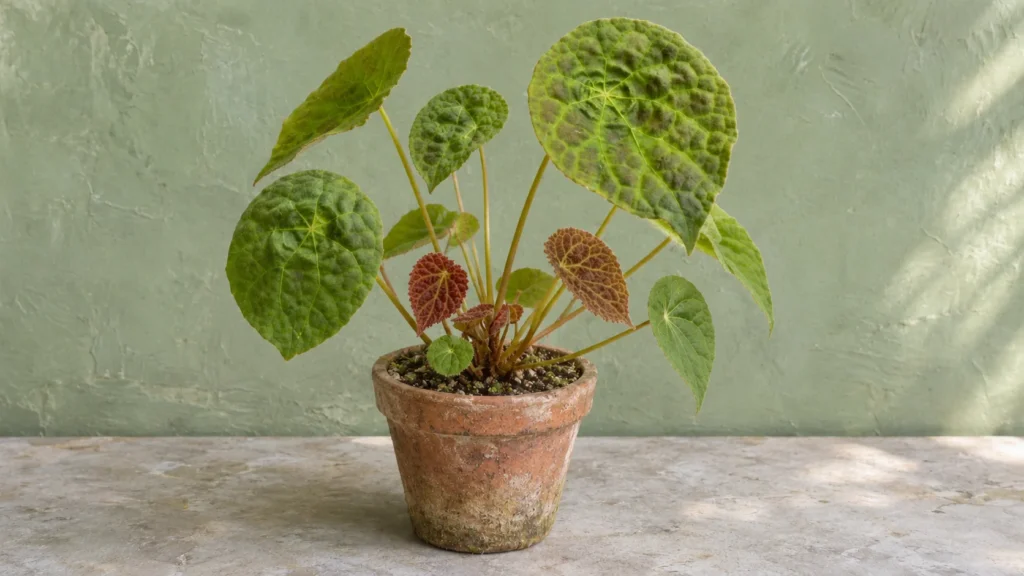
Begonia phuthoensis
Begonia phuthoensis
A textured, rounded-leaf Begonia species named for Vietnam's Phú Thọ province and suited to warm, filtered indoor light.
Watering frequency
Check weekly; water as the surface begins to dry
Ideal temperature
About 60-80°F / 16-27°C; protect from cold drafts
Humidity
Moderate humidity with good airflow
Care difficulty
Medium
Air purifying
No/Not Known
Growth rate
Moderate
Plant size
A low to medium spreading potted plant; mature size varies by growing conditions
Soil type
Loose, moisture-retentive mix with drainage
Fertilizer need
Feed lightly during active growth
Care summary
- Light: Use bright filtered light or gentle morning sun.
- Water: Let the surface begin to dry, then water fully and drain.
- Soil: Keep the rhizomatous base in loose, well-drained mix.
- Humidity: Prefer moderately humid air with good circulation.
- Safety: Keep away from pets that may chew it.
Common problems
- Soft base or yellow leaves: Check drainage and persistent wetness.
- Crisp margins: Review watering and dry airflow.
- Pale or damaged leaves: Check for excessive direct sun.
- Slow growth: Check light, temperature, roots, and pests before feeding.
Plant care guide
About Begonia phuthoensis
Begonia phuthoensis is an accepted species, not a horticultural cultivar, in Kew's Plants of the World Online. Its epithet refers to Phú Thọ, a province in Vietnam. Chinese plant listings may spell the place name in different characters; those spellings do not identify different species.
The species was published in 2004, as recorded by Kew and USDA GRIN. A circulating 2017 date should not be used as the first publication date. GRIN cites the original Novon description and records Vietnam localities including Phú Thọ and Thanh Hóa; Kew's currently accepted range is broader, including northern Myanmar and northern Vietnam. Those records distinguish the origin of the name from the full known range.
This is a rounded-leaf, rhizomatous begonia with a low, clustered habit. The leaves can be textured, with veins radiating from near the petiole attachment. Color, size, and texture can vary with the plant and growing conditions. Compare a seller's plant with a labeled specimen or reputable nursery photograph; an unlabeled round-leaf begonia is not enough for a confident species identification.
Where It Works Best
Give bright, filtered light beside a window, or gentle morning sun. Avoid hot afternoon sun until the plant has been carefully acclimated. Indoors it suits a tabletop or plant shelf where its leaf texture is visible. Keep it away from cold glass and direct heating or air-conditioning airflow. A young plant may fit a small pot; a mature rhizomatous clump can gradually widen.
Begonia phuthoensis Care
Feel the upper part of the mix. When the surface begins to dry, water thoroughly and allow the pot to drain. This is a cue to inspect, not a fixed weekly prescription. A loose organic mix with added drainage particles helps avoid both rapid desiccation and stagnant wetness. Use a pot with drainage holes, and do not bury the rhizome under a deep layer of soil.
Moderate humidity supports the leaves, but a sealed, stagnant enclosure can encourage spotting. Provide gentle airflow and avoid routinely wetting the foliage. Feed lightly during active growth at the fertilizer label's diluted rate. Pause if the plant has slowed in cool or dim conditions. Repot when the roots or rhizome have crowded the container or the mix has deteriorated, choosing only a modest increase in size.
A rooted rhizome division with a growth point is the most straightforward propagation method. Some growers also use leaf cuttings for rhizomatous begonias, but results vary. Keep a division warm and slightly moist in filtered light while it establishes. Seed-grown plants are not guaranteed to look identical to a particular parent clone.
Problems and Pet Safety
A soft base and yellowing leaves warrant checking whether the mix has stayed wet and whether roots are healthy. Crispy margins can follow uneven watering or very dry airflow. Pale patches may be sun injury. Slow new growth calls for a check of light, warmth, root health, and pests before fertilizing or upsizing the pot.
The ASPCA's Begonia guidance lists the genus as toxic to cats and dogs. Keep this species out of reach and call a veterinarian if an animal chews it.
Frequently Asked Questions
Was this species described in 2017? No. The taxonomic references cited here give 2004 as its original publication year.
Is it a rex begonia? It is a distinct species; rounded, patterned foliage alone does not make a plant part of the Rex Cultorum Group.
Can it stay in a closed terrarium? Warmth and humidity may help, but stagnant air and wet foliage can cause problems. Monitor the plant and provide ventilation.
Sources
- Kew POWO: Begonia phuthoensis — accepted name, publication year, and range.
- USDA GRIN: Begonia phuthoensis — original publication and Vietnam locality information.
- HAST specimen record — herbarium reference.
- Plantjai: Begonia phuthoensis — Chinese retail spelling.
- ASPCA: Begonia — pet safety.