
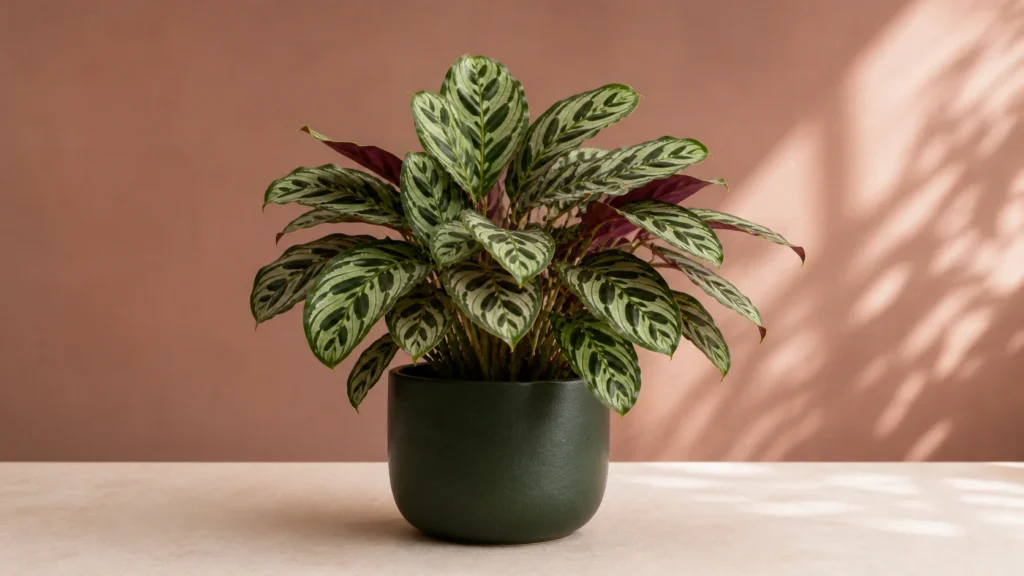
Peacock Plant
Goeppertia makoyana
A prayer plant with feathery peacock-patterned leaves that fold up at night — stunning and pet-safe, though demanding of humidity and steady conditions.
Watering frequency
Every 3-5 days
Ideal temperature
65-75°F / 18-24°C
Humidity
60%+
Care difficulty
Hard
Air purifying
No/Not Known
Growth rate
Moderate
Plant size
1-2 ft / 0.3-0.6 m
Soil type
Moist, well-draining mix with organic matter and perlite
Fertilizer need
Every 4 weeks while growing.
Care summary
- Light: Bright indirect or medium light; no direct sun.
- Water: Keep soil evenly moist with filtered or rain water.
- Soil: Moist, well-draining mix with organic matter.
- Humidity: 60%+ humidity keeps leaves clean and uncurled.
- Growth: Clumping habit; divide every couple of years.
- Safety: Pet-safe.
Common problems
- Brown leaf edges: fluoride in tap water or low humidity.
- Curling leaves: thirst or dry air.
- Washed-out color: too little light.
- Scorched patches: direct sun.
- Root rot: soil staying soggy.
Plant care guide
About Peacock Plant
The peacock plant (Goeppertia makoyana, long known as Calathea makoyana) has the most painterly leaves in the houseplant world: a pale green to creamy leaf background, feathered dark green markings running from the midrib to the edges, a dark green border, and a rich reddish-purple underside that shows when the leaves move. Native to the tropical rainforests of southeastern Brazil, it belongs to the prayer plant family (Marantaceae), and its common names — peacock plant, peacock calathea, cathedral windows, brain plant — all describe the same feathery, window-paned pattern. The NC State Extension profile for the peacock plant notes that the species name commemorates the Belgian nursery Messrs. Jacob-Makoy and Co., which introduced it into cultivation.
The name situation matters for shopping: this plant was known for decades as Calathea makoyana, and you will still find it sold under that name almost everywhere. Botanists have reclassified it into the genus Goeppertia (as the NC State entry shows), but for retail purposes, calathea and goeppertia makoyana are the same plant with the same care. Our own peacock plant's cousins in the prayer plant family share its behavior, and its sibling Calathea Orbifolia and the Stromanthe Triostar follow the same care playbook.
What makes the peacock plant special is how alive it feels. The leaves are papery thin and held erect on long petioles, and they perform a nightly ritual: the foliage folds up in the evening and reopens at sunrise, a response to light and temperature that NC State describes in detail. In a dim room, the effect is almost theatrical — the plant visibly "closes" at night like a living clock.
Why You'll Like It
The peacock plant is the most decorative member of a decorative family. No other houseplant has this exact pattern — feathered green on cream, edged in dark green, backed in purple — and no two leaves look identical as the light catches them. It is the plant people stop and ask about, and it photographs beautifully, which is why it dominates plant social media.
It is also genuinely pet-safe. The ASPCA lists Calathea as non-toxic to dogs, cats, and horses, and the NC State profile carries the same non-toxic tags for the species. In the prayer plant family, that is consistent — our prayer plant guide notes the family is one of the safest groups of patterned houseplants for pet households. The pet-safe houseplants guide includes the calatheas among the reliable options for homes with animals.
And it is a living mood piece. The nightly leaf-folding ritual, the purple undersides flashing as the leaves tilt, the sheer graphic quality of the pattern — this is a plant that does something, not just sits there. For anyone who wants a houseplant that feels interactive, the peacock plant delivers.
What Kind of Plant Is It?
Three facts explain how the peacock plant behaves.
- It is a rainforest-floor prayer plant. In the understory of Brazilian rainforests it lives in warm, shaded, humid conditions — no direct sun, steady warmth, high air moisture. NC State lists its needs as bright indirect sun or partial shade, moist well-drained soil, and around 60% humidity. Every care decision follows from that habitat: it wants filtered light, not sun; steady moisture, not drought; and humidity most homes do not naturally provide.
- Its leaves move. The folding and unfolding at night — called nyctinasty — is driven by light and temperature changes at the leaf joints. It is not damage; it is the plant's natural rhythm, and seeing the leaves stand up at night is a sign of health.
- It is a rhizomatous clumper. The plant grows from rhizomes into a tidy clump of upright leaves, which is why division is the propagation method — and why NC State recommends dividing every couple of years to keep the plant vigorous.
Where It Works Best
The peacock plant wants bright, indirect light or medium light — near an east or north window, or a few feet back from a brighter window where the sun never hits the leaves. NC State warns that direct sunlight causes leaf burn, and low light fades the pattern, so the goal is bright-but-filtered. The light guide explains the difference between the dappled light a rainforest-floor plant wants and the stronger light tropicals with thicker leaves tolerate.
Humidity is the second requirement and the real filter for ownership. NC State specifies around 60% humidity for the plant to thrive, and it is intolerant of dry air — leaves roll, brown at the edges, and generally complain. The best rooms are the humid ones: a bright bathroom, a kitchen near a sink, or any room with a humidifier or pebble tray. The humidity guide covers the techniques that make calatheas workable in ordinary homes.
Temperature needs to be steady: 65-75°F (18-24°C), with no cold drafts and no sudden swings. NC State notes the plant is intolerant of low or inconsistent temperatures, so keep it away from exterior doors, radiators, and AC vents. A stable, warm, bright-bathroom spot is the peacock plant's ideal home.
How to Care for Calathea Makoyana
Light: Bright indirect to medium light. Direct sun scorches the papery leaves; deep shade fades the pattern. East or north windows, or filtered light back from a south window, are ideal.
Watering: Keep the soil evenly moist — not soggy, never bone dry. Typically that means every 3-5 days in a normal room, checking the soil rather than following a calendar. The crucial detail is water quality: NC State recommends distilled or rainwater because the fluoride in tap water causes brown leaf edges — a signature calathea complaint. If you must use tap water, let it sit overnight to reduce chlorine, and know that fluoride build-up is the usual cause of brown tips that no amount of humidity fixes. The watering guide covers keeping soil evenly moist without overwatering.
Soil: Use a moist, well-draining mix with high organic matter — NC State specifically recommends a mix with organic matter and perlite to hold moisture while draining. A pot with drainage holes is essential.
Humidity: Target 60% or higher. Humidifier, pebble tray, plant grouping, or a bright bathroom all work. Low humidity is the most common reason peacock plants look rough: brown edges, curling leaves, and pest pressure all trace back to dry air.
Temperature: 65-75°F (18-24°C), steady. Protect it from drafts and temperature swings.
Fertilizer: Feed every 4 weeks during the growing season with a balanced houseplant fertilizer at half strength, and stop in winter when growth slows. NC State recommends exactly this cadence. Underfeeding shows as pale leaves; the fertilizing guide has the general timing.
Dusting: The leaves photosynthesize through their pattern, and NC State notes that dust slows photosynthesis — gently wipe the leaves with a damp soft cloth as needed. It is one of the few houseplants where wiping leaves is genuinely recommended, not cosmetic.
How to Propagate
Division is the method — the peacock plant grows from rhizomes, and there are no viable stem cuttings. NC State specifies division of the rhizomatous roots in late spring as the preferred method, and recommends dividing every two years to increase vigor.
To divide: water the plant a day before, unpot it, and gently separate the rhizome clump into sections, each with several leaves and a healthy root mass. Pot each division in fresh, moist, well-draining mix, water well, and keep it in high humidity and bright indirect light while it settles. The divisions may droop for a week or two — that is normal as the roots re-establish. One peacock plant becomes two or three, each filling out over the following months.
When to Repot
Repot every two years in spring, when the clump fills the pot or roots emerge from the drainage holes — NC State's every-two-years guidance for division doubles as the repotting rhythm. Move up one pot size and use fresh moist, well-draining mix. Because the plant dislikes disturbance, repot gently and keep the root ball intact as much as possible; water with distilled or rainwater afterward and maintain high humidity while it recovers. The repotting guide walks through the standard technique.
Toxicity and Pet Safety
The ASPCA lists Calathea as non-toxic to dogs, cats, and horses, and the NC State profile for Goeppertia makoyana carries the same non-toxic tags. This classification does not make the plant food: heavy chewing may still cause gastrointestinal upset. Confirm the plant's identity and contact a veterinarian if symptoms occur. The pet-safe houseplants guide includes other options for homes with animals.
Common Problems and Practical Fixes
- Brown leaf edges: The classic calathea complaint, and usually one of two things: fluoride in tap water or low humidity. NC State names both. Switch to distilled or rainwater and raise the humidity; the browned edges will not heal, but new leaves will stay clean.
- Curling leaves: Thirst or dry air. Check the soil — if it is dry, water thoroughly — and raise the humidity. Leaves that curl from dryness usually flatten back within a day.
- Faded, washed-out pattern: Too little light. Move the plant to a brighter spot without direct sun.
- Scorched or burned patches: Direct sun on papery leaves. Move it to filtered light.
- Drooping stems: Usually thirst or temperature stress. Water if the soil is dry and check for drafts or temperature swings.
- Root rot: Soggy soil, often from a pot without drainage. Yellowing lower leaves and a musty smell are the signs. Repot in fresh, better-draining mix.
- Pests: NC State notes aphids, scale, mealybugs, and spider mites as the main concerns, with spider mites driven by low humidity. Treat with insecticidal soap and raise humidity; the pest guide covers the routine.
Frequently Asked Questions
Why are the edges of my calathea's leaves turning brown? Two usual causes: fluoride in tap water or low humidity. Switch to distilled or rainwater and raise the humidity around the plant — the existing brown edges will not heal, but new leaves will come in clean.
Is Calathea makoyana safe for pets? The ASPCA lists Calathea as non-toxic to dogs, cats, and horses, and the NC State profile carries the same tags. Discourage heavy chewing and contact a veterinarian if symptoms occur.
Why is my peacock plant's pattern fading? Too little light. It wants bright, indirect light — direct sun burns it, but deep shade fades the pattern. Move it to a brighter spot without direct sun.
How often should I water a peacock plant? Keep the soil evenly moist — typically every 3-5 days in a normal room, checking the soil rather than following a calendar. Never let it dry out completely, and never leave it soggy.
Why does my calathea close its leaves at night? That is nyctinasty — the plant's natural response to light and temperature changes. The leaves fold up in the evening and reopen at sunrise. It is a sign of health, not a problem.
Can I propagate my peacock plant? Yes, by division. In late spring, unpot the plant and separate the rhizome clump into sections, each with leaves and roots, then pot each division in fresh moist mix. NC State recommends dividing every two years to keep the plant vigorous.
Why are the leaves curling? Usually thirst or dry air. Check the soil and water if dry, then raise the humidity. Curled leaves typically relax within a day of being watered.
Final Thought
The peacock plant is the beauty with the invoice attached: stunning, pet-safe, and honestly demanding. Give it bright filtered light, evenly moist soil watered with distilled or rainwater, and real humidity of 60% or more, and it rewards you with the most painterly leaves in the house and a nightly folding ritual no other plant offers. It is not the plant for a dry, dim corner — it is the plant for the person willing to meet its two or three requirements in exchange for a living work of art.