
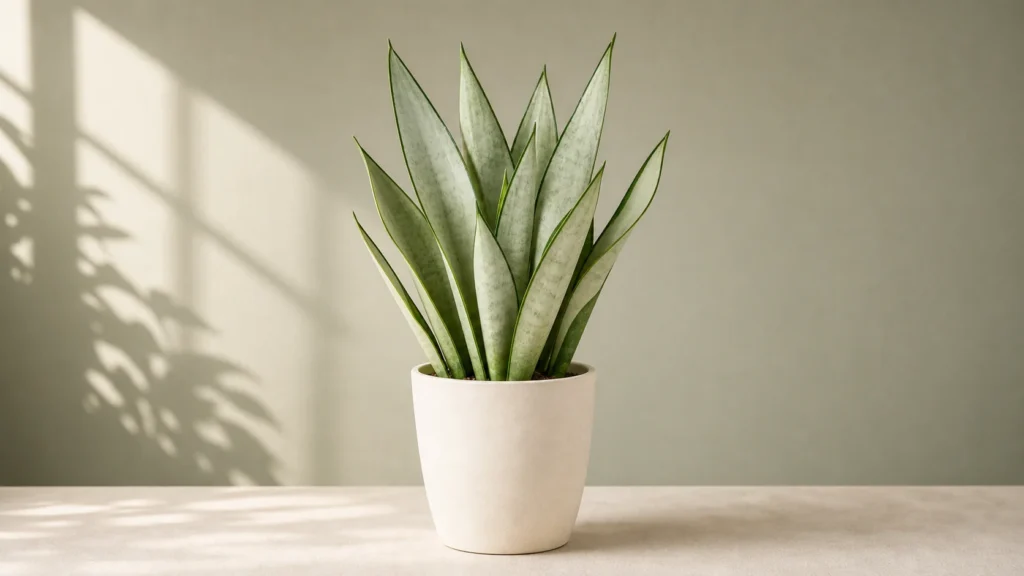
Snake Plant Moonshine
Dracaena trifasciata 'Moonshine'
A compact snake plant with smooth, silvery pale-green leaves and a matte sheen — the designer's snake plant, and one of the most striking easy-care houseplants.
Watering frequency
Every 2-4 weeks
Ideal temperature
60-85°F / 16-29°C
Humidity
30-50%
Care difficulty
Easy
Air purifying
Yes
Growth rate
Slow
Plant size
1-3 ft / 0.3-0.9 m
Soil type
Very well-draining cactus/succulent mix
Fertilizer need
Every 8-10 weeks, spring-summer.
Care summary
- Light: Brighter indirect light keeps the silver color; too dark turns it green.
- Water: Let soil dry fully; water sparingly, then drain.
- Soil: Cactus/succulent mix + drainage holes.
- Growth: Compact and slow; divide when crowded.
- Rule: When unsure, wait — Moonshine is rot-prone when overwatered.
- Safety: Not pet-safe; toxic if chewed.
Common problems
- Leaves turning dark green: not enough light — the silver color needs brighter indirect light.
- Soft, mushy leaf bases: overwatering; Moonshine rots faster than other snake plants.
- Wrinkled leaves: underwatered for too long.
- Drooping leaves: watering swings or very low light.
- Slow growth: normal, or the pot is too dark/cold.
Plant care guide
About Snake Plant Moonshine
Snake Plant 'Moonshine' (Dracaena trifasciata 'Moonshine') is a compact cultivar of the snake plant, grown for its smooth, pale, silver-green leaves with a soft matte sheen — the leaves look almost frosted, like moonlight on water. Kew's accepted species record confirms the current Dracaena trifasciata name and the older Sansevieria trifasciata synonym; NC State Extension's species profile adds practical horticultural context. Moonshine commonly stays shorter than tall forms, with broad upright leaves in a tight clump.
It shares its species with many familiar snake plant cultivars, though the common name also covers related Dracaena species. Its care follows the familiar broad principles: allow the mix to dry, provide drainage, and feed lightly. What sets Moonshine apart is its pale color, which is best maintained with brighter indirect light.
This page covers the cultivar specifically. A separate general Snake Plant guide may later cover the broader species-level light, watering, soil, propagation, and troubleshooting principles.
Why You'll Like It
Moonshine is the snake plant people choose for looks, not just toughness. The silvery, frosted color is genuinely unusual among easy-care houseplants, and the compact, architectural clump fits a desk, a shelf, or a bedside table without dominating the room. It reads as a design object, which is why it became so popular as a styling plant.
And it keeps the family's famous resilience: it tolerates low light, dry air, and missed waterings, and it needs attention only every couple of weeks. If you want the same family toughness with more height and classic yellow edges, the tall Snake Plant Laurentii is the traditional choice.
What Kind of Plant Is It?
Three traits explain how Moonshine behaves.
- It is a compact, rhizomatous succulent-leaved perennial. The pale leaves store water, and the underground rhizome produces new leaf fans, so the plant slowly spreads into a tidy clump that is easy to divide.
- Its silver color is light-dependent. The pale, frosted look is strongest in brighter indirect light. In low light the leaves produce more chlorophyll and turn darker green, losing the Moonshine character entirely.
- Its cultivar identity matters. Retail plants can be mislabeled, and color varies with light and maturity. Use the broad silver-green blade and compact upright habit together rather than relying on color alone.
Where It Works Best
Moonshine wants brighter light than the average snake plant. Give it bright indirect light — near an east or west window, or a few feet from a south window — and the silver color stays clean and even. In medium light it survives but slowly greens up; in a genuinely dark corner it loses its character and grows very slowly.
It suits bedrooms, living rooms, home offices, and shelves where its compact form can be seen. It tolerates dry air and temperature swings, but keep it away from freezing windows and cold drafts in winter. The low-light houseplants guide is a good reference for judging whether any room is bright enough.
How to Care for Snake Plant Moonshine
Watering: Let the soil dry out completely between waterings, then water thoroughly and let the excess drain. In a bright, warm room this may land around every 2-4 weeks in spring and summer, stretching to once a month or less in winter, but the potting mix is a better guide than the calendar. Like other snake plants, Moonshine is vulnerable to rot when the soil stays wet. The watering guide explains how to read soil moisture by feel.
Light: Bright indirect light keeps the silver color at its best. The plant tolerates medium light but turns progressively greener in darker spots. Avoid harsh direct afternoon sun, which can scorch the pale leaf surface.
Soil: Use a very well-draining cactus or succulent mix, or regular potting soil lightened with perlite or coarse sand. Drainage holes are non-negotiable — Moonshine is one of the first plants to rot in a waterlogged pot.
Temperature: Comfortable household temperatures of 60-85°F (16-29°C) suit it well. It tolerates cooler conditions but should not sit in cold drafts.
Humidity: Dry air is fine; do not mist it. Surface moisture in the leaf bases encourages rot rather than helping.
Fertilizer: Feed very lightly, every 8-10 weeks in spring and summer, with a balanced houseplant fertilizer at half strength. Skip feeding in winter; excess fertilizer on a slow-growing plant builds salts and browns the leaf tips.
How to Propagate
Division (most reliable): When the clump fills its pot, remove the plant, shake off the soil, and pull or cut apart the rhizome so each section has roots and at least one leaf fan. Pot each division in fresh cactus mix and keep it lightly moist for the first couple of weeks. Division reproduces the exact silver cultivar.
Leaf cuttings (slower, less predictable): Cut a healthy leaf into 3-4 inch sections, let the cut ends dry for a day or two, then insert them upright in damp mix. Roots and pups eventually form at the base, but the new plants can come back greener than the parent and are slower to establish. Divide if you want identical Moonshine plants.
When to Repot
Repot when the rhizome crowds the pot or roots push through the drainage holes — usually every 2-3 years, but judge by the plant. Move up one pot size, keep it on the shallow side, and use fresh fast-draining mix. Moonshine's clump is compact, so it rarely tips pots the way tall snake plants do; a standard proportioned pot works fine. The repotting guide covers the full process.
Keep the rhizome near its previous depth and do not bury leaf bases. A pot only slightly larger than the remaining roots dries more predictably than a large decorative planter. If using a cachepot, remove all hidden runoff after watering.
Seasonal Care
Spring is the best time for planned division or repotting. Resume very light fertilizer only when new growth appears, and move the plant gradually toward stronger filtered light so winter-grown leaves do not scorch.
During summer, brighter light and warmth may shorten dry-down, but the plant still stores water in thick leaves and rhizomes. Check at depth before watering. Protect an outdoor plant from repeated rain, harsh midday sun, and cool nights.
In autumn, reduce feeding as growth slows. During winter, maximize safe filtered light to preserve the pale color and keep roots away from cold glass. The center of the pot may remain moist far longer than in summer, so extend the watering interval according to actual conditions.
Choosing and Identifying Moonshine
Choose a plant with broad firm silver-green leaves, a stable crown, and no sour smell from the mix. New leaves may emerge lighter or show subtle banding before maturing. Color alone is not enough to identify an unlabeled plant, since nursery light and related cultivars can change appearance.
Inspect between tightly packed leaves for mealybugs, scale, and trapped water. A few dry scars are cosmetic; soft tissue spreading upward from the base is not. Quarantine a new plant and learn how its nursery substrate dries before following a standard schedule.
If the plant is healthy, allow it to acclimate before cosmetic repotting. If the rhizome is soft or the mix is persistently saturated, inspect promptly and remove clearly rotten tissue with clean tools.
Cleaning and Maintaining the Silver Color
Dust can dull the matte finish. Wipe each leaf gently with water and a soft cloth while supporting it from behind. Do not use oil or leaf-shine sprays, which can create an unnatural gloss and hide pests.
Give the plant medium to bright indirect light for its best pale tone, but accept that leaf color varies with age and conditions. Existing dark leaves will not bleach safely back to silver; judge improved placement by new growth. Rotate the pot gradually for a balanced clump.
Division is the safest way to keep the named cultivar. Leaf sections may root, but their offspring may not reproduce the parent color consistently, and they take much longer to form a presentable plant.
Toxicity and Pet Safety
Snake Plant Moonshine is not pet-safe. Like all snake plants, it contains saponins, and the ASPCA lists the plant as toxic to cats and dogs, with nausea, vomiting, and diarrhea among the clinical signs. Keep it out of reach of pets and small children.
If a pet chews the leaves, remove the plant from reach and contact your veterinarian or the ASPCA Animal Poison Control line. For pet-friendly homes wanting a similar silvery or architectural look, Ponytail Palm or Parlor Palm are non-toxic options.
Common Problems and Practical Fixes
- Leaves turning dark green: Not enough light — the silver color requires brighter indirect light. Move it to a brighter spot; new growth will come out pale again.
- Soft, mushy leaf bases: Overwatering or poor drainage causing rot — the most common Moonshine failure. Unpot, trim all dark mushy tissue, repot in fresh dry cactus mix, and water much less. If most of the rhizome is gone, save healthy leaf cuttings as a backup.
- Wrinkled leaves: Underwatered for too long, or roots too crowded. Water thoroughly; if the pot is full of roots, divide or repot.
- Drooping leaves: Watering swings or very low light. Steady the watering rhythm and move the plant brighter.
- Very slow growth: Normal for a snake plant, especially in a cool or dark spot. It is not a sign of trouble unless paired with other symptoms.
Frequently Asked Questions
Why is my Moonshine snake plant turning dark green?
It needs more light. The silver color is strongest in bright indirect light; in darker spots the leaves produce more chlorophyll and turn green. Move it brighter — new leaves will come in pale again.
Is Moonshine a different species of snake plant?
No. It is a cultivar of Dracaena trifasciata, the same species as all common snake plants — just selected for its silver-green color and compact form.
Why is my Moonshine getting soft and mushy at the base?
Overwatering. Moonshine's thinner leaves make it more rot-prone than other snake plants. Unpot, trim the dark mushy tissue, repot in fresh dry cactus mix, and let the soil dry fully between future waterings.
How much light does Snake Plant Moonshine need?
Brighter than the average snake plant: bright indirect light keeps the silver color. It tolerates medium light but greens up and slows down in dark corners.
Is Snake Plant Moonshine toxic to pets?
Yes. It contains saponins and is toxic to cats and dogs if chewed. Keep it out of reach.
How big does Moonshine get?
It is one of the more compact snake plants, typically 1-3 feet (0.3-0.9 m) tall, with broad leaves in a tight clump — a good fit for desks, shelves, and bedside tables.
Will a leaf cutting stay silver?
Not reliably. Cultivar traits may be lost or altered when propagated from leaf sections. Divide a rooted rhizome section with a growing fan when you want a plant that matches the parent.
Should I mist Moonshine?
No. Normal household humidity is adequate, and water trapped at the base can encourage rot. Use a damp cloth to remove dust instead.
Final Thought
Snake Plant Moonshine keeps all the toughness of the snake plant family and adds the one thing snake plants rarely have: a genuinely unusual color. The whole game is light — give it bright indirect light and the frosted silver stays, let it sit in a dark corner and it quietly turns into an ordinary green snake plant. Water it rarely, feed it less, and divide it when it crowds its pot, and Moonshine will sit on your desk looking like a small piece of moonlight for years.