White Spots on Houseplants: 5 Causes and How to Fix Each
White spots on your houseplant? Learn the five most common causes — powdery mildew, mealybugs, scale, mineral buildup, and edema — and how to diagnose and treat each one.
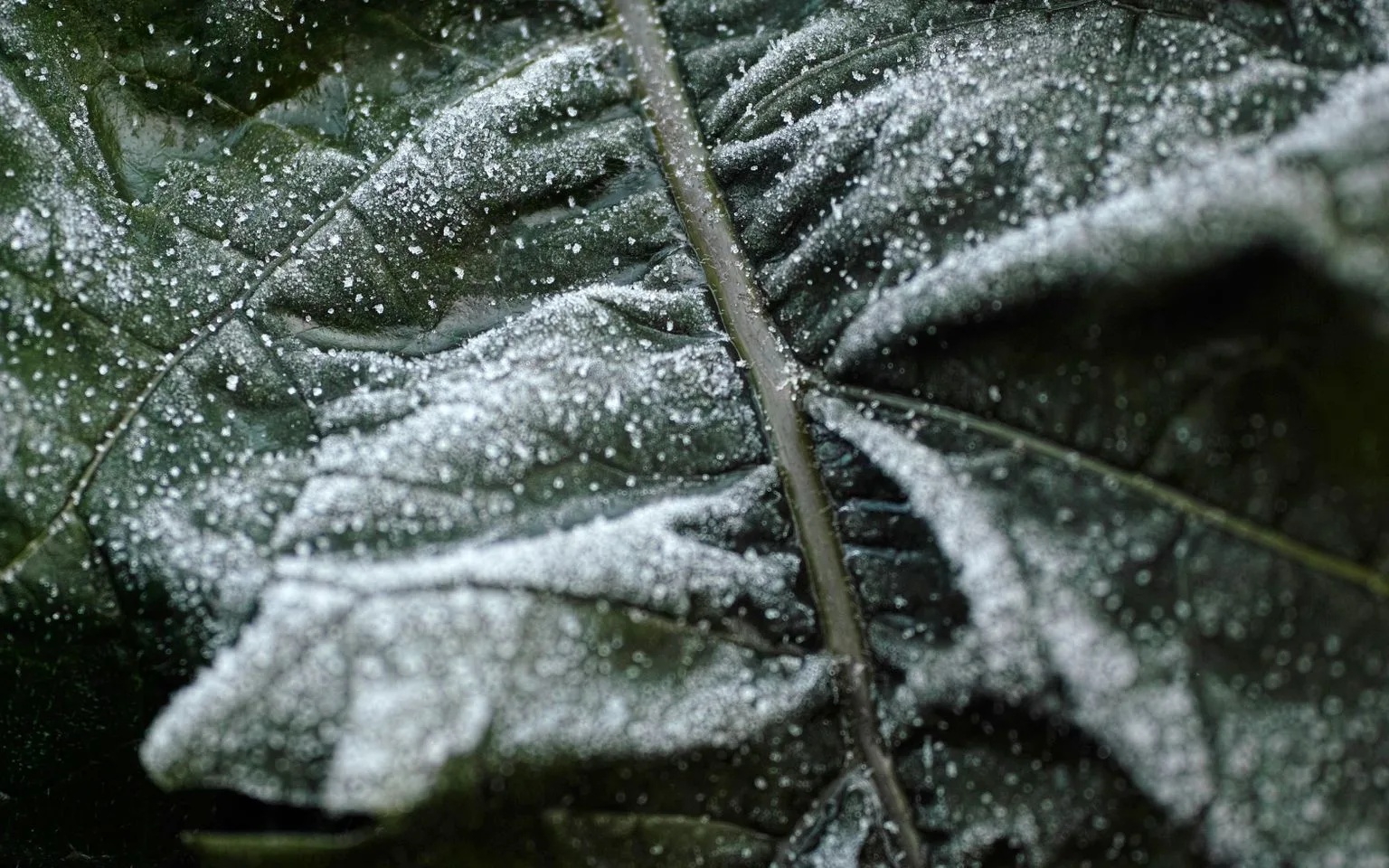
White spots appear on houseplants for five main reasons, and they are not interchangeable. A white powder means something completely different from a white cottony blob, which means something different again from a hard white crust on the soil surface. Treating the wrong cause wastes weeks — spraying a fungicide at mealybugs does nothing, and wiping mineral deposits off a leaf does nothing about the fungus underneath.
The good news is that each cause has a distinct look, a distinct location on the plant, and a simple test that confirms it within minutes. Here is how to identify which of the five you are dealing with, and exactly what to do about it.
Quick Diagnosis: Match the Spot to the Cause
Before diving into each cause, narrow things down with three observations: what the spot looks like, where it sits, and whether it wipes off.
| What you see | Where it is | Wipes off? | Likely cause |
|---|---|---|---|
| White powder, like flour dusted on the leaf | Upper leaf surface, spreading | Smears but returns | Powdery mildew |
| White cottony, fuzzy blobs | Leaf joints, stems, leaf undersides, stem crevices | Yes, and the bug underneath squashes | Mealybugs |
| Small hard bumps, white or tan | Stems and leaf midribs | Scrapes off with a fingernail | Scale insects |
| White or beige crusty film | Soil surface, pot rim, drainage hole, leaf tips | Flakes off, feels gritty | Mineral deposits |
| Small white or tan corky spots inside the leaf | Undersides of leaves, mainly succulents and peperomia | No — it is part of the leaf | Edema |
If the answer is still not obvious after this table, the alcohol swab test settles it: dip a cotton swab in 70 percent rubbing alcohol and touch it to one spot. Mealybugs and scale leave a dark smear; powdery mildew leaves a wet mark that dries and reforms; mineral deposits and edema do not react at all.
1. Powdery Mildew — The White Powder
Powdery mildew is a fungal disease that shows up as circular patches of white powder on the upper surface of leaves, looking like someone dusted the plant with flour. Unlike most fungi it does not need standing water to germinate — it thrives in moderate temperatures with high humidity and poor air circulation, which describes a crowded plant shelf in a humid room almost perfectly.
How to identify it: The powder sits on the leaf surface rather than inside the tissue. It starts as small isolated circles and spreads into patches that can merge across the leaf. Badly affected leaves may twist, yellow, or drop. It favors new, soft growth and the shaded interior of dense plants.
How to fix it:
- Isolate the plant immediately. Powdery mildew spreads readily between plants that sit close together.
- Remove and discard the worst-affected leaves. Do not compost them — bag and bin them.
- Improve airflow. Space plants apart, run a small fan on low, and prune dense growth so air moves through the plant.
- Treat with a fungicide labeled for powdery mildew on houseplants, or a baking soda solution (one teaspoon per liter of water with a drop of dish soap) as a gentler first pass. Spray both leaf surfaces and repeat weekly.
- Fix the environment, not just the leaf. Without better air movement, the mildew returns after every treatment — a detailed guide to powdery mildew from the University of Wisconsin horticulture program covers the conditions that trigger outbreaks in more depth.
Plants most affected: Begonia, rosemary, African violet, and squash-family plants overwintered indoors.
2. Mealybugs — The Cottony Blobs
If the white spots look like tiny clumps of cotton wool and they sit where the leaf meets the stem, in leaf axils, or along stems, you are looking at mealybugs — sap-feeding insects protected by a white waxy coating. They are mobile when small, which is why an infestation seems to appear on several plants at once.
How to identify it: Oval, segmented insects about 3 to 5 millimeters long, covered in white fluff, often with two short tail filaments. A cottony mass in a hidden crevice with no visible insect may be an egg sac — check the plant again in a week. Heavy infestations produce sticky honeydew on leaves below, and ants outdoors, though indoor plants rarely have the ant warning sign.
How to fix it:
- Dab each insect with a cotton swab dipped in 70 percent rubbing alcohol. The alcohol dissolves the waxy coating on contact. Large adults die visibly; repeat every few days for the hatchlings.
- Follow up with insecticidal soap or a 1 percent neem oil spray, coating stems and leaf undersides where crawlers hide.
- Check every plant within a meter. Mealybugs crawl between pots that touch, and they ride on your hands and watering can spouts.
- Persist for three to four weeks. A single adult surviving treatment restarts the colony — the full treatment calendar in our common houseplant pests guide covers how long each stage takes to eradicate.
3. Scale — The Hard Bumps
Scale insects are mealybugs' armored cousins. Instead of fluff, they grow a hard protective shell that sticks to stems and leaf veins. Young scale are pale and easy to miss; adults are tan, brown, or white bumps that look like part of the plant until you realize bumps do not belong on a stem in neat rows.
How to identify it: Scrape a bump with a fingernail. If it pops off and leaves a clean spot — and sometimes a squashed insect smell — it is scale, not a disease or natural marking. Like mealybugs, scale excretes sticky honeydew, so leaves below the infestation feel tacky or develop black sooty mold.
How to fix it:
- Physically remove adults with a fingernail, an old toothbrush, or an alcohol-dampened cotton pad. The shell protects them from sprays, so removal matters more than the spray.
- Treat crawlers — the newly hatched, unprotected stage — with insecticidal soap or neem oil every seven to ten days for a month.
- Prune heavily infested stems entirely. Scale concentrates on woody stems and the leaf midribs of tough plants like ficus, citrus, and orchids.
- Identifying scale early is the whole game. The photo comparisons and life-cycle timing in our pest identification guide make it easier to catch the crawler stage before the armor forms.
4. Mineral Deposits — The White Crust
Not every white spot is alive. If your tap water is hard, every watering deposits small amounts of dissolved calcium and magnesium salts. On leaves, misting and splashing leave white pinpoint spots that dry in place. On soil, the salts accumulate into a white or beige crust on the surface and around the drainage holes and pot rim. Fertilizer adds to the same buildup.
How to identify it: The spots are dry, gritty, and flake when scratched. They appear on the leaf surface wherever water evaporated, and on ceramic pots as a white tide line. There is no insect, no powder texture, and no reaction to alcohol. The leaf tissue underneath stays healthy and green — this is a deposit problem, not a plant disease.
How to fix it:
- Wipe leaves with a soft cloth dampened with a 1:1 water and vinegar solution, then rinse with plain water. The mild acid dissolves the calcium carbonate.
- Scrape the crust off the soil surface and replace the top two centimeters with fresh potting mix.
- Switch to filtered, distilled, or rainwater for misting and watering if your tap water is very hard. This single change prevents most recurring leaf spotting.
- Flush the pot every two to three months: run room-temperature water through the soil for several minutes and let it drain freely, carrying accumulated salts out of the root zone.
- Heavy salt buildup does more than leave spots — it burns root tips and produces the crispy leaf edges covered in our brown tips guide. If you see both white crust and brown tips on the same plant, salt accumulation is almost certainly the shared cause.
5. Edema — Spots From Inside the Leaf
Edema (sometimes spelled oedema) produces white, tan, or rust-colored corky spots that develop within the leaf tissue itself, most often on the undersides of leaves. It happens when the roots take up water faster than the leaves can transpire it — usually on a warm, humid, overcast day after a thorough watering — and leaf cells burst from the internal pressure, then scar over as they dry.
How to identify it: The spots are slightly raised, feel rough or corky to the touch, sit flush within the leaf rather than on top of it, and cannot be wiped or scraped away. They appear in irregular clusters on lower leaf surfaces and sometimes on stems. The rest of the plant looks otherwise healthy.
How to fix it:
- Nothing removes existing spots — they are scars, and the leaf carries them for life. Management is about preventing new ones.
- Water in the morning so leaves transpire freely through the day, rather than in the evening before humid nights.
- Improve airflow and reduce watering frequency in humid, low-light periods — exactly the seasons when growth slows and the plant uses less water. Our guide to watering houseplants covers how to adjust routine to seasons instead of the calendar.
- Space plants so air moves between pots. Stagnant humid air is the trigger; a small fan on low prevents it.
Plants most affected: Peperomia, jade plant and other succulents, geranium, and ivy — thick-leaved plants that transpire slowly.
How to Stop White Spots From Coming Back
Almost every cause on this list traces back to the same three conditions: crowded plants, still air, and water hanging around longer than the plant can use it. Whether the white spots came from fungus, insects, or tap water, the prevention checklist is short.
- Quarantine new plants for two weeks. Mealybugs and scale almost always arrive on new purchases.
- Space plants for airflow. Touching leaves create highways for crawlers and pockets of humid still air for mildew.
- Water the soil, not the plant. Wet foliage invites foliar problems, and hard-water droplets leave mineral spots where they dry.
- Check plants weekly. Run the alcohol swab test the moment anything white appears — a cause identified in week one takes days to fix; the same cause in week four takes a month.
Frequently Asked Questions
Are white spots on houseplants dangerous to humans?
No. None of the five causes — mildew, mealybugs, scale, mineral deposits, or edema — pose a health risk to people. Wash your hands after handling infested plants and keep fungicides and alcohol out of reach of children and pets, but the spots themselves are harmless to touch.
Can a plant recover from powdery mildew?
Yes. Powdery mildew infects leaf surfaces rather than the plant's vascular system, so once the affected leaves are removed and airflow improves, new growth emerges clean. Existing spotted leaves stay spotted, so recovery is judged by new growth, not by old leaves clearing.
Do mealybugs live in the soil?
Some species do. The long-tailed mealybug stays on foliage, but the obscure and root mealybugs live in the root zone. If a plant is reinfested repeatedly after thorough leaf treatment, unpot it and check the roots for white cottony clusters, then drench the soil with an insecticide labeled for soil application.
Why do white spots only appear on certain leaves?
Location narrows the cause. Spots on the upper surface facing the light suggest mildew or mineral deposits from misting; spots in leaf joints and crevices point to mealybugs; spots on stems and thick veins point to scale; spots on the lower surface of thick leaves point to edema.
Spot It Early, Fix It Cheaply
White spots are one of the most solvable houseplant problems — every cause has a visible signature and a direct treatment. The difference between a five-minute fix and a lost plant is almost always how long the spots went unexamined. A weekly thirty-second inspection of leaf joints, stems, and new growth catches all five causes at the stage where they are easiest to treat.
Want plants that fit the conditions you actually have — and your tolerance for inspection routines? Try the House Plant Finder quiz to discover indoor plants matched to your real environment and care style.