Why Are My Houseplant Leaves Curling? 7 Causes and Fixes
Are your houseplant leaves curling up or down? Learn the 7 most common causes — from low humidity to pests — and exactly how to diagnose and fix each one.
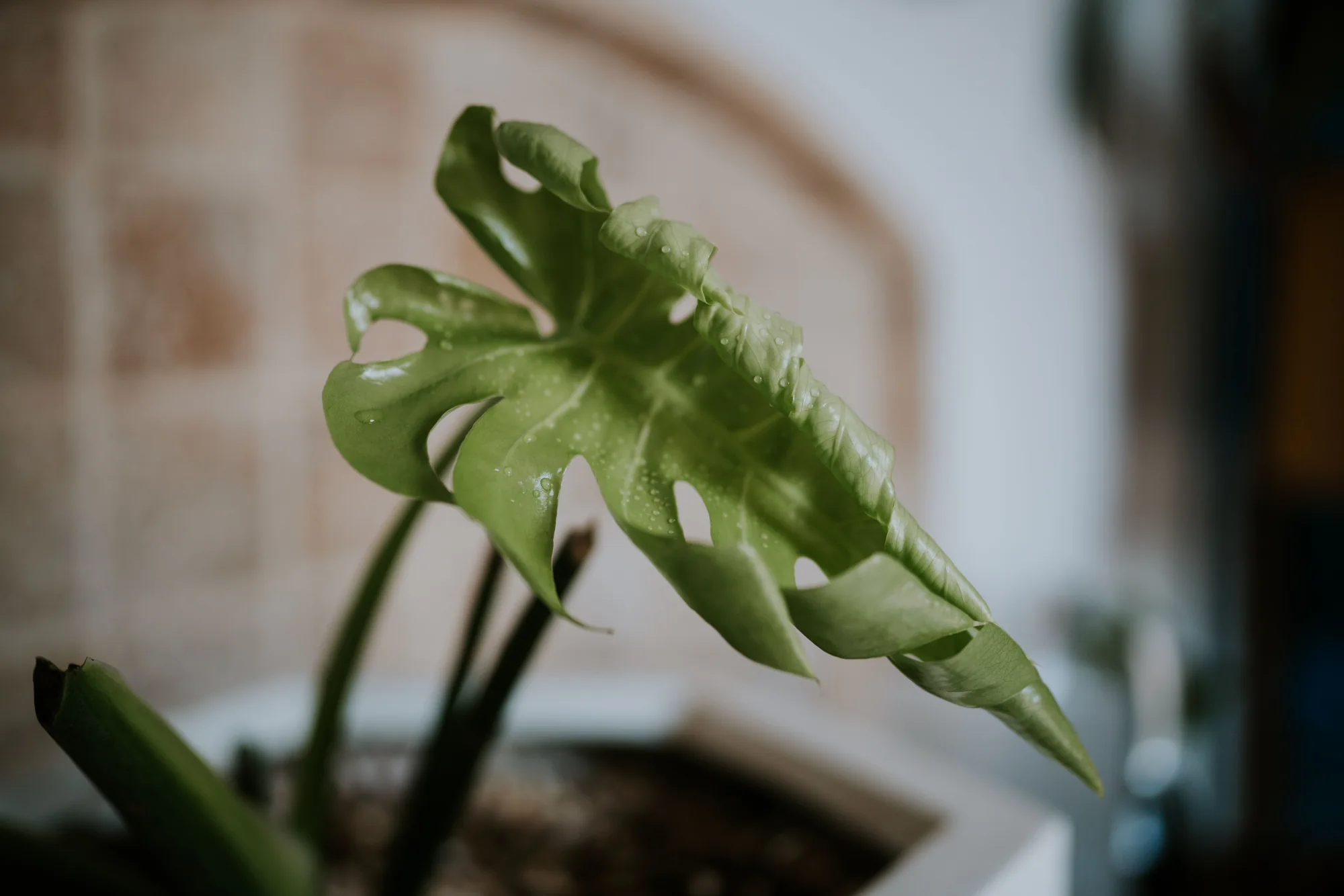
Curling leaves mean the plant is under stress. By shrinking its exposed surface, the plant conserves water until conditions improve. Unlike yellowing or browning — signs of damage already done — curling is an early warning. Catch it here, and you can usually fix the problem before lasting damage occurs.
The direction of the curl matters. Leaves curling upward suggest different causes than leaves curling downward or inward. Here are all seven common causes, how to match the curl pattern to the likely problem, and what to do for each.
What Leaf Curling Looks Like
— and Why Direction Matters
Curling leaves are not random. The plant is responding to a specific stressor, and the way the leaf curls provides a clue about what that stressor is.
Curling upward or cupping — the leaf edges turn up toward the center, creating a cup or bowl shape. This is often a response to too much light, heat, or underwatering. The plant is trying to reduce the surface area exposed to the sun.
Curling downward or drooping — the leaf tips and edges bend down toward the soil. This usually points to overwatering, nutrient issues, or root problems.
Curling inward or rolling tightly — the leaf rolls in on itself from the edges, sometimes forming a tight tube. This is most commonly associated with low humidity or pest damage, especially on new growth.
Use this pattern as a starting point, not a definitive answer. Always check the soil, the plant’s environment, and the leaves themselves before concluding. Here is a quick diagnostic table to narrow down your search.
| Curl Pattern | Most Likely Causes |
|---|---|
| Upward / cupping | Too much light or heat, underwatering |
| Downward / drooping | Overwatering, nutrient deficiency, root problems |
| Inward / tight roll | Low humidity, pests (especially on new leaves) |
1. Low Humidity — The Most Common Cause
If your plant’s leaves are curling inward from the edges and you have not changed your watering routine, low humidity is the most likely explanation. This is especially common in winter, when indoor heating dries the air significantly.
Plants most affected: Calathea, Maranta (Prayer Plant), Stromanthe, Ferns, Alocasia, and Anthurium. These plants evolved in tropical environments with humidity levels of 60 percent or higher, far above the typical indoor range of 30 to 40 percent.
How to identify it: Leaves curl inward from the edges, sometimes tightly rolling. The tips and edges may also be brown and crispy — our brown tips guide covers that symptom in detail. The curling is gradual and affects multiple leaves at once rather than one or two isolated leaves.
How to fix it: Increase humidity around the plant. Our complete humidity guide covers seven methods ranked by effectiveness, from grouping plants together to using a humidifier. For immediate relief, move the plant to a bathroom or kitchen where humidity is naturally higher, or place it on a pebble tray filled with water — the evaporating water raises local humidity as it disperses.
What matters as much as the humidity number itself is consistency. Plants that experience large swings — dry air during the day, a brief misting, and then dry again — are more stressed than plants in consistently moderate humidity.
2. Underwatering or Irregular Watering
When a plant does not receive enough water, or when the watering schedule is highly inconsistent, leaves curl to reduce water loss through transpiration. This is the plant’s survival mechanism — it is trying to hold onto whatever moisture it has.
How to identify it: The soil is bone-dry. The pot feels light. Leaves curl upward or inward and feel dry and papery to the touch. In severe cases, the soil may have pulled away from the edges of the pot, creating a visible gap. The curling may worsen progressively over days, not suddenly overnight.
How to fix it: Bottom-water the plant by placing the pot in a shallow tray of room-temperature water for 20 to 30 minutes. This allows the soil to rehydrate fully and evenly. Top-watering sometimes fails when soil has dried completely because the water runs through without absorbing.
After rehydrating, establish a consistent watering routine based on soil moisture rather than a calendar. Our guide to watering houseplants explains how. If you are unsure whether you are dealing with overwatering or underwatering, our side-by-side comparison guide will help you tell them apart.
3. Too Much Light or Heat
When leaves are exposed to more light or heat than they can handle, they curl upward into a cup shape. This reduces the amount of leaf surface area directly facing the light source. It is the botanical equivalent of squinting.
How to identify it: Leaves curl upward or cup. You may also see bleached, scorched, or brown patches on the leaves that face the window. The plant is in direct sun, especially during the harsh afternoon hours. The soil may be appropriately moist — the problem is above the soil, not below it.
How to fix it: Move the plant away from direct sun. A sheer curtain between the plant and the window diffuses the light enough to prevent leaf curling while still providing brightness. Most common houseplants prefer bright indirect light — they want to see the sky but not feel direct sun on their leaves.
Some plants — notably Calathea and Prayer Plants — curl their leaves even in what seems like moderate light. These are understory plants in nature, adapted to life in deep shade. If yours is curling near a window, move it further into the room where light is lower and see if the curling reverses within a few days. Our guide to houseplant light requirements covers how to read the light in your home.
4. Pest Damage
Pests feed on plant sap, and the damage they cause often shows up as curling or distortion, especially on new growth. The pattern can help you identify the pest.
Spider Mites
Spider mites are tiny — nearly invisible to the naked eye — but their damage is distinctive. Leaves develop a stippled, dusty, or speckled yellow appearance. Fine webbing appears between stems and on the undersides of leaves. Affected leaves curl and eventually dry out.
How to fix it: Isolate the plant immediately. Wipe down every leaf with a damp cloth. Spray with insecticidal soap or neem oil, making sure to coat the undersides of leaves where mites cluster. Repeat treatment every 5 to 7 days for at least three weeks to catch emerging eggs.
Thrips
Thrips cause silvery or bronze streaks on leaves, often with tiny black specks of frass. New leaves emerge curled, distorted, or scarred before they fully unfurl. Thrips are slender and fast-moving — you may see them if you gently shake a leaf over a white piece of paper.
How to fix it: Thrips are persistent. Isolate the plant and treat with insecticidal soap or spinosad-based spray. Blue sticky traps help monitor and reduce adult populations. Because thrips lay eggs inside leaf tissue, repeat treatments are essential.
Aphids
Aphids cluster on new growth — stems, buds, and unfurling leaves — where they feed on sap. Leaves curl and pucker around the feeding site. You may notice a sticky residue called honeydew on the leaves or surrounding surfaces.
How to fix it: Aphids are relatively easy to control. Wipe them off with a damp cloth or spray them off with a gentle stream of water in the sink or shower. For persistent infestations, insecticidal soap is effective. Check your plant weekly — aphids reproduce quickly.
A simple habit that prevents most pest introductions: inspect every new plant thoroughly and quarantine it for two to three weeks before placing it near your existing collection.
5. Nutrient Deficiency or Overfertilizing
Nutrient problems can cause curling at both extremes. Too little nutrition and leaves curl while turning pale or yellow. Too much fertilizer and leaves curl while developing brown, crispy edges — this is fertilizer burn.
How to identify deficiency: Leaves curl and turn pale, light green, or yellowish. Growth slows noticeably. New leaves are smaller than older ones. The plant has been in the same soil for more than a year without fertilizer.
How to identify overfertilizing: Leaves curl and develop brown, crispy edges or tips. A white crust may be visible on the soil surface — this is accumulated fertilizer salts. The plant may wilt even though the soil is moist. Symptoms appear shortly after a fertilizer application.
How to fix it: For deficiency, begin a light fertilizing routine during the growing season. A balanced liquid fertilizer diluted to half strength, applied every two to four weeks during spring and summer, is sufficient for most houseplants. Our fertilizing guide has the details.
For overfertilizing, flush the soil by running water through the pot for several minutes, allowing it to drain freely. This leaches excess salts out of the soil. Hold off fertilizing for at least two to three months. In severe cases, repot into fresh soil. There is a well-established pattern of overfertilizing causing more damage than under-fertilizing — when in doubt, use less, not more.
6. Temperature Stress
Sudden temperature changes cause leaves to curl as a shock response. This is usually acute — the curling starts within hours of the temperature event — and affects multiple leaves simultaneously.
How to identify it: The curling started suddenly after a cold draft, a night near a poorly insulated window, placement near an air conditioning vent, or a heat wave. Leaves may curl in any direction — the pattern is less diagnostic than the timing.
How to fix it: Move the plant to a location with stable temperatures between 18 and 26 degrees Celsius. Keep it away from cold windows in winter, especially at night. Pull it back from air conditioning vents and at least a meter from radiators. Most plants recover within a few days once the temperature stabilizes.
7. Root Problems
Root issues — whether root rot from overwatering or being root bound from overcrowding — can cause leaf curling because the roots cannot function properly. Without healthy roots, the plant cannot absorb water or nutrients effectively, and the leaves show the stress.
How to identify root rot: The soil has been consistently wet. Yellowing and curling occur together — often the lower leaves yellow while upper leaves curl. Stems may feel soft at the base. Remove the plant from its pot to check: healthy roots are firm and white or tan; rotting roots are brown, mushy, and may smell. Our root rot guide covers diagnosis and treatment in detail.
How to identify root bound: Roots are visible at the drainage holes. Water runs straight through the pot. The plant dries out within a day. When you remove the plant from the pot, roots circle tightly around the inside with little visible soil. Our repotting guide walks through the fix.
How to Diagnose Curling Leaves Step by Step
If your plant’s leaves are curling and you do not know where to start, work through these steps in order:
Identify the curl pattern. Are the leaves curling up, down, or inward? This narrows your search to two or three likely causes.
Check the soil moisture. Dry soil points to underwatering. Wet or soggy soil points to overwatering or root rot. Soil moisture rules out or confirms watering issues immediately.
Inspect the leaves and stems for pests. Look closely at the undersides of leaves. Check for webbing, speckling, sticky residue, or visible insects. Pay special attention to new growth, which pests target first.
Assess the plant’s location. Is it in direct sun? Near a draft or vent? Has it been in the same spot for months? Location points to light, temperature, or humidity issues.
Check the roots if nothing above explains it. Remove the plant from the pot and inspect the roots for rot or crowding. Root problems are less common than the causes above but are worth checking when other explanations have been ruled out.
FAQ
Why are my plant leaves curling upward?
Leaves that curl or cup upward are usually responding to too much light, too much heat, or underwatering. Check the plant’s location and the soil moisture. If the soil is dry, water thoroughly. If the soil is moist but the plant is in direct sun, move it to a spot with bright indirect light.
Can curling leaves recover and uncurl?
Yes, in most cases. Once you fix the underlying cause, new growth will emerge healthy and flat. Severely curled older leaves may not fully uncurl, but they will not get worse. If the leaf is green and otherwise healthy, leave it on the plant — it still photosynthesizes. Trim leaves only if they are fully brown, crispy, or dead.
Why are my new leaves curling?
New leaves that curl as they unfurl — especially if they emerge distorted, scarred, or with brown edges — often point to pest damage or low humidity. Thrips and aphids target tender new growth. Low humidity causes new leaves to curl and dry at the edges before they fully expand. Check for pests first, then assess humidity.
Which houseplants are most prone to leaf curling?
Plants that need high humidity are the most curl-prone: Calathea, Maranta (Prayer Plant), Stromanthe, Ferns, Alocasia, and Anthurium. These plants evolved in humid tropical environments and are the first to show stress when indoor air is dry. If you struggle with curling on these species, a humidifier is often the most effective long-term solution.
Do curling leaves mean my plant is dying?
Not usually. Curling is an early stress signal, not a death sentence. A plant with curling leaves is communicating a problem, not shutting down. Most causes of curling are reversible, and plants recover well once the stressor is addressed. The key is acting before the curling progresses to browning, yellowing, or leaf drop.
Catch It Before It Gets Worse
Leaves curl before they yellow. Unlike yellowing or leaf drop — which happen after the damage is done — curling means the plant is under stress right now. Catch it here and you can usually fix it before anything permanent happens.
Start with the curl pattern, check the soil, inspect for pests, look at the light and temperature. One of these will point to the answer, and in most cases, the fix is simple.
Want plants that can handle your home’s actual humidity and light? Try the House Plant Finder quiz to discover indoor plants matched to your real environment.