
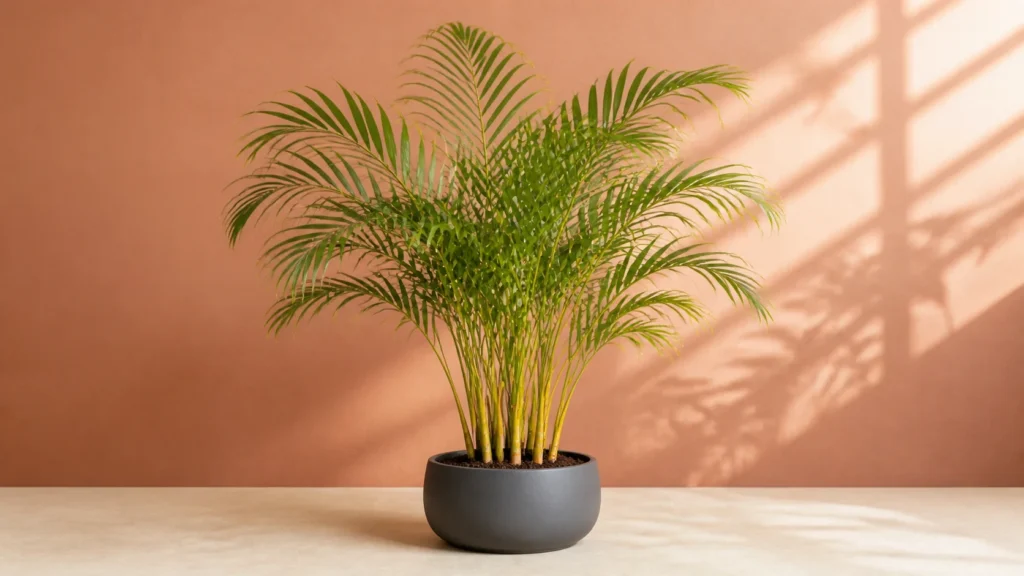
Areca Palm
Chrysalidocarpus lutescens
A graceful, feathery palm for bright rooms; the ASPCA lists it as non-toxic to cats and dogs.
Watering frequency
Every 7-10 days
Ideal temperature
65-80°F / 18-27°C
Humidity
50-70%
Care difficulty
Medium
Air purifying
Yes
Growth rate
Moderate
Plant size
5-8 ft / 1.5-2.4 m indoors
Soil type
Light, well-draining potting mix with perlite or bark
Fertilizer need
Monthly, spring-summer.
Care summary
- Light: Bright indirect light; a few hours of gentle morning sun is fine.
- Water: Keep the soil lightly moist; allow the top inch to dry between waterings.
- Humidity: Enjoys humid air; brown tips appear when the room is too dry.
- Soil: Use a light, fast-draining mix and a pot with drainage holes.
- Growth: Moderate; grows slowly in lower light.
- Safety: Pet-safe; non-toxic to cats, dogs, and horses.
Common problems
- Brown leaf tips: low humidity, tap-water minerals, or irregular watering.
- Yellowing lower fronds: normal aging, or too little light.
- Pale, slow growth: not enough light.
- Spider mites: fine webbing in hot, dry air.
- Root rot: soil kept constantly wet.
Plant care guide
About Areca Palm
The Areca Palm (Chrysalidocarpus lutescens, long known as Dypsis lutescens) is a clumping palm from Madagascar with arching, feathery fronds and stems that glow yellow-green in bright light. The NC State Extension profile — which now lists the plant under its accepted name, Chrysalidocarpus lutescens — describes it as a multi-stemmed palm with cane-like trunks and pinnate leaves, commonly called golden cane palm or butterfly palm.
The name change trips up shoppers: most nurseries still tag it Dypsis lutescens, while botanical databases and extension services have moved to Chrysalidocarpus lutescens. They are the same plant. It is often sold in clusters of several stems in one pot, which gives it the full, bushy silhouette people buy it for.
The Areca Palm has been an indoor staple for well over a century. Victorian conservatories prized feather-leaved palms, and the group reached a mass audience in the 1970s and 1980s, when palm-filled interiors became a shorthand for tropical modernism. The common name "butterfly palm" comes from the way the leaflets flutter at the tips of the fronds; "golden cane palm" refers to the yellow-green of the young stems. It remains one of the best-selling indoor palms worldwide, sold everywhere from small tabletop pots to room-filling floor specimens.
Why You'll Like It
Areca Palm delivers the tropical look without the drama of some other palms. Its fronds arch outward like feathers, catching light and adding softness to a room in a way few plants match. It is also one of the few genuinely pet-safe statement plants — non-toxic to cats and dogs — which makes it a rare find for households with curious animals.
It is a forgiving plant in most ways, but it is not a beginner's plant: it asks for consistent moisture and humidity, and it will tell you loudly — with brown tips — when the air is too dry. Get those two things right, though, and it rewards you with steady, elegant growth. If you want a palm that tolerates more neglect and lower light, Parlor Palm or Kentia Palm are tougher cousins; if you want something that shrugs off drought, Ponytail Palm is not a true palm but far more forgiving.
What Kind of Plant Is It?
Three traits define how Areca Palm behaves indoors.
- It is a clumping palm, not a single-trunked tree. Several stems grow from the base and new shoots keep appearing, which is why the plant looks full and why dividing an overgrown pot is possible.
- It is a humidity lover. Native to a humid island climate, it responds to dry indoor air with brown leaf tips — its most common complaint by far.
- It has modest roots for its size. Palms in this group dislike being disturbed and prefer slightly snug pots, so repot rarely and gently.
Where It Works Best
Place it in a bright room with indirect light — a few feet back from an east or west window, or near a north window with supplemental brightness. It can take a couple of hours of gentle morning sun, but harsh afternoon sun through glass will bleach the fronds.
It performs best in rooms with higher humidity: a bright bathroom, a kitchen with good light, or a living space where you run a humidifier. Avoid putting it in the direct path of an air conditioner or heater vent — both dry the air and stress the fronds.
How to Care for Areca Palm
Watering: Keep the soil lightly and evenly moist during the growing season, watering when the top inch or two dries out — often every 7-10 days in a bright, warm room. Never let the pot sit in standing water, and do not let it dry out completely for long stretches; both extremes cause browning. In winter, water less but do not let the root ball go bone dry. The watering guide explains how to feel for the right moment instead of counting days.
Light: Bright indirect light is ideal. In medium light the palm survives but grows slowly and may stretch; in low light it declines. If your room is dim, this is the wrong palm — Parlor Palm handles shade far better.
Soil: Use a light, fast-draining mix — standard potting soil amended with perlite or orchid bark. Drainage holes are non-negotiable; palm roots rot quickly in waterlogged soil.
Temperature: Comfortable household temperatures of 65-80°F (18-27°C) suit it well. Avoid cold drafts and keep it away from windows that drop below about 55°F (13°C) in winter.
Humidity: Areca Palm is one of the first plants to complain about dry air. Brown tips are its signal. Raise humidity with a humidifier, a pebble tray, or by grouping it with other plants; the humidity guide covers the practical options. This single step fixes most Areca Palm complaints.
Fertilizer: Feed monthly in spring and summer with a balanced fertilizer at half strength. Palms are sensitive to salt buildup, which itself causes brown tips — flush the soil with clean water a few times a year and feed lightly. Mineral buildup in tap water is a common cause of brown tips, so filtered or rainwater is a genuinely better choice if your tap water is hard.
Seasonal adjustment: Growth slows in winter. Water less frequently, stop feeding, and keep the room warm enough — this palm dislikes both cold and the extreme dryness of heating season.
Cleaning and grooming: Palms collect dust, and dusty fronds look dull while photosynthesizing less efficiently. Wipe the leaflets occasionally with a damp cloth, or rinse the whole plant in the shower on a warm day and let it drip dry. Brown fronds and brown tips will never recover, so cutting them back at the stem keeps the plant looking clean — but prune only fully dead material, because healthy green fronds are the plant's energy supply.
How to Propagate
Areca Palms are grown from seed by nurseries, which makes home propagation impractical — the seeds are slow and unreliable for most growers. The realistic approach for a potted plant is division: when a large clump fills its pot, you can carefully separate it into two smaller clusters, each with several stems and a share of roots. Palms dislike root disturbance, so only attempt this on a vigorous plant in spring, and expect some stress and browning afterward as it recovers.
When to Repot
Repot only when necessary — every two to three years at most, and only when roots visibly fill the pot. Move up just one pot size and use fresh, well-draining mix. Handle the root ball gently, keep it at the same depth, and water lightly for the first week. Overpotting a palm is a common mistake: too much soil holds too much water, and the roots rot. The repotting guide walks through the technique.
Toxicity and Pet Safety
Areca Palm is pet-safe. The ASPCA lists it as non-toxic to cats, dogs, and horses (listed under its former name, Dypsis lutescens). That said, chewing on any plant can cause mild stomach upset, so a persistent plant-chewer should still be supervised. The fronds can also accumulate dust — wiping them occasionally keeps the plant healthy and the room cleaner.
Common Problems and Practical Fixes
- Brown leaf tips (the number-one complaint): Usually low humidity, hard-water minerals, or irregular watering. Raise humidity first, then switch to filtered water if your tap is hard, and smooth out your watering schedule. Tips that are already brown will not turn green — trim them if you like, but fix the cause or the problem returns. The brown tips guide helps you sort through the causes.
- Yellowing lower fronds: The oldest fronds yellow and die as part of normal aging — cutting them off at the base is fine. If many fronds yellow at once, check for overwatering or too little light.
- Pale, stretched growth: Not enough light. Move the palm closer to a window.
- Spider mites: Fine webbing and stippled fronds in hot, dry air. Rinse the palm, raise humidity, and treat with insecticidal soap weekly. See the pest guide for the full routine.
- Root rot: Soft, brown stems or a foul smell from the soil mean the pot has stayed wet too long. Unpot, trim dark mushy roots, and repot in fresh dry mix with better drainage.
- Fronds turning pale yellow-green overall: Often a light or nitrogen problem rather than a disease — move the palm to brighter indirect light and feed at half strength during the growing season.
Frequently Asked Questions
Why does my areca palm have brown tips?
Almost always low humidity, hard tap water, or inconsistent watering. Raise the humidity around the plant, use filtered water if your tap is hard, and water on a steadier schedule. Brown tips do not heal, but new growth will stay clean once the cause is fixed.
Is an areca palm good for beginners?
It is a step up from beginner plants because it needs consistent moisture and humidity. If you want the palm look with more tolerance for neglect, choose a Parlor Palm or Kentia Palm instead.
Is areca palm safe for cats and dogs?
Yes — the ASPCA lists it as non-toxic to cats, dogs, and horses, which makes it one of the best pet-safe statement plants. The pet-safe houseplants guide has more options for animal-friendly homes.
How much light does an areca palm need?
Bright indirect light is best. It can handle a couple of hours of gentle morning sun but not harsh afternoon sun through glass. Low light causes slow, pale growth.
Why is my areca palm dying?
The usual causes are overwatering (root rot, soft stems), underwatering plus dry air (massive browning), or a spot that is too dark. Check the roots first — if they are dark and mushy, the pot has stayed too wet; if the soil is bone dry and the air arid, the plant has simply been starved of both water and humidity.
Can areca palm really clean the air?
The Areca Palm was one of the plants in NASA's 1989 Clean Air Study, which found it absorbed certain volatile organic compounds in sealed test chambers. Real rooms move far more air than a sealed chamber, so a single palm will not purify a living space on its own — treat it as a pleasant, low-risk extra rather than a reason to buy more plants, and rely on ventilation for the actual work.
Why are the tips brown but the rest of the leaf green?
Brown tips with healthy green tissue point to one of three things: dry air, minerals in tap water (especially fluoride and chlorine), or salt buildup from fertilizer. All three hit the leaf margins first. Fix the air and the water, flush the soil occasionally, and new growth will come in clean.
How often should I water an areca palm?
In a bright, warm room, every 7-10 days is a reasonable starting rhythm — but always check the soil first and water when the top inch or two is dry. In winter, stretch the interval. Consistency matters more than the exact number of days.
Why is my areca palm drooping?
Drooping fronds usually mean the plant is thirsty — water thoroughly and the fronds firm up within hours. If they stay limp, check the roots: a pot that has stayed soggy rots them, which also makes the plant droop, and that version does not recover as easily.
Should I mist my areca palm?
Misting gives temporary relief but does not change room humidity meaningfully — a humidifier or pebble tray does. If you do mist, do it in the morning so the fronds dry before evening; palms dislike standing water on the leaves overnight.
Final Thought
The Areca Palm trades some of the toughness of drought-tolerant houseplants for a soft, feathery appearance, and the ASPCA lists it as non-toxic to cats and dogs. Keep the soil lightly and consistently moist without leaving it waterlogged, prevent prolonged dry air, and give it bright indirect light. Those habits help the fronds stay clean and green while keeping the safety claim tied to the identified species.