How to Clean Houseplant Leaves: Methods, Tools, and Which Plants to Never Spray
Choose safe cleaning methods for smooth, fuzzy, or crowded houseplant leaves while improving light exposure and spotting pests early.
If you have not cleaned your houseplant leaves in a while, you are not alone. Dust accumulates slowly, and since most people do not inspect the tops of their plant leaves daily, it builds up over months until it is thick enough to see from across the room.
That dust layer is not just cosmetic. It blocks light, which directly reduces photosynthesis. A plant covered in dust is effectively living in a shadier spot than you placed it in. Dust also creates a habitat for spider mites and other pests, which thrive in dry, dusty conditions and are much harder to spot on a dusty leaf.
Here is why cleaning matters, the three methods that actually work, and the critical exceptions — plants that should never get their leaves wet.
Why You Need to Clean Houseplant Leaves
Light and Photosynthesis
Dust on a leaf surface scatters and absorbs light before it reaches the chloroplasts underneath. Research on crop plants has shown that even a thin dust film can reduce photosynthetic efficiency by 10% or more. For a houseplant already struggling with low indoor light, that 10% can be the difference between healthy growth and stagnation.
Early Pest Detection
Cleaning forces you to handle every leaf, which means you are far more likely to notice the early signs of pest infestation — a few webbing strands from spider mites, a single cottony mealybug, or the first scale insect — before they become a full-blown problem. See our common houseplant pests guide for what to look for.
Stomata Function
Leaves breathe through tiny pores called stomata, which are mostly on the undersides of leaves. Heavy dust can partially block these pores, reducing the plant’s ability to exchange gases. Cleaning the undersides is just as important as cleaning the tops.
Three Cleaning Methods
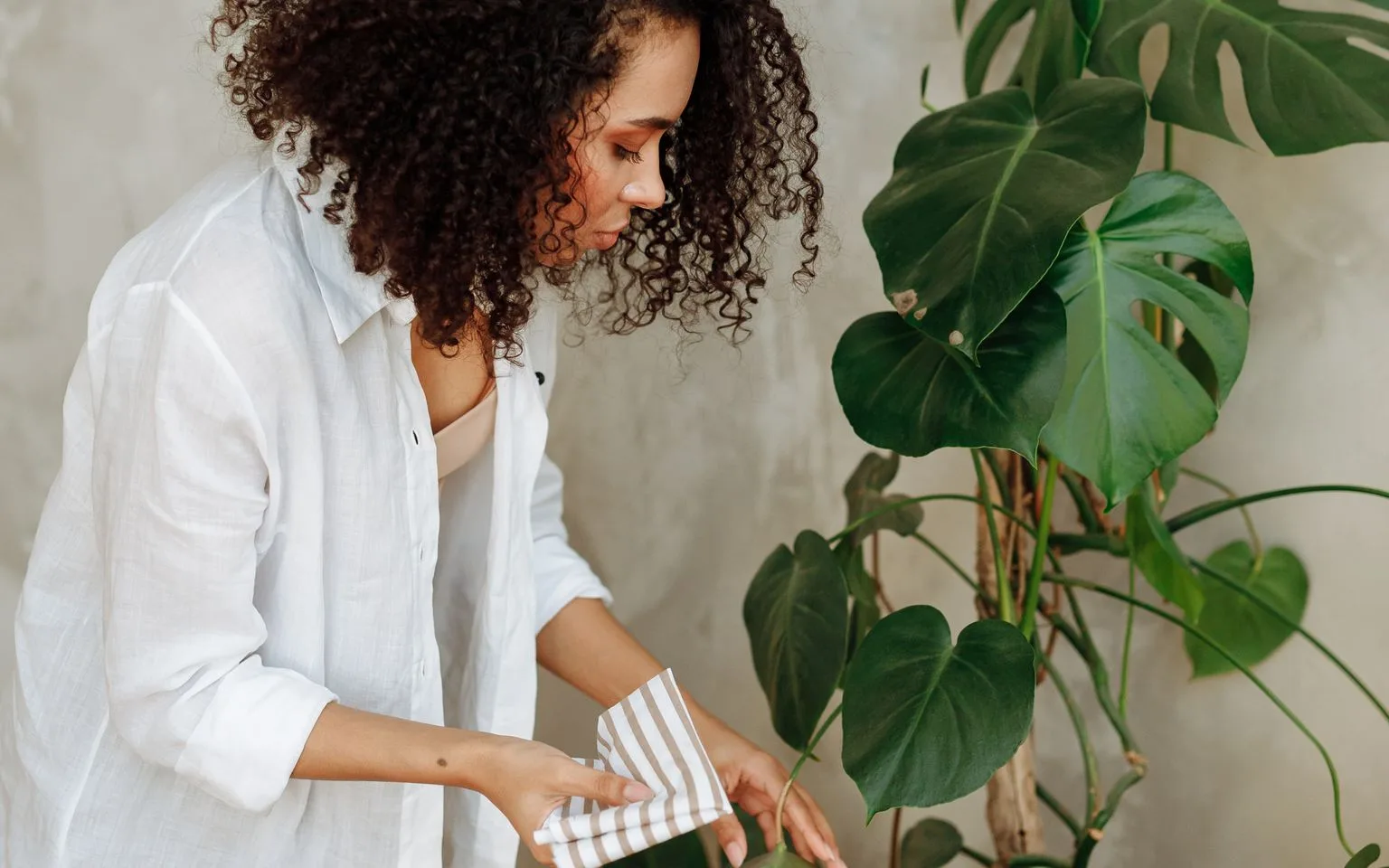
Method 1: Wipe Down with a Damp Cloth
Best for: Large-leafed plants like Monstera Deliciosa, Rubber Plant, Fiddle Leaf Fig, Peace Lily, Bird of Paradise
This is the most reliable method for plants with big, smooth leaves. It gives you direct contact with every surface and lets you remove both dust and any sticky residue.
How to Do It
- Dampen a soft cloth — Use a microfiber cloth or a soft cotton cloth. Dampen it with lukewarm water and wring it out so it is barely wet, not dripping.
- Support the leaf — Place one hand gently under the leaf to support it. Large leaves can tear under pressure if not supported.
- Wipe from base to tip — Wipe in the direction of the leaf’s growth, from where it meets the stem toward the tip. This avoids damaging the leaf surface.
- Clean the underside — Flip the leaf and wipe the underside too. This is where dust collects and where pests hide.
- Rinse the cloth between leaves — Rinse and wring the cloth after every few leaves so you are not just spreading dust around.
Method 2: Shower or Hose Down
Best for: Plants with many small leaves that are hard to wipe individually — Boston Fern, Areca Palm, Parlor Palm, Spider Plant, English Ivy
This is the fastest method for bushy or finely leafed plants. It also cleans the soil surface and flushes out accumulated salts.
How to Do It
- Cover the soil — Place a plastic bag or aluminum foil over the pot to prevent soil from washing out.
- Use lukewarm water — Test the temperature on your wrist. Water that feels cold to you is too cold for a tropical plant; water that feels hot is definitely too hot.
- Use gentle pressure — A handheld showerhead on a gentle spray setting works well. Do not use a high-pressure setting.
- Shower for 1 to 2 minutes — Rotate the plant so all sides are rinsed.
- Let it drain — Leave the plant in the shower or tub until water stops dripping from the drainage holes.
- Gently shake off excess water — Tilt the plant slightly to help water run off the leaves.
Method 3: Soft Brush or Duster
Best for: Plants with fuzzy, velvety, or textured leaves that should not get wet — African Violet, Peace Lily (sometimes), Persian Shield, succulents with powdery coatings like Mexican Snowball
Fuzzy-leaved plants hold water droplets in their leaf hairs, which can cause spotting and fungal issues. These plants should be cleaned with a dry method.
How to Do It
- Use a soft brush — A clean, dry makeup brush, watercolor brush, or a small paint brush works well.
- Brush in the direction of the hairs — Brush gently from the base of the leaf toward the tip, following the direction of the fuzz.
- Work leaf by leaf — This is slower than the other methods but it is the only safe option for these plants.
Which Plants Should Never Get Their Leaves Wet
Some plants will develop permanent damage if water sits on their leaves. These are the same plants that should not be misted — see our guide on houseplants that don’t like wet leaves for the full list and the science behind it.
| Plant | What happens if leaves get wet |
|---|---|
| African Violet | Permanent white spots on the fuzzy leaf surface |
| Begonia ‘Black Tango’ | Brown patches and potential fungal leaf spot |
| Succulents with farina (powdery coating) | The protective coating washes off and does not regrow |
| Phalaenopsis Orchid | Water in the crown can cause crown rot |
For these plants, use the brush method only. If water accidentally gets on the leaves, blot it off immediately with a paper towel.
Leaf Shine Products: Skip Them
Commercial leaf shine sprays and wipes promise glossy leaves, but they are counterproductive. These products coat the leaf surface with oils or waxes that:
- Block stomata and reduce gas exchange
- Attract more dust (the sticky surface grabs particles)
- Can cause leaf burn if applied in direct sun
- Are difficult to remove without damaging the leaf
The natural shine of a clean, healthy leaf is brighter and better for the plant than any artificial product. If your leaves look dull after cleaning, the issue is usually lack of light or nutrients, not lack of wax.
How Often to Clean
| Location | Frequency |
|---|---|
| Near a window that opens regularly | Every 2 to 3 weeks |
| In a typical room with average dust | Every 3 to 4 weeks |
| In a kitchen or near construction | Every 1 to 2 weeks |
| In a low-traffic room | Every 4 to 6 weeks |
The test is simple: rub a finger across the top of a leaf. If you can see a clear dust line, it is time to clean.
Cleaning as Pest Prevention
Regular cleaning is one of the most effective pest prevention habits you can develop. Dust creates ideal conditions for spider mites — they prefer dry, still environments and the dust provides cover for their webs. A clean plant is easier to inspect and less hospitable to pests.
If you do find pests during cleaning, do not just wipe them away and hope for the best. Quarantine the plant and treat it properly. See our common houseplant pests guide for treatment protocols for spider mites, mealybugs, scale, and fungus gnats.
Summary
| Method | Best for | Avoid for |
|---|---|---|
| Damp cloth wipe | Large, smooth leaves | Fuzzy or hairy leaves |
| Shower rinse | Many small leaves, bushy plants | African Violets, fuzzy-leaved plants, succulents with farina |
| Soft brush | Fuzzy, velvety, or powdery leaves | Nothing — safe for all plants |
Clean leaves are healthier leaves. A monthly cleaning routine takes less time than you think and makes a visible difference in plant vigor within weeks.