
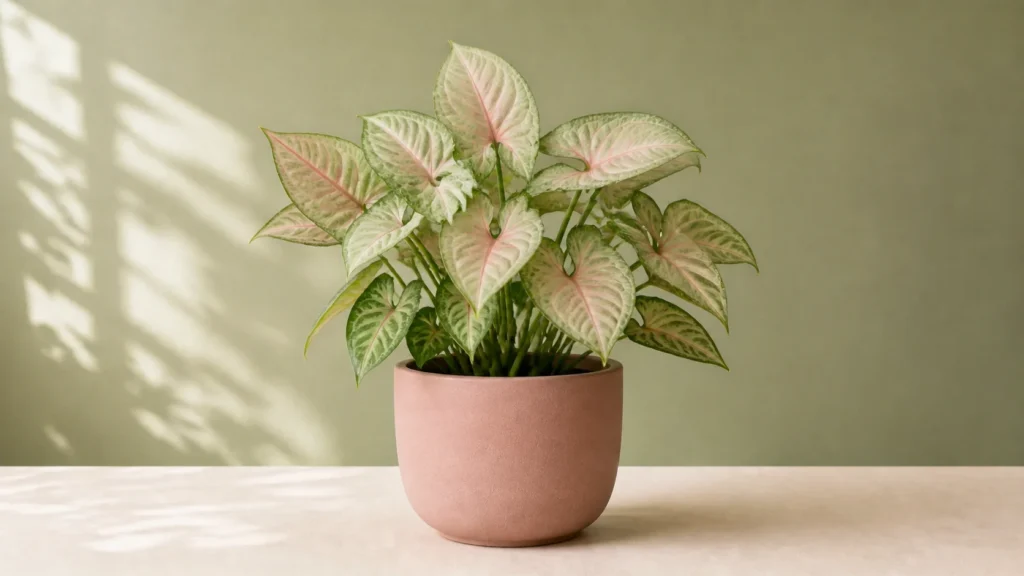
Syngonium ‘Pink Allusion’
Syngonium podophyllum 'Pink Allusion'
A compact arrowhead cultivar with soft green leaves, rosy central veins, and a gentle pink blush that is strongest in bright indirect light.
Watering frequency
Every 7-10 days
Ideal temperature
65-80°F / 18-27°C
Humidity
40-60%
Care difficulty
Easy
Air purifying
No/Not Known
Growth rate
Moderate
Plant size
Trails or climbs 2-5 ft / 0.6-1.5 m
Soil type
Loose, moisture-retentive aroid mix
Fertilizer need
Monthly, spring-summer.
Care summary
- Light: Bright indirect light supports the pink veins without scorching the leaves.
- Water: Let the top inch dry, then water fully and drain.
- Soil: Use an airy, well-draining aroid mix.
- Growth: Naturally compact when young; prune or train the later vine.
- Safety: Not pet-safe if chewed.
Common problems
- Pink color fading: low light, immature growth, or normal leaf variation.
- Bleached or crispy patches: excessive direct sun.
- Yellow leaves: wet soil or poor drainage.
- Curling new growth: dry roots, low humidity, or pests.
- Long stems: insufficient light or lack of pruning.
Plant care guide
About the Pink Allusion Syngonium
Pink Allusion Syngonium (Syngonium ‘Pink Allusion’) is a named cultivar of the Arrowhead Plant, Syngonium podophyllum, selected for soft green arrow-shaped leaves with rosy veins and a pink wash through the center. Official plant-variety records also use ‘Pink Allusion’ as an established cultivar name, including in IP Australia’s Plant Varieties Journal. The cultivar remains relatively compact when young, then develops the same trailing or climbing habit as other arrowhead vines.
The color is gentle rather than neon. A healthy plant can carry pale green, cream-green, and pink-blushed leaves at the same time, so one unusually green leaf is not enough to call it a reversion.
How to Identify It
Look for pink along the midrib and branching veins, often spreading as a soft blush across the inner leaf—the signature look of Pink Allusion Syngonium. The margin remains green. Unlike the Milk Confetti Syngonium, the pink is not mainly a field of scattered freckles. Unlike the White Butterfly Syngonium, the center is rosy rather than cream-white.
Many pink Syngonium trade names look similar, and growing conditions can change color intensity. Buy from a reliable source and keep the original label; do not identify the cultivar from one leaf or a marketplace photo alone.
Best Light and Placement
Bright indirect light gives the best balance of pink color and healthy green tissue. Gentle morning sun is usually tolerated, but harsh midday or afternoon sun can bleach and crisp the leaves. In low light, new growth becomes greener and stems stretch.
Place it near an east-facing window or behind a sheer curtain at a brighter exposure. A warm living room, bedroom, or office works well. Rotate the pot regularly and keep it away from cold glass, air-conditioning, and hot vents.
Water, Soil, and Humidity
Water when the top inch of soil has dried, then soak the pot and let it drain. Do not keep a decorative cover pot full of runoff. If lower leaves turn yellow while the mix remains wet, extend the interval and check the roots.
Use indoor potting mix loosened with perlite and fine bark. The mix should stay lightly moist for a while but never compact into a waterlogged block. Normal household humidity works, while 40-60% helps prevent curled new leaves and dry edges.
Feed monthly at half strength in spring and summer. More fertilizer will not force stronger pink color; useful light and healthy roots matter more.
Keeping It Compact
Pinch or prune long vines above a node. This encourages side shoots and preserves the full, tabletop form that makes ‘Pink Allusion’ attractive. If you prefer larger leaves, train the vine onto a slim pole or trellis instead.
Propagate with stem sections containing a node. Root them in water or a light moist medium, then plant several rooted cuttings together. Keep newly rooted cuttings warm and in bright filtered light, but avoid strong sun until the roots are established.
Common Problems
- Pink fades to green: Increase indirect light gradually and wait for new growth; old leaves may not recolor.
- Pale scorched patches: Move it out of direct afternoon sun.
- Yellow lower leaves: Check for wet, compacted soil and poor drainage.
- Brown edges: Stabilize watering and move the plant away from drying vents.
- New leaves emerge distorted: Inspect carefully for thrips and mites before changing fertilizer.
Pet Safety
‘Pink Allusion’ is not pet-safe. Like other Syngonium podophyllum cultivars, it contains insoluble calcium oxalate crystals. The ASPCA’s arrowhead-vine entry lists oral pain, drooling, vomiting, and difficulty swallowing among possible signs after chewing.
Frequently Asked Questions
How do I make Pink Allusion more pink? Provide brighter indirect light, stable warmth, and healthy roots. Avoid harsh sun and excess fertilizer. Color varies naturally, so assess several new leaves.
Is Pink Allusion the same as Neon Robusta? No. They are sold as separate cultivars, although labels are often confused. ‘Pink Allusion’ is usually recognized by green margins and pink veins or inner blush rather than a broadly uniform pink leaf.
Can I grow it as a hanging plant? Yes. Let mature stems trail, or prune them regularly for a more compact pot.
Why are the newest leaves pale? Fresh Syngonium leaves often deepen as they harden. Give a new leaf time before diagnosing a light or nutrient problem.