
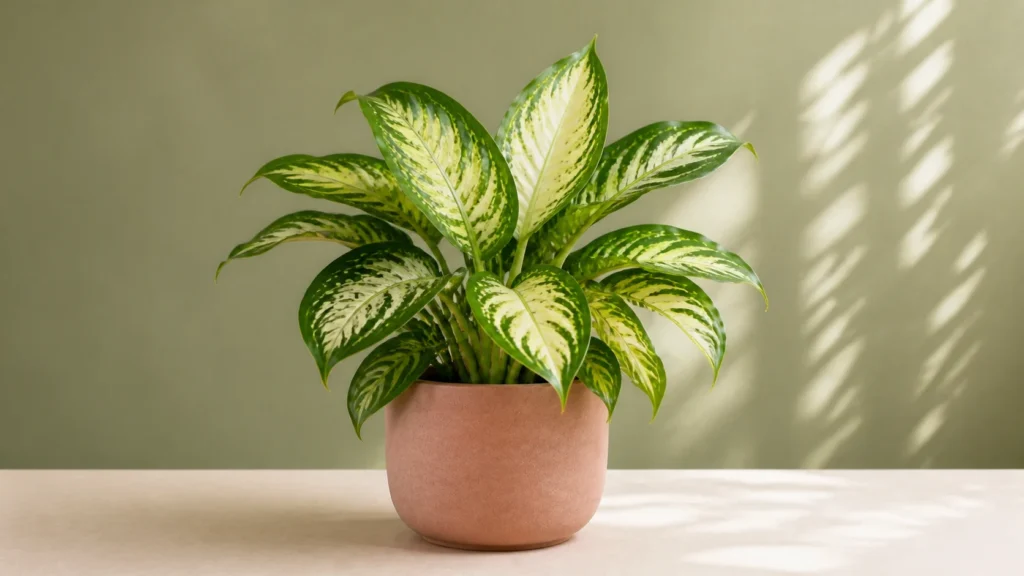
Dieffenbachia
Dieffenbachia seguine
A fast-growing tropical with broad, cream-patterned leaves that adds lush height to bright rooms — beautiful, but handle it with gloves and keep it away from pets.
Watering frequency
Every 7-10 days
Ideal temperature
65-80°F / 18-27°C
Humidity
50-70%
Care difficulty
Easy
Air purifying
Yes
Growth rate
Fast
Plant size
3-5 ft / 0.9-1.5 m
Soil type
Well-draining potting mix with perlite
Fertilizer need
Monthly, spring-summer.
Care summary
- Light: Bright indirect light; tolerates medium light.
- Water: Let the top inch or two of soil dry, then water thoroughly and drain.
- Soil: Well-draining mix in a pot with drainage holes.
- Growth: Fast and upright; lower leaves fall naturally as the cane grows.
- Handling: Wear gloves — the sap is a skin and mouth irritant.
- Safety: Not pet-safe; toxic if chewed.
Common problems
- Yellow lower leaves: overwatering, or normal aging of old leaves.
- Drooping stems: overwatering or cold drafts.
- Brown leaf edges: dry air or hard-water minerals.
- Leggy, bare cane: not enough light.
- Mealybugs or scale: sticky residue on stems and leaf undersides.
- Sap contact: causes skin and mouth irritation — wear gloves.
Plant care guide
About Dieffenbachia
Dieffenbachia — commonly called Dumb Cane — is a fast-growing tropical perennial native to the Caribbean and tropical South America, where it grows in humid forest understories. The NC State Extension profile describes Dieffenbachia seguine as a broadleaf evergreen with large, oval leaves patterned in green and white, grown for its foliage and upright cane-like stems. It belongs to the arum family (Araceae), the same family as Philodendrons, Monsteras, and Peace Lilies.
The name "dumb cane" comes from its sap: chewing the stem causes intense swelling and numbing of the mouth and throat that can temporarily make speech impossible. That hazard is exactly why this beautiful plant needs respect — it is grown for its looks, handled with gloves, and kept far from pets and children.
Several named varieties are commonly sold, and they differ mainly in how much white they show. 'Camille' has creamy leaf centers with green edges; 'Tropic Snow' is heavily variegated with speckled white; 'Compacta' stays shorter and denser; and 'Reflector' pairs unusually dark leaves with bright white blotches. All share the same care and the same toxicity — the pattern varies, the safety story does not.
Why You'll Like It
Dieffenbachia is one of the fastest ways to add real height and lush, tropical foliage to a room. The leaves are large and broadly oval, often cream or white in the centers with green edges — some varieties look almost painted. And unlike many statement plants, it grows quickly, so you see progress within weeks, not seasons.
It is also genuinely easy to keep alive. It tolerates a wide range of indoor light, forgives occasional missed waterings, and is not demanding about humidity the way some aroids are. Its only real requirements are basic: don't overwater, don't let it freeze, and don't touch the sap.
For the same bold-leafed tropical look in a pet-safe version, Chinese Evergreen or Peace Lily are close alternatives.
What Kind of Plant Is It?
Three traits explain how Dieffenbachia behaves.
- It is a cane-forming aroid. The stems grow upright and become bare, bamboo-like canes as the lower leaves age and fall. This is normal growth, not a problem — the plant simply becomes a taller "trunk" topped with leaves.
- It is a fast, soft-stemmed grower. Growth is quick in warm bright conditions, but the stems are not woody; they can bend or lean if the plant grows tall without support or water.
- It is chemically defended. The sap contains insoluble calcium oxalate crystals and a proteolytic enzyme that cause intense burning and swelling on contact with skin or mucous membranes. This is the plant's whole safety story.
Where It Works Best
Bright indirect light is ideal, and medium light is fine — the plant is one of the more forgiving aroids. In lower light it grows slower and the white variegation fades toward green, so give it the brighter end of its range if you want the pattern to stay bold. Direct sun burns the large leaves.
It suits living rooms, home offices, and bright bathrooms, and it handles average household conditions well. Keep it away from cold drafts, heat vents, and spots that drop below about 60°F (15°C). Because of the toxicity, place it somewhere pets and children physically cannot reach.
How to Care for Dieffenbachia
Watering: Water when the top inch or two of soil feels dry — typically every 7-10 days — then water thoroughly and let the excess drain. The plant shows its feelings clearly: drooping stems mean it needs water, while yellowing lower leaves usually mean the opposite, that the soil has stayed wet too long. The watering guide explains how to read soil moisture by touch instead of the calendar.
Light: Bright indirect light keeps growth compact and the white pattern strong. Medium light is tolerated but slows growth and fades variegation. Low light causes leggy, stretched growth and weak stems.
Soil: Use a well-draining potting mix with perlite added, in a pot with drainage holes. The plant is prone to root rot in heavy, waterlogged soil.
Temperature: Comfortable household temperatures of 65-80°F (18-27°C) suit it well. Cold drafts cause yellowing leaves and drooping stems; keep it away from winter windows and air conditioning vents.
Humidity: Average household humidity is acceptable, but the plant prefers more — brown leaf edges appear in very dry air. A humidifier, pebble tray, or bright bathroom helps; the humidity guide covers the options.
Fertilizer: Feed monthly in spring and summer with a balanced houseplant fertilizer at half strength. It is a fast grower and uses the food, but reduce or stop feeding in winter when growth slows. The fertilizing guide covers the basics.
Handling: Always wear gloves when pruning, repotting, or wiping the leaves. The sap causes skin irritation, and touching your face after handling the plant transfers the problem to your eyes and mouth. Wash tools and hands thoroughly afterward.
Pruning and renewal: A tall, bare cane is normal but not mandatory. If the plant outgrows its spot or looks top-heavy, cut the cane back to the height you want — new growth will break from nodes along the remaining stem. The piece you cut off can be rooted as a new plant, so a heavy prune doubles as propagation. Do this in spring, with gloves on.
How to Propagate
Stem cuttings root easily, and because the plant grows tall, propagation is also the standard way to refresh a leggy plant. Cut a bare section of cane a few inches long, let the cut end dry for a day, then place it horizontally or upright in moist soil — new growth emerges from nodes on the cane. You can also root the leafy top of a cane in water and pot it once roots form. Wear gloves throughout, and keep new cuttings warm and lightly moist. Spring and early summer give the fastest results.
When to Repot
Repot every one to two years in spring, when roots fill the pot or the plant becomes top-heavy. Move up one pot size and use fresh, well-draining mix. Because Dieffenbachia grows fast, a fresh pot of soil each spring also replaces spent nutrients. A taller plant may need a heavier pot or a support cane to stay upright. The repotting guide walks through the process — gloves on.
Toxicity and Pet Safety
Dieffenbachia is not pet-safe. The ASPCA lists it as toxic to cats and dogs, with insoluble calcium oxalates and a proteolytic enzyme causing oral irritation, intense burning and swelling of the mouth, tongue and lips, excessive drooling, vomiting, and difficulty swallowing. The same sap is why the plant is called "dumb cane" — chewing it can swell the mouth and throat enough to impair speech.
Keep it completely out of reach of pets and children. If a pet chews it, contact your veterinarian immediately — swelling in the mouth can be serious. For homes with animals, Chinese Evergreen, Spider Plant, or Boston Fern give a similar lush, leafy look without the risk.
Common Problems and Practical Fixes
- Yellow lower leaves: Often normal aging — the lowest leaves yellow and drop as the cane grows. If several leaves yellow at once, check for overwatering or poor drainage. The yellow leaves guide helps compare the causes.
- Drooping stems: Usually underwatering or cold drafts. Water thoroughly and move the plant away from vents and winter windows.
- Brown leaf edges: Dry air, hard-water minerals, or irregular watering. Raise humidity first, consider filtered water if your tap is hard, and steady the watering rhythm. See the brown tips guide for the full diagnosis.
- Leggy, bare cane with small leaves: Not enough light. Move it brighter; the bare cane is normal height, but the small leaves signal weak light.
- Mealybugs or scale: Sticky residue and cottony clusters on stems. Wipe with rubbing alcohol on a cotton swab and recheck weekly; the pest guide covers the routine.
- Skin or mouth irritation after handling: The sap is the culprit. Wear gloves in the future, and wash any contact area with soap and water immediately.
- Plant leaning or falling over: Fast growth makes the top heavy. Support the cane with a stake or move to a heavier pot, and prune the top back to rebalance the plant. A stem that droops dramatically right after watering is usually just thirsty — the soft tissue firms up within hours.
Frequently Asked Questions
Why is my dumb cane drooping?
The most common causes are underwatering (stems go limp, leaves angle down) or cold drafts. Water thoroughly and move it to a warm, stable spot. Overwatering can also cause a droopy, yellowed plant, so check the soil moisture first.
Is dieffenbachia toxic to cats and dogs?
Yes. The ASPCA lists it as toxic to both, with insoluble calcium oxalates causing intense mouth irritation, swelling, drooling, and vomiting. Keep it out of reach and call your veterinarian immediately if a pet chews it.
Why is my dieffenbachia turning yellow?
Usually overwatering or poor drainage — let the top couple of inches dry before watering again. Older lower leaves also yellow naturally as the cane grows, which is normal.
How much light does a dumb cane need?
Bright indirect light is best for keeping the white variegation strong. It tolerates medium light, but in low light the pattern fades and growth stretches. Direct sun burns the large leaves.
Do I really need gloves to handle dieffenbachia?
Yes. The sap causes skin irritation and, worse, intense swelling if it reaches your mouth or eyes. Wear gloves for pruning, repotting, and leaf-wiping, and wash your hands afterward.
Why are the leaves turning brown at the edges?
Dry air is the most common cause — raise the humidity with a humidifier or pebble tray. Hard tap water and inconsistent watering also contribute; the brown tips guide helps you sort through them.
Why is my dumb cane growing slowly?
Light is the usual limiter — the plant grows quickly in bright indirect light and sluggishly in dimmer rooms. It may also be pot-bound or simply waiting out winter. Move it brighter, check whether the roots fill the pot, and resume feeding in spring.
Can dieffenbachia clean the air?
Dieffenbachia appeared in NASA's 1989 Clean Air Study, which found it absorbed volatile organic compounds in sealed test chambers. Real rooms move far more air than a sealed chamber, so treat the claim as a bonus rather than a reason to buy one — and never let the air-purifying reputation distract from the toxicity, which matters far more.
Why is the white pattern fading on my dieffenbachia?
Variegation is light-hungry: the white parts of the leaf contain little chlorophyll, so in dim conditions the plant produces more green and less white. Move it to brighter indirect light and the new leaves will come in with stronger contrast.
Why is my dieffenbachia dripping water from the leaves?
That is guttation — the plant pushes excess moisture out through the leaf tips, especially after watering in humid conditions. It is normal and harmless, though the droplets contain trace amounts of sap, so wipe them up rather than letting pets lick them.
Should I cut off yellow leaves?
Yes — a leaf that has turned yellow will not recover. Cut it off at the stem to keep the plant tidy and redirect energy to new growth. Just identify the cause first (usually overwatering), or the next leaf will yellow the same way.
How tall will a dumb cane get indoors?
With bright light and regular repotting it can reach 3-5 feet indoors, though most plants sit around 2-3 feet before their owners prune them back. Height is easy to control: cut the cane back whenever you want a shorter, fuller plant — the stem regrows from the nearest nodes.
Final Thought
Dieffenbachia is a fast, forgiving, genuinely lush plant whose only real hazard is its sap — and that hazard is entirely manageable with gloves and good placement. Give it bright indirect light, water when the top couple of inches dry, and keep it away from cold drafts and curious pets, and it will quickly grow into a tall, patterned centerpiece that makes a room feel tropical. Respect the plant, and it will reward you with years of effortless, leafy height.