
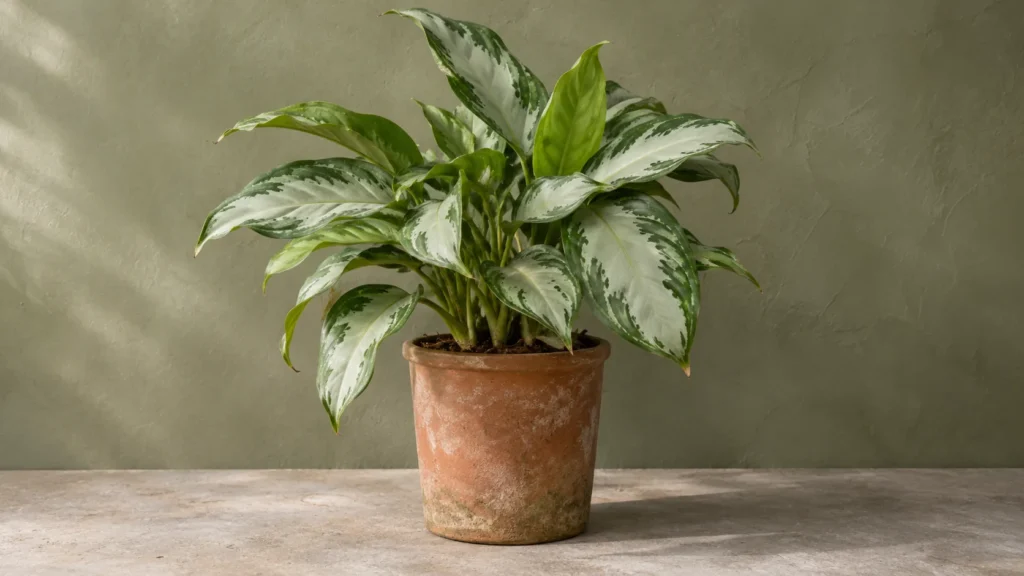
Chinese Evergreen ‘Silver Bay’
Aglaonema 'Silver Bay'
A broad-leaved Aglaonema cultivar with a large silvery-gray center and an irregular green border.
Watering frequency
Check weekly; water when the upper mix has partly dried
Ideal temperature
About 65-80°F / 18-27°C; avoid cold drafts
Humidity
Average room humidity; protect from very dry air
Care difficulty
Easy
Air purifying
No/Not Known
Growth rate
Moderate
Plant size
Commonly 1.5-3 ft / 0.45-0.9 m tall and wide indoors
Soil type
Airy, moisture-retentive mix that drains freely
Fertilizer need
Every 6-8 weeks, spring-summer.
Care summary
- Light: Medium to bright indirect light; lower light slows growth.
- Water: Let the upper mix partly dry, then water and drain fully.
- Soil: Use an airy mix and a pot with drainage holes.
- Pattern: Broad gray-silver centers have irregular green borders.
- Safety: Keep away from chewing pets and children.
Common problems
- Yellow lower leaves: Check for wet mix, cold roots, or normal aging.
- Soft stems: Inspect for prolonged moisture and root damage.
- Brown margins: Check direct sun, dry air, salts, and watering history.
- Sparse growth: Move toward brighter indirect light and inspect roots.
- Mealybugs or scale: Inspect leaf bases and undersides.
Plant care guide
About Chinese Evergreen 'Silver Bay'
Chinese Evergreen 'Silver Bay' is the familiar retail name for Aglaonema 'Silver Bay', a green-and-silver hybrid grown for its wide, softly patterned leaves. A typical leaf has a broad silver-gray central field and an uneven green edge. UF/IFAS production guidance describes 'Silver Bay' as grayer and more oval-leaved than many other Chinese evergreens, while NC State Extension notes the silver center. Silver Bay Aglaonema and Silver Bay Chinese Evergreen are alternate retail word orders for the same named cultivar.
This is one cultivar within the large Chinese evergreen group, not a synonym for every Aglaonema. It belongs to the aroid family. Its cultivated parentage should not be replaced with the wild range of a single presumed species: a University of Florida cultivar account identifies 'Silver Bay' as an interspecific hybrid developed and released through the university's foliage breeding program in 1992.
Why You'll Like It
The broad silver center catches light without the saturated color of red or pink cultivars. A mature clump looks full and architectural on a sideboard or as a modest floor plant. It is a practical choice for a room with indirect daylight and a grower who can let the surface of the mix partly dry between waterings.
Its tolerance has limits. Lower light slows growth and water use; it does not make a windowless room suitable indefinitely. Cold, wet roots are a more common threat than ordinary household humidity. The silver leaves are ornamental, not a substitute for ventilation or an air purifier.
How to Identify 'Silver Bay'
Look for relatively broad, oval to elliptic leaves. Silver-gray occupies much of the center, with uneven darker gray islands and a narrow, irregular green margin. The pattern can vary among leaves and with growing conditions. A dependable nursery tag is still the strongest evidence of the exact cultivar.
Compare Chinese Evergreen 'Stripes': 'Stripes' has elongated leaves with distinct pale bands along side veins, rather than one dominant silver central zone. 'Silver Queen' is also silver-green but tends to have narrower, more marbled leaves. 'Diamond Bay' arose from 'Silver Bay' and can look similar; a single photo may not separate them reliably. UF/IFAS's 'Diamond Bay' account documents that relationship.
History and Naming
The University of Florida's foliage breeding program released 'Silver Bay' in the early 1990s. Its combination of broad leaves, a silver center, and strong basal growth helped make it a recognizable commercial Chinese evergreen. The cultivar name, rather than a guessed species name, is the reliable identity to preserve in a record. Retail labels often omit parentage and may simply say “Aglaonema”; that identifies the genus, not the cultivar.
Where It Works Best
Place it near an east-facing window or back from a bright south- or west-facing window so the leaves receive medium to bright indirect light. Avoid prolonged direct sun, particularly against glass. A dimmer position may keep the plant alive but lead to slower, more open growth; it will also make the pot dry more slowly.
Keep the pot away from winter drafts and air-conditioning. UF/IFAS guidance for commercial Aglaonema warns of chilling injury at low temperatures. Use a pot with a drainage hole even if it sits inside a decorative cover.
Chinese Evergreen Silver Bay Care
Light. Medium indirect light is a useful starting point; brighter filtered light supports steadier growth. If moving a plant toward a brighter window, do so gradually and watch for bleached or brown patches.
Water. Feel the upper inch or two of mix and check the pot's weight. Water thoroughly when that layer has partly dried, then empty runoff. A weekly check is a reminder to inspect, not a promise of a weekly watering need. In cool or low-light conditions, wait longer. Yellowing with persistently wet mix calls for root inspection, not another drink. NC State Extension identifies root rot from overwatering as a common problem.
Soil and container. Use a houseplant mix with enough air space to drain freely while retaining some moisture. Bark, perlite, or pumice can improve a dense mix. Do not jump to a much larger pot: a large unused volume of damp mix can stay wet around the roots.
Temperature and humidity. Comfortable indoor warmth is suitable. Average room air is usually manageable, but hot dry vents can brown leaf edges. Grouping plants or using a room humidifier is more effective than brief misting if humidity is persistently low.
Fertilizer and grooming. Feed modestly during active spring and summer growth. Pause when growth slows or when a plant is stressed. Wipe dust from the broad leaves, turn the pot occasionally, and remove fully yellow older leaves. A weak root system is not fixed by extra fertilizer.
Propagation and Repotting
Divide a well-established clump when each section can keep healthy roots and a growing stem. Stem cuttings with viable nodes can also root in warm, lightly moist conditions. A cut leaf by itself will not reproduce the complete plant. Vegetative propagation retains cultivar traits more predictably than seed, but a correct original label remains important.
Repot when roots crowd the pot, drainage is failing, or the mix has broken down. Spring is convenient because active growth helps recovery. Keep newly divided plants warm and out of harsh sun while roots reestablish.
Problems to Watch
Yellow leaves or soft stems: Check whether the pot has remained wet and whether roots are firm. One old lower leaf can be normal; widespread soft growth is not.
Brown edges: Consider direct sun, inconsistent watering, fertilizer buildup, dry airflow, and cold exposure. The location and soil condition help distinguish these causes.
Pests: Inspect the underside of leaves and the point where leaves meet stems for mealybugs, scale, and mites. Isolate an affected plant before treatment.
Pet Safety
'Silver Bay' is not pet-safe. Aglaonema sap contains irritating calcium oxalate crystals; chewing can cause mouth irritation, drooling, and swallowing discomfort. Singapore NParks' genus guidance supports the genus-level warning. Keep the plant away from pets and children who chew leaves. Contact a veterinarian or poison-control service after exposure; difficulty breathing or swallowing needs urgent professional help.
Frequently Asked Questions
Is 'Silver Bay' the same as 'Silver Queen'? No. Their silver patterns overlap, but they are separate cultivars. 'Silver Bay' is notably broad-leaved with a large silver-gray center.
Will it grow in low light? It can tolerate lower indoor light, but new growth becomes slower and the pot dries more slowly. Give it some indirect daylight or a suitable grow light.
Should I water on a fixed day? No. Check the mix and adjust for pot size, light, and season. Saturated soil is more dangerous than missing a calendar date.
Final Thoughts
Choose 'Silver Bay' for broad leaves and a generous silver center. Give it indirect light, a warm draining pot, and a watering routine based on the mix rather than the clock. Its distinctive pattern deserves its own label beside the other Chinese evergreen cultivars.