
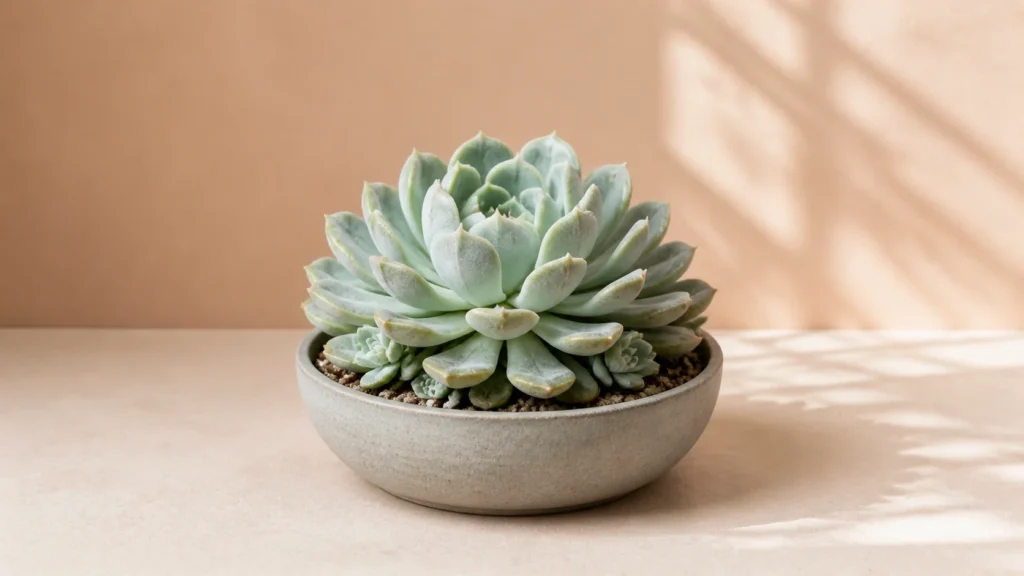
Mexican Snowball
Echeveria elegans
A compact, drought-tolerant rosette succulent with pale blue-green leaves; NC State lists the species as non-toxic to cats and dogs.
Watering frequency
Every 10-14 days
Ideal temperature
60-80°F / 16-27°C
Humidity
30-50%
Care difficulty
Easy
Air purifying
No/Not Known
Growth rate
Slow
Plant size
3-6 in / 8-15 cm
Soil type
Well-draining cactus or succulent mix
Fertilizer need
Monthly, spring-summer.
Care summary
- Light: Bright, direct morning sun or very bright indirect light.
- Water: Soak thoroughly only when the soil is fully dry.
- Soil: Fast-draining cactus or succulent mix.
- Humidity: Dry air is fine; never mist the leaves.
- Growth: Slow, compact rosettes; propagates from leaves or pups.
- Safety: Pet-safe.
Common problems
- Mushy, translucent leaves: overwatering.
- Stretched, leggy rosette: too little light.
- Shriveled bottom leaves: thirst or normal aging.
- Powdery coating rubbed off: too much handling.
- Pests: mealybugs, aphids, and vine weevils.
Plant care guide
About Mexican Snowball
Mexican Snowball (Echeveria elegans) is the classic "rosette succulent" — a pale blue-green cluster of tightly packed leaves. Native to northeastern Mexico, it belongs to the Crassulaceae family, the same family as jade plants and hens-and-chicks. It is also sold as White Mexican Rose and Mexican Hens and Chicks. The NC State Extension profile for Echeveria elegans describes it as a perennial succulent that grows in rosette-shaped clumps and blooms from late winter to summer on long, slender stalks of pink tubular flowers with yellow tips.
The botanical name comes with a small catch that matters if you shop online: the species was once recorded as Echeveria perelegans, and you will still see that name on some seller listings and care articles. It is the same plant. NC State lists Echeveria perelegans as a previously known name, so treat the two as synonyms rather than two different plants.
What makes this particular echeveria so popular is how reliably it delivers the "succulent look." The leaves are spoon-shaped, fleshy, and arranged in a tight spiral that stays small — a mature plant is only a few inches across — and every leaf carries a powdery, silvery-white bloom called glaucous coating that gives the rosette its soft, frosted appearance. Because it stays compact and offsets freely, it is the plant of choice for dish gardens, terrarium-style arrangements, and windowsill collections where one plant can gradually become a cluster.
Why You'll Like It
Echeveria elegans is one of the lowest-maintenance plants you can own. It asks for a bright spot, infrequent water, and otherwise mostly wants to be left alone. It tolerates missed waterings that would kill a fern, shrugs off dry indoor air that browns the tips of tropicals, and keeps looking tidy without any pruning. For beginners, it is the plant that makes "I forgot to water it" a success story rather than an apology.
It is also visually versatile. A single rosette reads as a tiny sculptural object — frosted, geometric, and compact — which is why echeverias appear so often in succulent arrangements. A healthy plant may produce offsets (baby rosettes) around its base, gradually forming a clump. Complete, undamaged leaves can also produce roots and a new rosette, although not every cutting succeeds.
For pet owners, the relevant evidence is positive rather than inferred: the NC State profile tags Echeveria elegans as non-toxic for cats, dogs, and horses. That makes it a useful option in a plant group where some popular members, including jade plants and aloes, are not pet-safe. The pet-safe houseplants guide includes other options for homes with animals.
What Kind of Plant Is It?
Three facts explain how Echeveria elegans behaves.
- It is a leaf-storing succulent from a semi-arid mountain region. The thick, fleshy leaves are the plant's water tank. They swell when the plant is hydrated and soften or wrinkle when it is thirsty, which gives you a visible, honest watering cue that most houseplants lack. Its native habitat in northeastern Mexico is dry and seasonally bright, which is why it wants more sun and far less water than the average houseplant.
- The rosette grows from a very short stem. The leaves emerge in a compact spiral, so the stem is easy to overlook. This geometry matters for propagation and for light: a rosette that does not get enough light loosens and stretches, a condition growers call etiolation.
- It is a "glaucous" plant. The powdery silver coating on the leaves is not dust and should not be wiped off — it is a natural wax-like bloom that protects the plant from sun and water loss. It never regrows once rubbed away, which is why handling echeverias by the leaves leaves permanent fingerprint-shaped bare spots.
Where It Works Best
Echeveria elegans wants the brightest spot your home can offer. NC State lists its light needs as full sun to partial shade, and indoors that translates to a south- or west-facing windowsill where the plant gets several hours of direct sun, or a very bright spot just inside a sunny window. This is the rare houseplant where direct sunlight is not the enemy — it is the requirement. A plant kept in medium light will survive for a while but will slowly stretch into a leggy, flattened shape with widely spaced leaves that no longer look like the tight rosette you bought.
Because it wants dry air and dry soil, the classic "bright, warm, dry" spots are perfect: a sunny kitchen windowsill, a shelf near a bright window, or a spot on a west-facing balcony or patio during warm months. The light guide explains the difference between the bright indirect light most tropicals need and the genuine sun a succulent like this one prefers — it is an important distinction, because putting an echeveria in a "bright indirect light" spot is often not enough.
One warning: echeverias are sold in small pots, and those pots are easy to overwater when surrounded by other, thirstier houseplants. Give it its own dry corner, not a spot in the middle of a humidity-loving group where it gets watered on their schedule.
How to Care for Echeveria Elegans
Light: This is the make-or-break factor. Give it full sun when you can — a south or west windowsill — or the brightest indirect light available. If the rosette starts to stretch and flatten, move it to more sun immediately. Turning the pot occasionally keeps the rosette growing evenly instead of leaning toward the window.
Watering: Water only when the soil is completely dry, then water deeply and let the excess drain. In a typical home that lands somewhere between every 10-14 days in the growing season and every 3-4 weeks in winter, but the soil condition is the real cue, not the calendar. The watering guide covers the "soak and dry" rhythm that succulents depend on. Overwatering is the number one killer — NC State notes that echeverias "prefer dry, well-drained soil" and that overwatering is the most common problem. When in doubt, wait another week.
Soil: Use a fast-draining cactus or succulent mix. The soil's job is to dry out quickly after watering, so a mix heavy in grit, perlite, or coarse sand is better than a dense potting soil. A pot with drainage holes is non-negotiable; a decorative pot without drainage turns any watering mistake into root rot.
Temperature and humidity: Comfortable room temperatures of 60-80°F (16-27°C) are ideal, and the plant tolerates a range from cool winter windowsills to warm summer patios. Dry air is fine — this is a plant that actively dislikes humidity. Do not mist it; moisture sitting on the leaves encourages rot and spots.
Fertilizer: Feed monthly in spring and summer with a half-strength succulent or cactus fertilizer, and stop entirely in fall and winter when growth slows. The fertilizing guide explains why succulents need much less feeding than leafy tropicals — a little goes a long way with a plant this slow-growing.
How to Propagate
Mexican Snowball can be propagated in several practical ways, with offsets usually giving the most predictable result:
- Leaf cuttings (the classic method): Gently twist a healthy lower leaf off the rosette — it must come away cleanly from the stem, not break. Let the detached leaf dry and callus for a day or two, then lay it flat on top of well-draining succulent soil with the cut end touching the surface. Leave it in bright indirect light and mist the soil occasionally, without keeping it wet. Within a few weeks, tiny roots and a baby rosette form at the base of the leaf, and the new plant grows independently as the mother leaf shrivels away.
- Offsets (pups): Mature plants produce baby rosettes around their base. When an offset is large enough to have its own root system, gently separate it and pot it in its own small container. This is the fastest method, because the new plant is already self-sufficient.
- Division: A well-established clump can be divided at repotting time, separating the rosettes into individual plants.
NC State lists leaf cutting, division, and offsets among the recommended propagation strategies for this species. Propagate in spring or early summer when the plant is actively growing, and keep new plants in bright light but out of the harshest midday sun until they are established.
When to Repot
Echeveria elegans is slow-growing and happy in a small pot, so repot sparingly — every two to three years, or when the roots fill the container and offsets are crowding the rosette. Spring is the best time. Move up only one pot size and use fresh well-draining succulent mix. Because the roots are shallow and fine, a wide, shallow pot suits the plant better than a deep one, which holds more water than the roots can use. After repotting, wait a few days before watering to let any damaged roots callus, then resume the normal soak-and-dry rhythm. The repotting guide walks through the standard technique for moving plants into fresh soil without shock.
Toxicity and Pet Safety
The NC State Extension profile lists Echeveria elegans as non-toxic to cats, dogs, and horses. That classification does not mean eating the plant is recommended: chewing a large amount of any plant material can still cause vomiting or gastrointestinal upset. It also does not apply automatically to every succulent, so identify each plant before treating a mixed collection as pet-safe. The pet-safe houseplants guide is a better starting point for building a collection around animals.
Common Problems and Practical Fixes
- Mushy, translucent leaves: The classic overwatering sign. The leaves feel soft and look waterlogged, often starting at the bottom of the rosette. Remove the affected leaves, let the soil dry out completely, and check the roots for rot — if the stem base is dark and mushy, cut above the rot and reroot the healthy rosette.
- Stretched, leggy growth: The rosette flattens and the leaves spread apart. This is etiolation from too little light. Move the plant to a sunnier spot; the existing stretch will not reverse, but new growth will tighten back into a rosette. Give it more sun right away.
- Shriveled or wrinkled leaves: Usually thirst — the leaves soften and wrinkle when the plant has used up its stored water. Water thoroughly and the leaves plump back up within a day or two. If only the oldest bottom leaves are shriveling, that is normal aging, not a problem.
- Powdery coating missing: The glaucous bloom is rubbed off by handling or wiping. It does not regrow, so handle the plant by the pot or the bottom leaves, and never polish the rosette.
- Pests: NC State lists mealybugs, aphids, and vine weevils as the main pest concerns. Mealybugs look like small white cottony spots tucked between the leaves. Remove them with a cotton swab dipped in rubbing alcohol and repeat weekly; the pest guide covers the full treatment routine.
Frequently Asked Questions
How often should I water an Echeveria? Only when the soil is completely dry — typically every 10-14 days in spring and summer and every 3-4 weeks in winter, depending on your home. The leaves are the best cue: soft and wrinkled means thirsty, firm means fine.
Why is my Echeveria stretching up instead of staying a rosette? It is not getting enough light. Etiolation — the flattened, stretched growth — happens when a succulent reaches for more sun. Move it to the brightest spot you have, ideally a sunny windowsill, and new growth will tighten back up.
Is Echeveria safe for cats and dogs? NC State lists Echeveria elegans as non-toxic to cats, dogs, and horses. A pet that eats a large amount of plant material may still develop gastrointestinal upset, so discourage chewing and contact a veterinarian if symptoms occur.
Can I grow Echeveria from a single leaf? It often can. Remove a complete, healthy leaf, let the wound dry, and lay it on a dry, airy succulent mix. Roots and a small rosette may form, but timing and success vary with leaf condition, warmth, light, and moisture.
Why are the bottom leaves mushy and falling off? That is overwatering. The plant is taking up more water than it can use and the oldest leaves are the first to show it. Let the soil dry out completely, water less frequently, and check for root rot if the stem base is dark.
Does Echeveria need direct sun? It prefers it. Full sun to partial shade is the NC State recommendation, and indoors a south- or west-facing windowsill produces the tight, colorful rosettes people buy the plant for. Bright indirect light keeps it alive but it will gradually stretch.
Why is the white powder coming off my Echeveria? The powdery coating is a natural waxy bloom, not dust — it is being rubbed off by handling or wiping. It does not regrow, so handle the plant by its pot and leaves as little as possible.
Final Thought
Mexican Snowball shows why a simple succulent can remain interesting for years. Give it a very bright position, fast drainage, and a full drying period between waterings, and it can retain a tight, frosted rosette while gradually producing offsets. NC State lists the identified species as non-toxic to cats and dogs, and healthy leaves may be used for propagation. It is a strong first choice for a sunny succulent collection, provided the available light is genuinely bright.